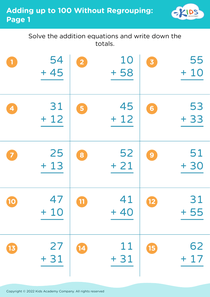
Number Recognition Adding up to 100 with Regrouping Worksheets for Ages 3-8
12 filtered results
-
From - To
Welcome to our engaging Number Recognition Adding Up to 100 with Regrouping worksheets, designed specifically for children aged 3 to 8! These resources help young learners develop essential math skills by practicing addition with regrouping while reinforcing number recognition. Our colorful, interactive worksheets make learning fun and engaging, allowing kids to confidently explore numbers up to 100. Each activity encourages critical thinking and problem-solving, laying a strong foundation for further mathematical concepts. Ideal for home or classroom use, these worksheets are perfect for nurturing a love for math in early learners. Start enhancing your child’s math abilities today!
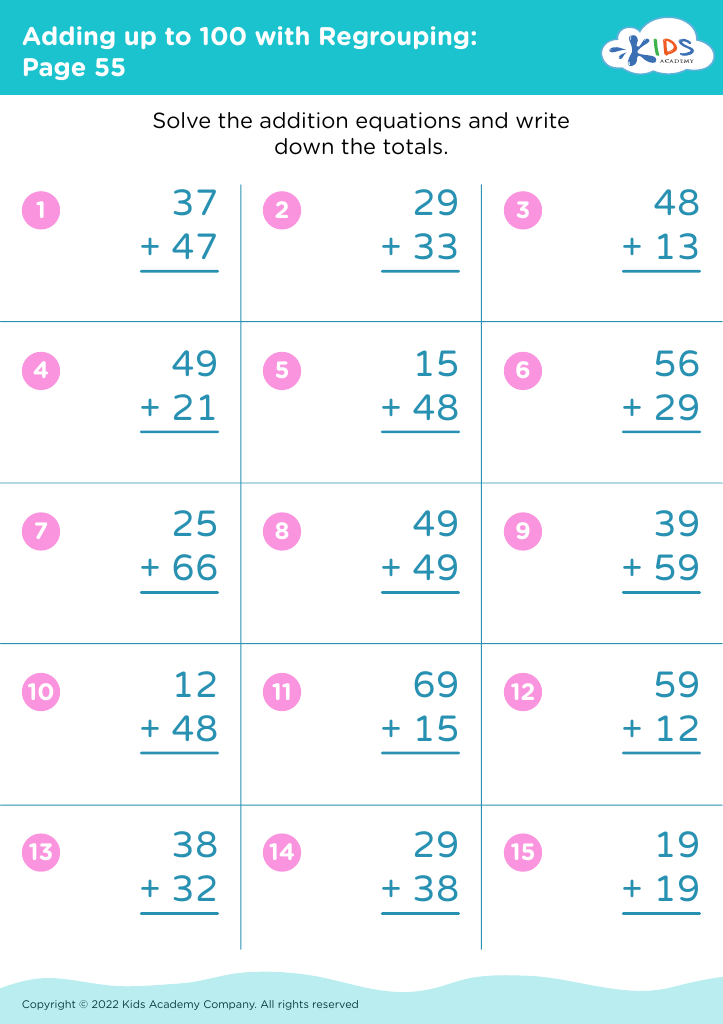
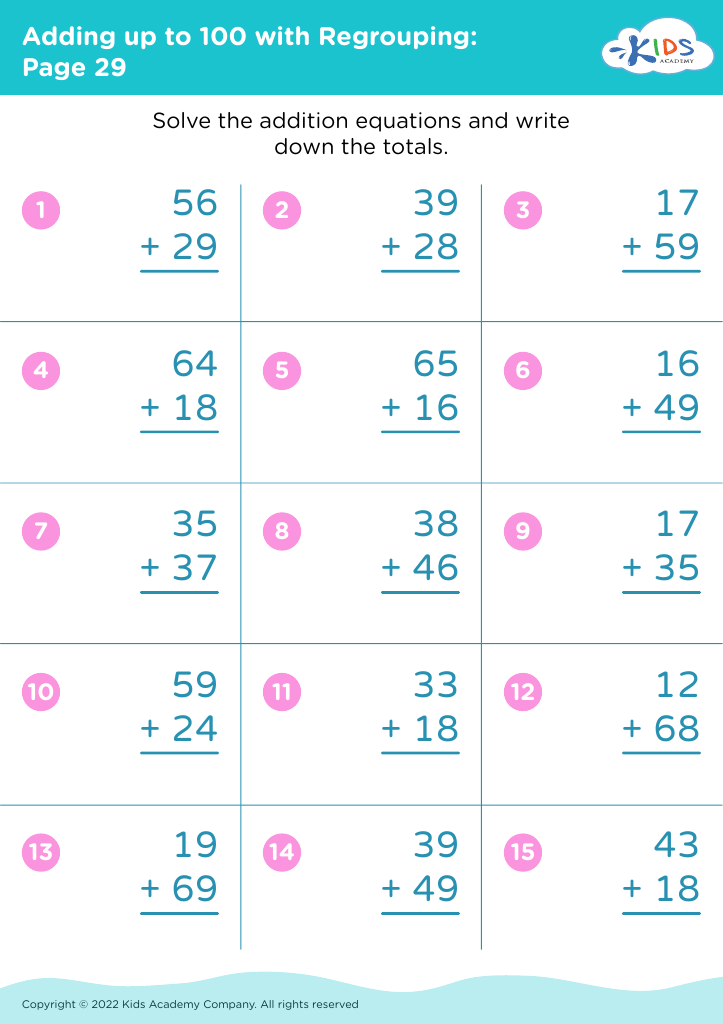
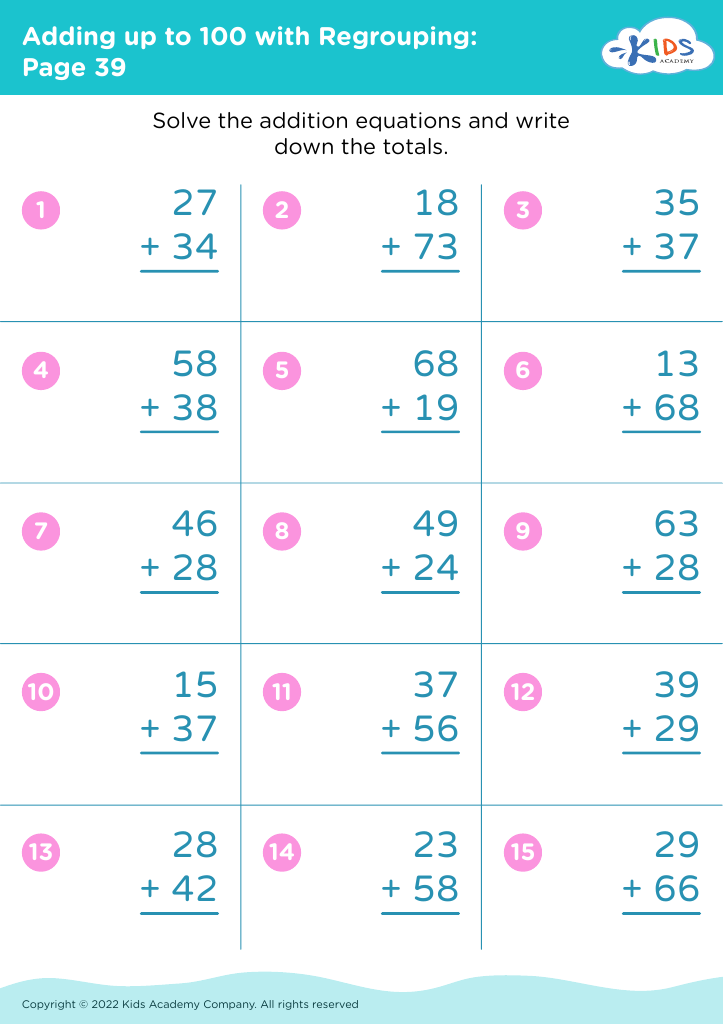
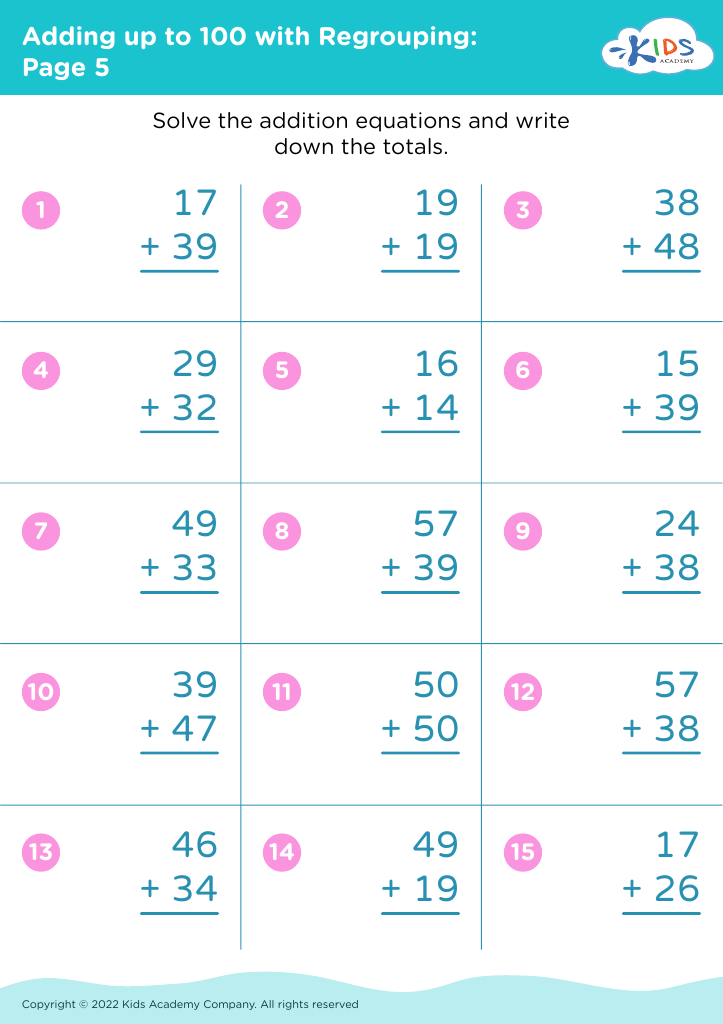
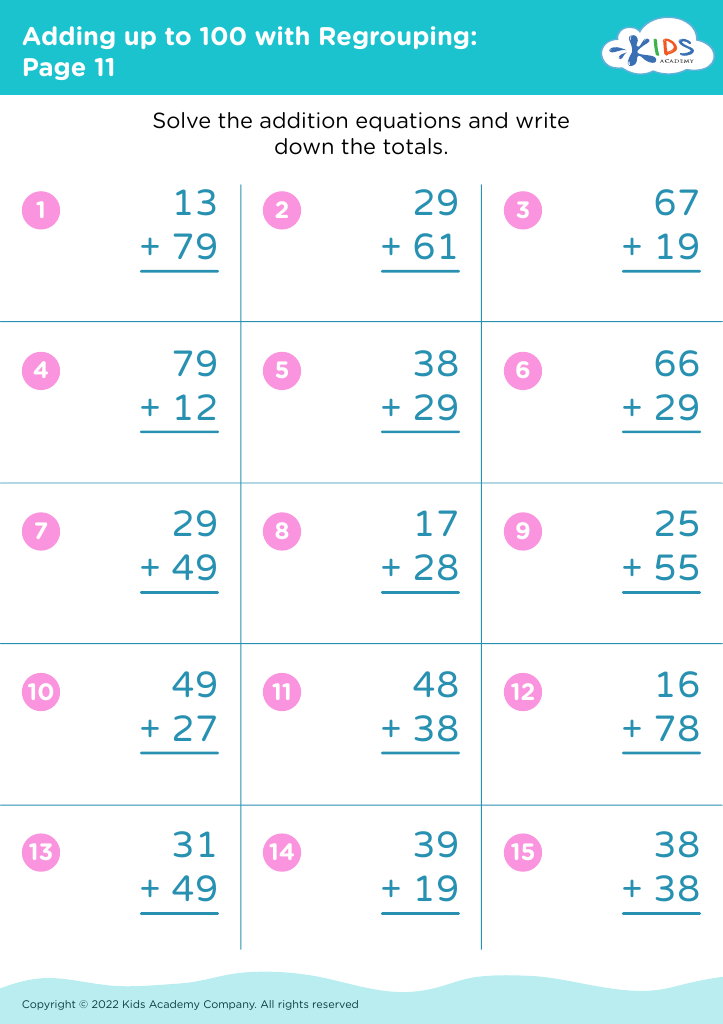
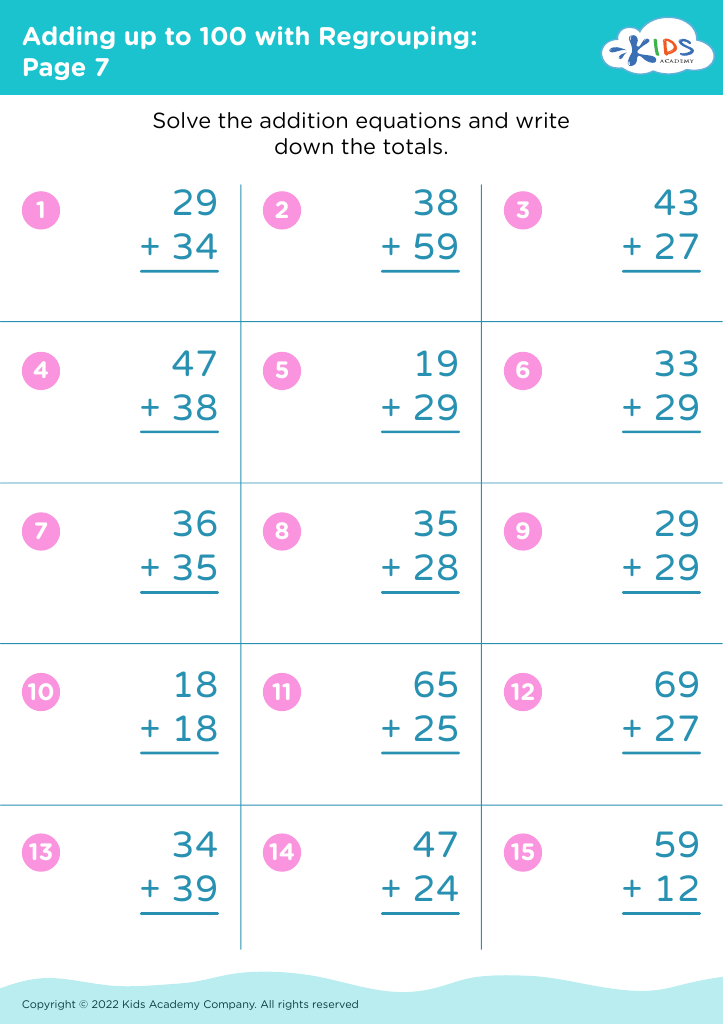
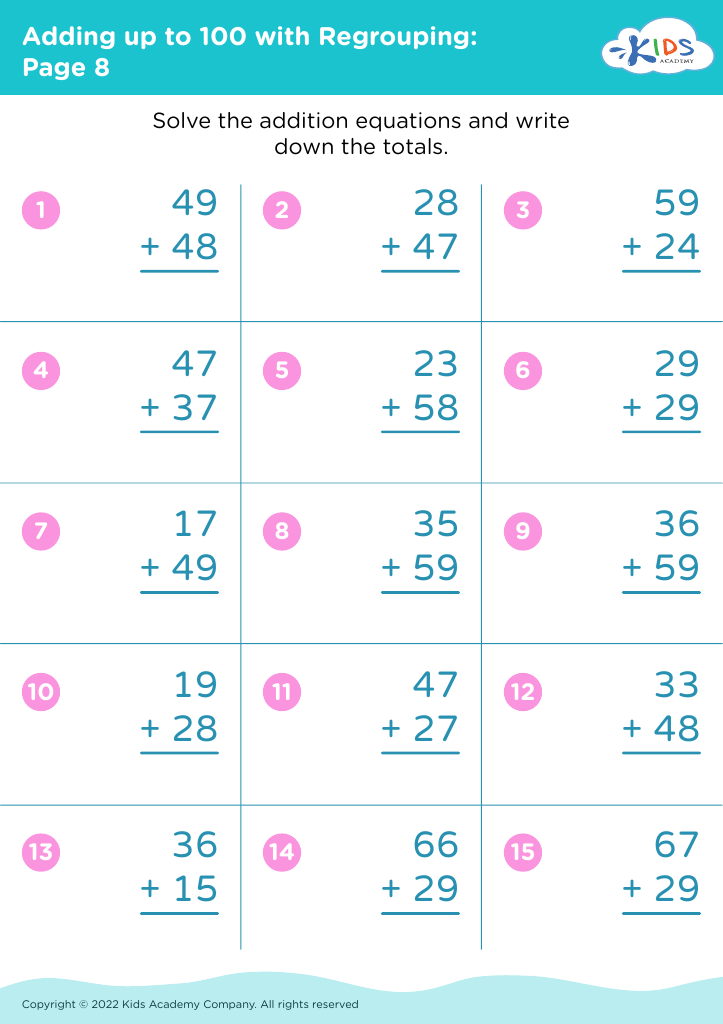
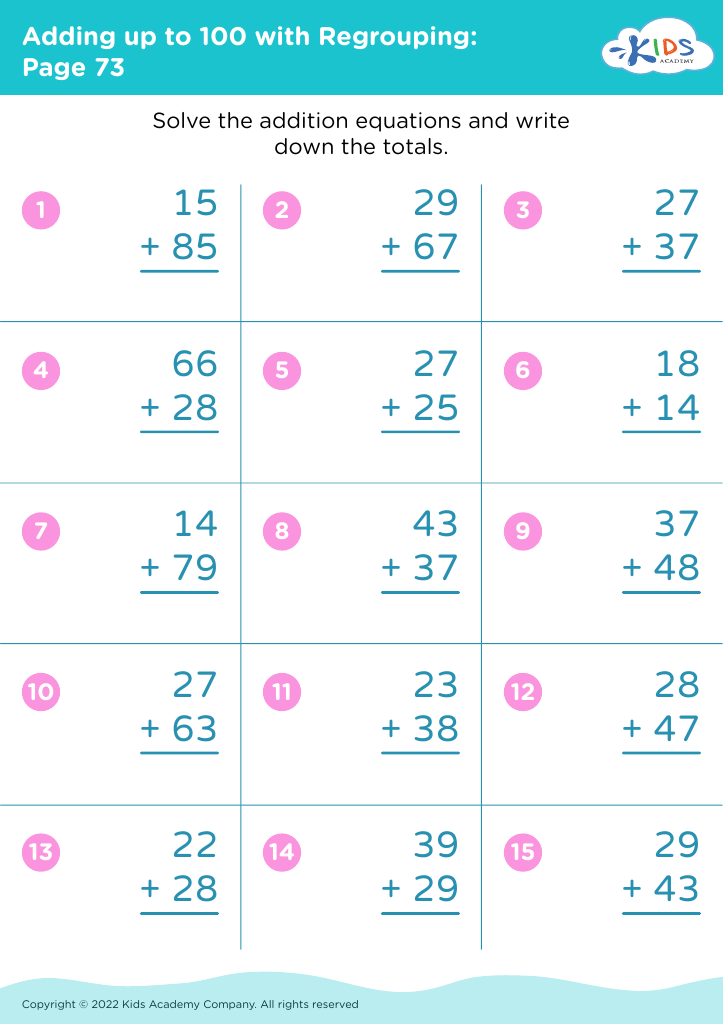
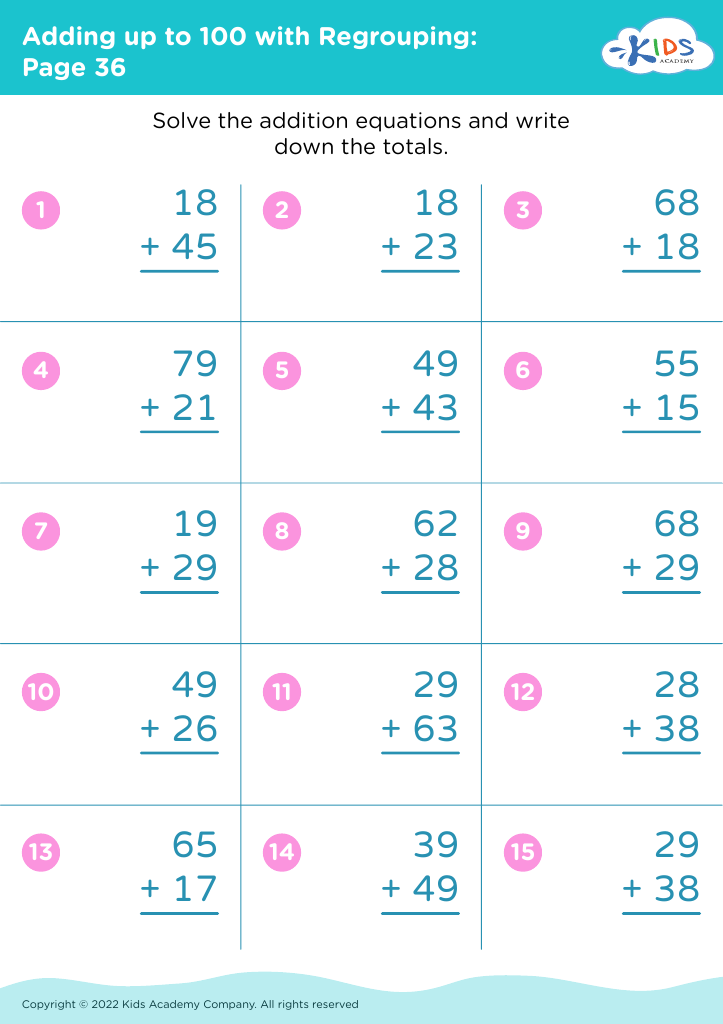
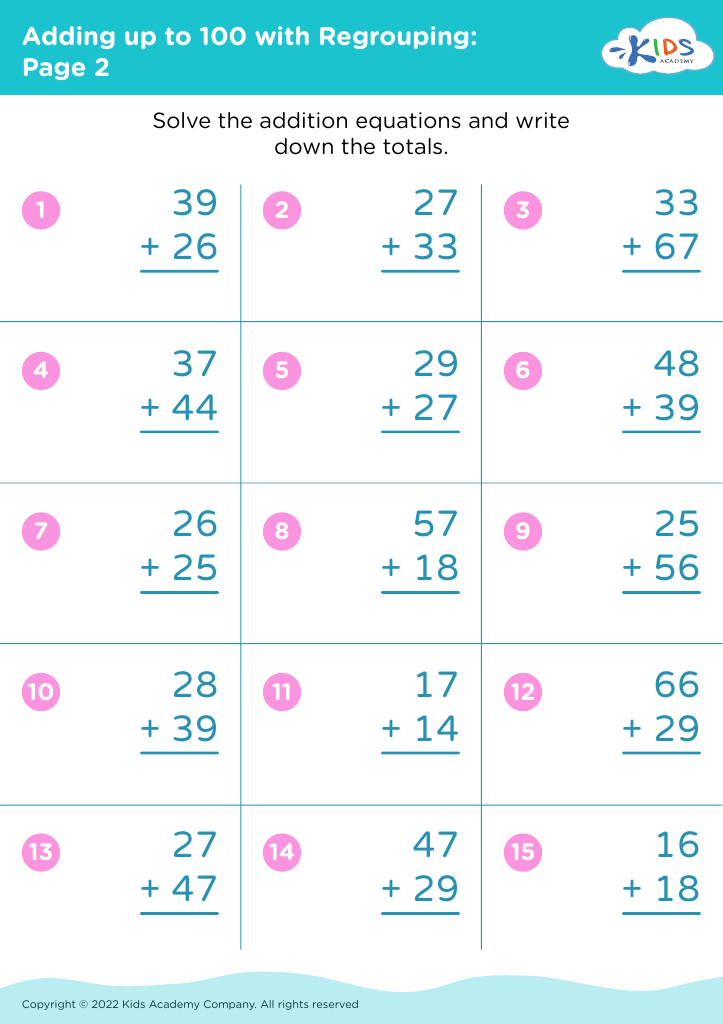
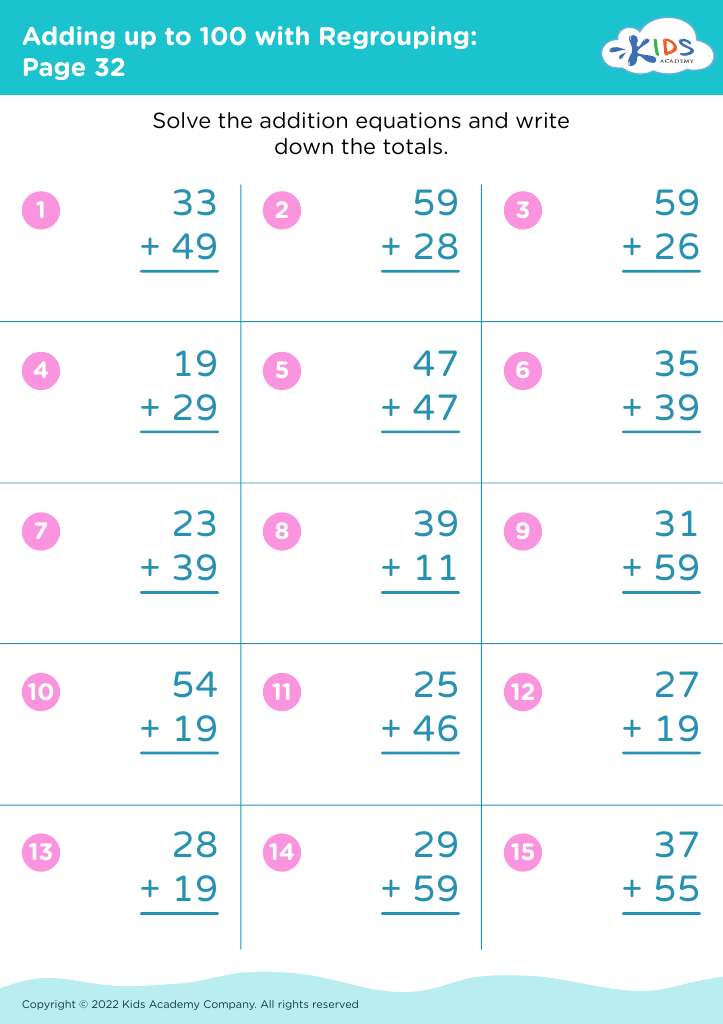
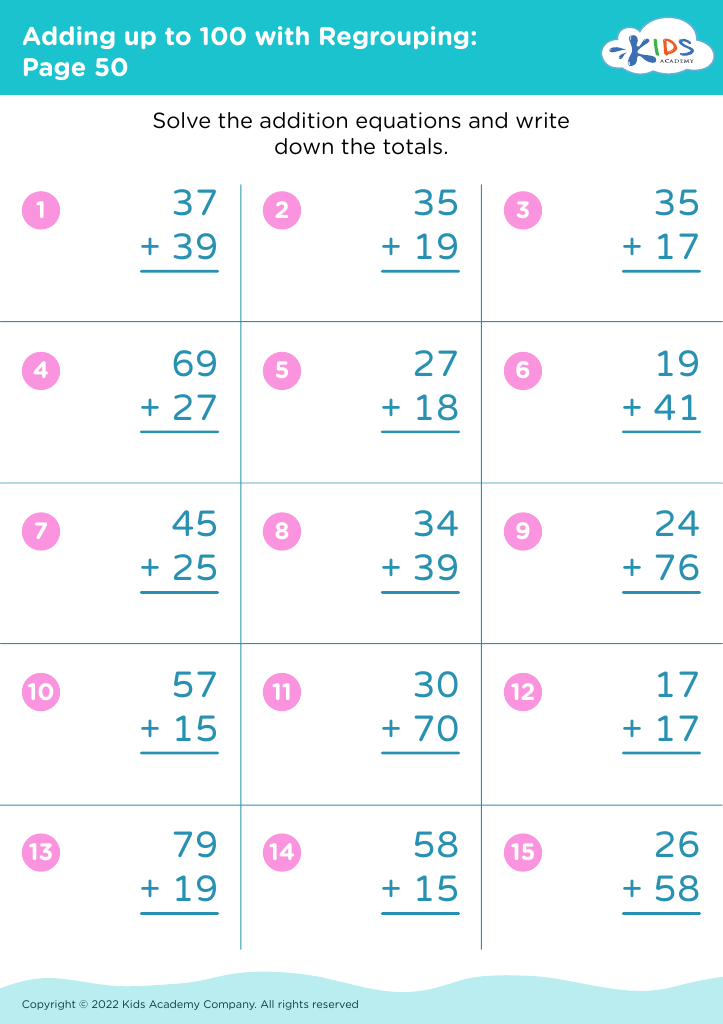




Number recognition and the ability to perform addition with regrouping are foundational skills in early mathematics for children aged 3-8. Parents and teachers should prioritize these concepts as they serve as building blocks for more complex mathematical understanding in later years.
At this age, children are developing critical cognitive skills. Mastering number recognition enables them to identify quantities, which is essential for basic arithmetic. Addition with regrouping introduces the idea of carrying values, enhancing their problem-solving skills. Both skills foster logical thinking and boost confidence in handling mathematical problems.
Moreover, understanding numbers and addition encourages a positive attitude towards math, countering the anxiety that often develops later in school when children face more challenging concepts. Engaging children with fun activities—like games and visual aids—helps to reinforce these skills and make learning enjoyable.
Essentially, proficiency in these areas not only prepares children for future academic success but also promotes lifelong mathematical fluency, essential in everyday life. By caring about these foundational skills, parents and teachers empower children to become confident, competent, and enthusiastic learners, setting them up for academic success and enhancing their problem-solving capabilities in real-world situations.