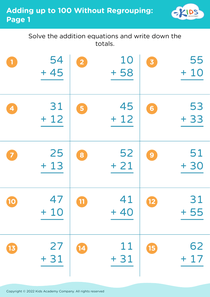
Recognize patterns Adding up to 100 with Regrouping Worksheets for Ages 3-8
3 filtered results
-
From - To
Discover the joy of learning with our "Recognize Patterns Adding up to 100 with Regrouping Worksheets," designed especially for children aged 3-8! These engaging worksheets help young learners identify and understand numerical patterns while mastering addition strategies that yield sums up to 100. Through interactive exercises, kids will develop critical thinking skills as they practice regrouping in a fun and supportive environment. Ideal for both classroom settings and home practice, these resources make math enjoyable and accessible for early learners. Boost your child's confidence in math and watch them thrive as they explore the magic of numbers and patterns!
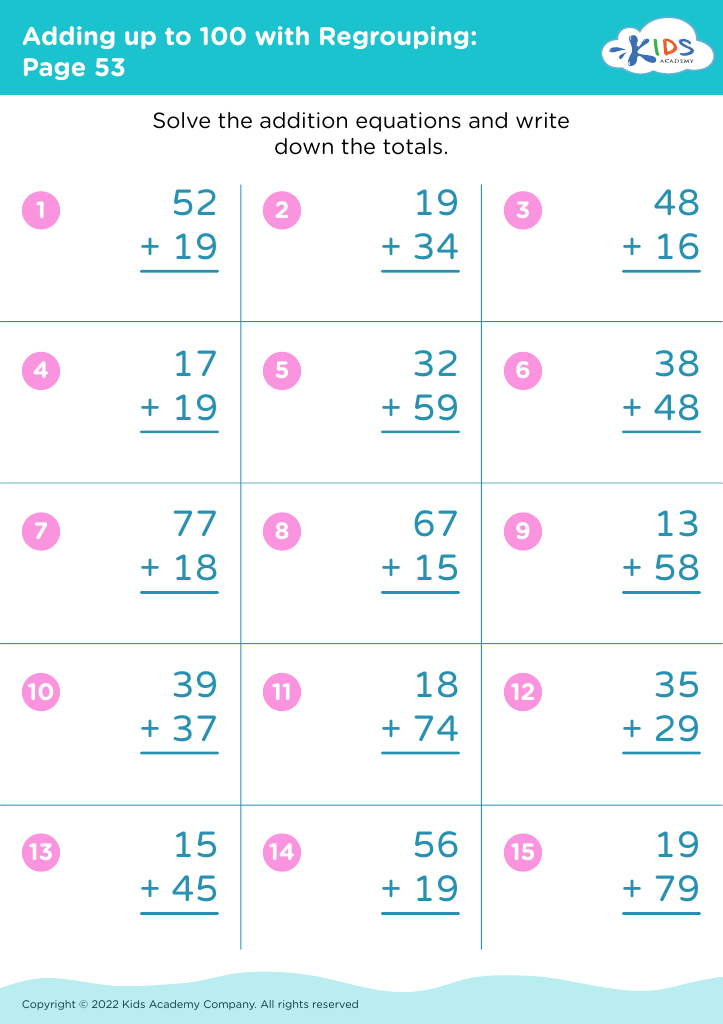
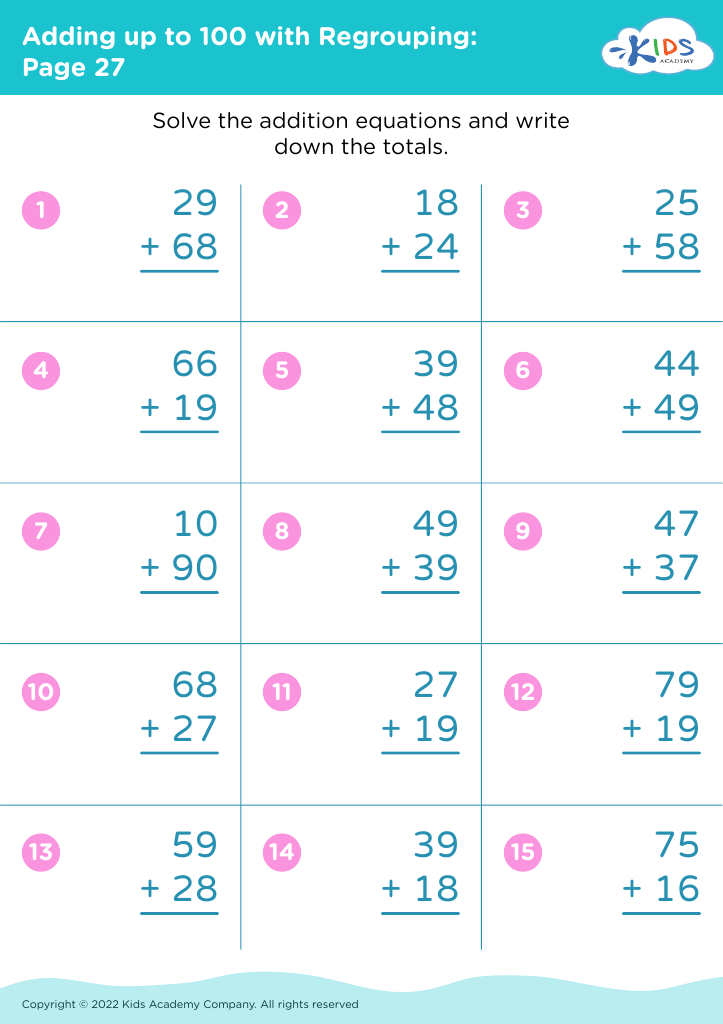
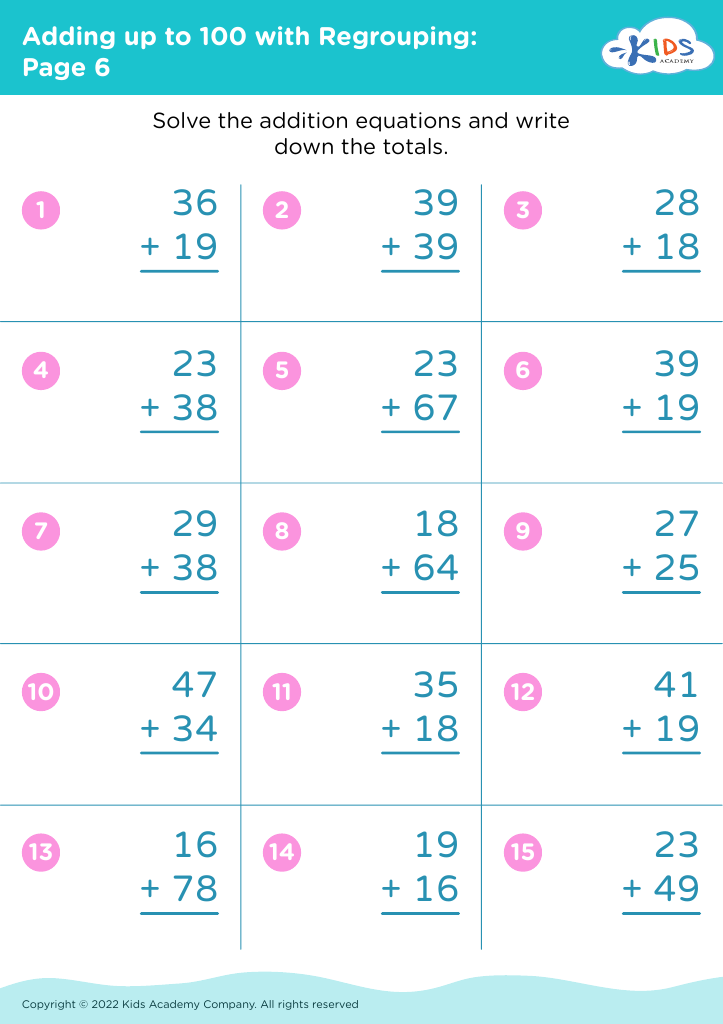




Recognizing patterns and learning to add up to 100 using regrouping are essential skills for young learners aged 3-8. First, understanding patterns enhances critical thinking and problem-solving abilities. Children who can identify patterns develop stronger reasoning skills, which are fundamental for more complex mathematical concepts later on. This foundational ability also helps them make connections in various subjects, fostering a more integrated approach to learning.
Regrouping, or decomposition, is an important mathematical strategy that not only helps learners efficiently sum larger numbers but also reinforces the understanding of place value—an essential concept in early mathematics. Mastery of these skills provides children with confidence, improving their math fluency.
Parents and teachers play a crucial role in cultivating these skills. By introducing engaging, age-appropriate activities, they can make learning enjoyable and meaningful. Furthermore, demonstrating real-life applications of addition and pattern recognition helps children see the relevance of their learning, building intrinsic motivation. Fostering these skills in young children lays the groundwork for future academic success, reinforcing their abilities across math and beyond, while instilling a positive attitude towards learning from an early age. Investing time in these concepts prepares children to navigate gradually more complex mathematical challenges with confidence.