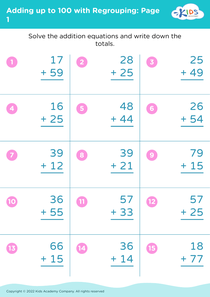
Basic Math Skills Adding up to 100 Without Regrouping Worksheets for Ages 3-8
4 filtered results
-
From - To
Discover our engaging "Basic Math Skills: Adding Up to 100 Without Regrouping" worksheets, specifically designed for children aged 3-8. These fun and interactive worksheets help young learners develop essential addition skills while building confidence in their math abilities. Each activity encourages kids to explore numbers in a playful manner, promoting early numeracy through visual aids and hands-on exercises. Perfect for homeschooling, classroom reinforcement, or supplemental practice, our worksheets facilitate a strong mathematical foundation. Watch your child thrive as they master the art of addition without regrouping, ensuring they are well-prepared for more advanced math concepts in the future!
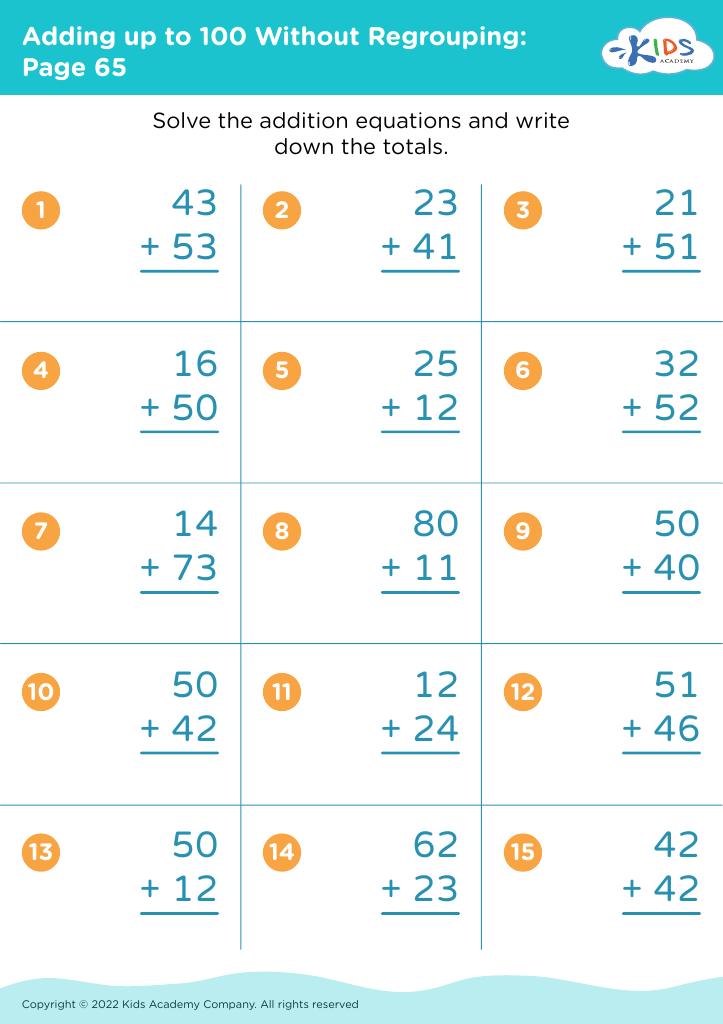
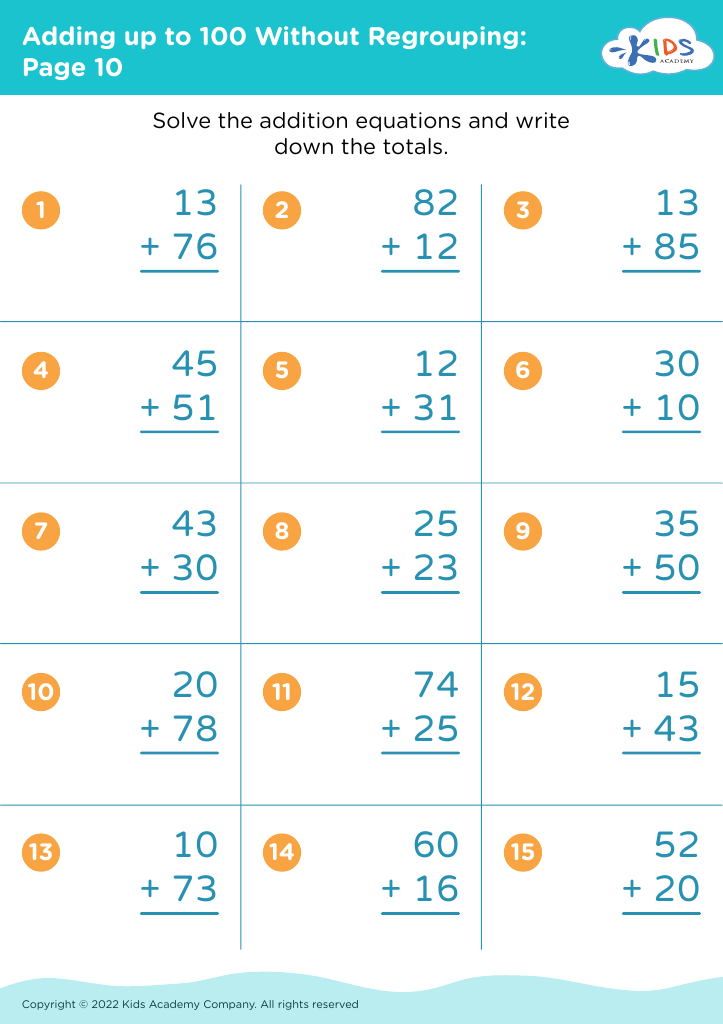
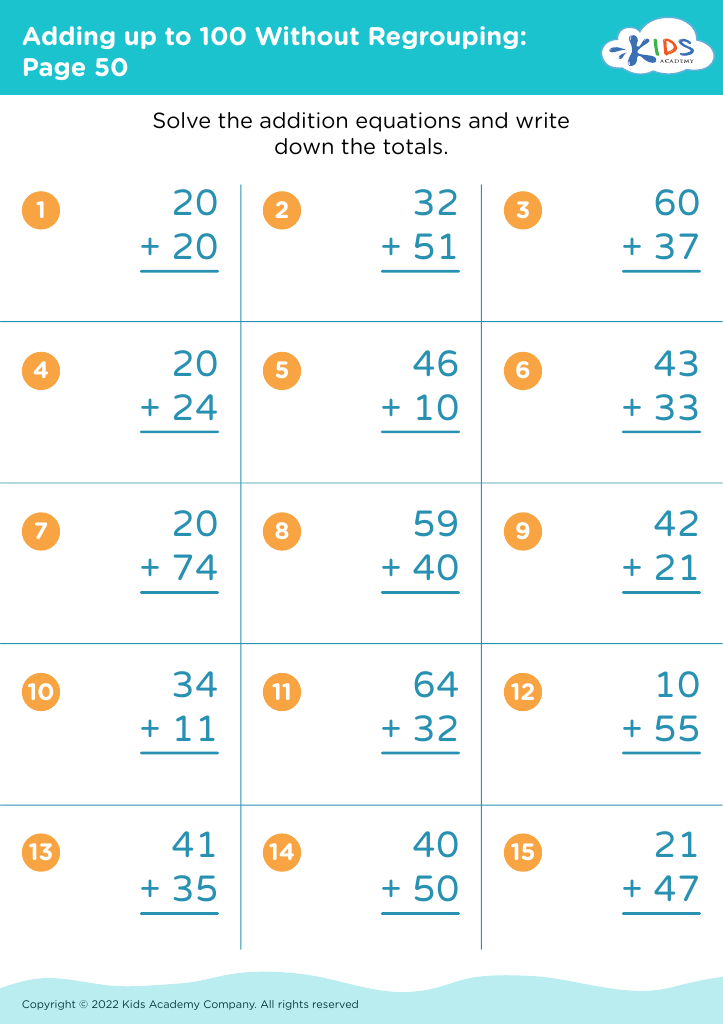
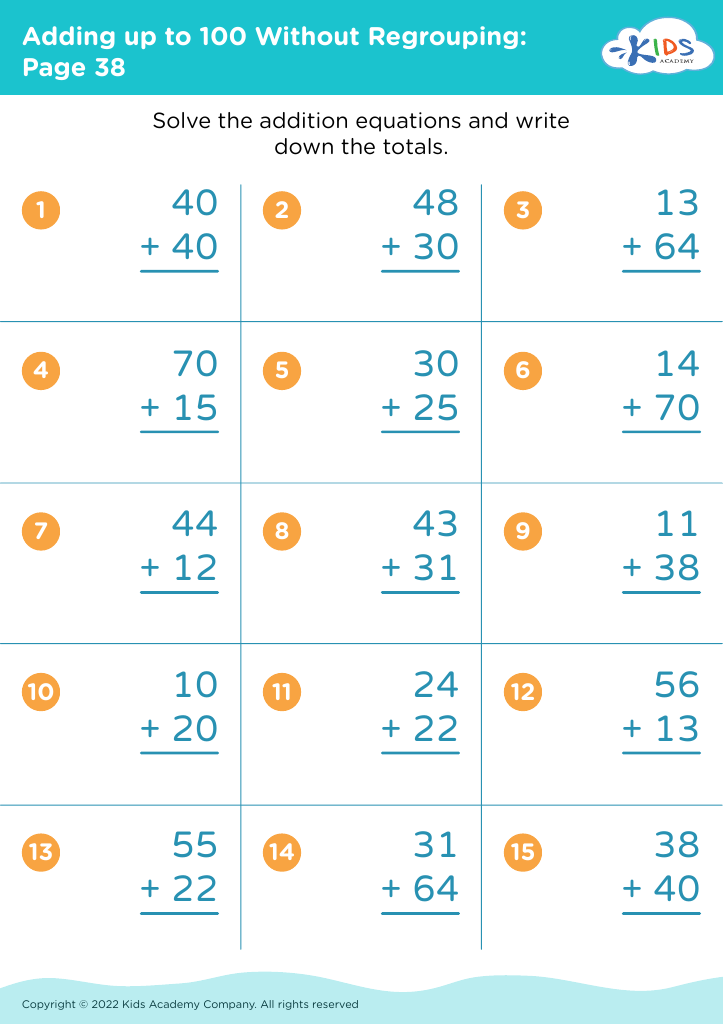




Basic math skills, especially adding up to 100 without regrouping, are foundational for children ages 3-8 and significantly influence their long-term academic success. During these formative years, children develop critical thinking and problem-solving abilities, and mastering simple addition fosters confidence and a positive attitude toward mathematics.
When children grasp the concept of addition up to 100, it enhances their numerical fluency, which supports more complex mathematical learning later on. It allows for a better understanding of patterns, number relationships, and improves their ability to tackle everyday tasks involving numbers, such as measuring, budgeting, and resource management.
For parents and teachers, fostering these skills can be a collaborative and enjoyable journey. Engaging children in simple addition activities and games not only reinforces learning but also strengthens the child-caregiver relationship. Additionally, early proficiency in math equips children with essential life skills, making them more competent and confident individuals.
Furthermore, math skills are increasingly integrated into science, technology, engineering, and math (STEM) education. Therefore, laying a strong foundation in basic math not only prepares children for future academic disciplines but also opens avenues for them in a rapidly evolving world. In essence, nurturing these skills today leads to a more capable and confident learner tomorrow.