Fine Motor Skills Adding up to 100 Without Regrouping Worksheets for Ages 3-8
4 filtered results
-
From - To
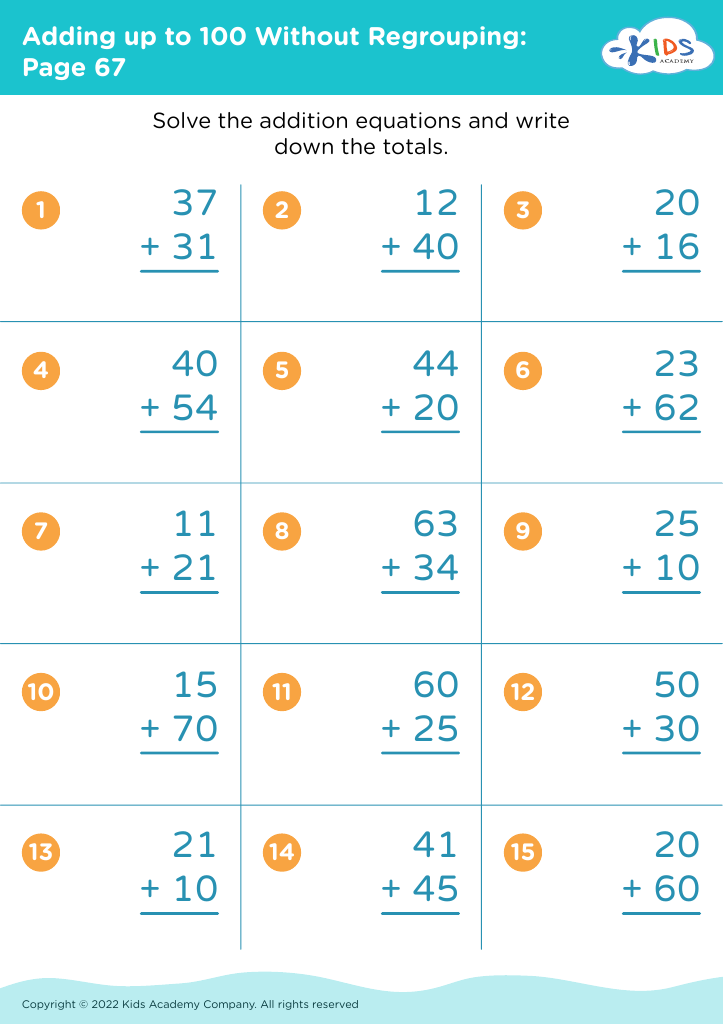
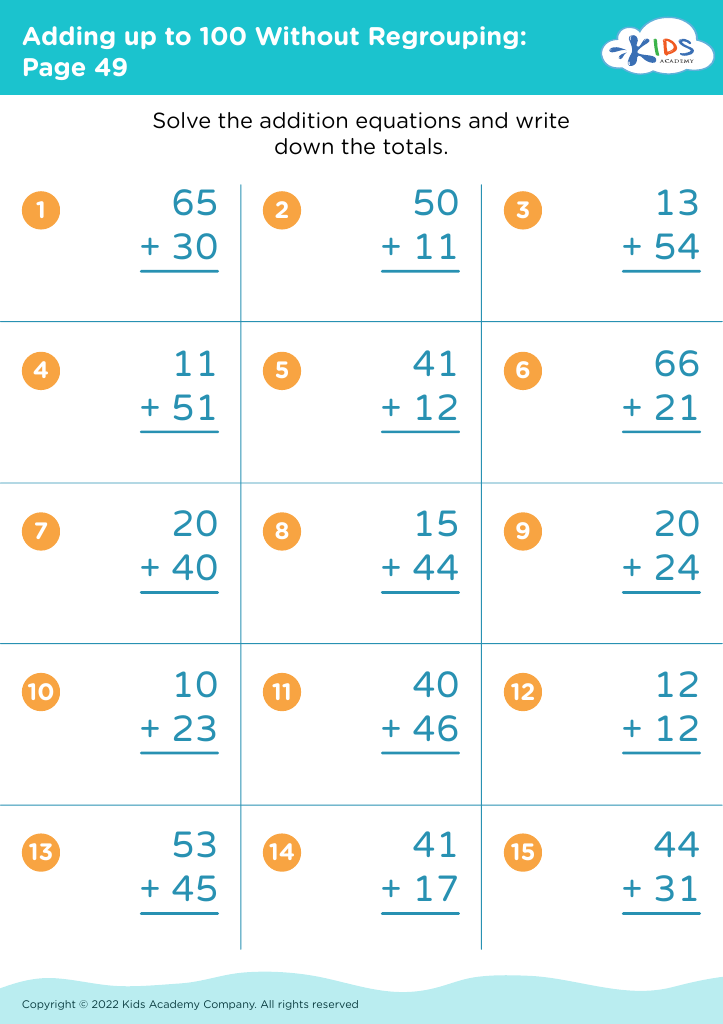
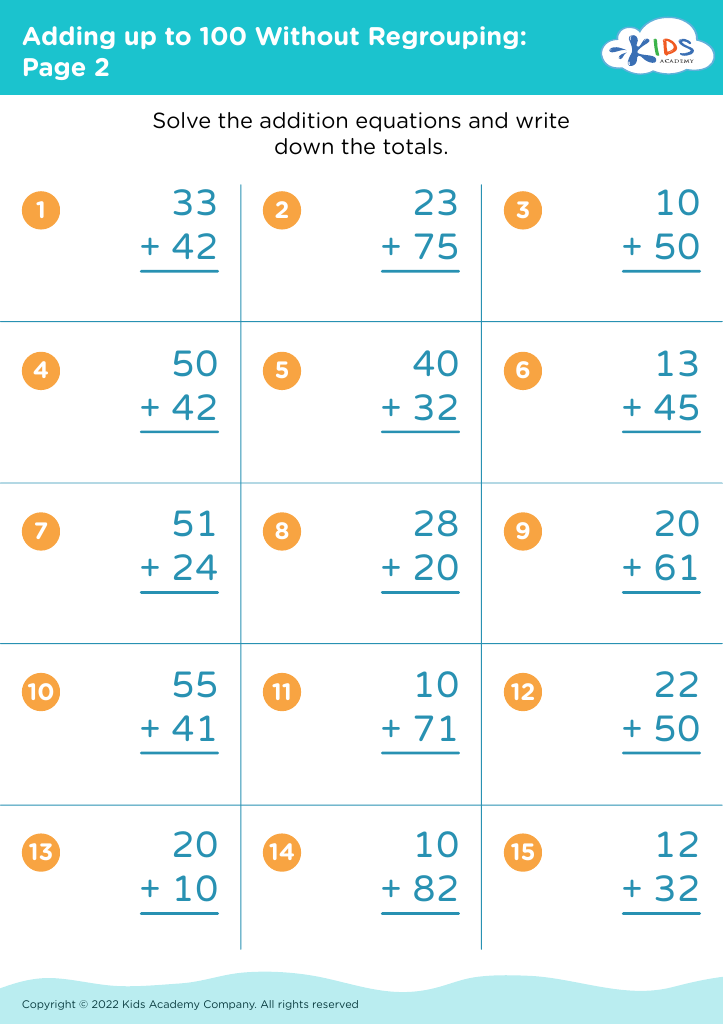
Enhance your child’s math abilities and fine motor skills with our "Fine Motor Skills Adding up to 100 Without Regrouping Worksheets for Ages 3-8." Specially designed for young learners, these worksheets focus on addition within 100 without the complexity of regrouping, making it easier for kids to grasp basic arithmetic principles. Engaging and fun, each worksheet not only hones their mathematical skills but also develops precision, hand-eye coordination, and dexterity. Perfect for classroom or home use, our colorful and interactive sheets are an excellent resource for both educators and parents committed to their child’s early math success.
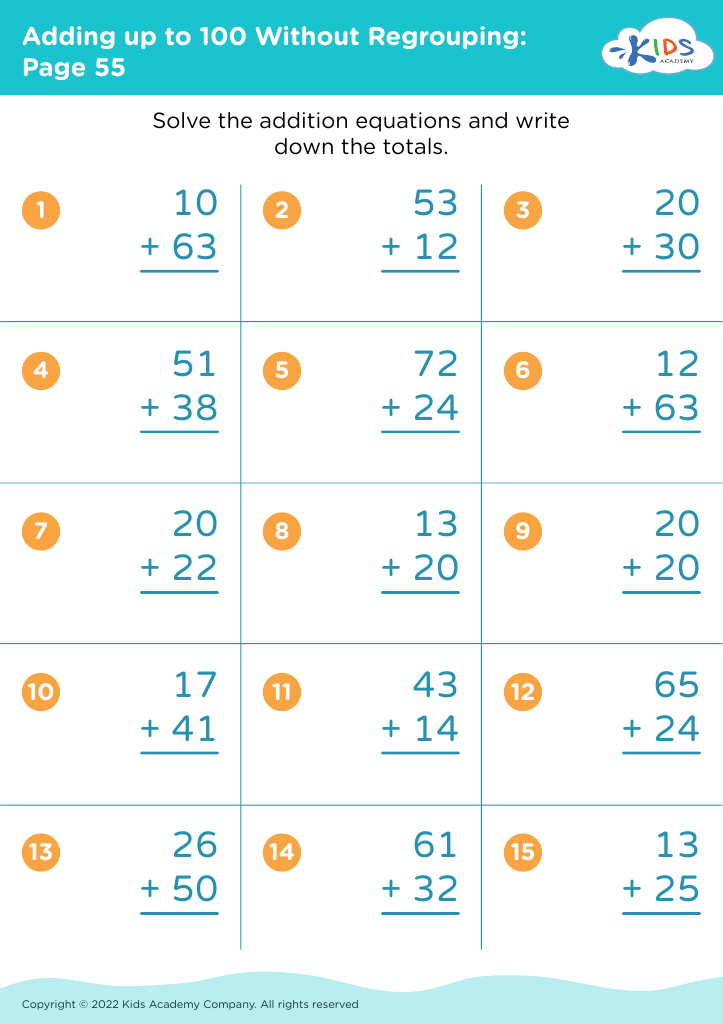




Fine motor skills and the ability to perform basic arithmetic, such as adding up to 100 without regrouping, are crucial for children ages 3-8 as they directly impact their overall development and academic success. Fine motor skills involve the coordination of small muscles, especially in the hands and fingers, which are essential for tasks like holding a pencil, cutting with scissors, or buttoning clothes. When children develop these skills early on, they gain the dexterity necessary for more complex activities, ultimately fostering independence and confidence.
Simultaneously, grasping the basics of arithmetic instills foundational numeracy skills crucial for more advanced mathematical concepts later on. By learning to add numbers up to 100 without regrouping, children enhance their ability to understand numbers and their relationships, which bolsters problem-solving and logical thinking skills. These experiences also build a child's perseverance and focus.
Parents and teachers play a vital role in nurturing these skills through engaging and age-appropriate activities, such as puzzles, block play, and simple addition exercises. By prioritizing fine motor skills and early arithmetic, they set children on a path towards academic achievement and essential life skills, creating a balanced and holistic educational foundation.