Number Recognition Adding up to 100 Without Regrouping Worksheets for Ages 3-8
8 filtered results
-
From - To
Help your child master number recognition and addition with our engaging worksheets designed for ages 3-8. These "Adding Up to 100 Without Regrouping" worksheets focus on building a strong numerical foundation while reinforcing basic math skills. Children will enjoy fun and interactive exercises that encourage fluent addition up to 100, all without the complexity of regrouping. Perfect for at-home learning or classroom activities, these resources foster confidence and understanding in young learners. Boost your child's math prowess and make learning enjoyable with our carefully crafted worksheets that align with early education standards. Start exploring today for a brighter mathematical future!
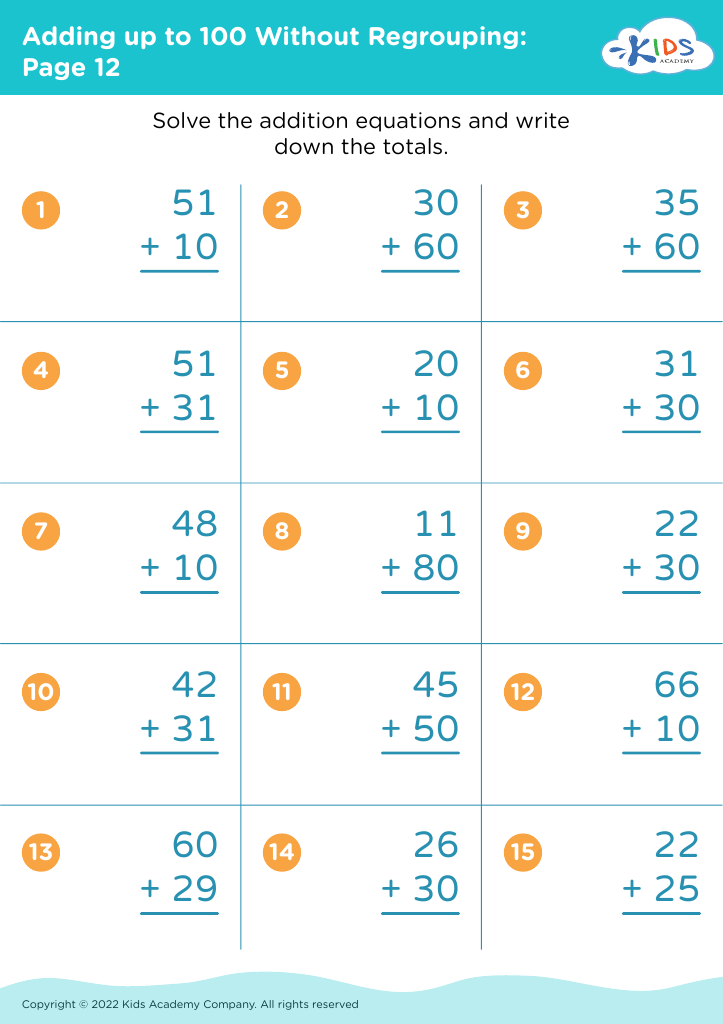
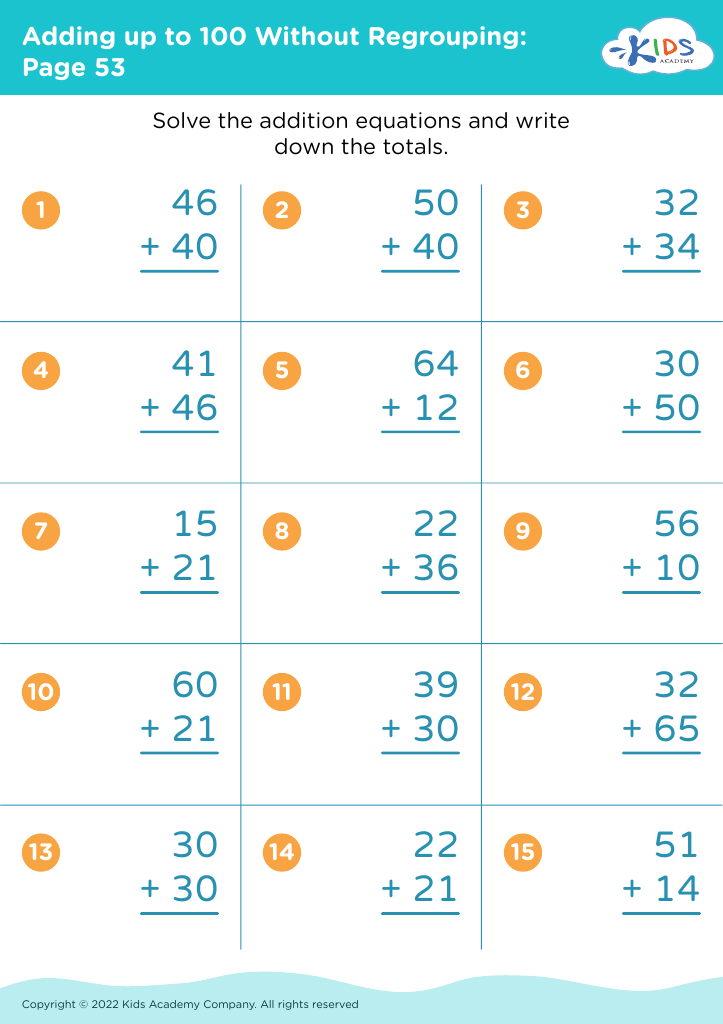
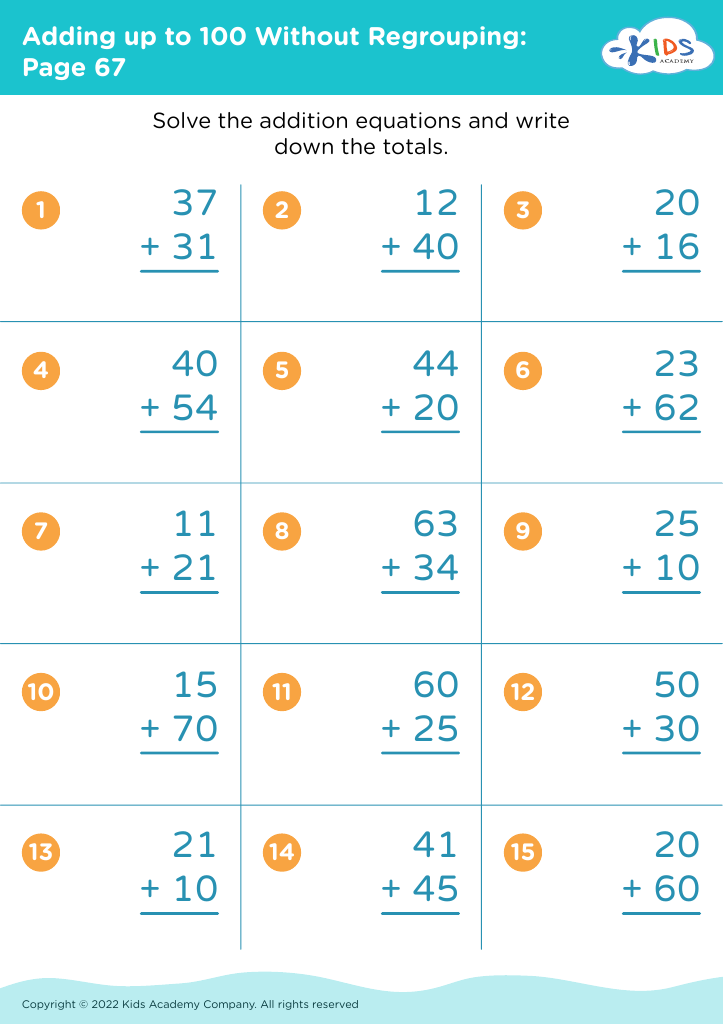
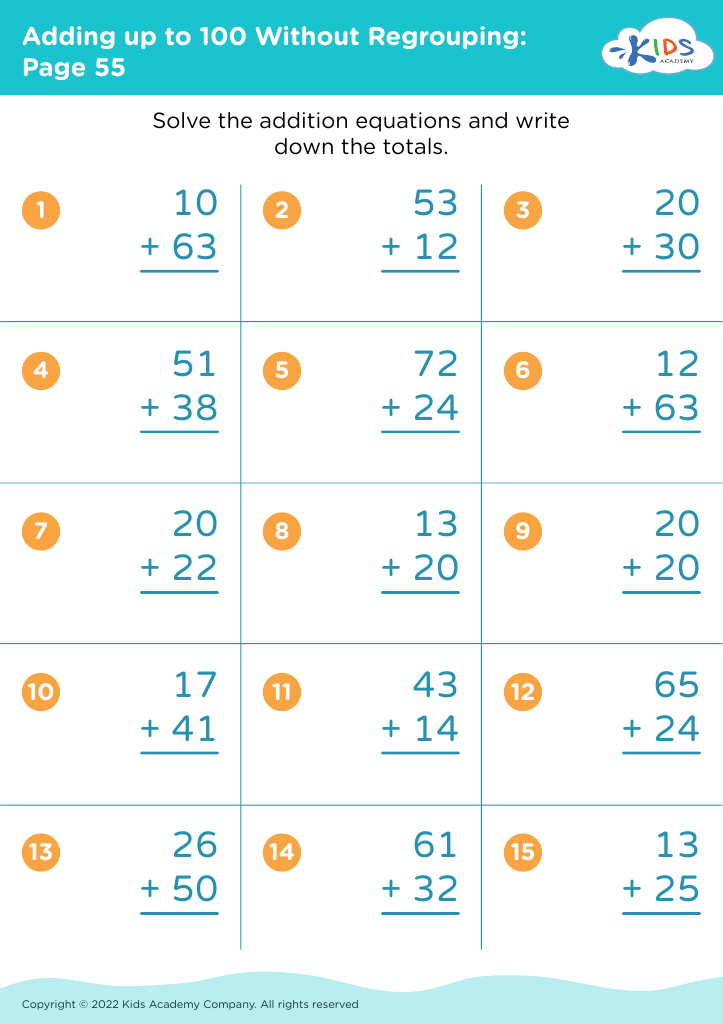
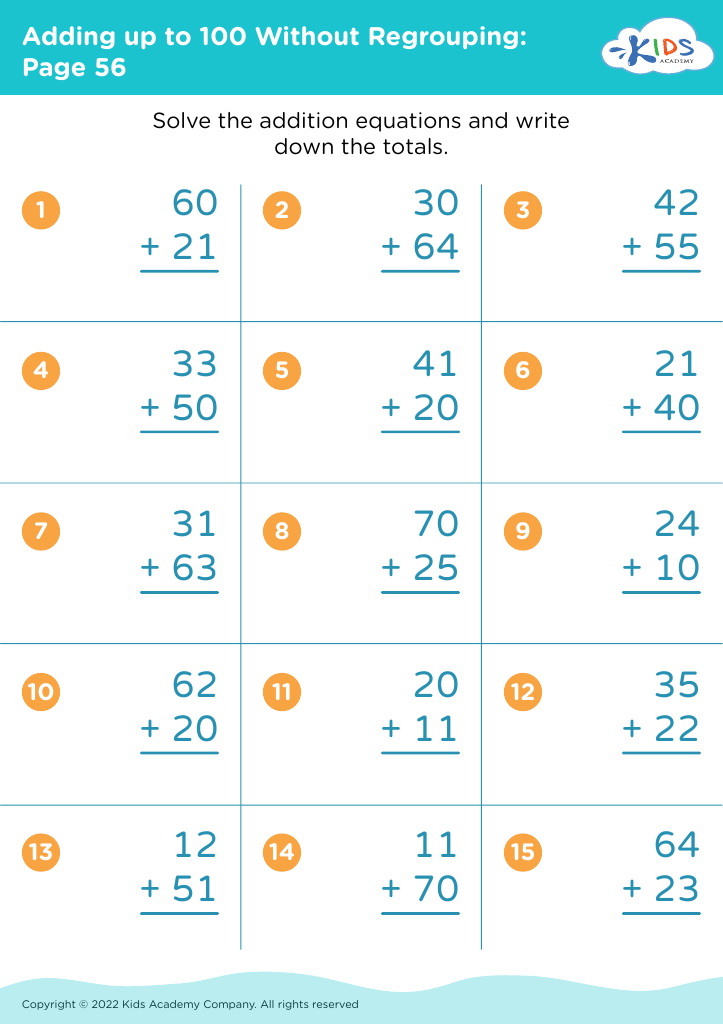
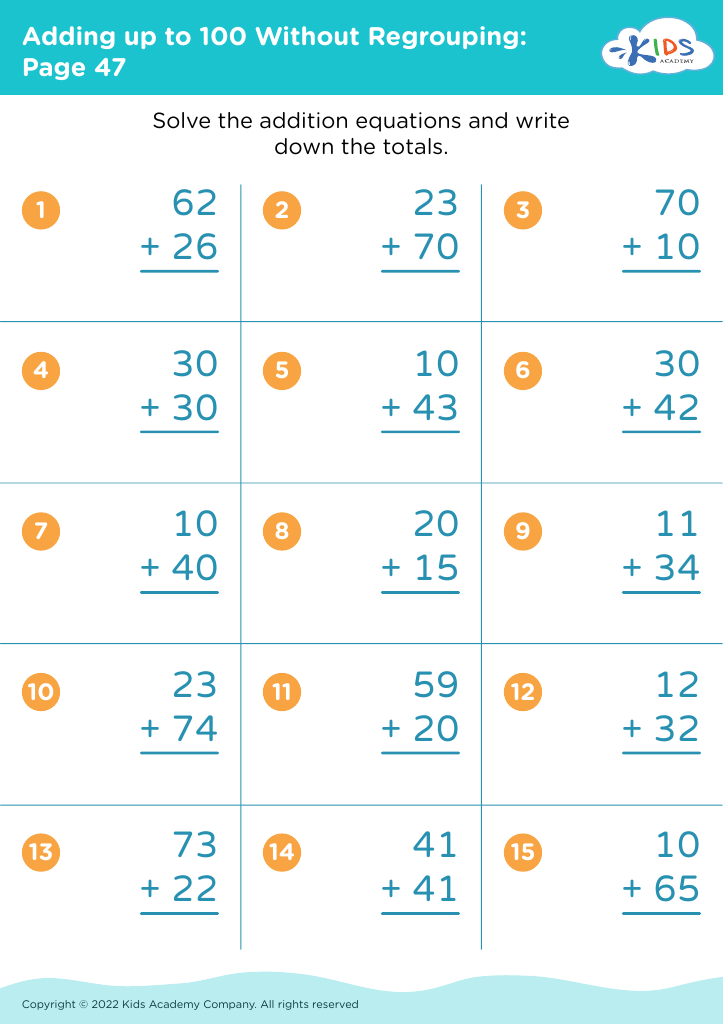
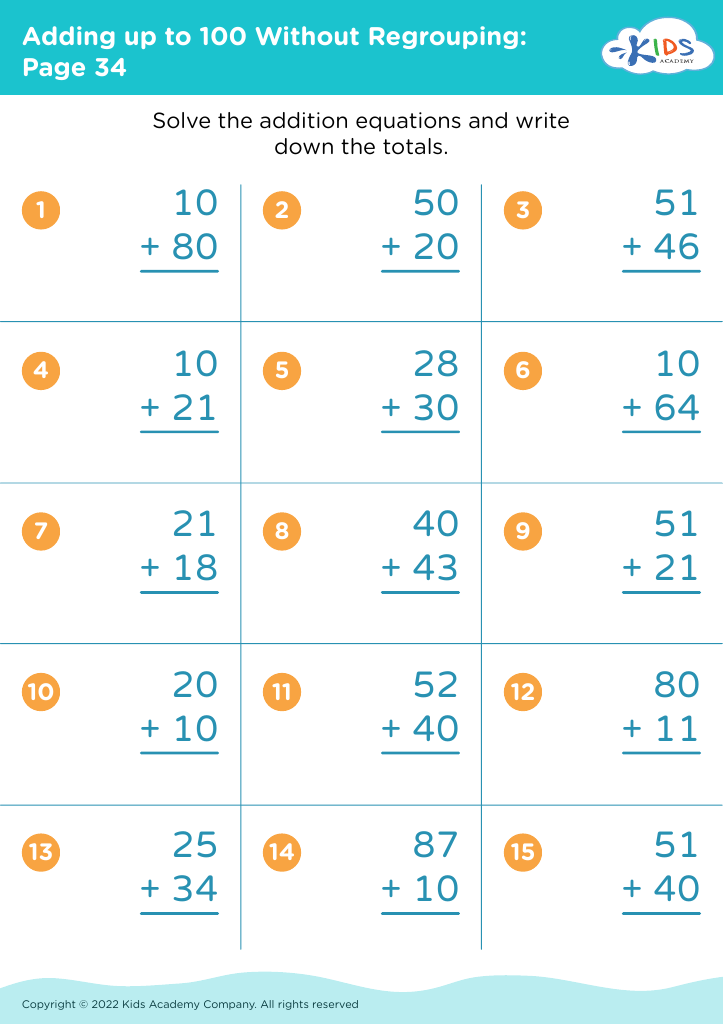
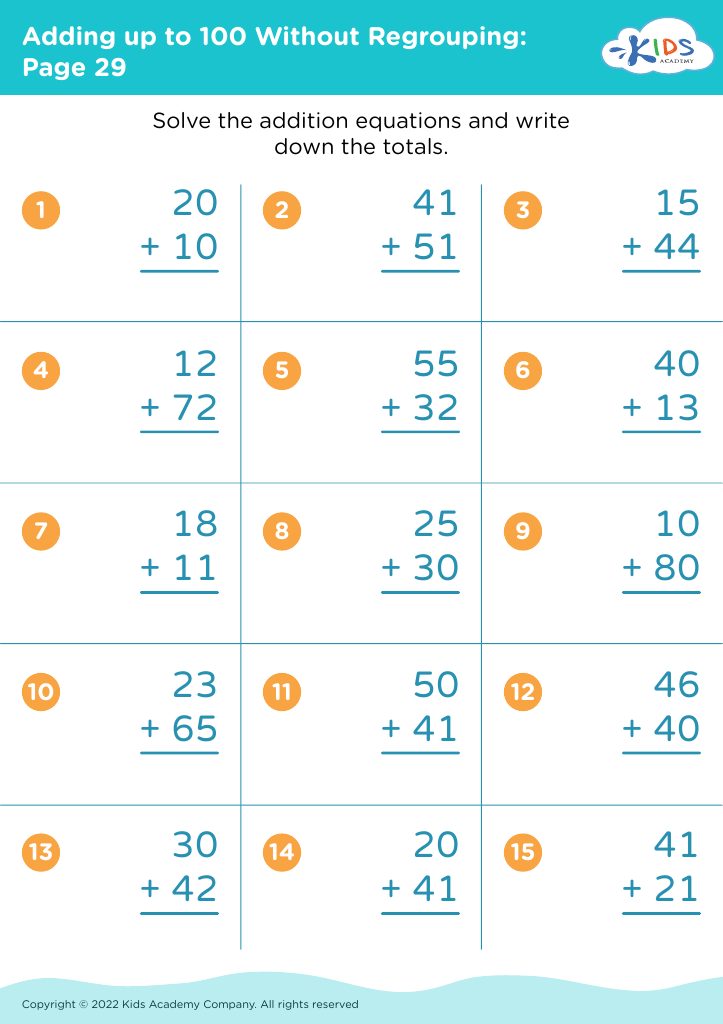




Number recognition and mastering the ability to add up to 100 without regrouping are foundational skills for children ages 3-8. These skills lay the groundwork for future mathematical understanding and facilitate cognitive development. Firstly, number recognition helps children identify and understand numbers, fostering their ability to connect numerical symbols with quantities. This is crucial as it impacts their ability to perform basic calculations and solve problems in daily life and advanced mathematical concepts in the future.
Moreover, being able to add without regrouping enhances a child’s proficiency in mental math, which boosts their confidence and independence in handling numbers. This skill is particularly important as it supports their understanding of place value and arithmetic operations, ultimately contributing to stronger mathematical reasoning.
For educators and parents, emphasizing these skills allows children to engage with mathematics meaningfully, making it less abstract. Incorporating fun and playful learning activities can significantly enrich their learning experience, helping them to develop a positive attitude toward mathematics. Therefore, prioritizing number recognition and addition without regrouping not only aids children’s educational development but also cultivates essential skills that will serve them for years to come. Engaging in these foundational skills nurtures a generation confident in tackling mathematical challenges.