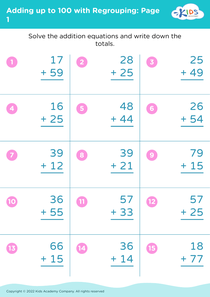
Understanding fractions Adding up to 100 Without Regrouping Worksheets for Ages 3-8

Filters

19 filtered results

Clear all filters
Favorites
With answer key
Interactive

19 filtered results

Difficulty Level

Grade


Our "Understanding Fractions: Adding Up to 100 Without Regrouping" worksheets are designed for children ages 3-8. These worksheets help kids easily grasp basic fraction concepts while practicing addition up to 100 without the need to regroup. Engaging and educational, these activities bolster essential math skills through fun exercises and colorful visuals. Ideal for early learners, these resources make fraction comprehension and addition a breeze, preparing young minds for more advanced mathematical challenges. Perfect for use at home or in the classroom, these worksheets offer a solid foundation in math through interactive and stimulating practice.
Check out this FREE Trial Lesson on Adding up to 100 Without Regrouping for age 3-8!

Match Exactly the Same

Favorites
With answer key
Interactive
  • 3-8
  • Understanding fractions
  • Adding up to 100 Without Regrouping
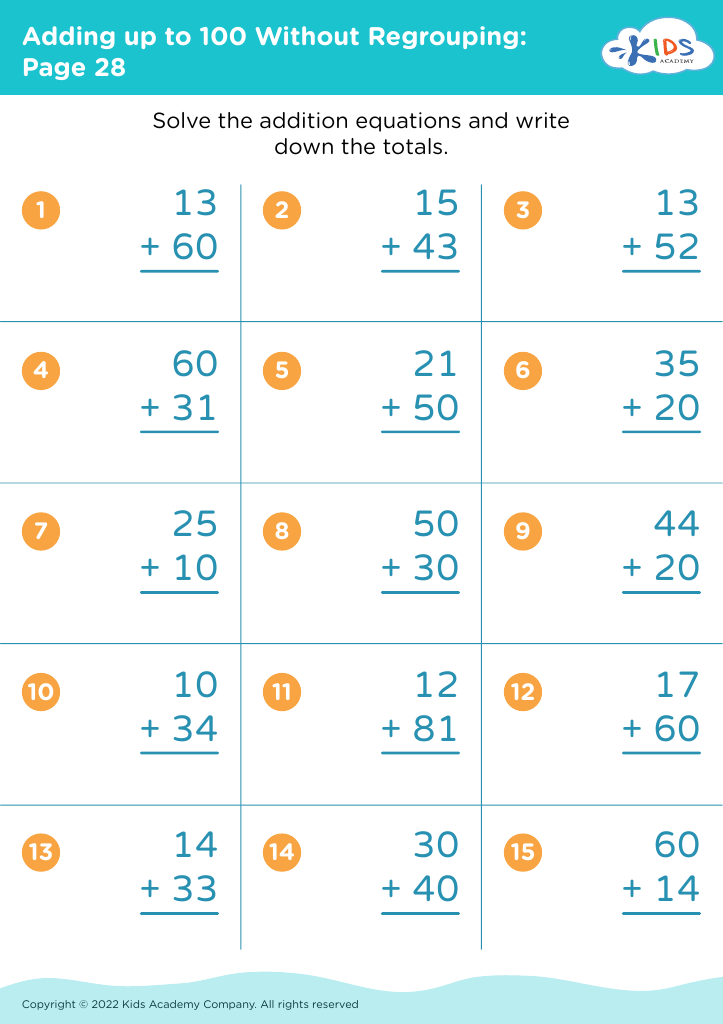
Adding up to 100 Without Regrouping: Page 28
Worksheet
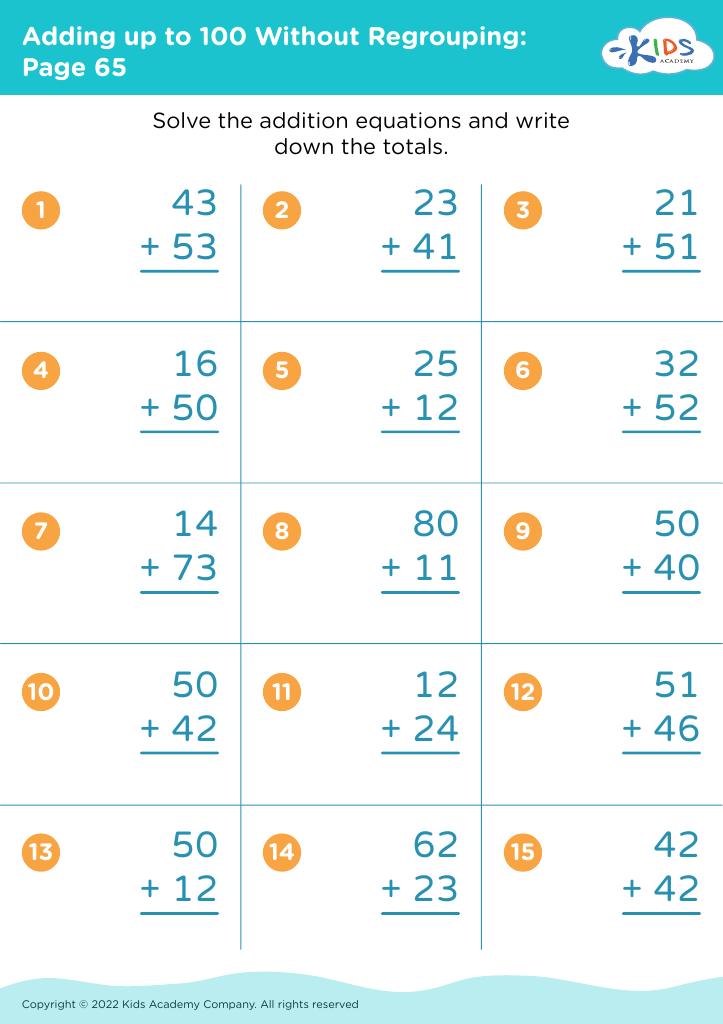
Adding up to 100 Without Regrouping: Page 65
Worksheet
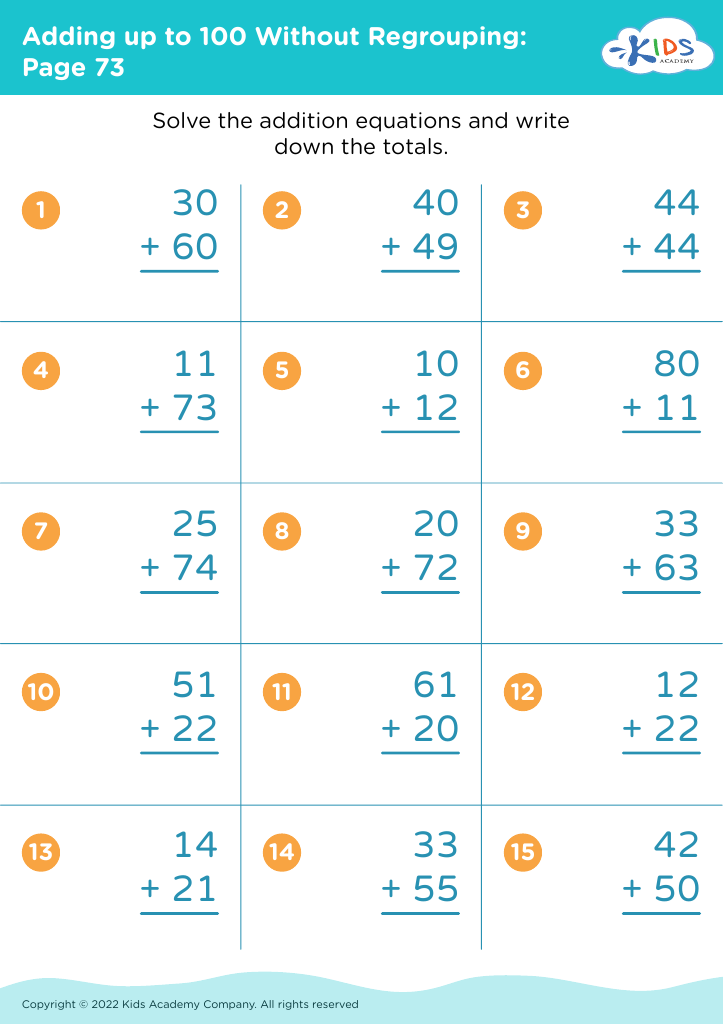
Adding up to 100 Without Regrouping: Page 73
Worksheet
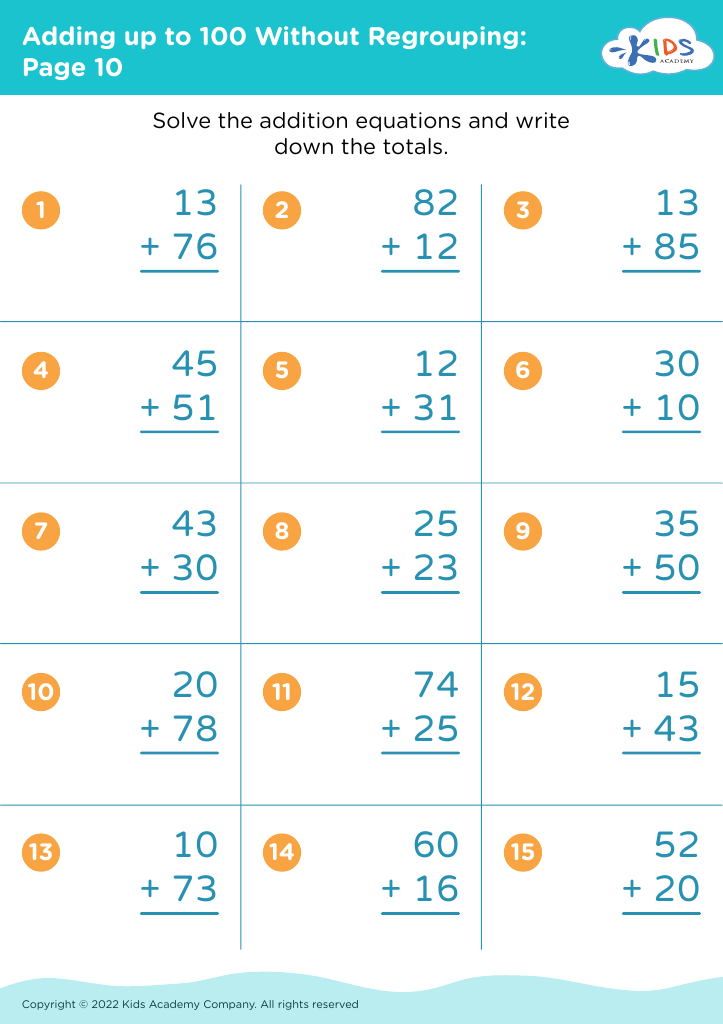
Adding up to 100 Without Regrouping: Page 10
Worksheet
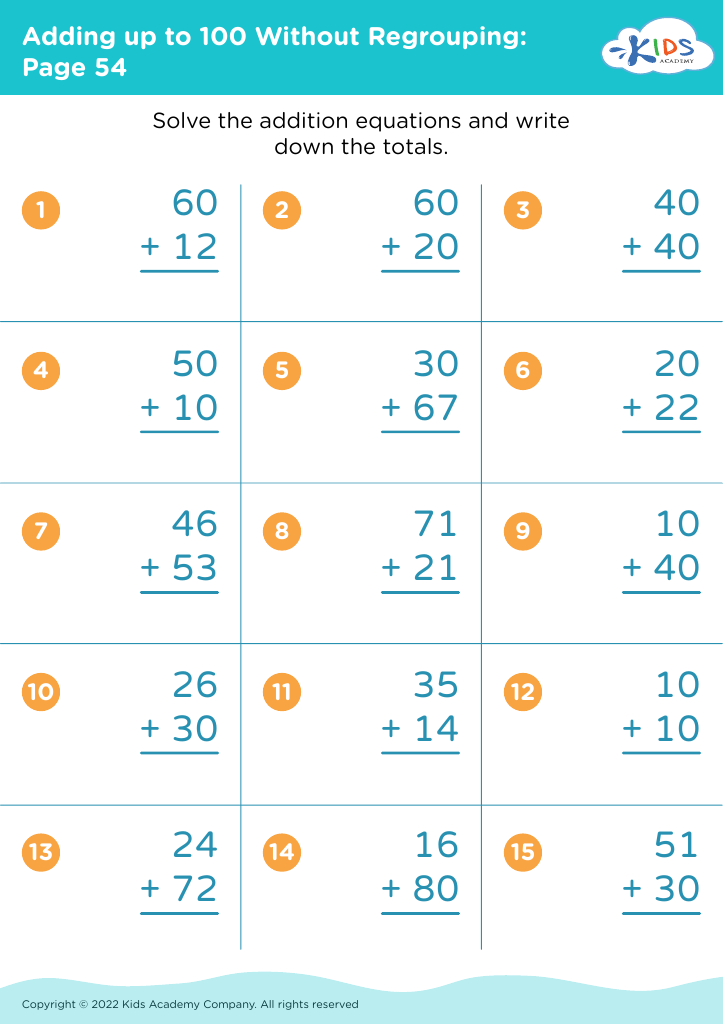
Adding up to 100 Without Regrouping: Page 54
Worksheet
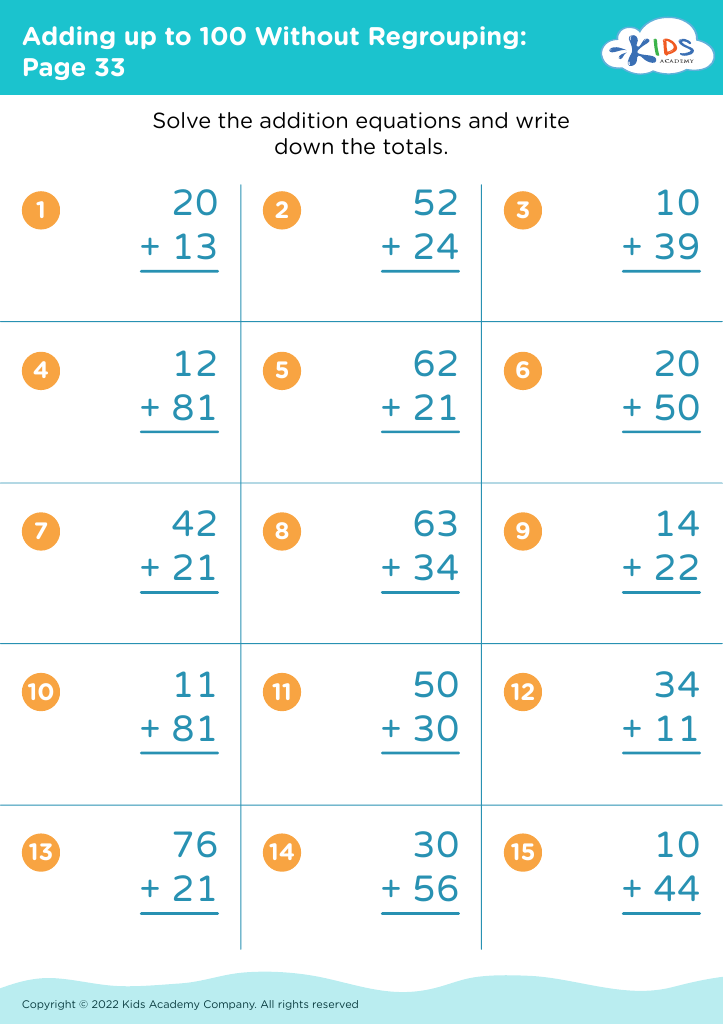
Adding up to 100 Without Regrouping: Page 33
Worksheet
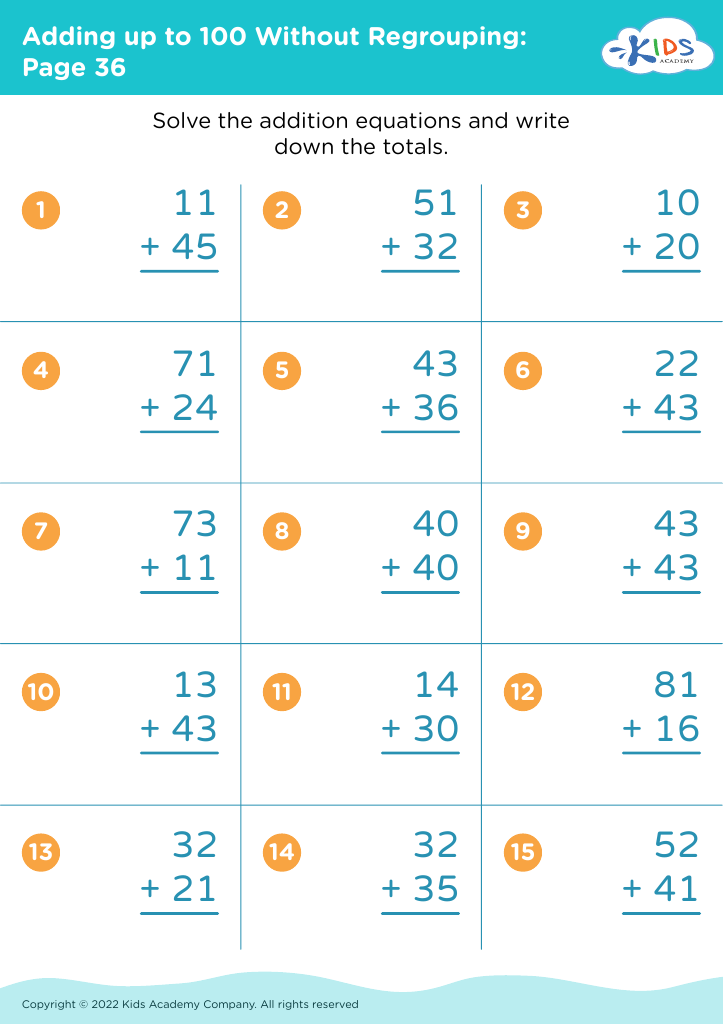
Adding up to 100 Without Regrouping: Page 36
Worksheet
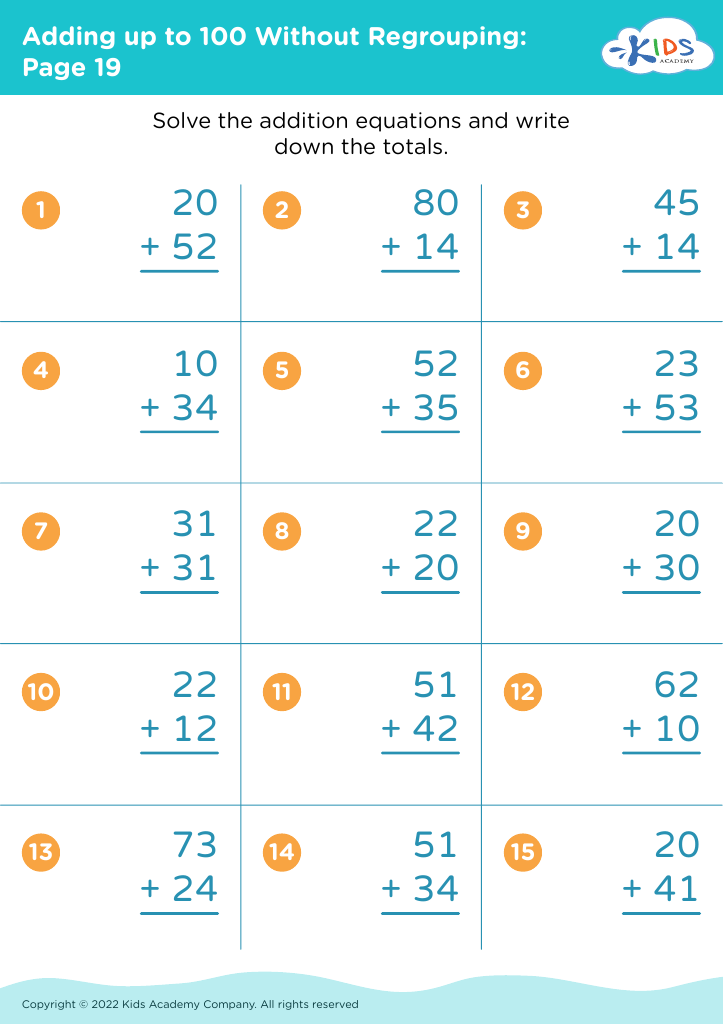
Adding up to 100 Without Regrouping: Page 19
Worksheet
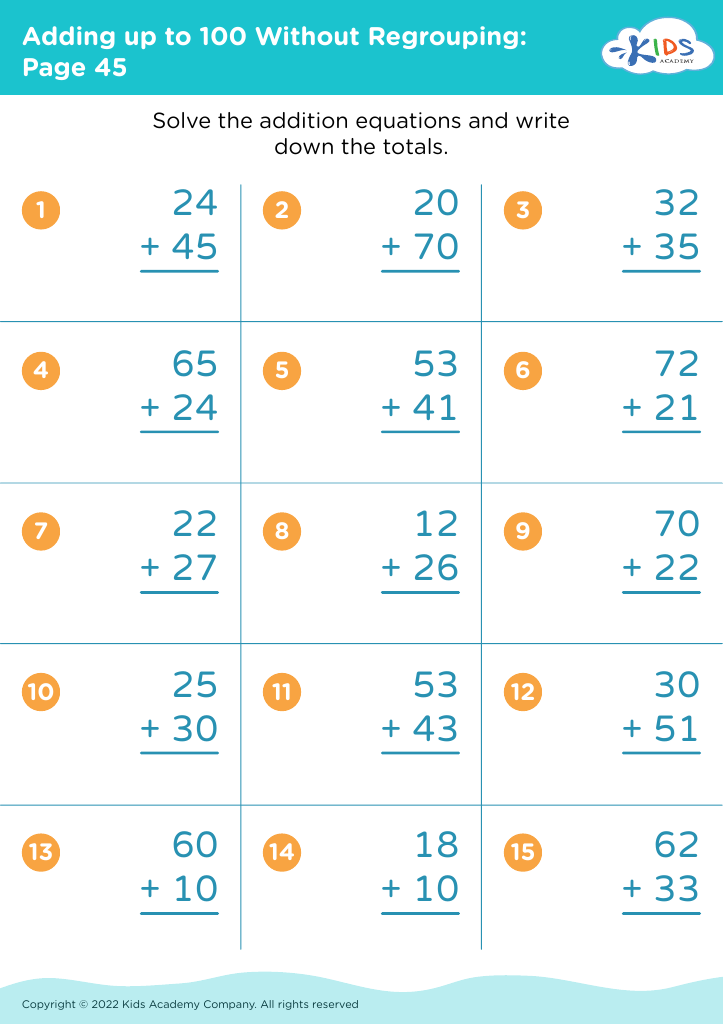
Adding up to 100 Without Regrouping: Page 45
Worksheet
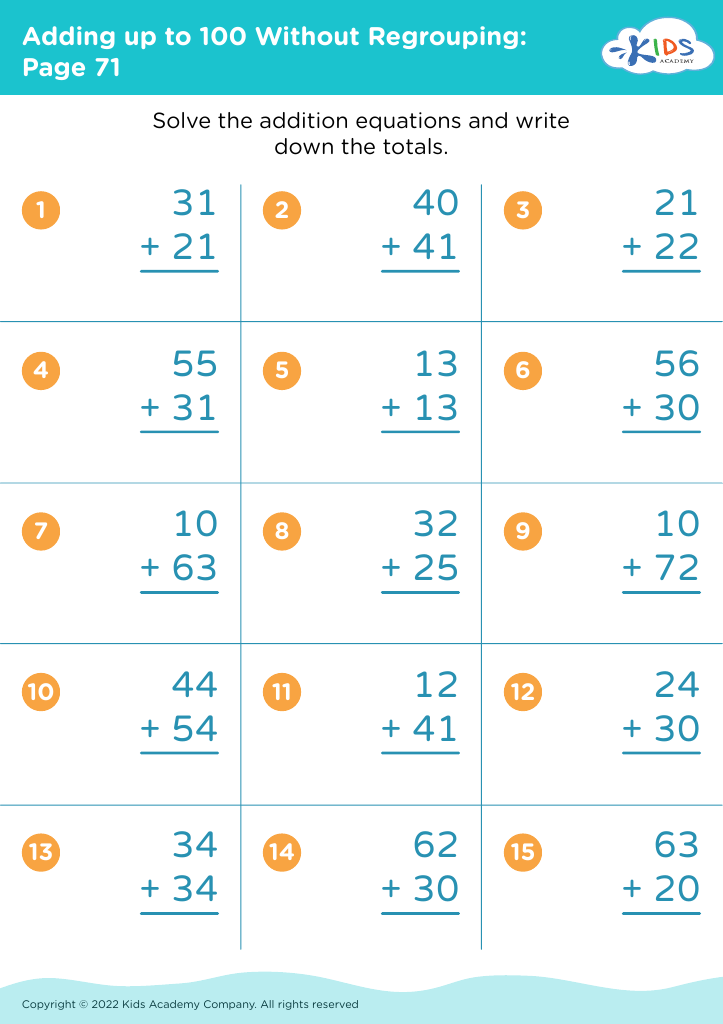
Adding up to 100 Without Regrouping: Page 71
Worksheet
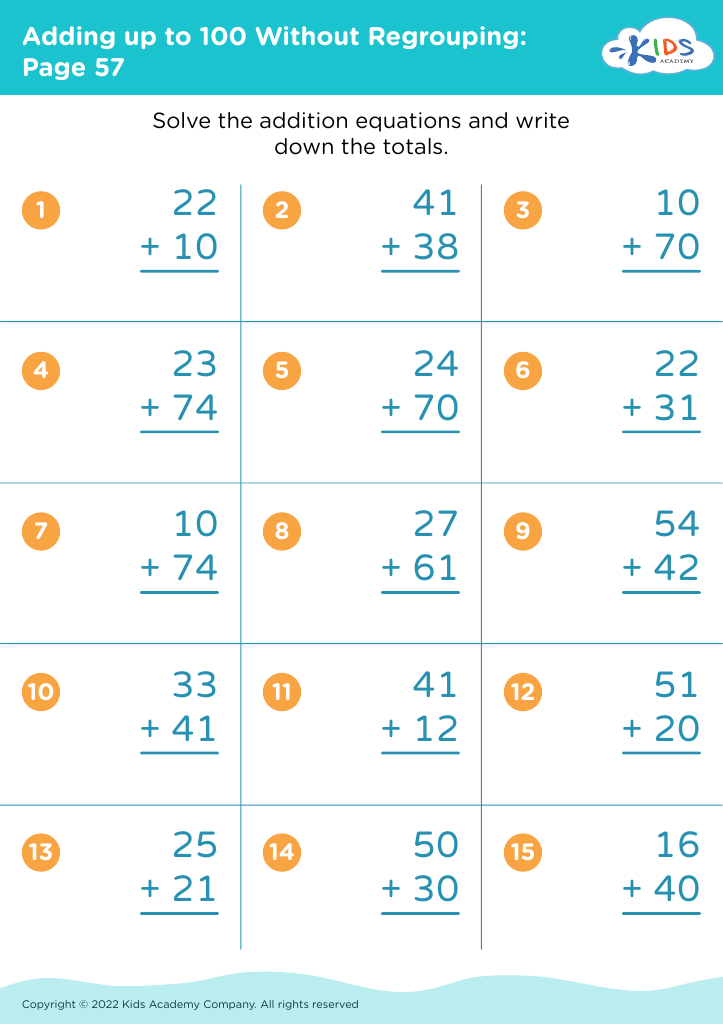
Adding up to 100 Without Regrouping: Page 57
Worksheet
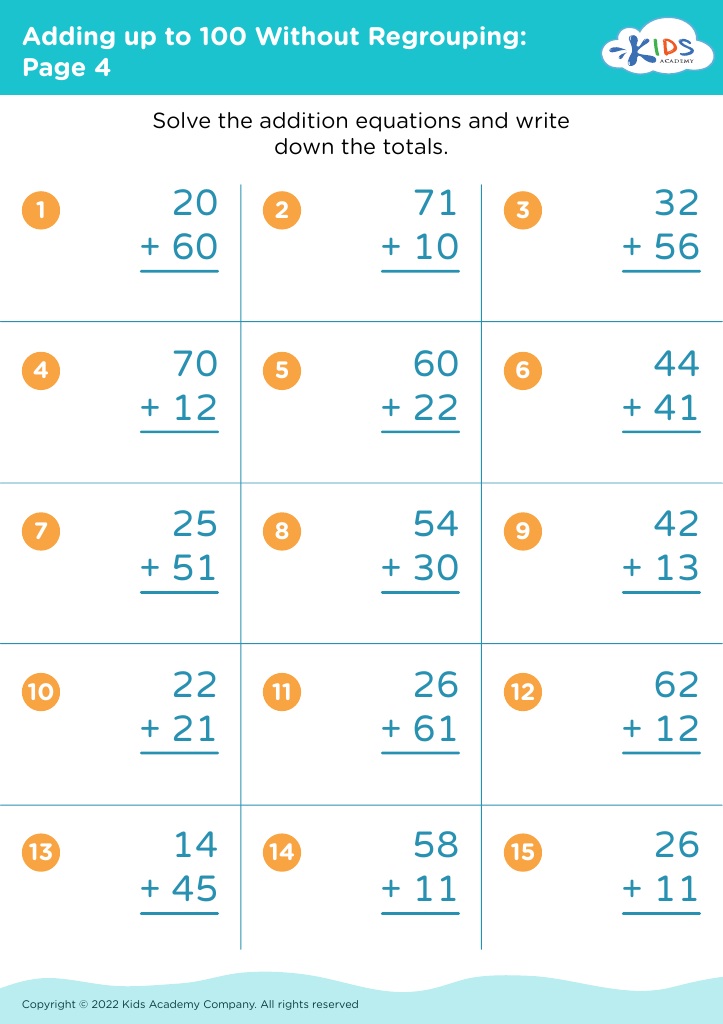
Adding up to 100 Without Regrouping: Page 4
Worksheet
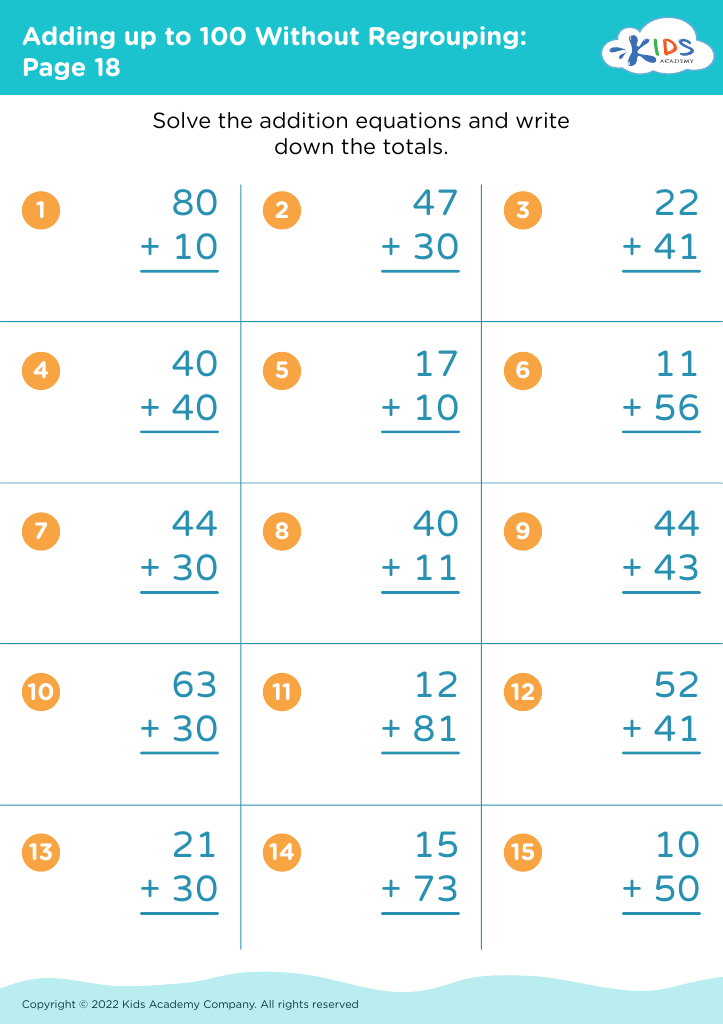
Adding up to 100 Without Regrouping: Page 18
Worksheet
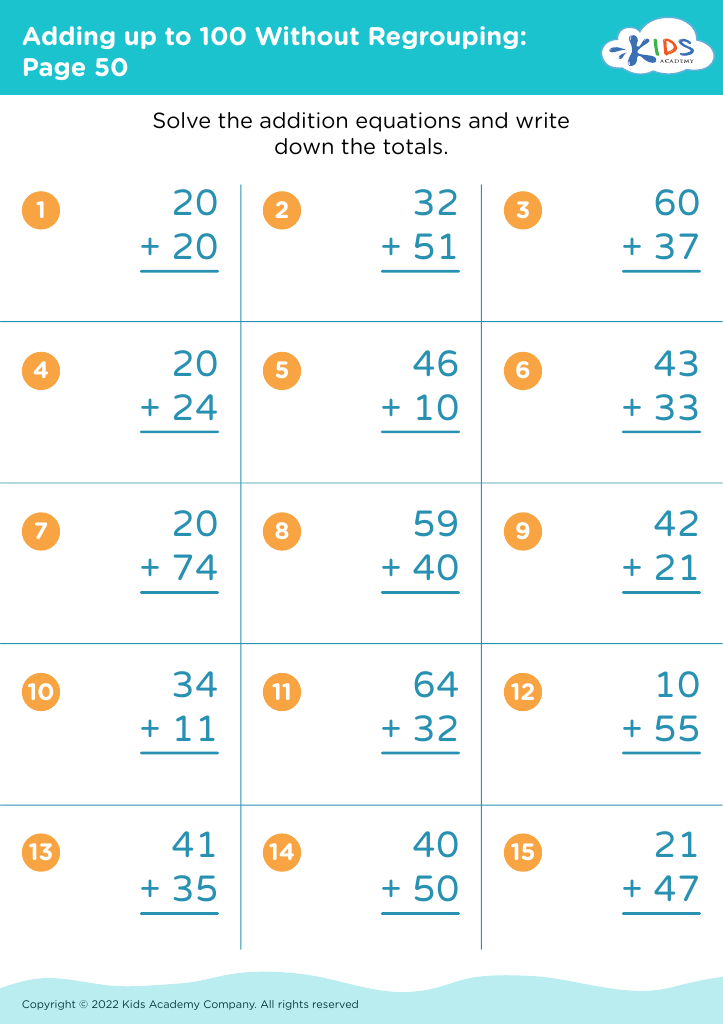
Adding up to 100 Without Regrouping: Page 50
Worksheet
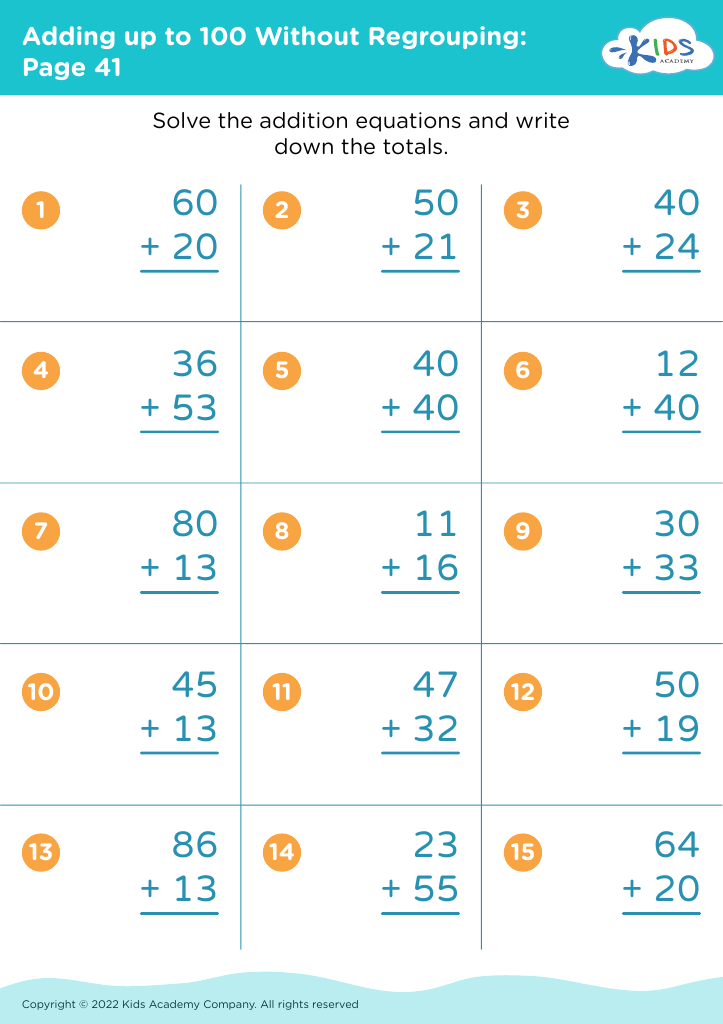
Adding up to 100 Without Regrouping: Page 41
Worksheet
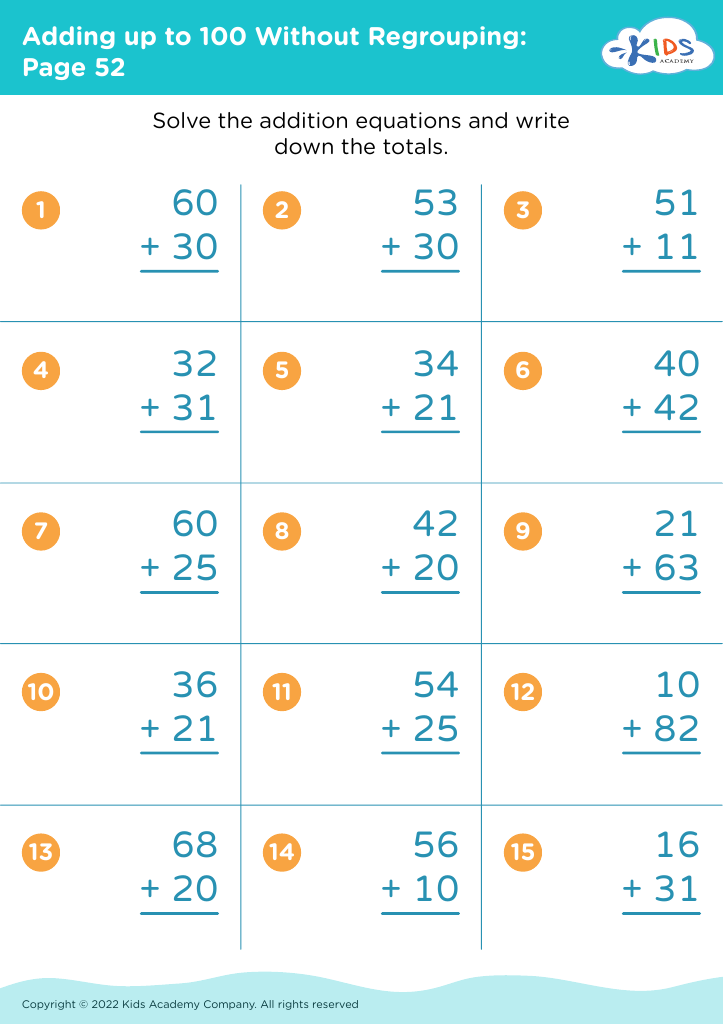
Adding up to 100 Without Regrouping: Page 52
Worksheet
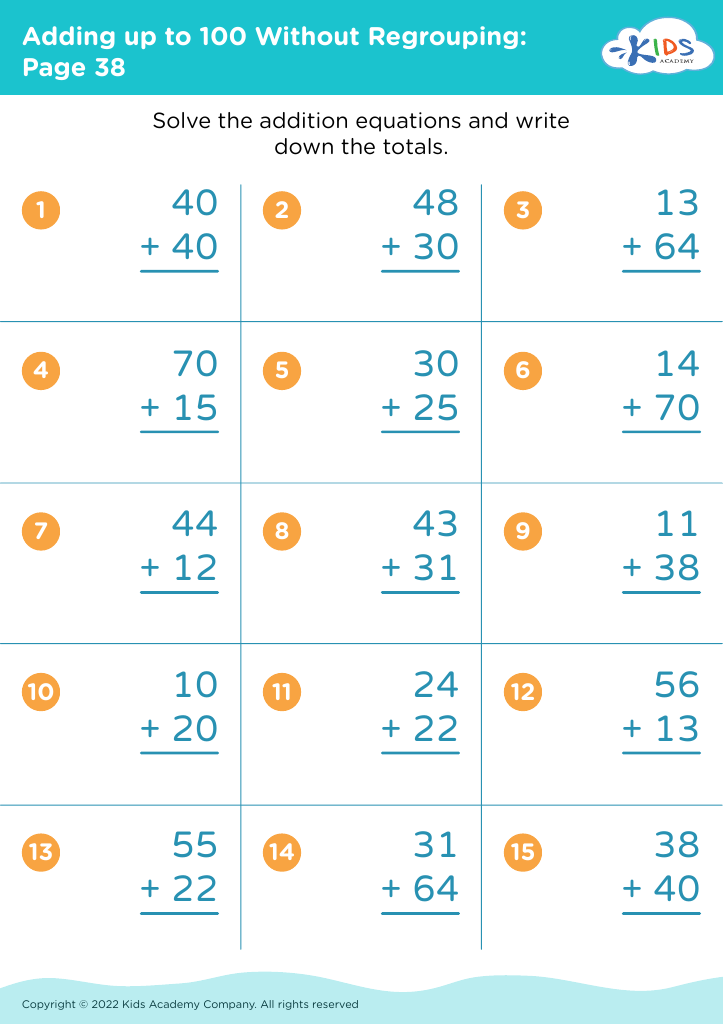
Adding up to 100 Without Regrouping: Page 38
Worksheet
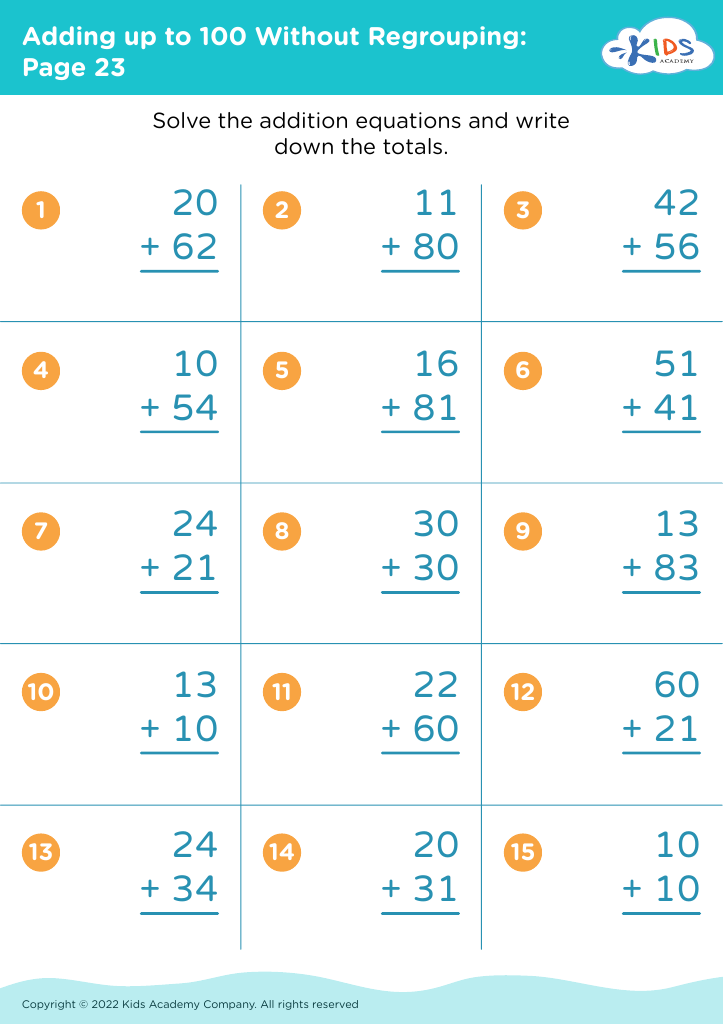
Adding up to 100 Without Regrouping: Page 23
Worksheet
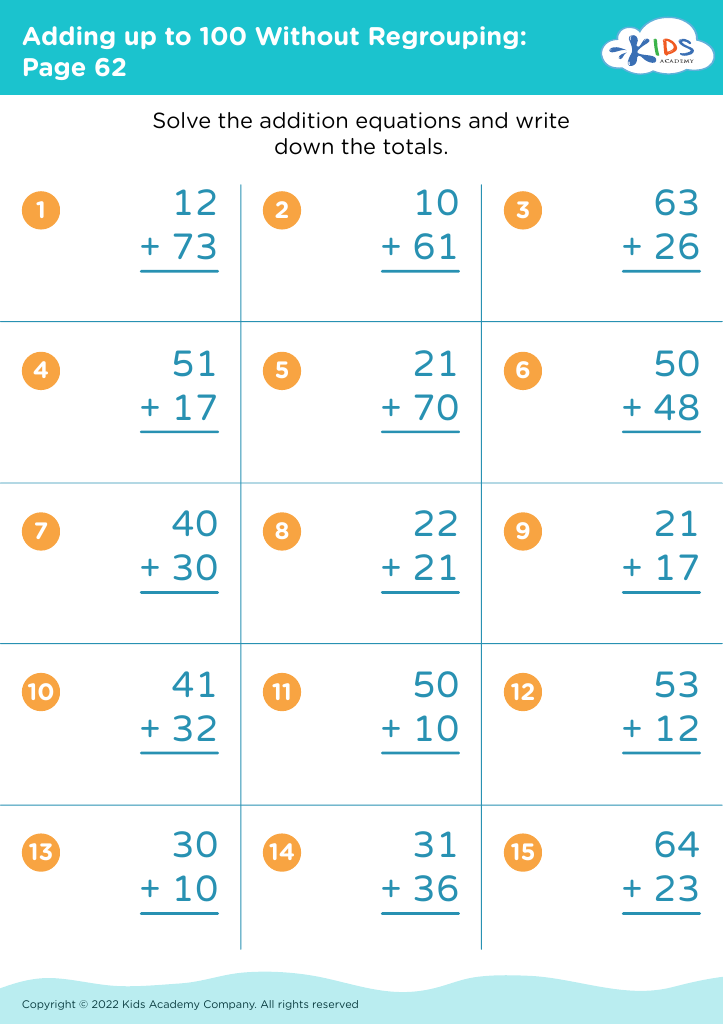
Adding up to 100 Without Regrouping: Page 62
Worksheet


Understanding fractions and addition up to 100 without regrouping is crucial for children aged 3-8 as these foundational skills pave the way for future mathematical success. Early comprehension of fractions helps children visualize and grasp the concept of parts making up a whole, fostering a more profound understanding of division and proportions they will encounter later in their education. When children intuitively grasp that a fraction represents a part of a set or whole, they build a strong numerical sense and see the relevance of math in everyday life, such as dividing an apple into parts or sharing candies equally.

Adding up to 100 without regrouping, on the other hand, hones basic arithmetic and mental calculation skills. It encourages children to understand place values, aiding in their comprehension of larger numbers and complex operations. These exercises not only reinforce addition facts and speed but also build confidence and enhance problem-solving abilities. Early proficiency in these areas ensures that children have a solid mathematical foundation, reducing cognitive load as they advance to more challenging concepts.

For parents and teachers, emphasizing fractions and addition up to 100 without regrouping equips children with essential tools for academic achievement and real-world applications. Providing a strong mathematical start fosters a positive attitude toward learning, eventually contributing to their overall cognitive development and future accomplishments.