Color recognition Adding up to 100 Worksheets for Ages 3-8
4 filtered results
-
From - To
Discover our engaging "Color Recognition Adding up to 100 Worksheets" designed for children aged 3 to 8. These fun, interactive worksheets cleverly combine math skills with color recognition, helping young learners enhance their understanding of numbers while visualizing colors. Each activity encourages kids to practice adding numbers up to 100, making learning both enjoyable and effective. Perfect for preschool, kindergarten, or early elementary students, these worksheets cater to various learning styles and aid in developing critical early skills. Give your child a head start in math and creativity with our vibrant and educational resources today!
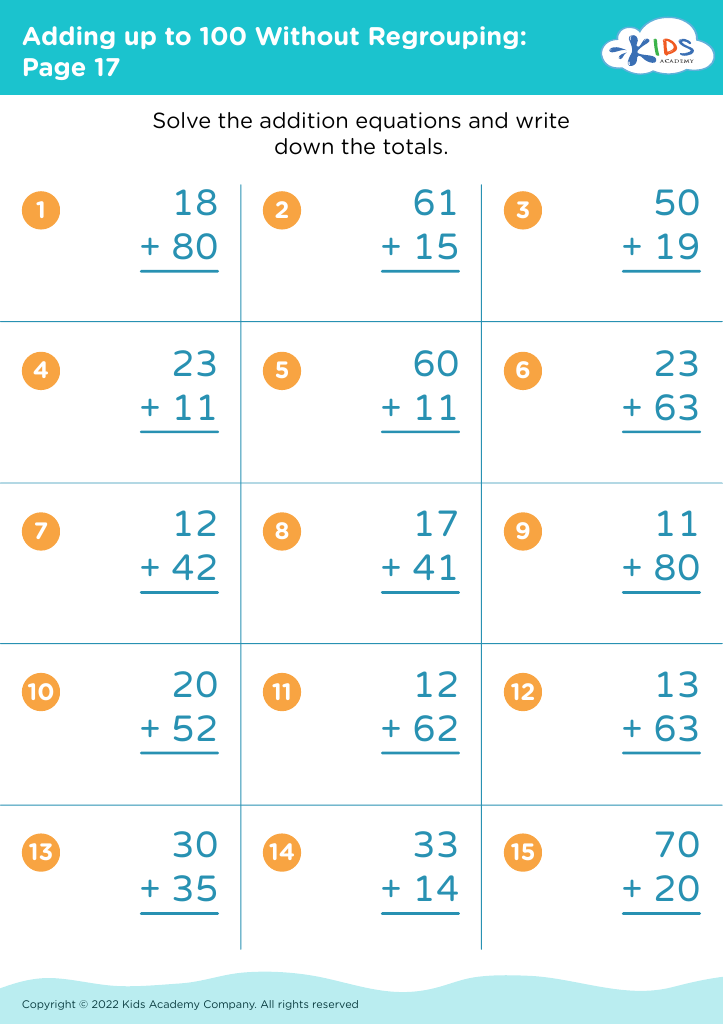
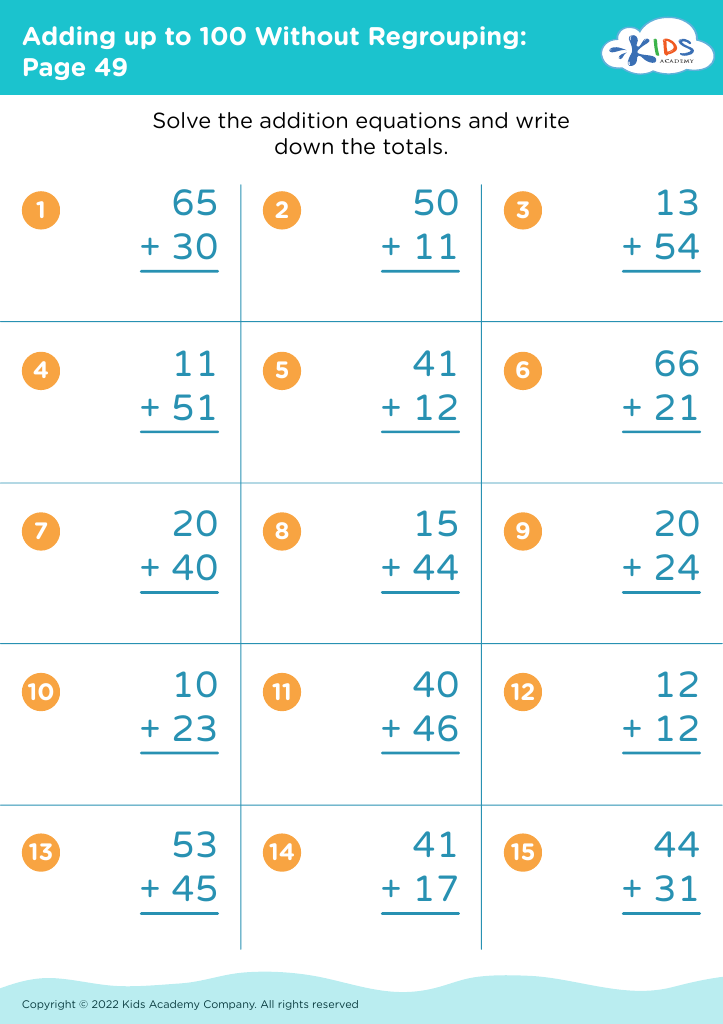
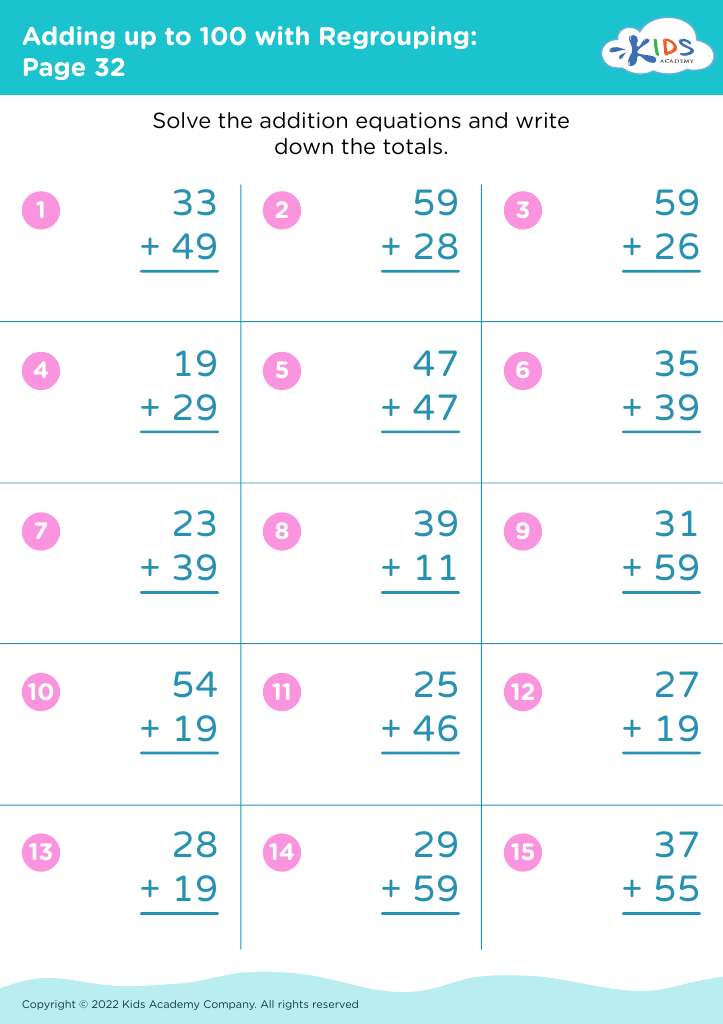
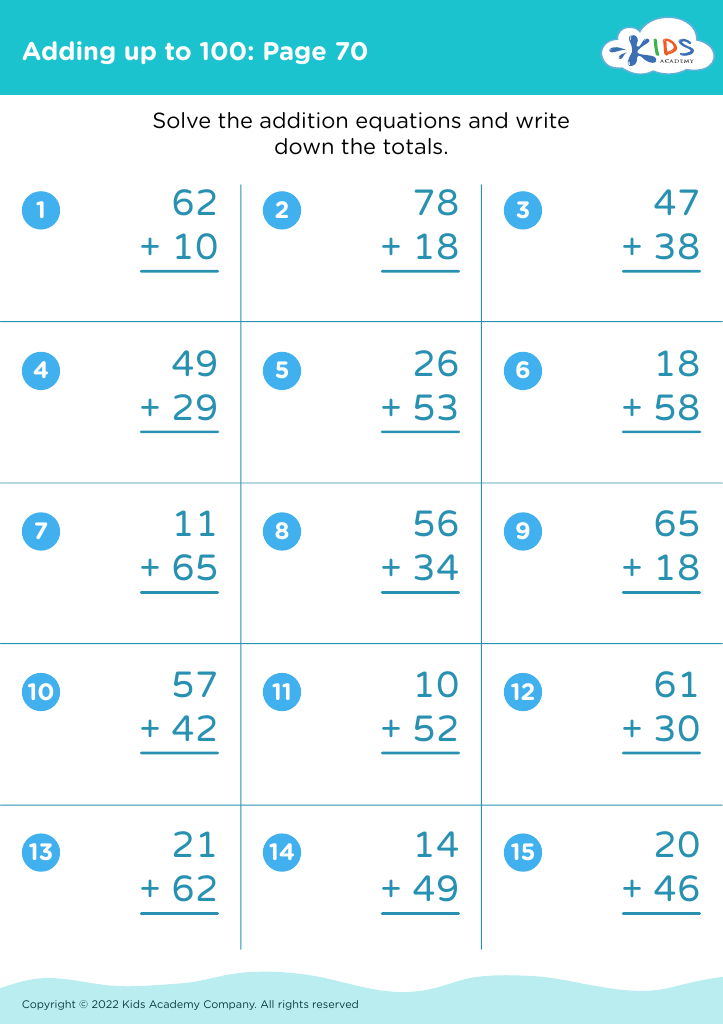




%20(1).jpg)


Color recognition and understanding basic arithmetic concepts, such as adding up to 100, are crucial developmental milestones for children aged 3-8. Parents and teachers should prioritize these skills for several reasons.
Firstly, color recognition forms the foundation of early learning. It enhances cognitive development by helping children categorize the world around them, improving their ability to make connections between objects and concepts. Colors are often the first form of communication for toddlers, influencing their ability to express preferences and engage in artistic activities.
Secondly, introducing numeracy concepts like addition fosters critical thinking and problem-solving skills. Learning to add numbers up to 100 not only lays the groundwork for future math skills but also encourages logical reasoning and analytical thought. It enables children to understand quantities, make comparisons, and solve everyday problems.
Moreover, engaging in activities that incorporate both color recognition and counting, such as counting colored objects or using colored number charts, can make learning playful and enjoyable. This interactive approach keeps children motivated and eager to learn.
Ultimately, promoting these skills at an early age equips children with the necessary tools for academic success, boosts their confidence, and nurtures a lifelong love of learning.








