Comparing Fractions Adding up to 100 Worksheets for Ages 3-8 - Page 2






%20(1).jpg)

Comparing fractions and getting accustomed to numbers adding up to 100 might seem challenging for children ages 3-8, but these early experiences build a strong foundation for mathematical understanding. At this young age, children's brains are like sponges, soaking up fundamental concepts that will be critical throughout their education.
Engaging children in activities that involve comparing fractions aids in their understanding of proportionality and numerical relationships. When children learn that fractions are parts of a whole, they develop a deeper sense of division and multiplication, which are crucial for more advanced math topics. Activities like comparing which is larger, 1/2 or 1/4, help children grasp these abstract concepts in a tangible way.
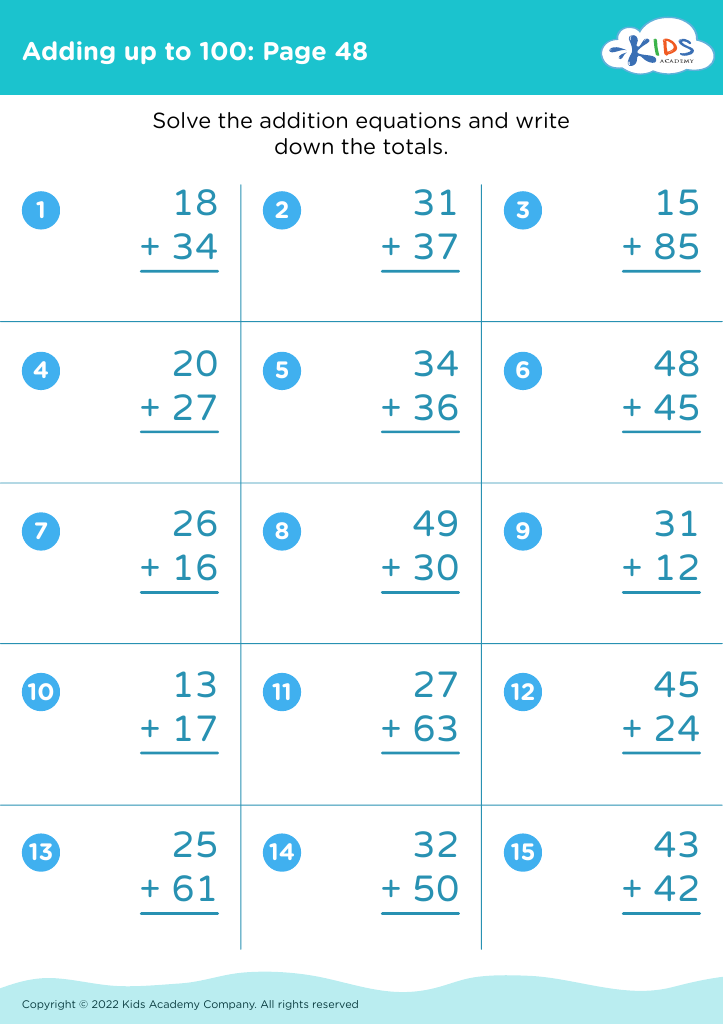
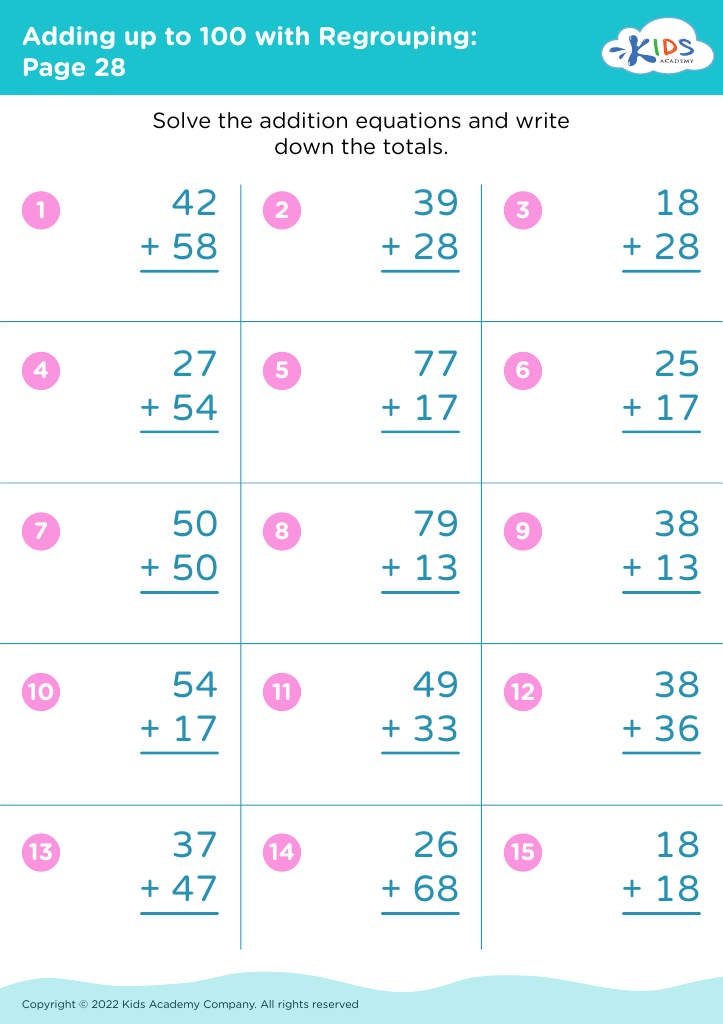
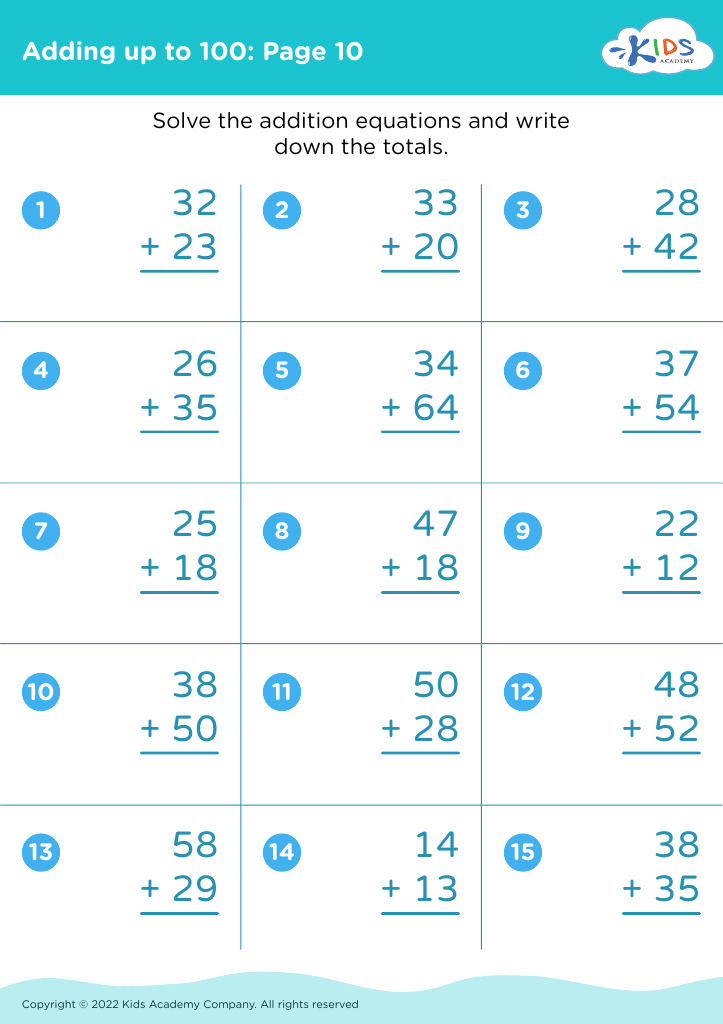
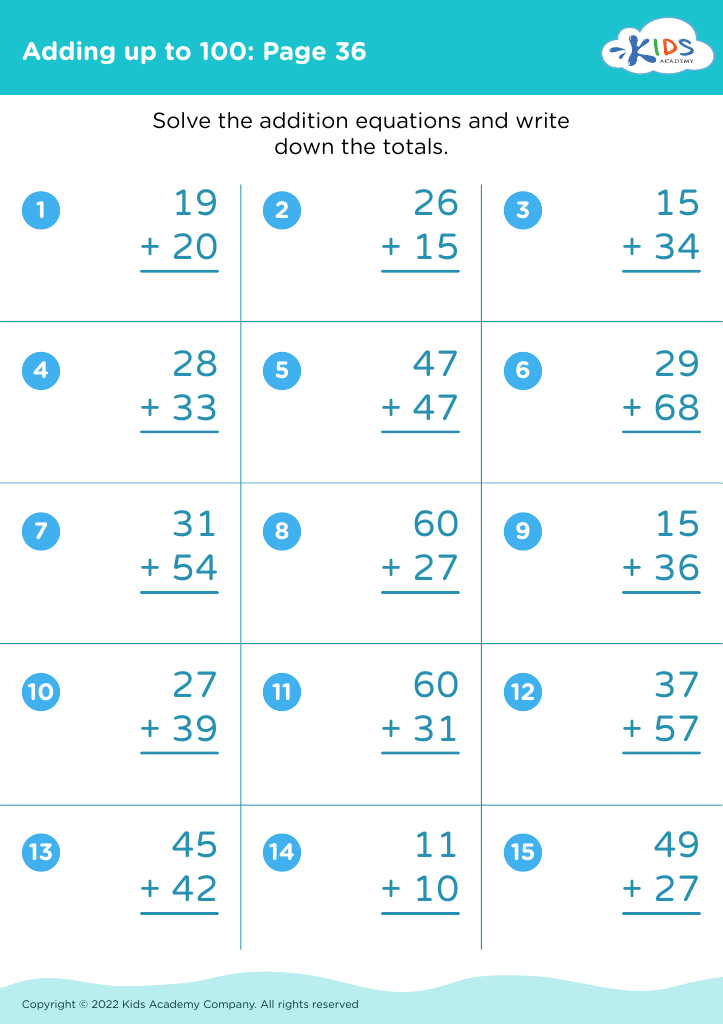
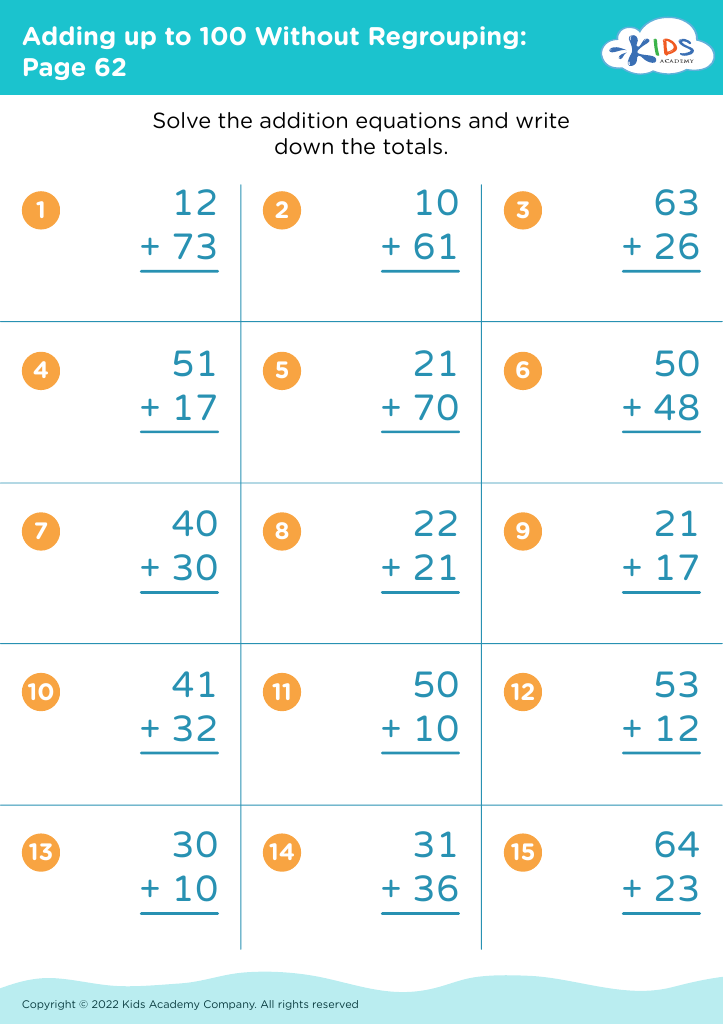
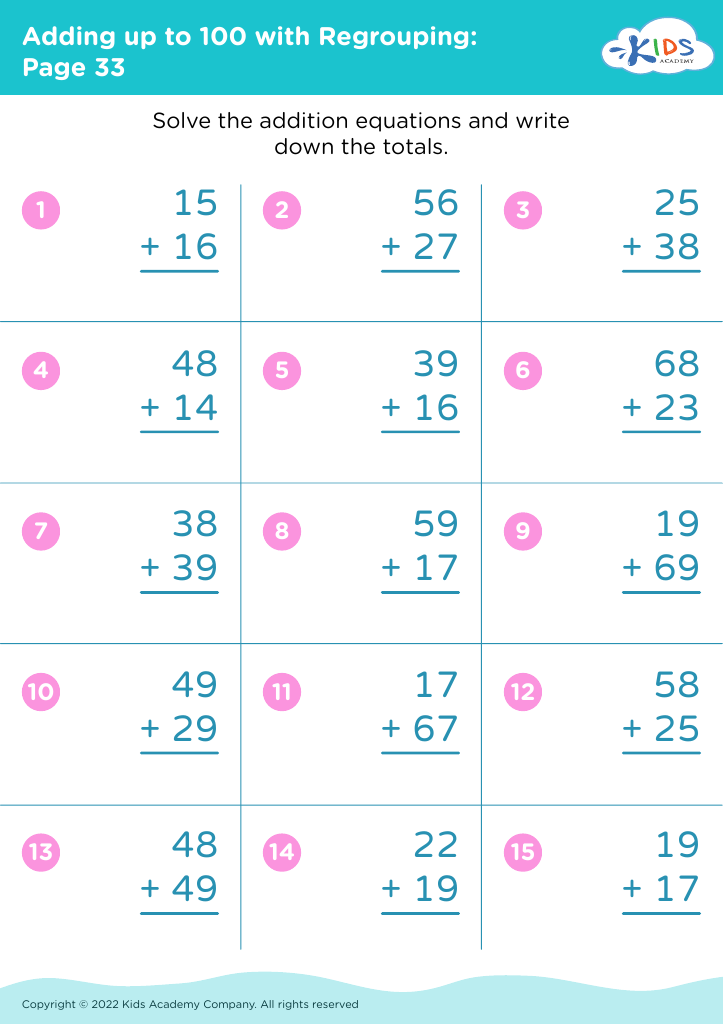
Adding numbers up to 100 further introduces children to basic arithmetic, strengthening their counting skills and enabling them to comprehend that numbers represent quantities and can be manipulated. Mastery of these skill sets ensures that children have confidence when faced with more complex math problems in future grades, reducing math anxiety and increasing overall academic performance.
Both parents and teachers play a crucial role in nurturing a child's comfort and proficiency with these concepts by incorporating fun and interactive methods. Investing time in teaching comparing fractions and arithmetic up to 100 now will yield long-term benefits, equipping children with the mathematical skills necessary for their educational journey and everyday life.








