Critical Thinking Adding up to 100 Worksheets for Ages 3-8
5 filtered results
-
From - To
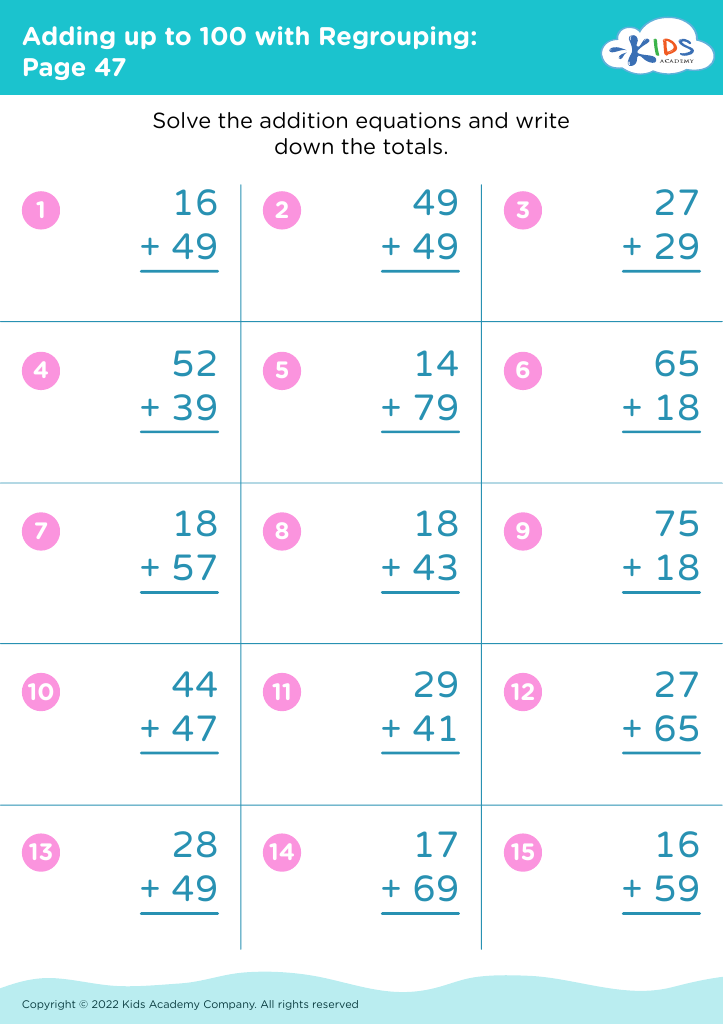
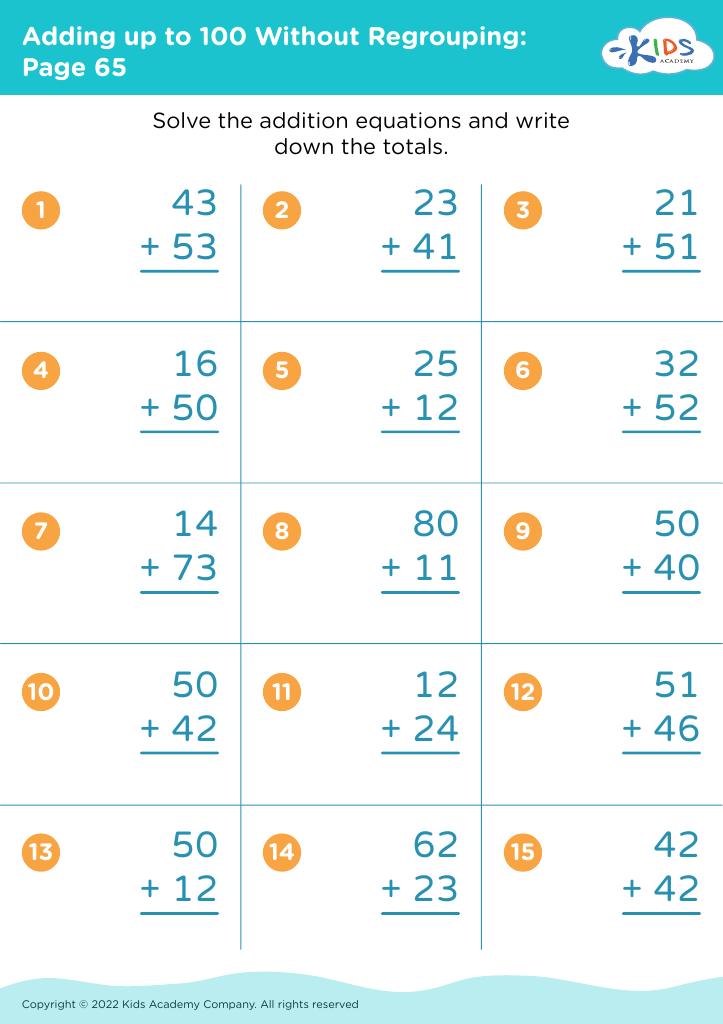
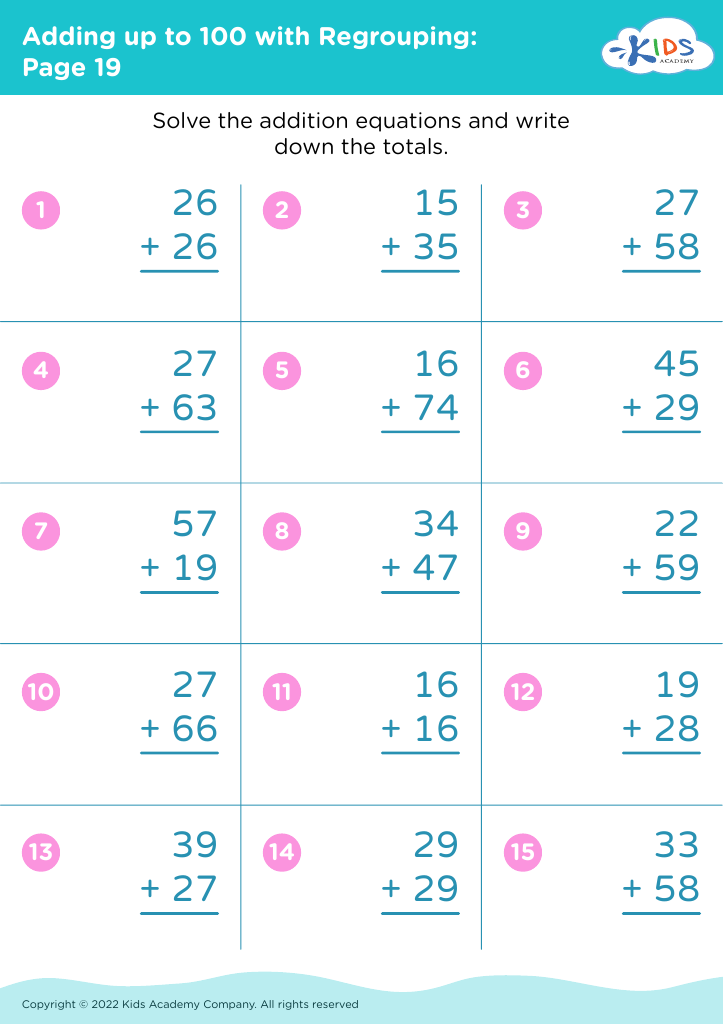
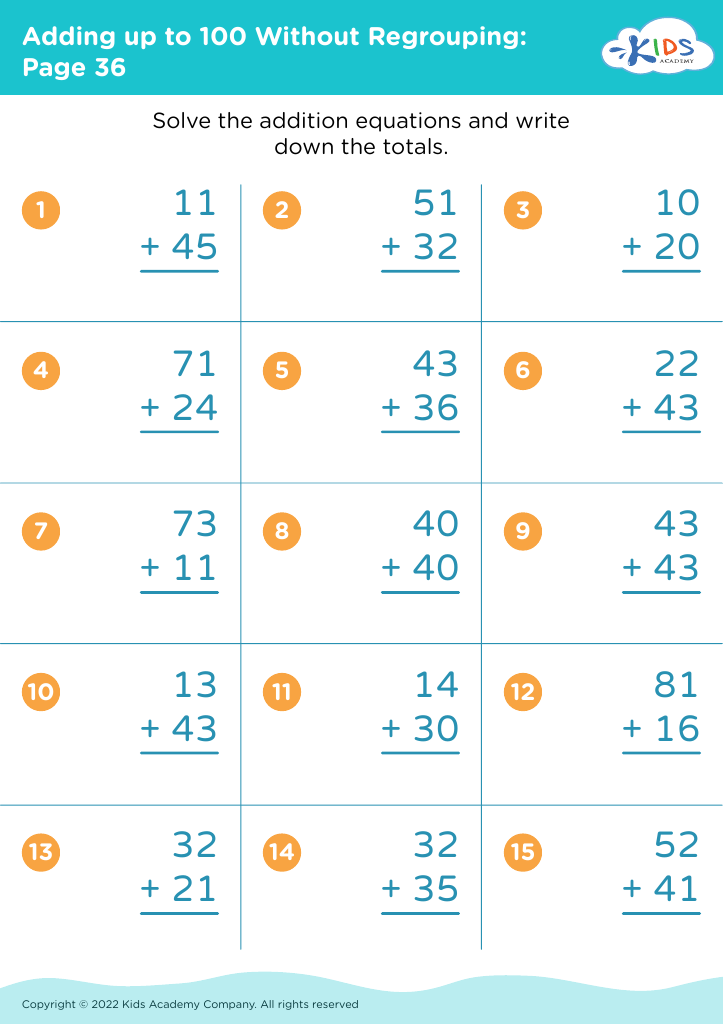
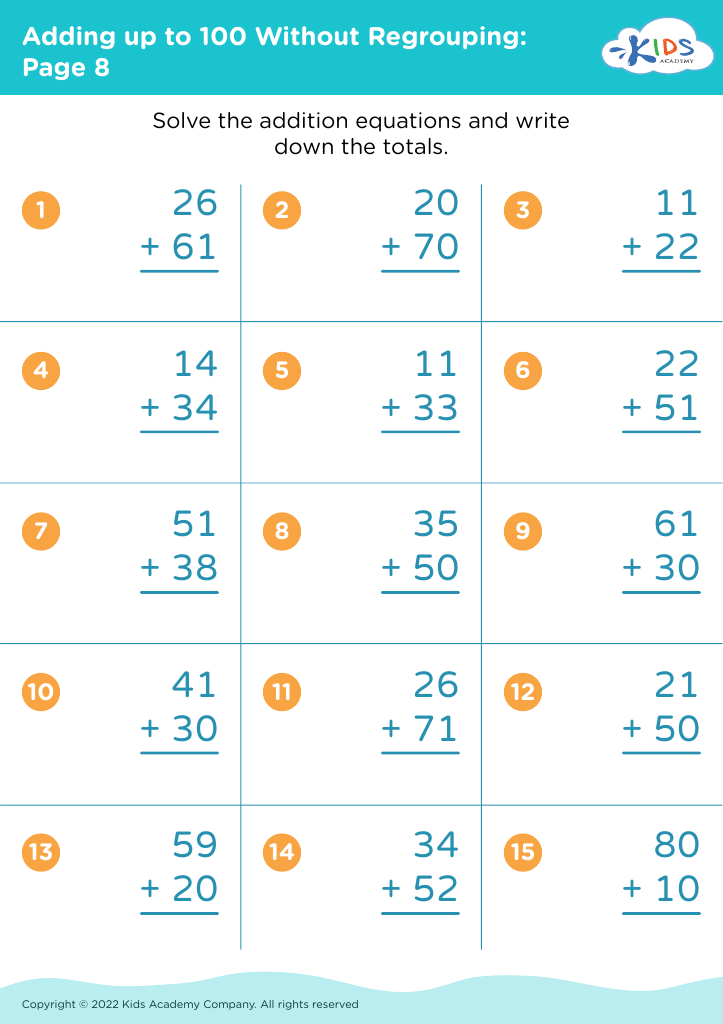
Discover our engaging "Critical Thinking Adding up to 100 Worksheets" designed for children aged 3-8. These worksheets promote essential math skills while enhancing critical thinking abilities through fun, interactive activities. Tailored to foster early learning, each worksheet encourages kids to solve problems, make connections, and develop reasoning skills as they work towards mastering addition to 100. With colorful designs and age-appropriate challenges, these resources make learning enjoyable and effective. Perfect for home or classrooms, our worksheets create an inviting atmosphere for young learners to explore their creativity and sharpen their analytical minds. Unlock the potential for success in math today!





%20(1).jpg)

Critical thinking is essential for young children aged 3-8 as it lays the foundation for effective learning and problem-solving skills. By fostering critical thinking at this early age, parents and teachers can enhance a child's ability to analyze situations, make informed decisions, and develop a love for learning. Engaging children in activities that require them to ask questions, explore different solutions, and evaluate outcomes cultivates creativity and independence.
When children learn to think critically, they become more adept at handling everyday challenges. They learn to express their thoughts clearly, understand different perspectives, and work collaboratively with peers. This skill set not only boosts academic success but also promotes emotional and social development. For instance, children who can articulate their reasoning can better navigate conflicts and build relationships with others.
Moreover, in a world increasingly dominated by information and technology, critical thinking equips children to discern credible information from misinformation, a crucial skill for their continued education and future careers. Therefore, parents and teachers should actively nurture critical thinking through interactive play, inquiry-based learning, and open dialogue, ensuring children grow into confident, competent thinkers ready to face the complexities of the world.








