Develop critical thinking Adding up to 100 Worksheets for Ages 3-8
5 filtered results
-
From - To
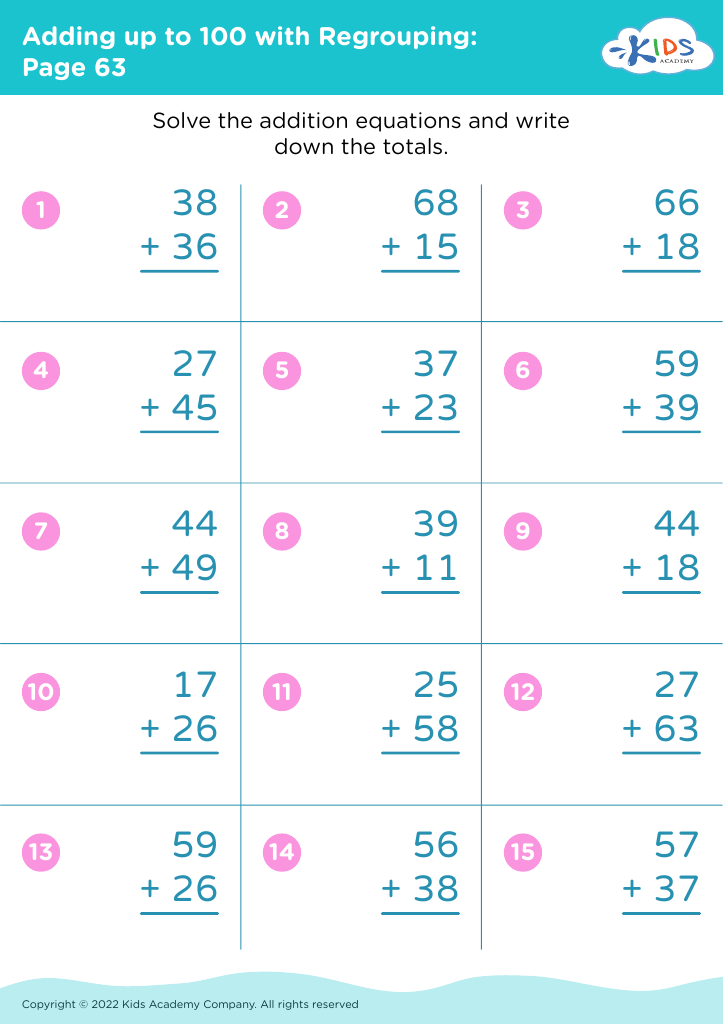
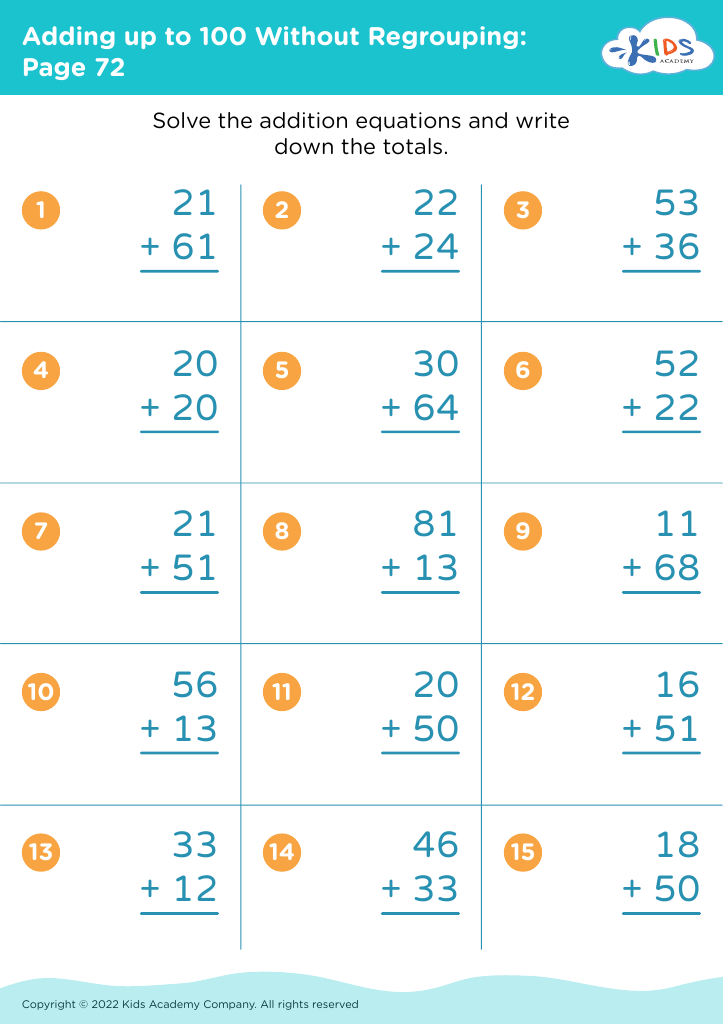
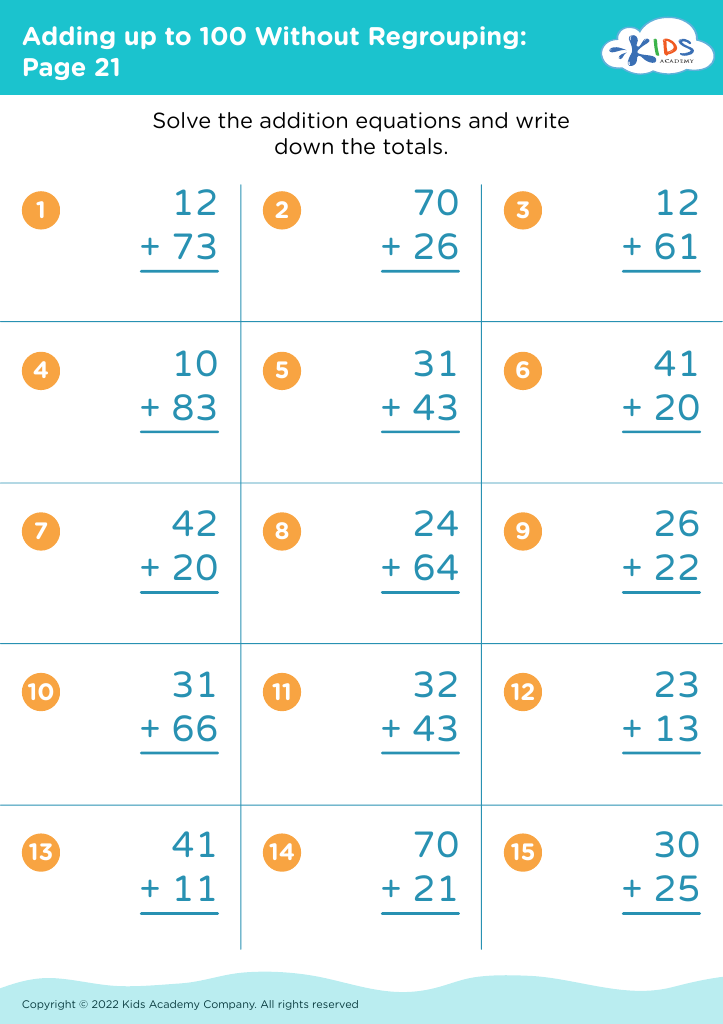
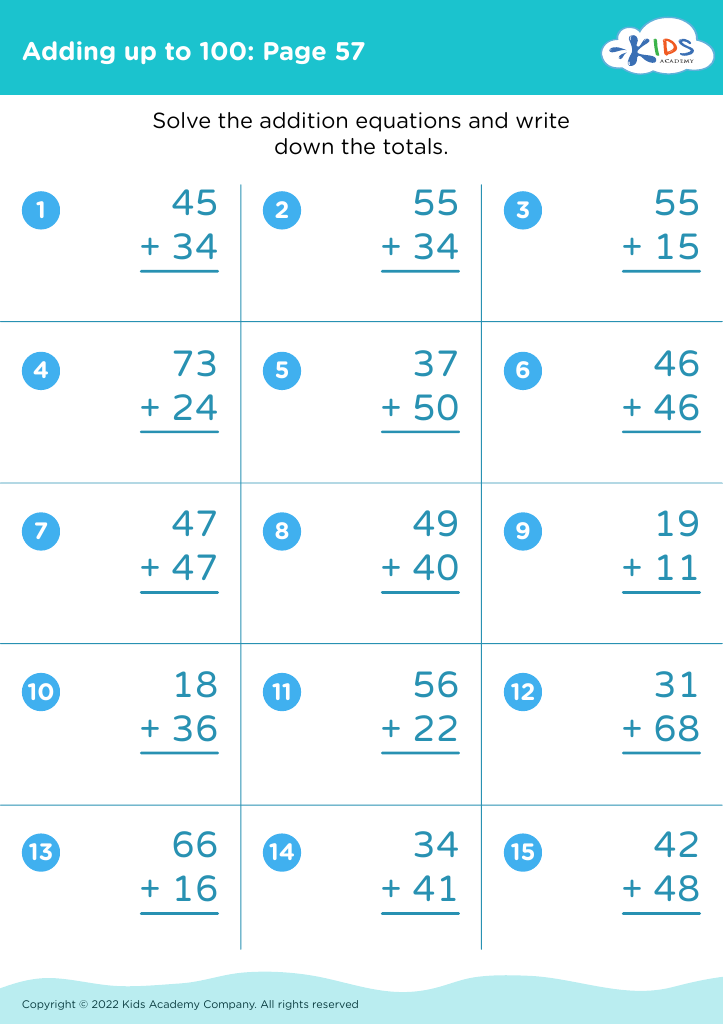
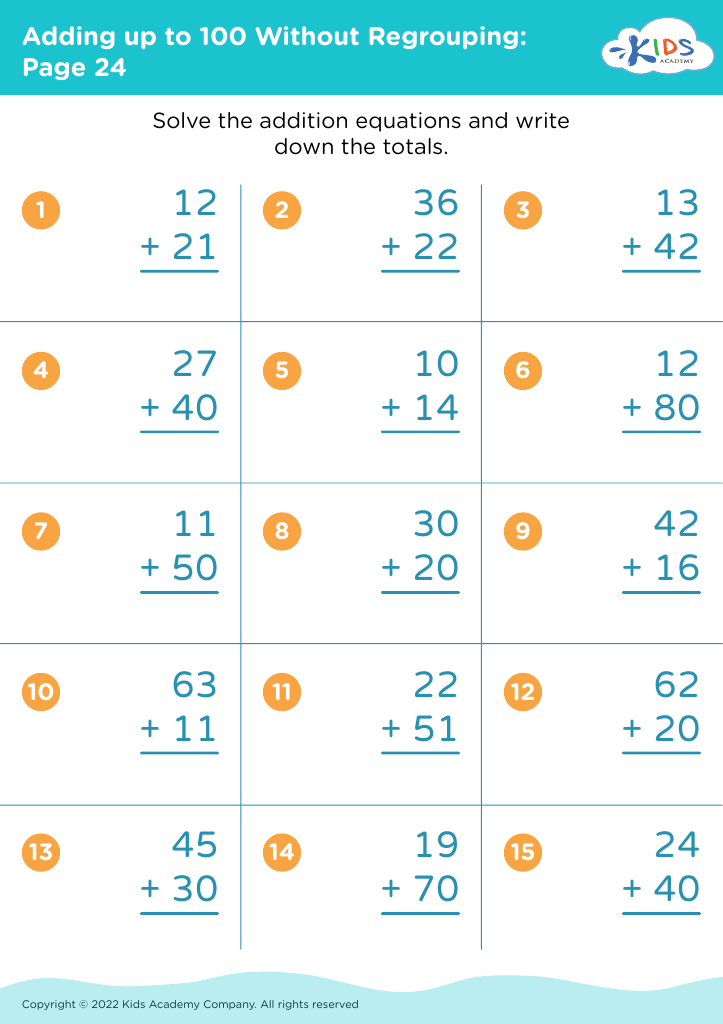
Unlock your child's potential with our "Adding up to 100 Worksheets for Ages 3-8"! These engaging, expertly-crafted worksheets are designed to go beyond basic math skills, promoting critical thinking and problem-solving abilities. Perfect for young learners, our activities introduce adding numbers up to 100 through interactive and fun exercises that capture children's interests and fuel their curiosity. Each worksheet is thoughtfully created to build foundational skills while encouraging logical reasoning and confidence. Set your child on the path to mathematical success and watch their minds flourish with these indispensable learning tools from Kids Academy!





%20(1).jpg)

Developing critical thinking skills in early childhood is foundational for a child’s intellectual, social, and emotional growth. When parents and teachers focus on teaching children, ages 3-8, how to add numbers up to 100, they promote not just basic math skills but also a host of cognitive benefits.
Firstly, working with numbers boosts logical thinking. As children learn to understand quantities and perform operations, they start to recognize patterns and relationships, laying the groundwork for more complex problem-solving. These early math activities enhance their ability to think analytically and make reasoned decisions.
Moreover, tackling mathematical challenges helps children develop perseverance and resilience. They learn the value of trial and error, understanding that mistakes are part of the learning process. This nurtures a growth mindset, which is crucial for lifelong learning and adaptation to new problems.
Additionally, arithmetic exercises improve focus and concentration, teaching young learners to pay attention to details and follow steps sequentially. These skills are transferable to other academic areas and daily life situations, making children more capable and independent.
Overall, nurturing critical thinking through early math education equips children with the tools to effectively reason, problem-solve, and make connections in diverse contexts, setting a strong foundation for their future academic and life success.








