Enhance problem-solving skills Adding up to 100 Worksheets for Ages 3-8
3 filtered results
-
From - To
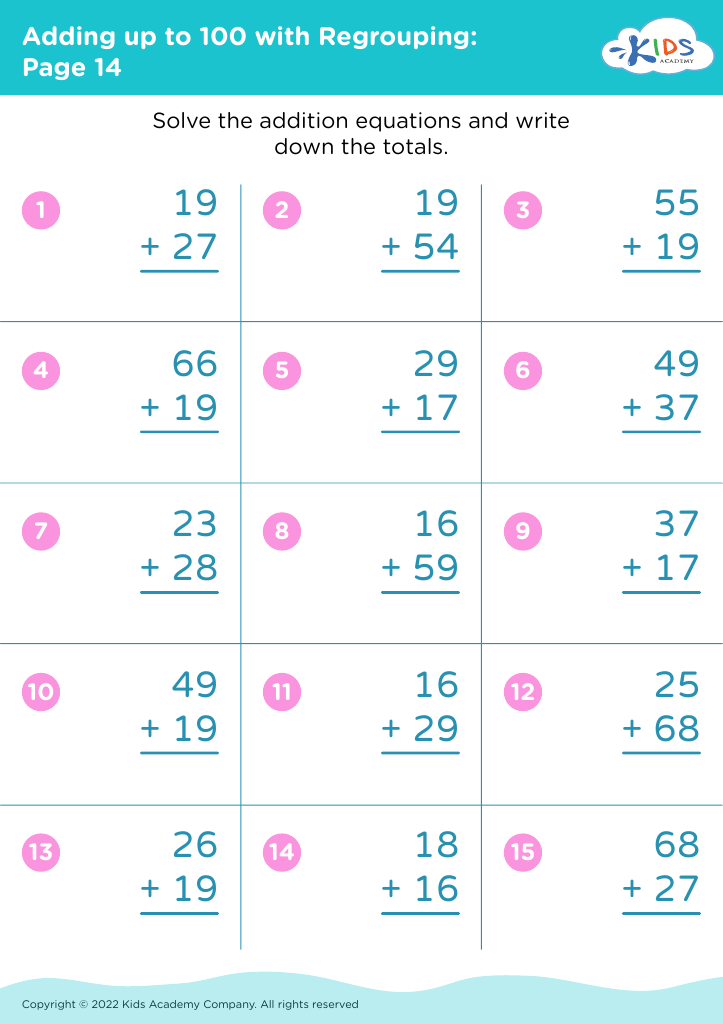
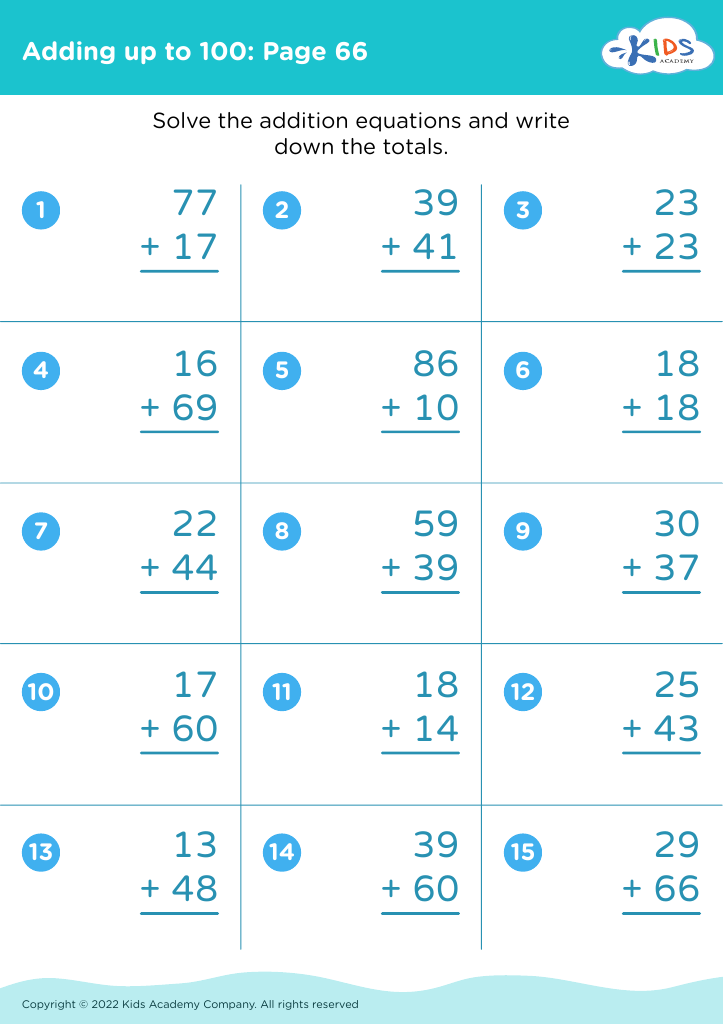
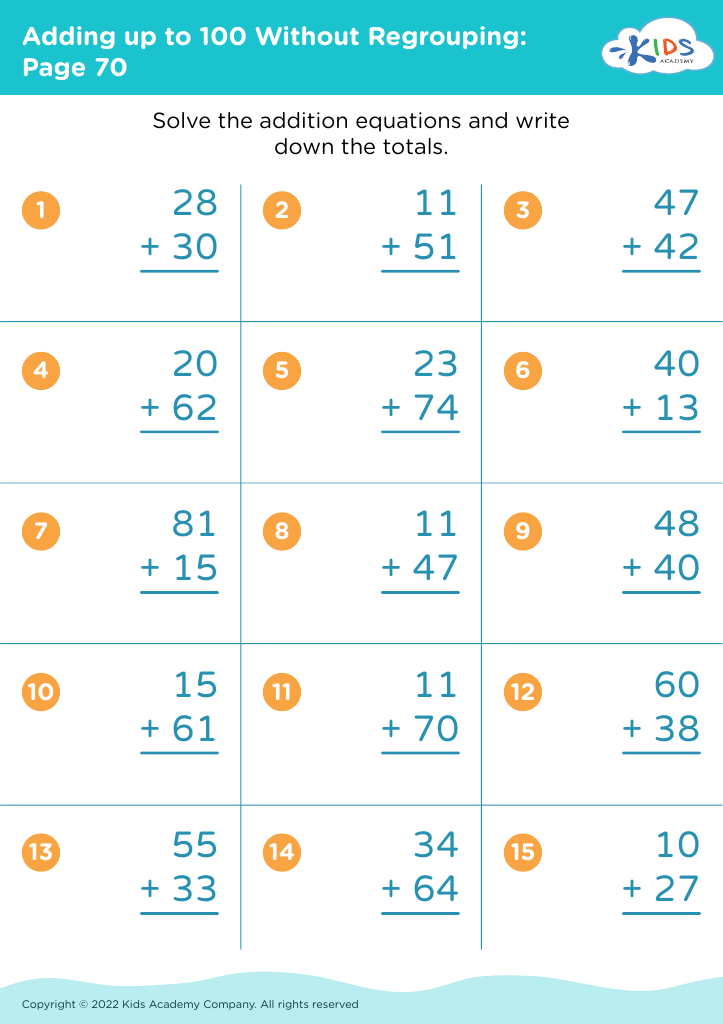
Boost your child’s problem-solving abilities with our “Adding up to 100” worksheets, designed specifically for ages 3-8. These engaging, age-appropriate activities by Kids Academy help young learners develop crucial math skills while making learning fun. Perfect for both classroom and home use, our worksheets encourage logical thinking, enhance numeric understanding, and build addition skills. Whether your child is a beginner or looking to enhance existing knowledge, these printable worksheets provide the right level of challenge. Invest in your child’s educational journey with Kids Academy’s expertly crafted resources that turn math practice into an enjoyable adventure!


%20(1).jpg)




Enhancing problem-solving skills in children ages 3-8 through activities like adding up to 100 is critically important for several reasons. At this developmental stage, young minds are exceptionally receptive to learning and forming cognitive connections. Introducing them to basic arithmetic not only builds a foundation for future mathematics but also enhances critical thinking skills necessary for everyday life.
First, tackling basic addition challenges promotes logical reasoning and analytical skills. Children will not only learn how to compute sums but also understand patterns, relationships, and sequences, which are essential components of higher-order thinking. These skills transfer into problem-solving abilities in diverse real-world scenarios, such as budgeting, spatial awareness, and strategic planning.
Second, early mathematic proficiency is linked to higher academic achievement in later years. By making arithmetic engaging, teachers and parents can instill a love for learning and boost a child's confidence in their abilities. Positive reinforcement from successfully solving problems fosters a growth mindset, encouraging children to take on more complex challenges without fear.
Finally, developing problem-solving skills through arithmetic enhances social interaction. Group activities that involve adding numbers can foster teamwork, communication, and collaboration among peers, skills that are invaluable throughout life.
In essence, making problem-solving a fun, integral part of early education equips children with versatile tools they’ll use far beyond the classroom.








