Enhancing calculation skills Adding up to 100 Worksheets for Ages 3-8
4 filtered results
-
From - To
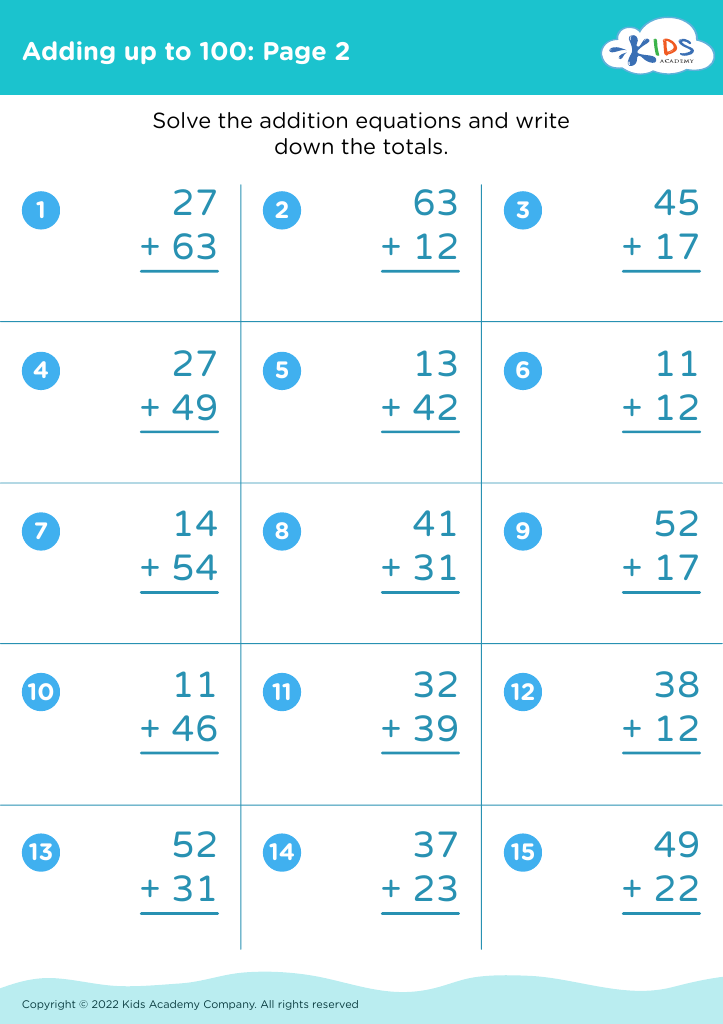
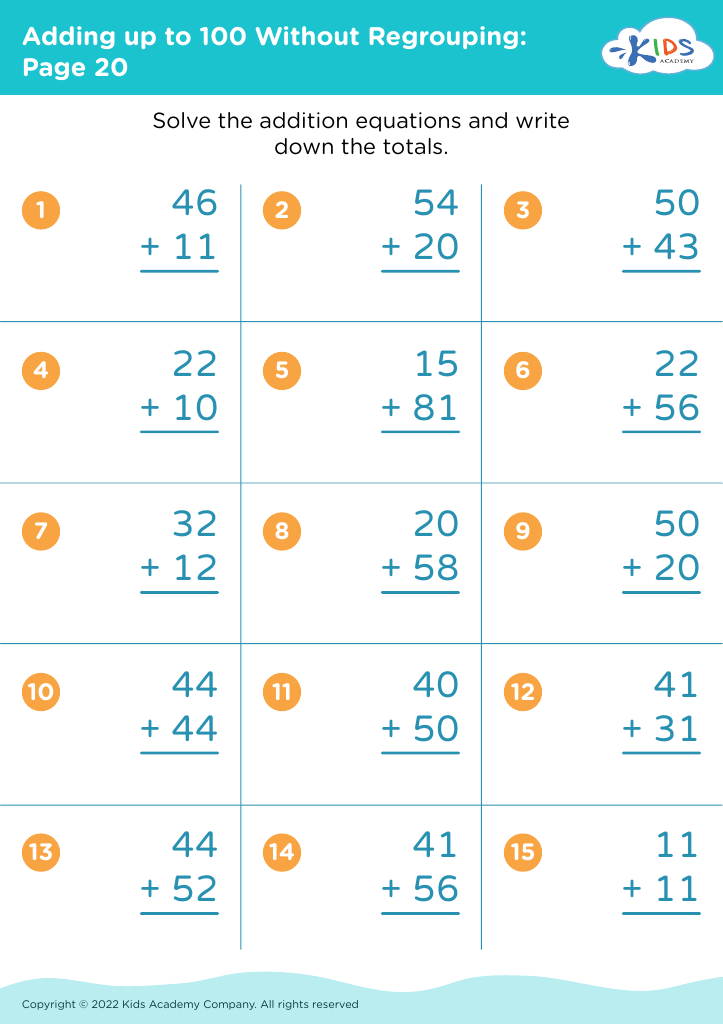
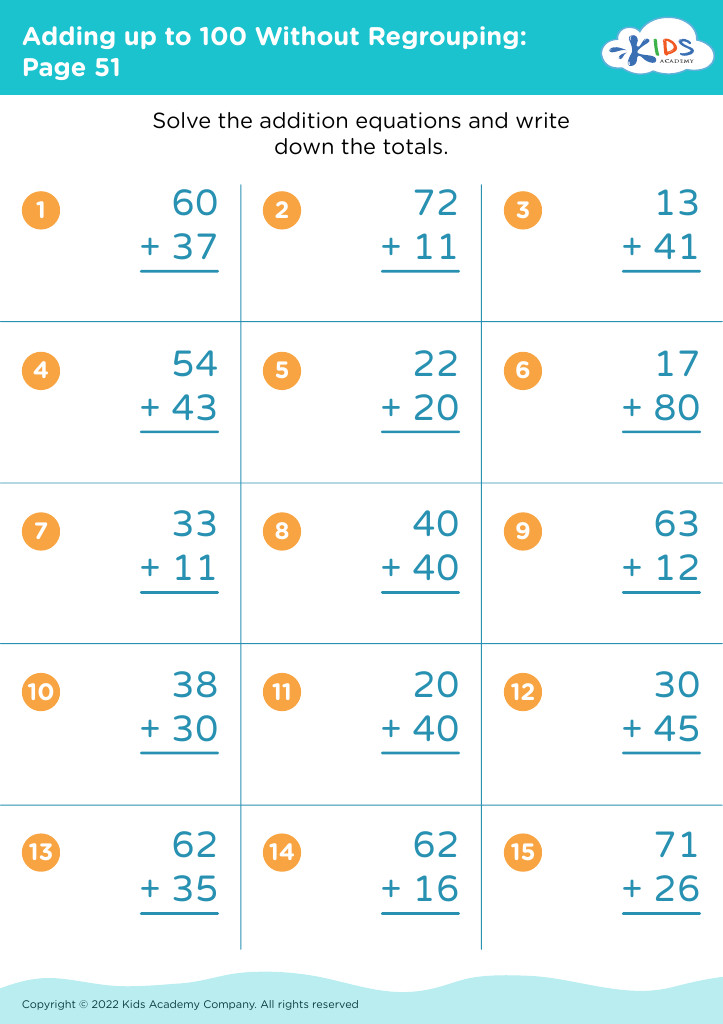
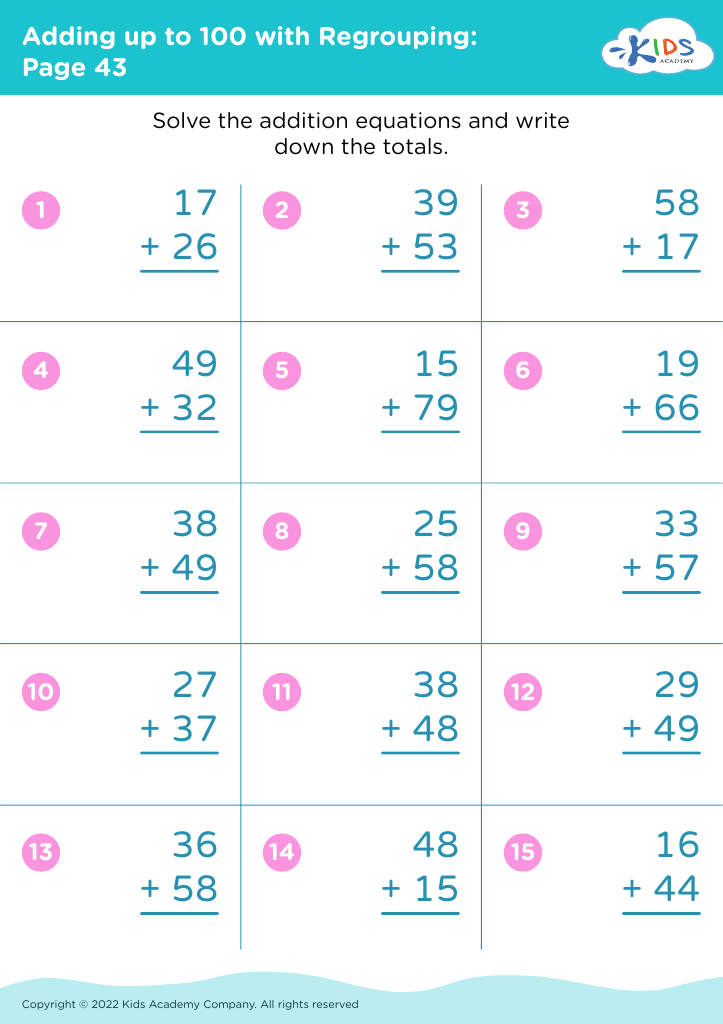
Enhance your child's math skills with our "Enhancing Calculation Skills: Adding up to 100 Worksheets for Ages 3-8." Designed for early learners, these engaging worksheets help young minds master addition up to 100. Through fun and interactive activities, children develop essential calculation skills, improve number sense, and build a solid math foundation. Perfect for both classroom and home practice, each worksheet is crafted to cater to different learning speeds, making math enjoyable and accessible. Give your child the confidence to excel in math with these expertly designed resources. Download now and watch their calculation skills soar!





%20(1).jpg)

Enhancing calculation skills, especially adding up to 100, for children aged 3-8 is crucial for several reasons. First, mastering basic arithmetic instills a solid mathematical foundation, which is essential for later academic success. At a young age, children’s brains are highly receptive to learning new concepts, and developing these skills early facilitates easier understanding of more complex mathematical principles in the future.
Second, practicing addition up to 100 enhances cognitive development by improving memory, problem-solving abilities, and logical thinking. These critical skills are not only beneficial for mathematics but also for other subjects and everyday situations. For instance, a child who can confidently add numbers is better prepared to manage tasks involving time, money, and measurements.
Furthermore, early success in calculation boosts self-esteem and fosters a positive attitude towards learning. Children who feel competent in math are more likely to approach challenges with confidence and curiosity, rather than fear or reluctance.
Finally, these skills are foundational for critical life skills. Whether calculating scores in a game, understanding the concept of savings, or even collaborating on group projects, strong calculation skills are indispensable. Parents and teachers play a pivotal role in nurturing these skills, setting the stage for lifelong numerical competence and academic achievement.








