Enhancing problem-solving skills Adding up to 100 Worksheets for Ages 3-8
3 filtered results
-
From - To
Unlock your child's potential with our "Adding up to 100 Worksheets for Ages 3-8." Designed to enhance problem-solving skills, these engaging worksheets offer a fun and educational way for young learners to practice addition up to 100. With a variety of exercises, kids will develop critical thinking, improve mathematical abilities, and build a strong foundation for future learning. Ideal for preschoolers and early grade students, our printables ensure that math becomes an enjoyable adventure. Dive into a world of numbers and watch your child’s confidence and skills grow by leaps and bounds! Explore now at Kids Academy.
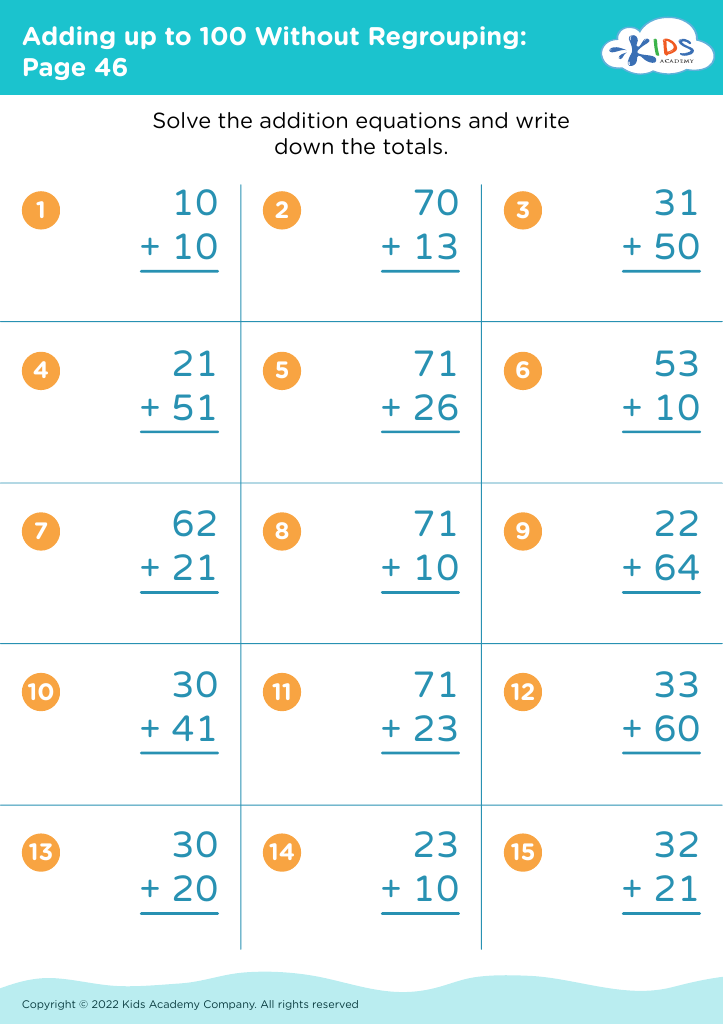
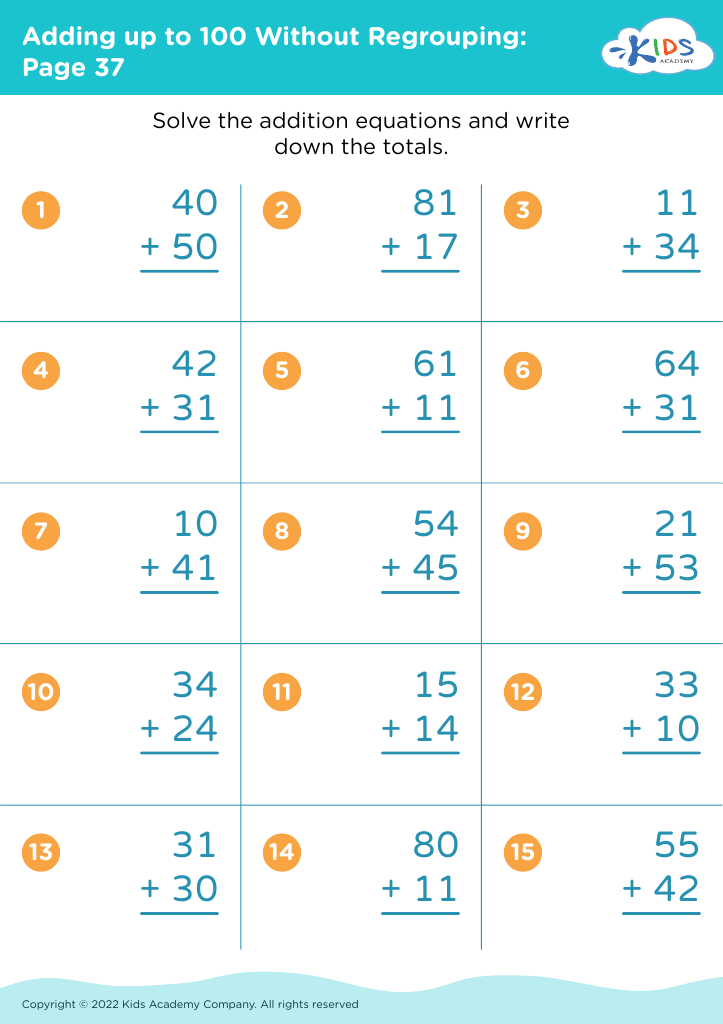
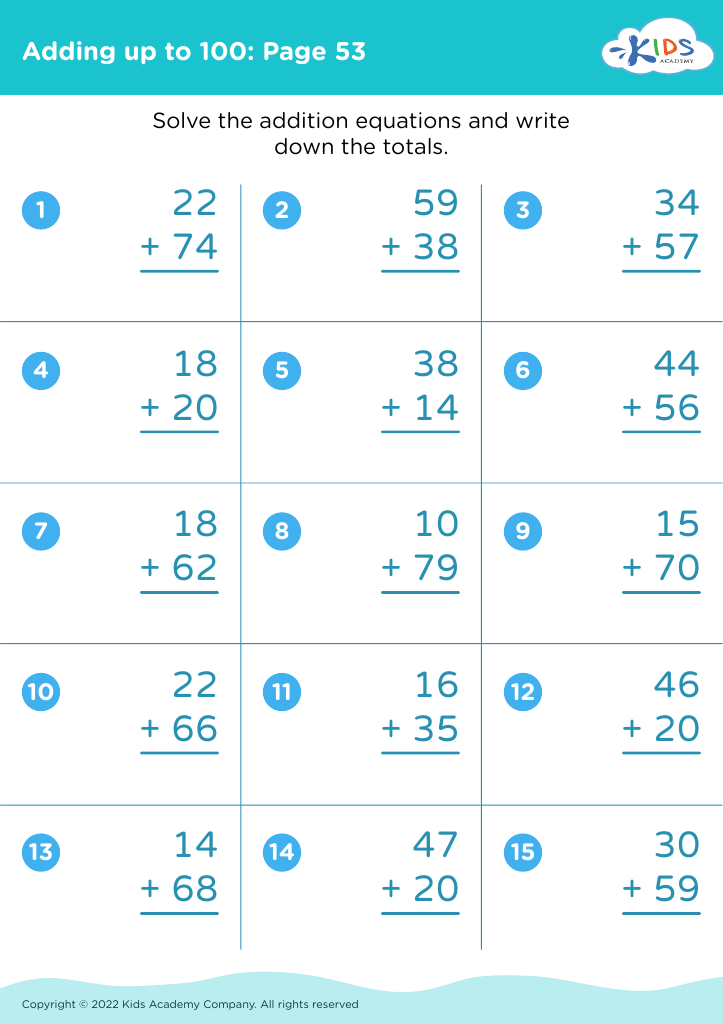



%20(1).jpg)



Enhancing problem-solving skills and the ability to add up to 100 in children aged 3-8 is pivotal for several reasons. Firstly, these foundational math skills lay the groundwork for more complex mathematical concepts and critical thinking abilities that children will encounter later in their education. Parents and teachers fostering these skills early instill a sense of confidence and competency in the child, which is crucial for their self-esteem and academic success. Problem-solving promotes cognitive development by encouraging children to think logically and make connections between different pieces of information. It also enhances their perseverance, as they learn to tackle challenges from various angles until they find a solution.
Learning to add up to 100 is not just about arithmetic; it's fundamental for understanding broader mathematical principles such as place value, which acts as the cornerstone for all future math learning. Children who grasp these concepts early are better equipped to handle advanced math topics, ensuring they don't fall behind as academic demands increase. Additionally, these skills have practical applications in everyday life, from simple budgeting to time management, empowering children to become more independent and capable individuals. Consequently, early investment in developing these abilities yields long-term benefits, equipping children with essential tools for academic and personal success.








