
Following instructions Adding up to 100 Worksheets for Ages 3-8
4 filtered results
Difficulty Level
Grade
Age
-
From - To
Subject
Activity
Standards
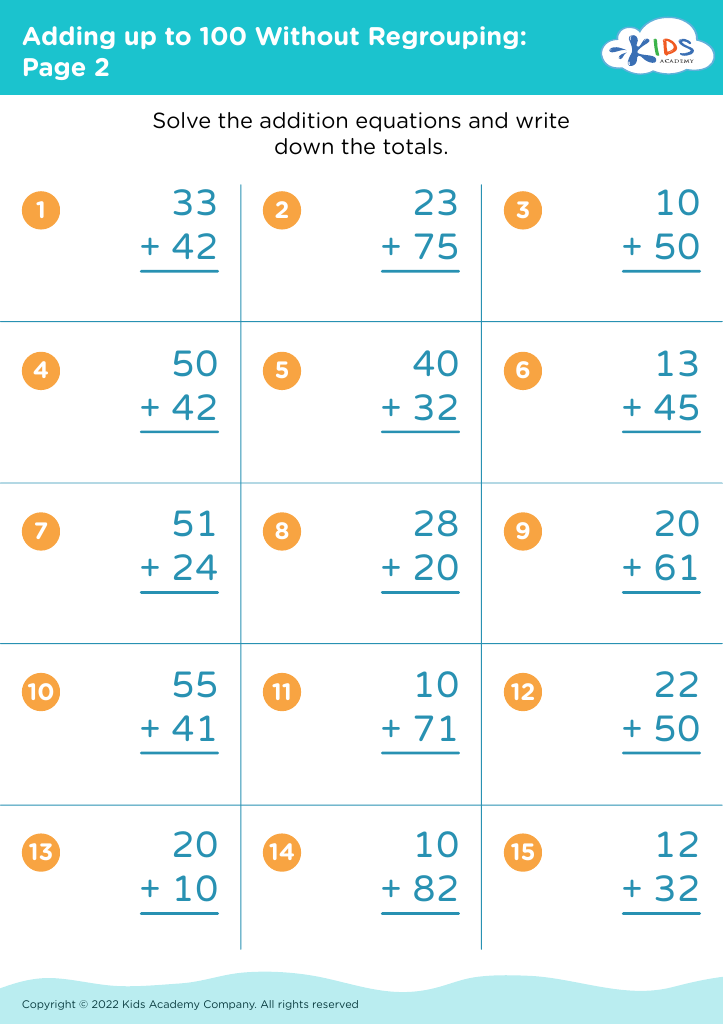
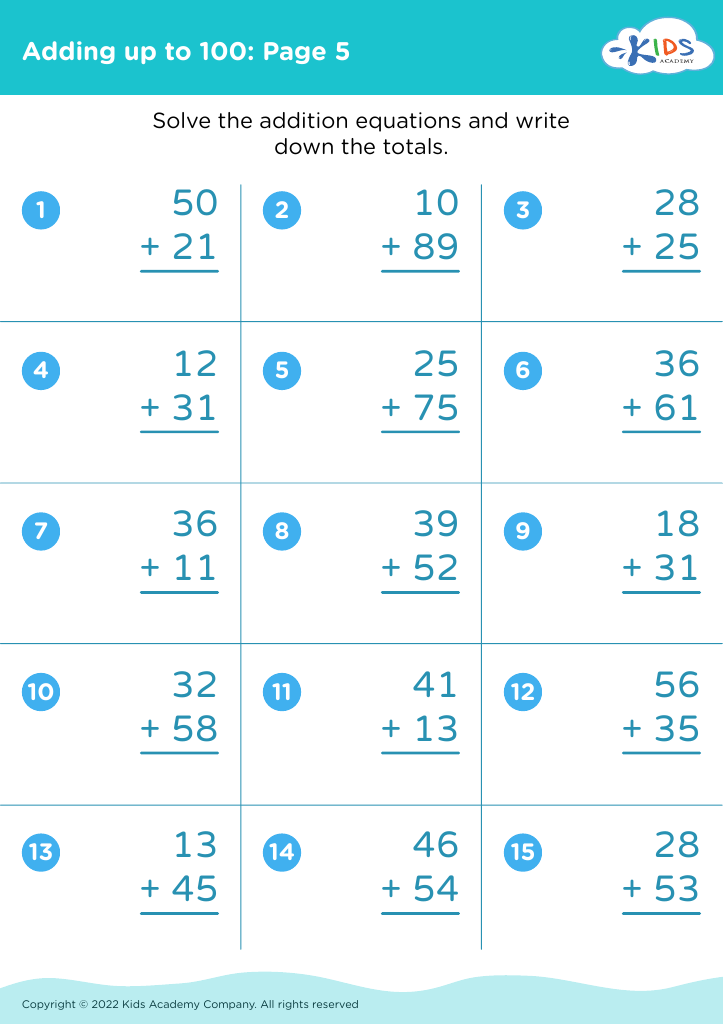
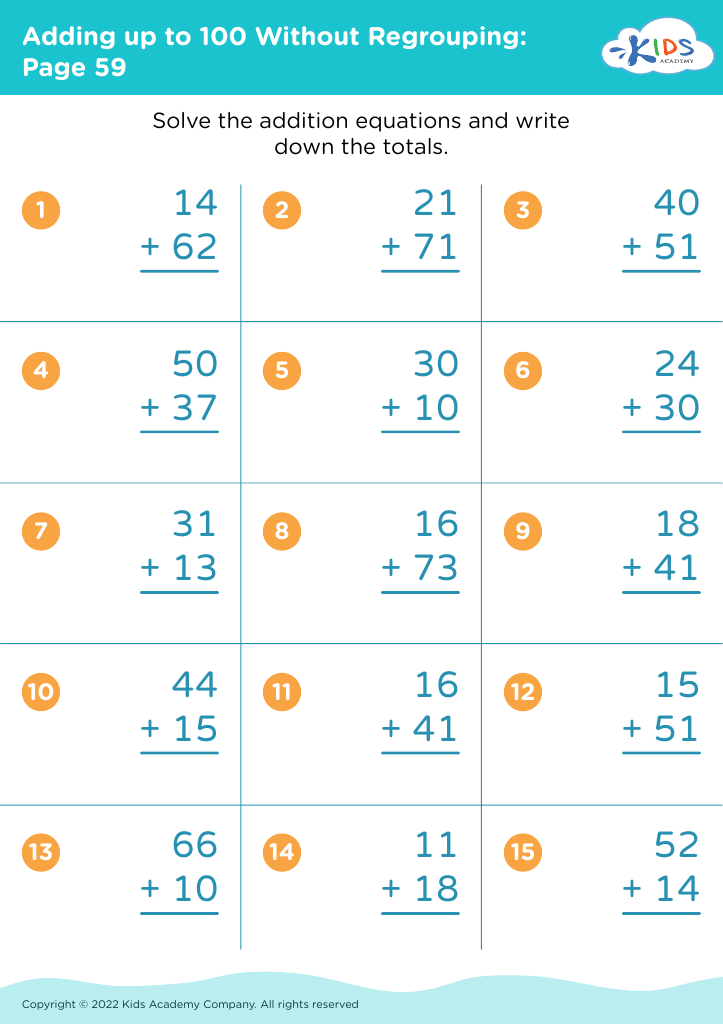
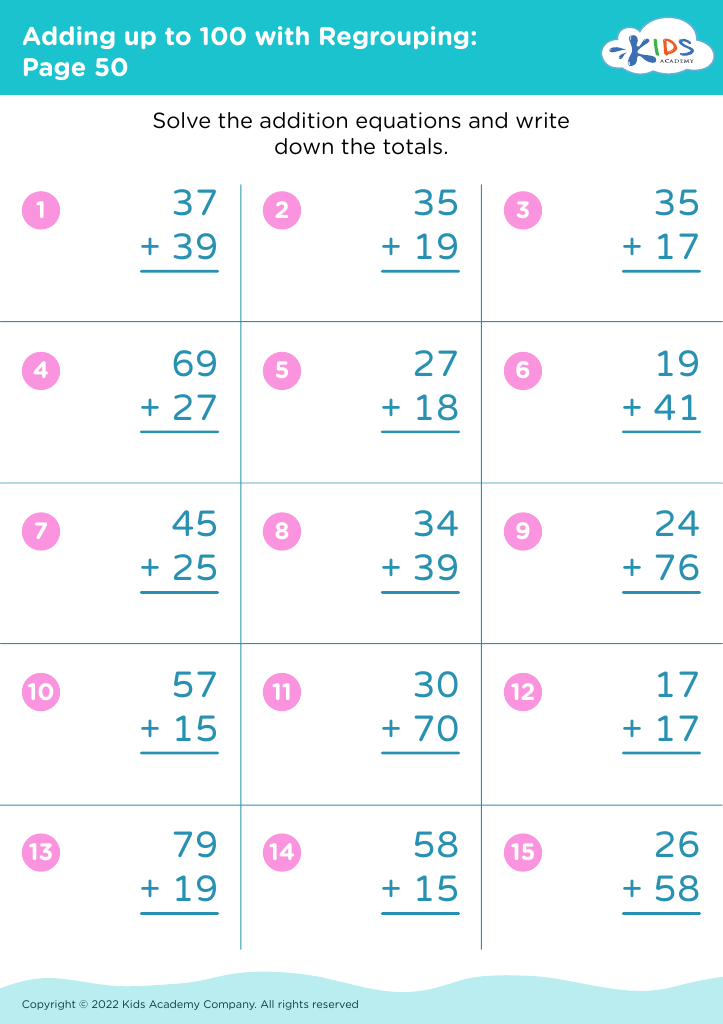
Welcome to our collection of "Following Instructions: Adding Up to 100 Worksheets" designed for children aged 3-8! These engaging worksheets help young learners master basic addition skills while enhancing their ability to follow instructions. Each activity is crafted to promote critical thinking, attention to detail, and numerical understanding. This comprehensive resource nurtures your child's ability to interpret directions accurately, ensuring they build a strong mathematical foundation. With colorful illustrations and fun exercises, these worksheets make learning fun and effective. Perfect for parents and educators seeking to support early math skills, these worksheets are a must-have for inspiring confident, competent learners!
Favorites
With answer key
Interactive
Join Kids Academy for Free
Who is primarily going to use this learning content?



%20(1).jpg)



Following instructions and understanding the concept of "adding up to 100" are pivotal skills for children aged 3-8, laying the groundwork for their educational journey. At this developmental stage, children learn not only fundamental math concepts but also critical life skills.
Firstly, following instructions nurtures self-discipline and enhances listening skills. When children practice this skill, they become more adept at managing tasks, which instills confidence and fosters independence. For example, being able to follow multi-step directions during a project helps them develop organizational skills essential for future learning.
Moreover, the concept of adding up to 100 introduces foundational numeracy skills. It encourages kids to grasp number relationships, develop problem-solving abilities, and engage in logical thinking. Mastery of this concept is a building block for more complex math operations like addition, subtraction, and even basic algebra.
Together, these skills prepare children for academic challenges and everyday situations, such as managing money or understanding time. By prioritizing these areas, parents and teachers greatly contribute to spreading a love for learning, laying the foundation for a lifetime of success and engagement in education. Let's help children thrive by emphasizing the importance of following instructions and basic math concepts!








