Filters

22 filtered results

Clear all filters
Favorites
With answer key
Interactive

22 filtered results

Difficulty Level

Grade


Discover engaging Fraction Simplification and Adding up to 100 worksheets tailored for children ages 3-8. Our carefully designed resources help young learners grasp basic fraction concepts while practicing addition skills that total 100. Through fun activities, colorful illustrations, and age-appropriate exercises, kids will build a strong foundation in math. These worksheets enhance critical thinking and problem-solving abilities, making math enjoyable! Perfect for classroom settings or home learning, our Fraction Simplification worksheets encourage creativity and confidence in tackling early math challenges. Explore our collection today and let your child thrive in their mathematical journey!
Check out this FREE Trial Lesson on Adding up to 100 for age 3-8!

A

Favorites
With answer key
Interactive
  • 3-8
  • Fraction simplification
  • Adding up to 100
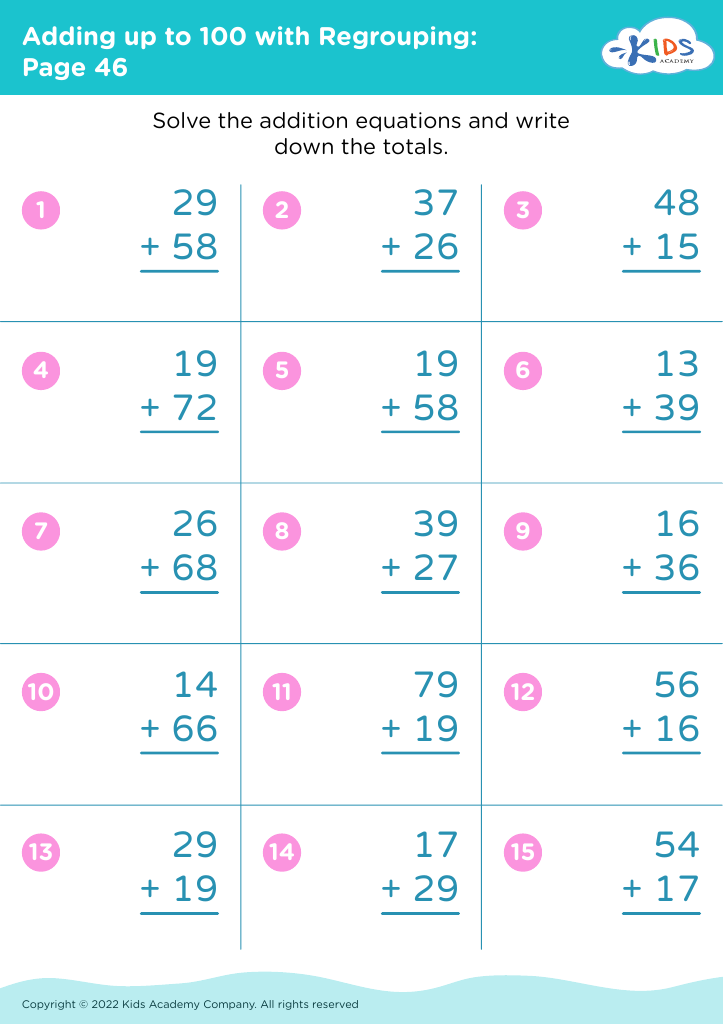
Adding up to 100 with Regrouping: Page 46
Worksheet
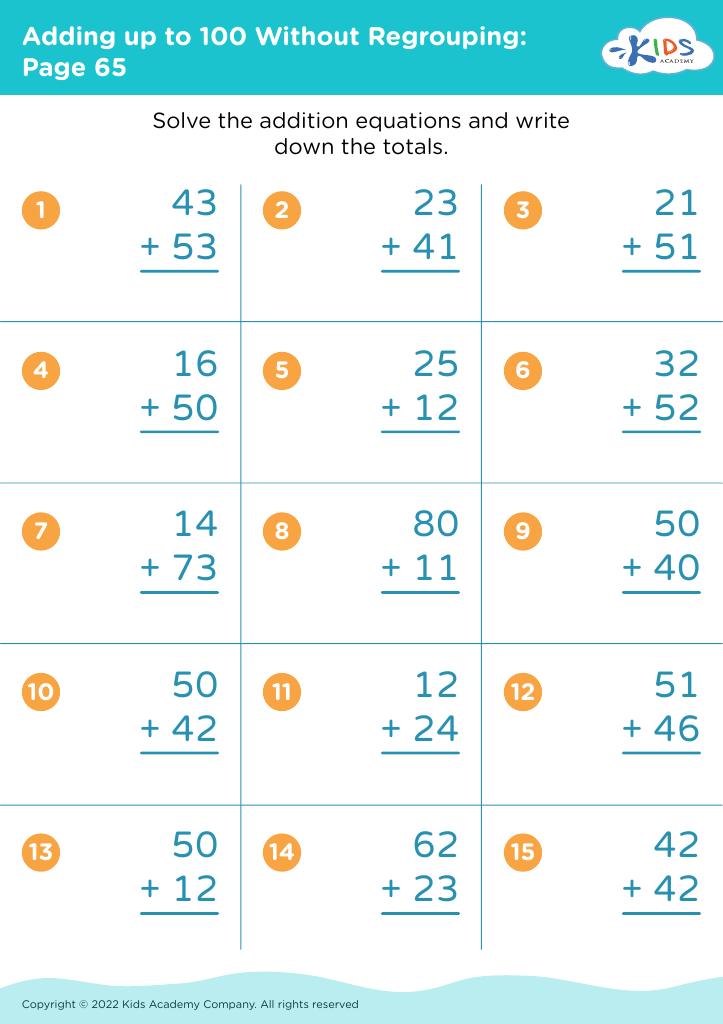
Adding up to 100 Without Regrouping: Page 65
Worksheet
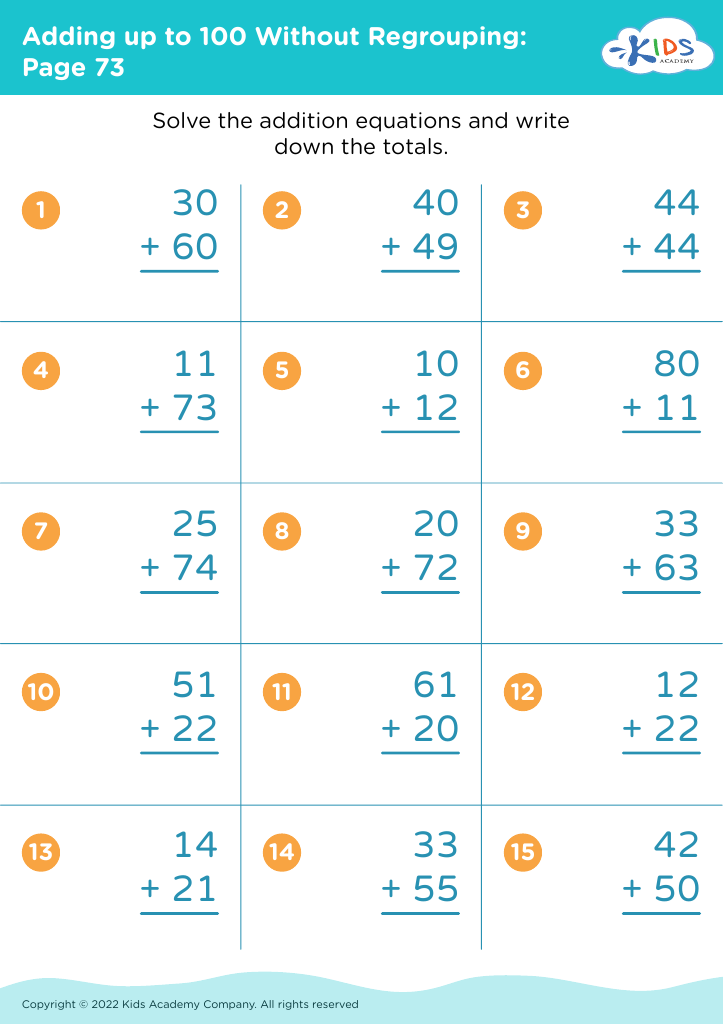
Adding up to 100 Without Regrouping: Page 73
Worksheet
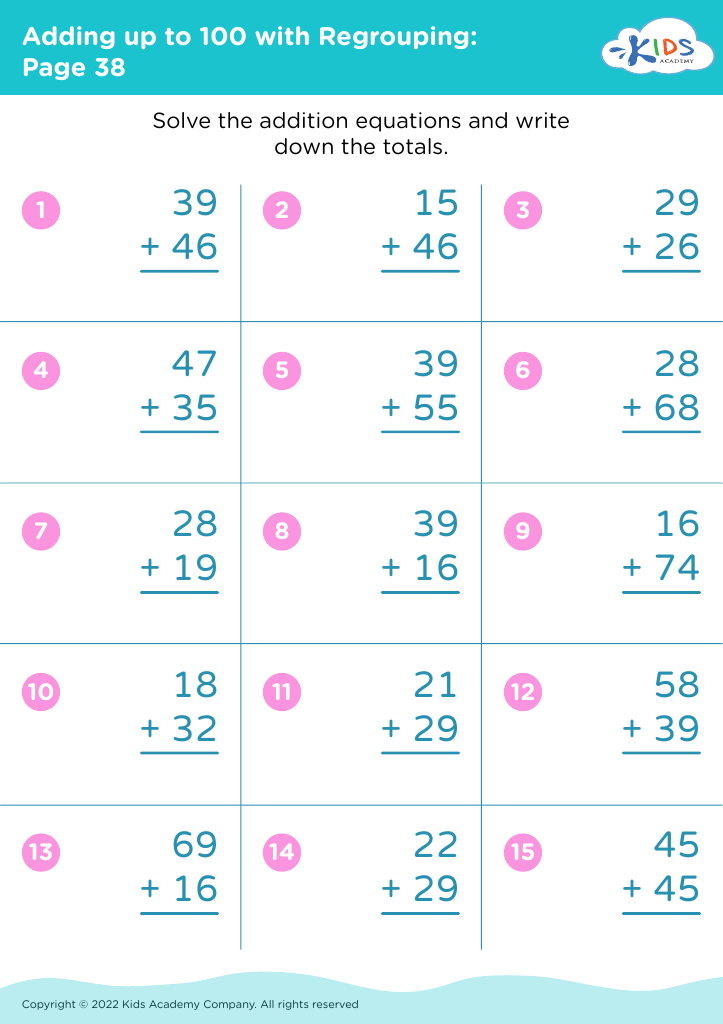
Adding up to 100 with Regrouping: Page 38
Worksheet
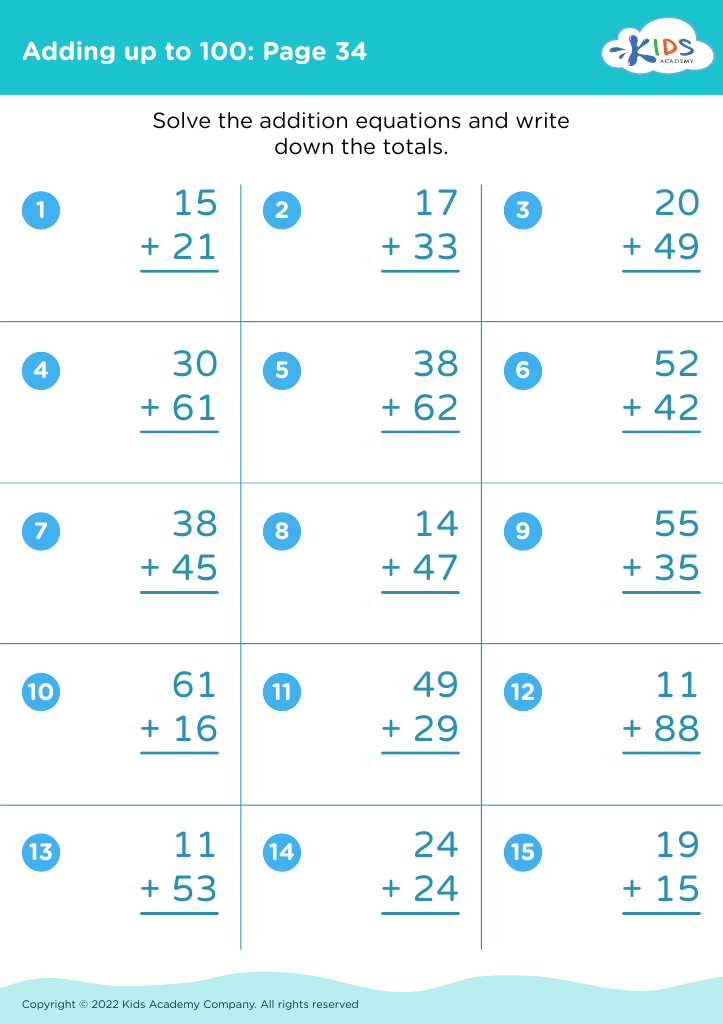
Adding up to 100: Page 34

Adding up to 100: Page 34

Adding up to 100: Page 34
Worksheet
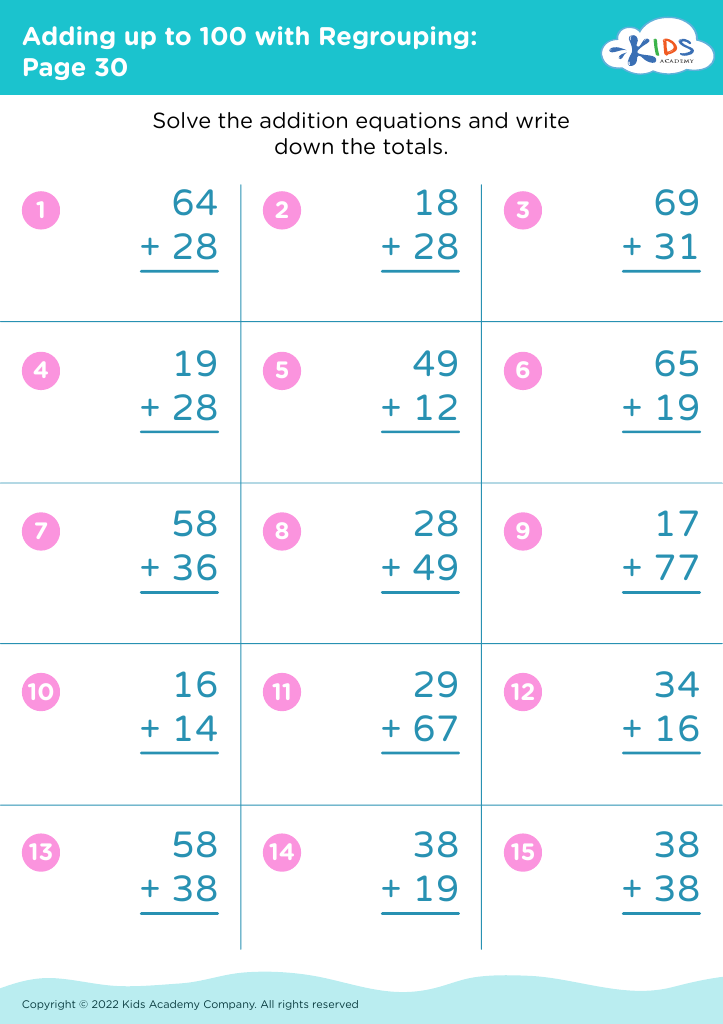
Adding up to 100 with Regrouping: Page 30
Worksheet
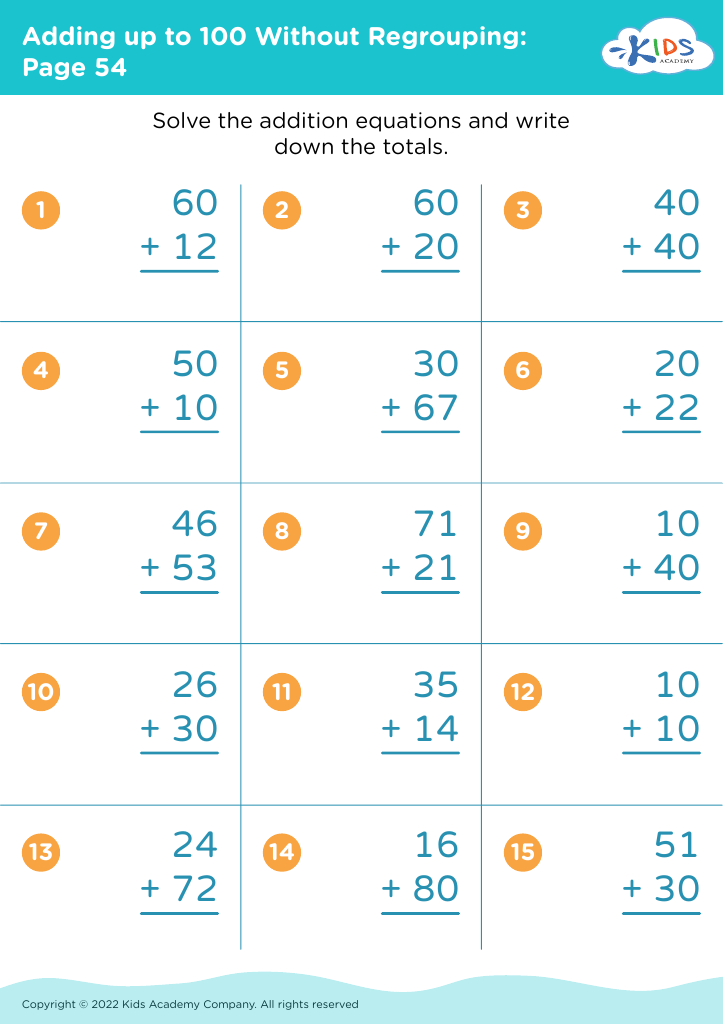
Adding up to 100 Without Regrouping: Page 54
Worksheet
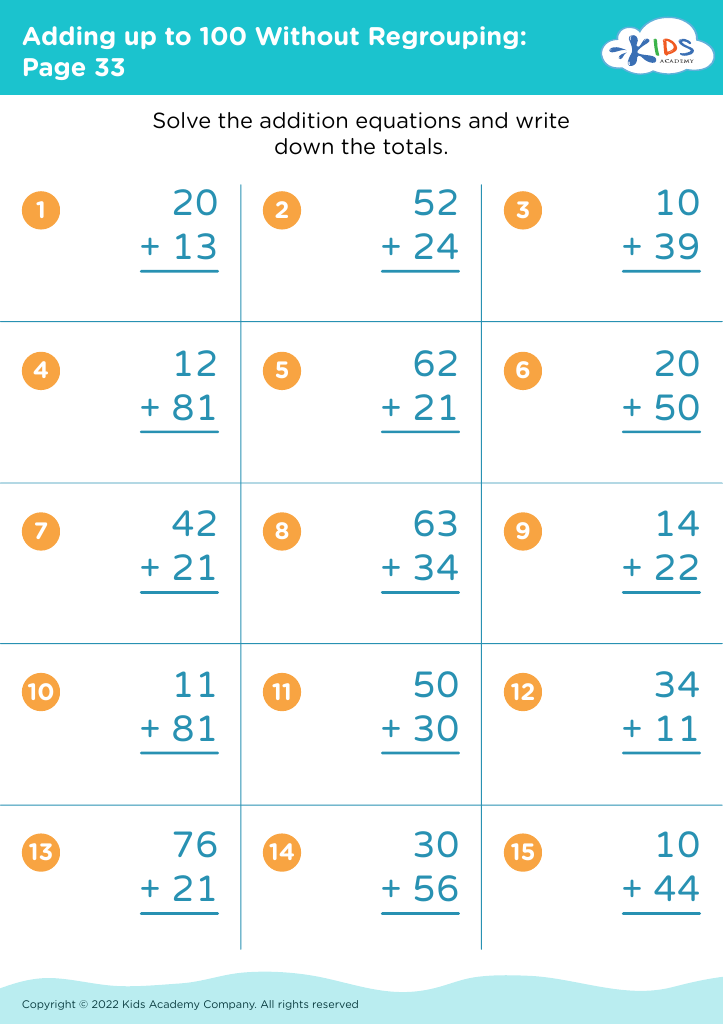
Adding up to 100 Without Regrouping: Page 33
Worksheet
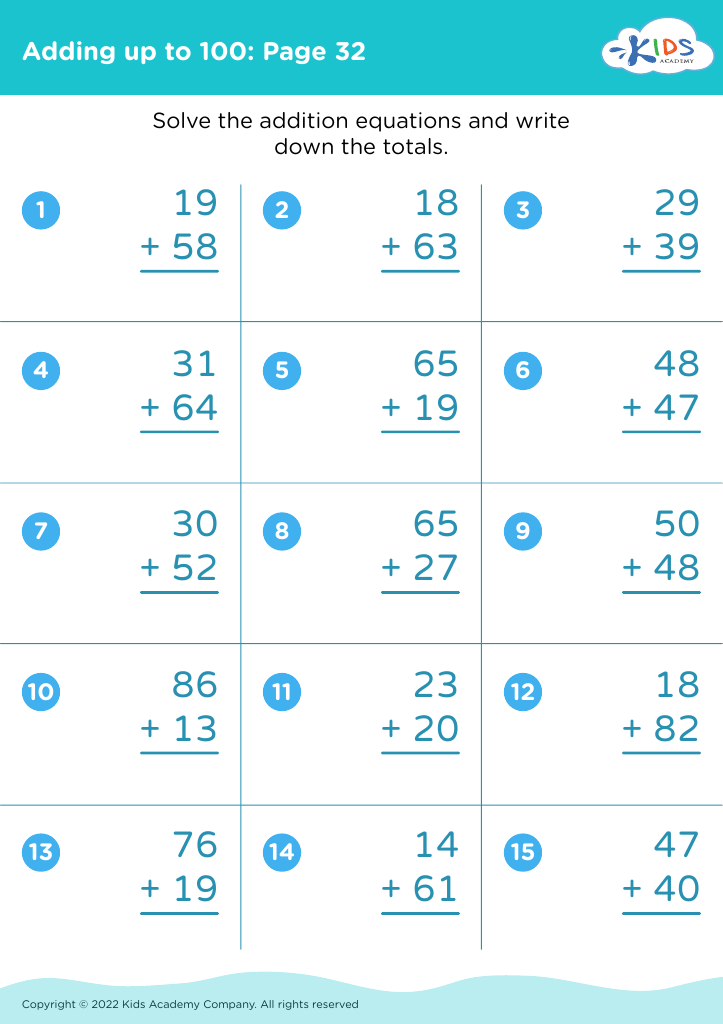
Adding up to 100: Page 32

Adding up to 100: Page 32

Adding up to 100: Page 32
Worksheet
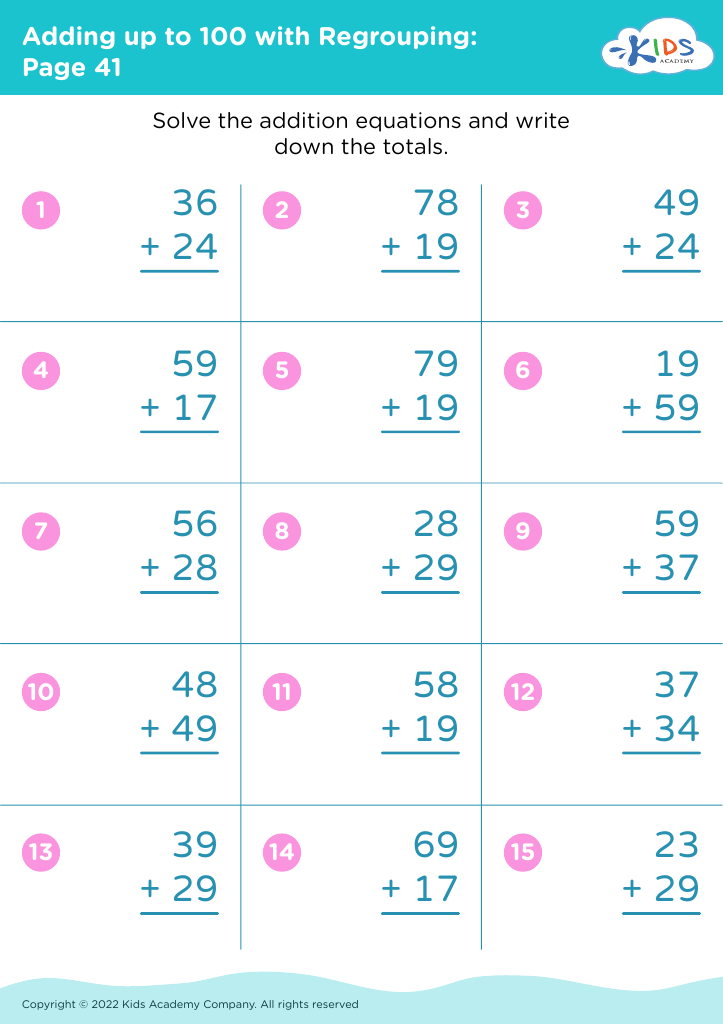
Adding up to 100 with Regrouping: Page 41
Worksheet
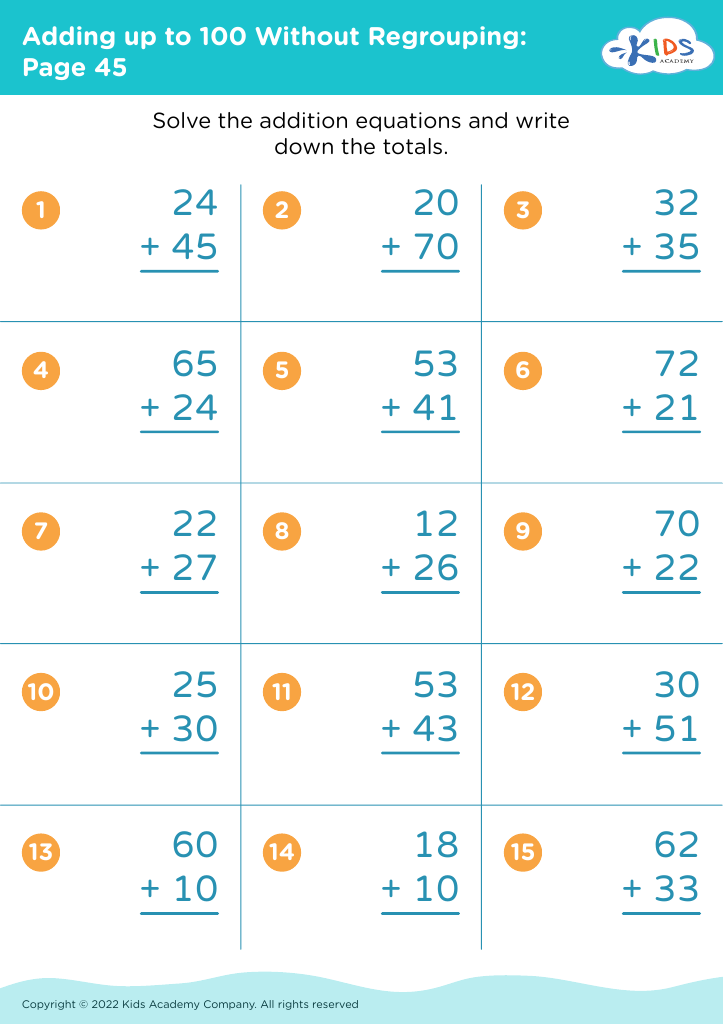
Adding up to 100 Without Regrouping: Page 45
Worksheet
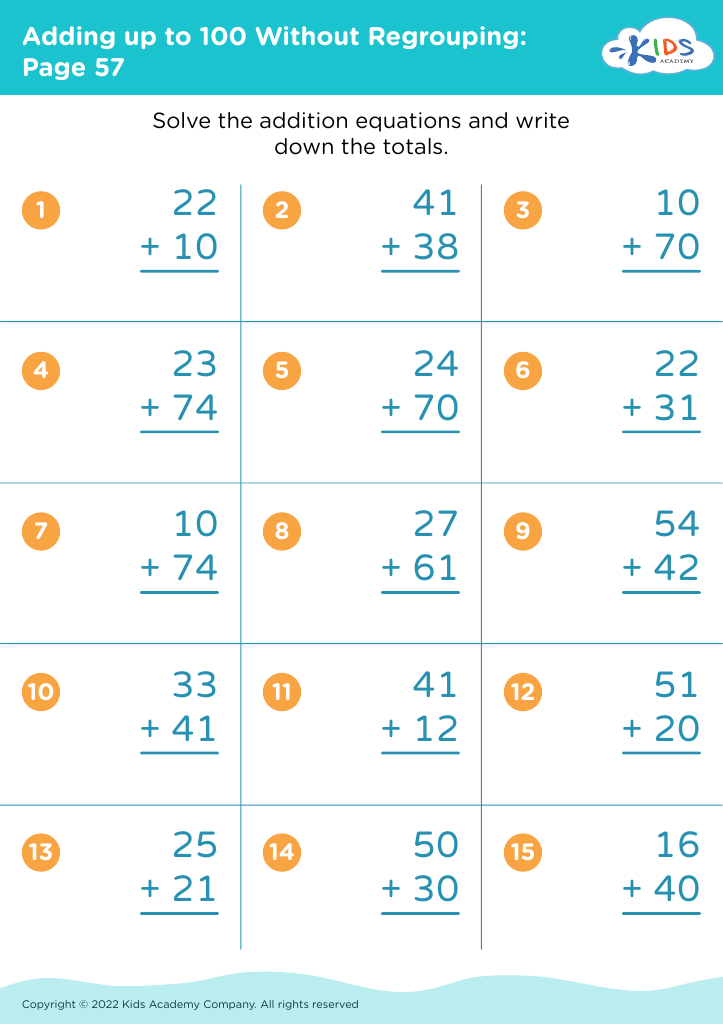
Adding up to 100 Without Regrouping: Page 57
Worksheet
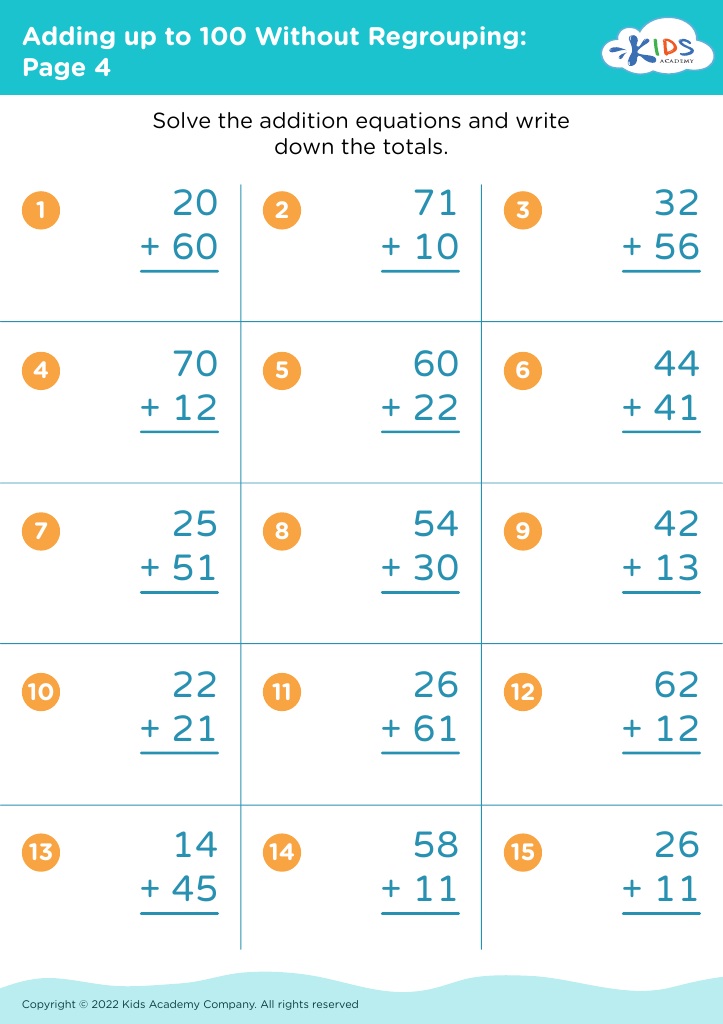
Adding up to 100 Without Regrouping: Page 4
Worksheet
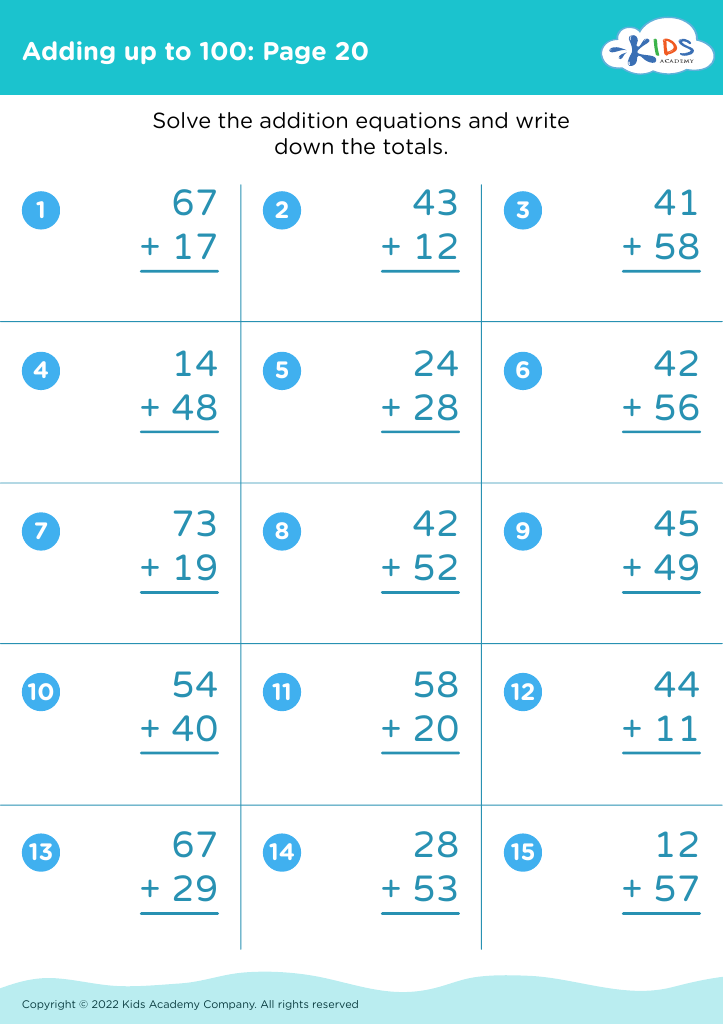
Adding up to 100: Page 20

Adding up to 100: Page 20

Adding up to 100: Page 20
Worksheet
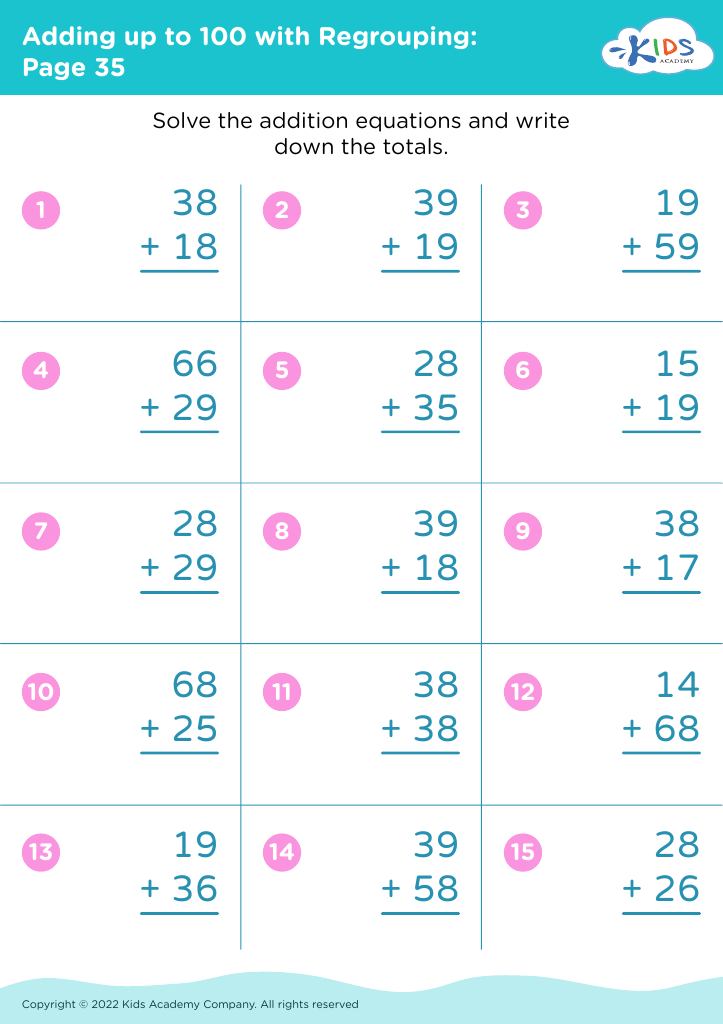
Adding up to 100 with Regrouping: Page 35
Worksheet
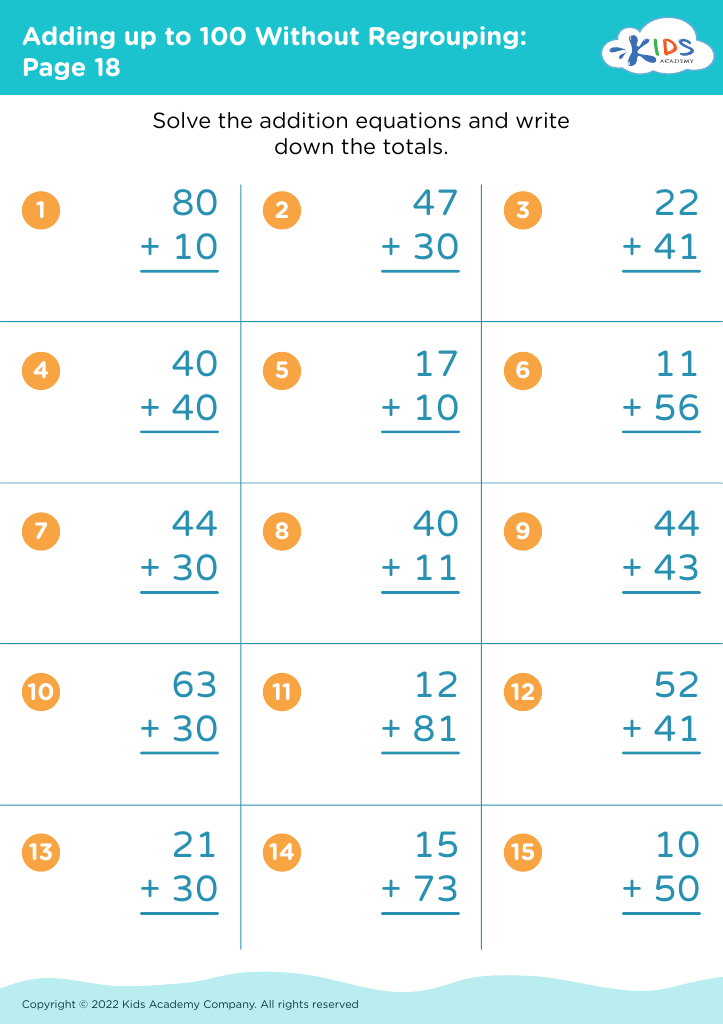
Adding up to 100 Without Regrouping: Page 18
Worksheet
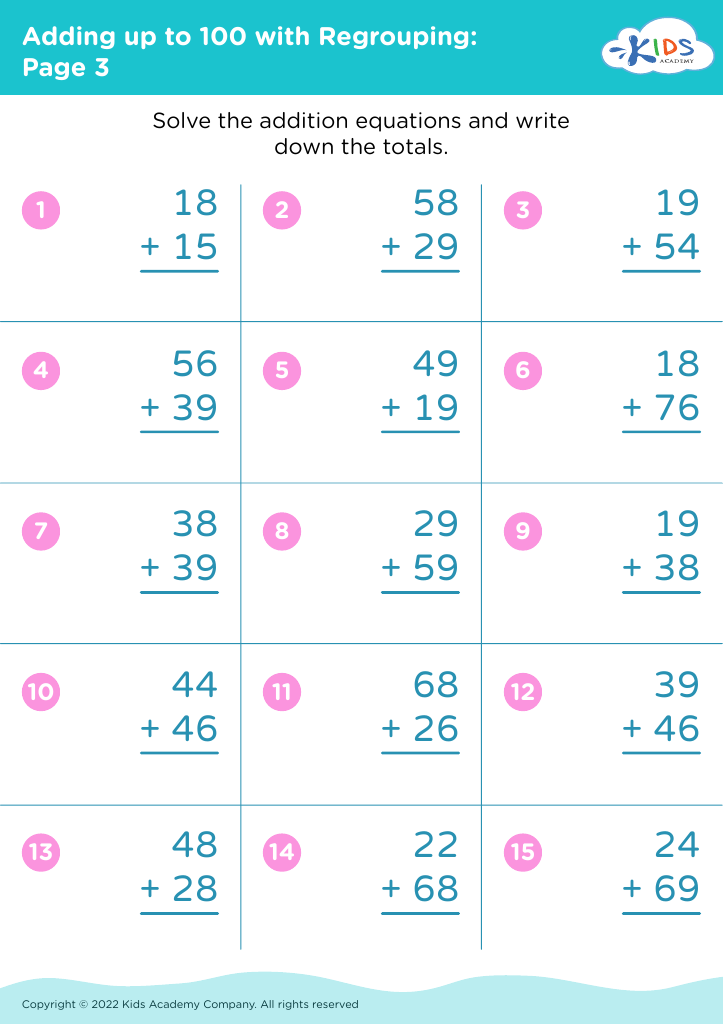
Adding up to 100 with Regrouping: Page 3
Worksheet
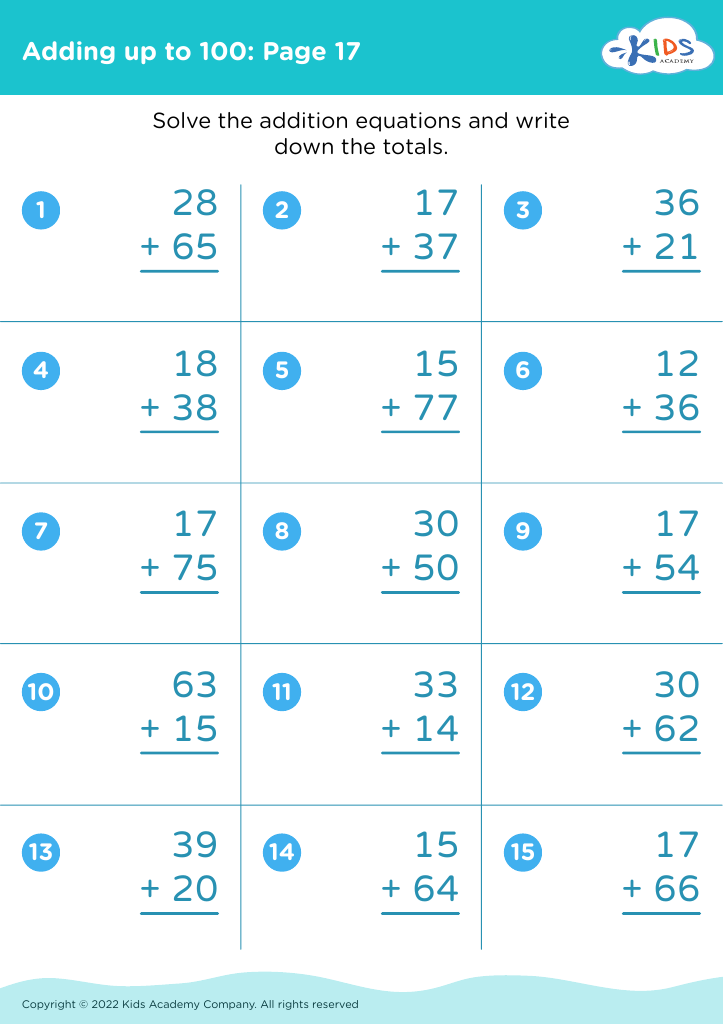
Adding up to 100: Page 17

Adding up to 100: Page 17

Adding up to 100: Page 17
Worksheet
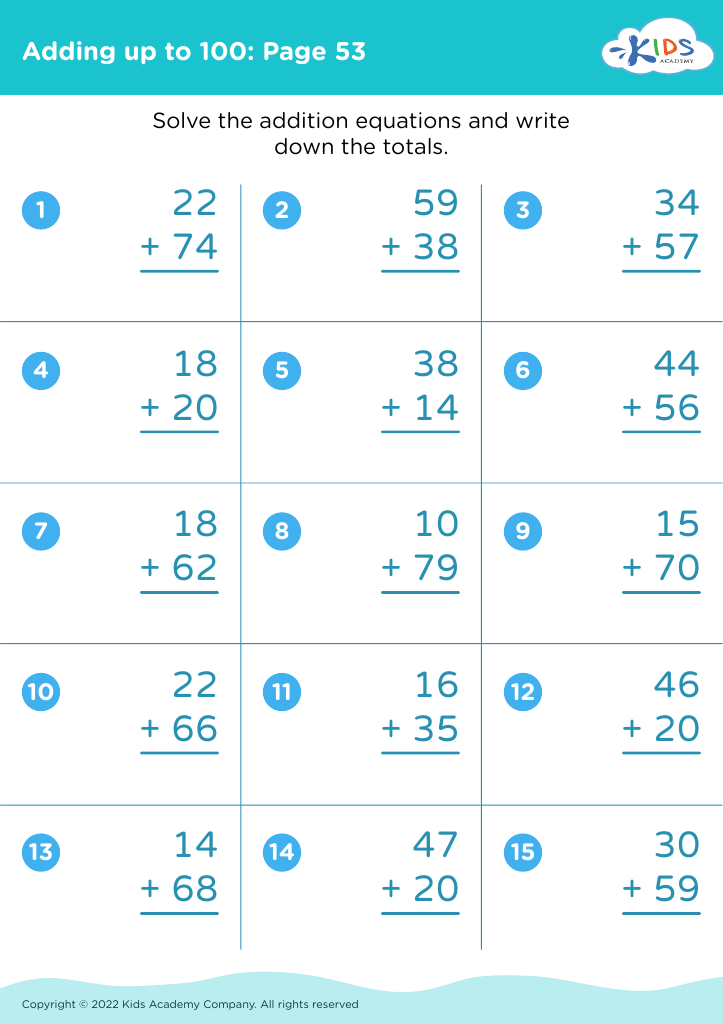
Adding up to 100: Page 53

Adding up to 100: Page 53

Adding up to 100: Page 53
Worksheet
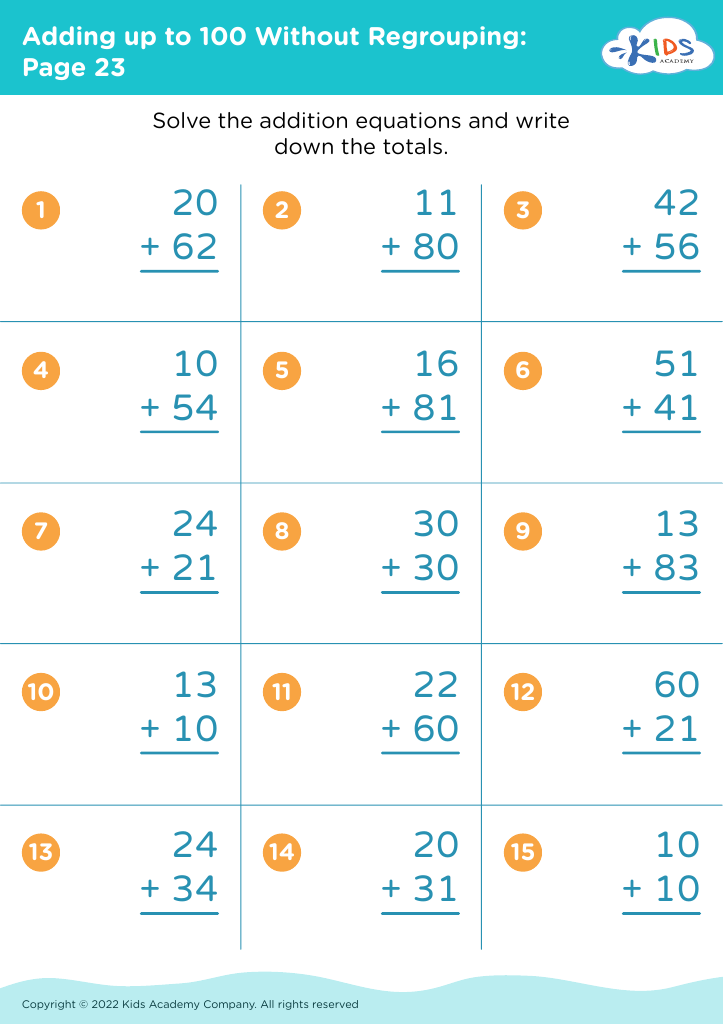
Adding up to 100 Without Regrouping: Page 23
Worksheet
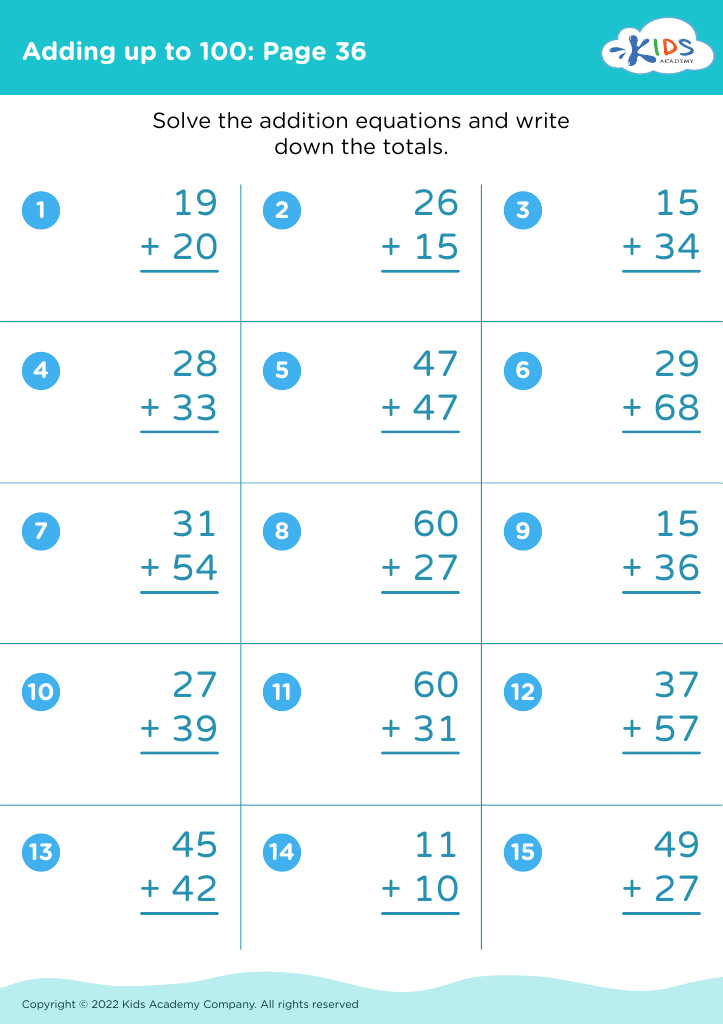
Adding up to 100: Page 36

Adding up to 100: Page 36

Adding up to 100: Page 36
Worksheet
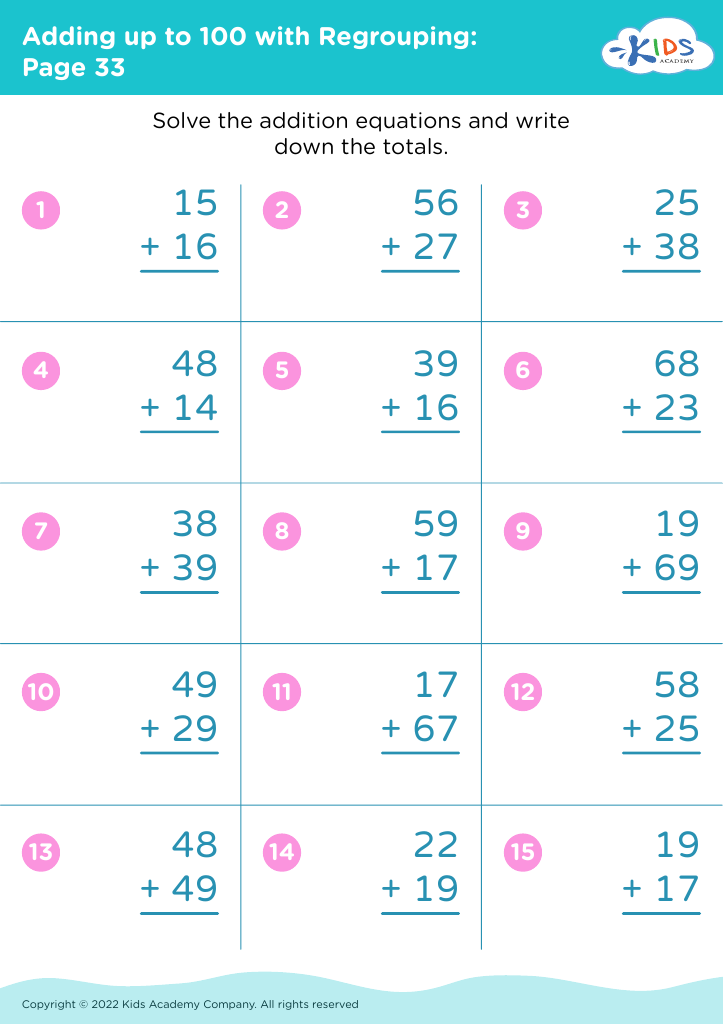
Adding up to 100 with Regrouping: Page 33
Worksheet


Understanding fraction simplification and the concept of adding up to 100 is crucial for children aged 3-8, as it lays the foundation for their mathematical skills. At this age, children are developing critical thinking and problem-solving abilities, and grasping these concepts promotes numerical literacy. Simplifying fractions helps children learn how to identify equivalent values, fostering a deeper understanding of proportions and ratios, which will be invaluable as they encounter more complex math in later grades.

Adding up to 100 nurtures children’s mental math skills and enhances their ability to recognize patterns and relationships in numbers. It also supports their comprehension of percentages, an essential concept in everyday life, such as understanding discounts or dividing things equally among a group.

Moreover, mastering these foundational skills boosts children’s confidence, making them more likely to engage with mathematics as they progress. Parents and teachers play a vital role by incorporating fun, age-appropriate activities that promote these skills through games and interactive exercises. By doing so, they not only make learning enjoyable but also empower children to see the relevance of math in their everyday lives, ultimately preparing them for future academic success.