Identifying equivalent fractions Adding up to 100 Worksheets for Ages 3-8
5 filtered results
-
From - To
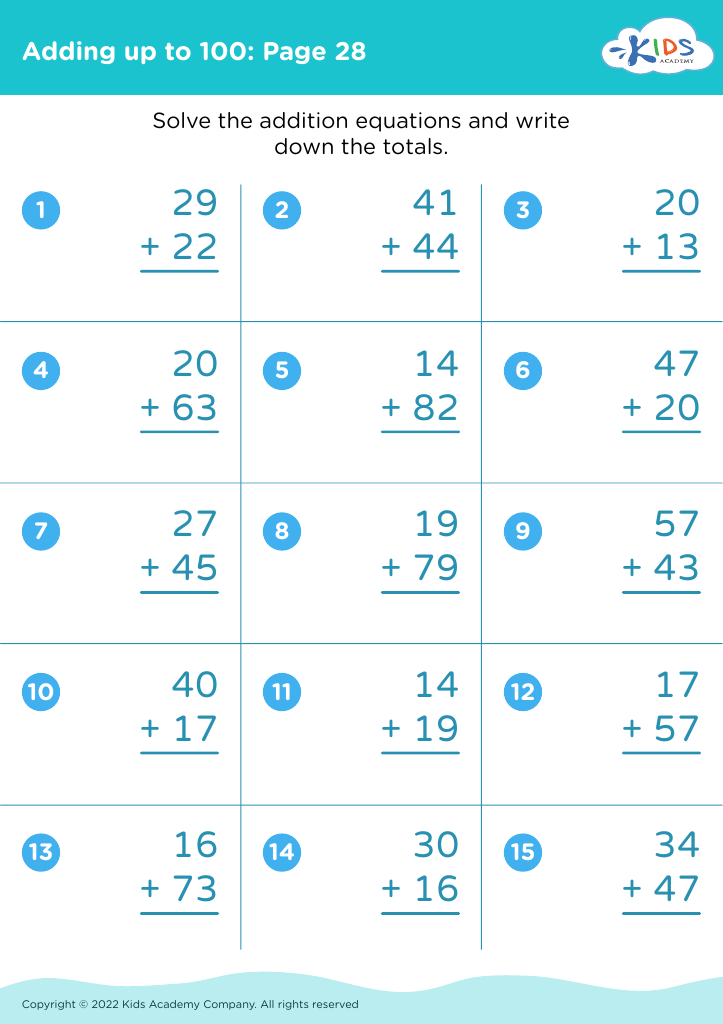
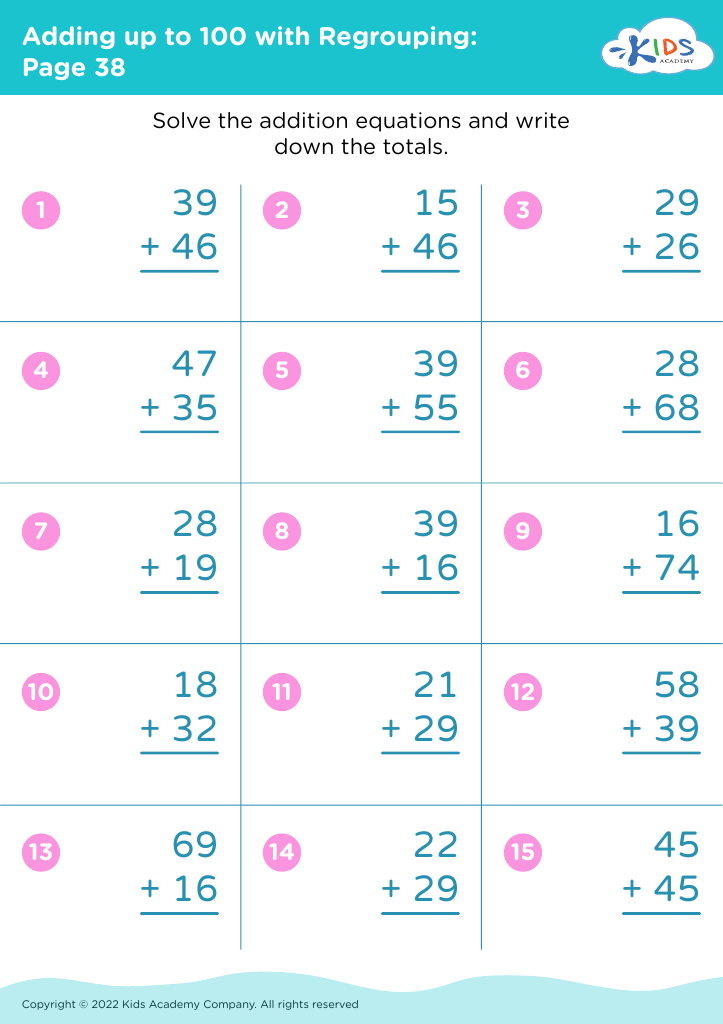
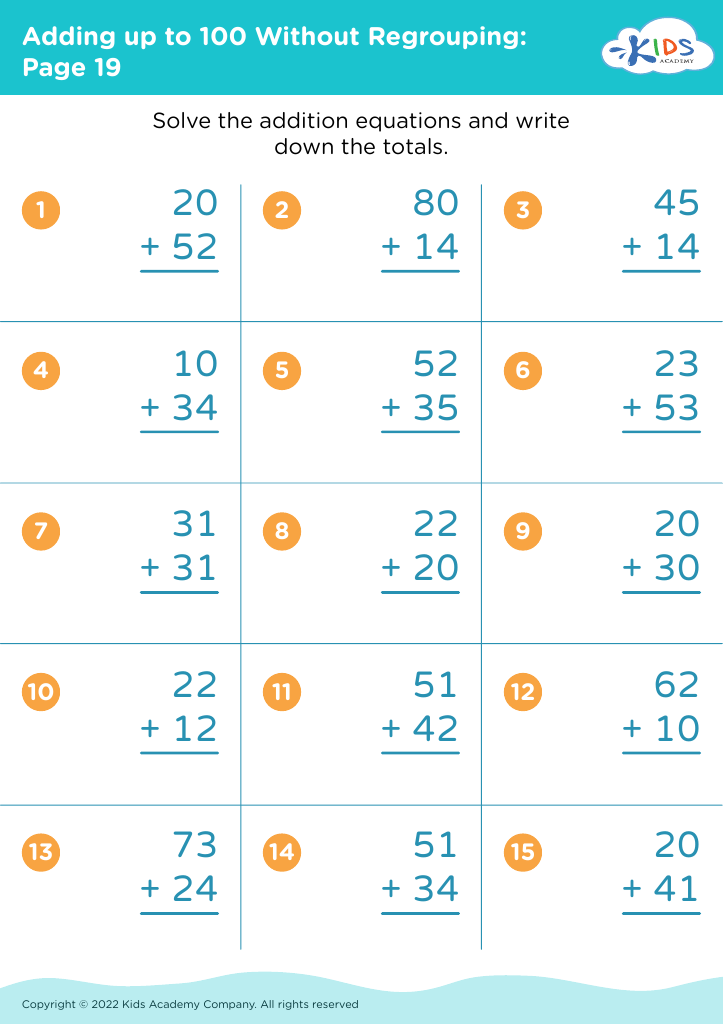
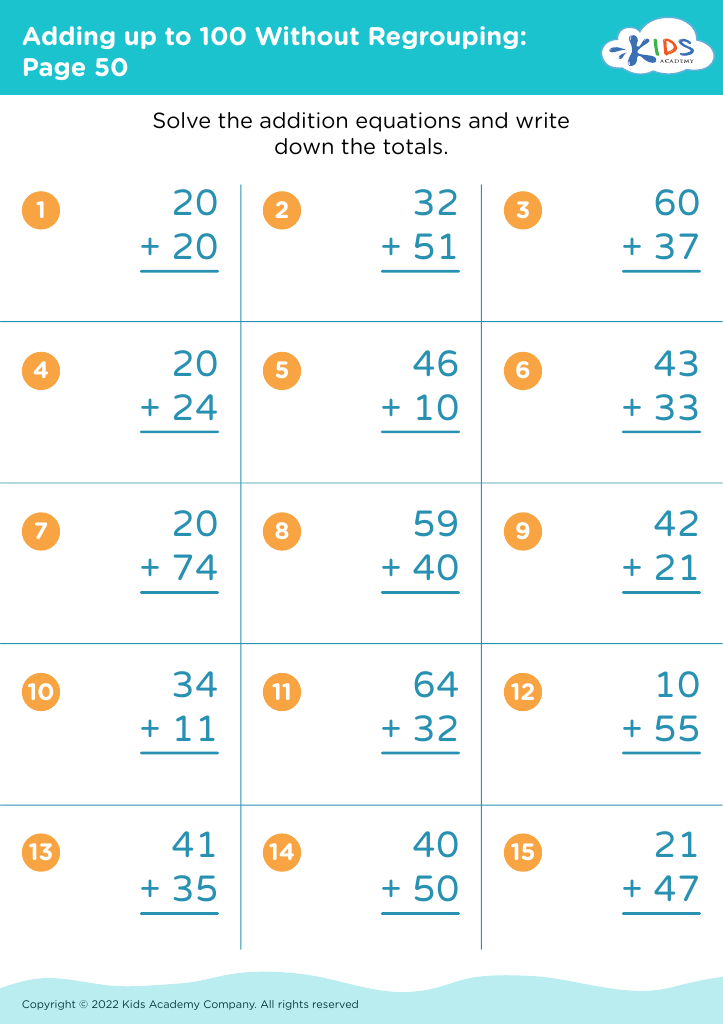
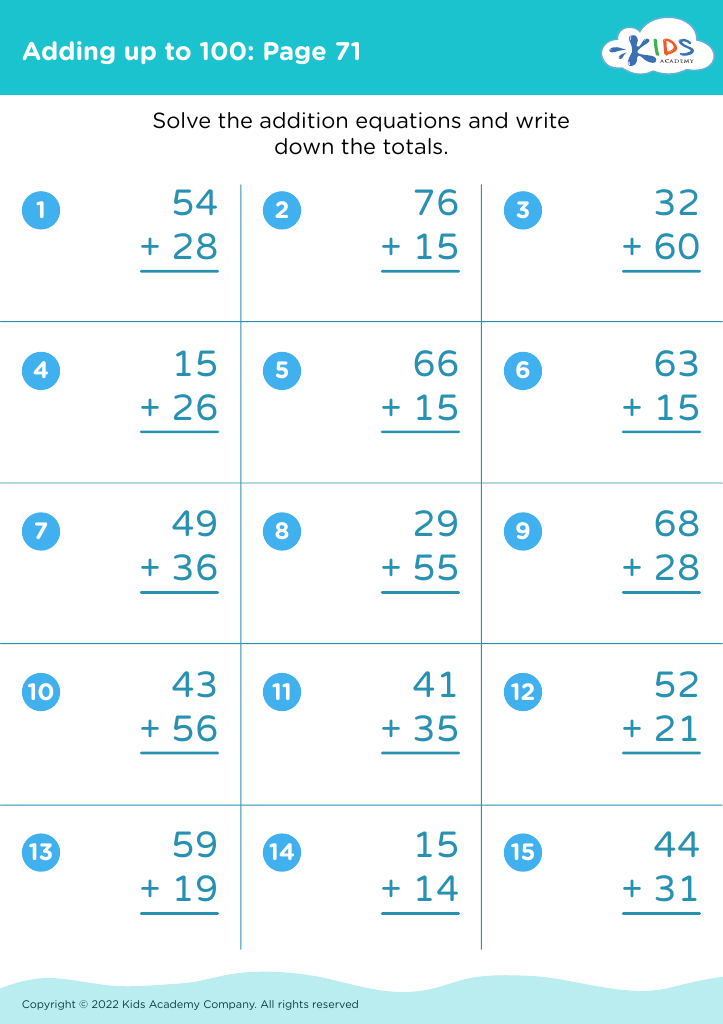
Discover engaging worksheets designed to help young learners aged 3-8 identify equivalent fractions while adding up to 100! Our resources provide a fun and interactive way for children to grasp the concept of fractions through colorful visuals and hands-on activities. With exercises tailored to varied skill levels, these worksheets encourage critical thinking and enhance math fluency. Perfect for classrooms or home learning, they foster a solid foundation in foundational math skills. Empower your child with the knowledge to confidently navigate fractions through our identified worksheets, ensuring productive and enjoyable learning experiences. Start exploring today and boost your child's math confidence!



%20(1).jpg)



Identifying equivalent fractions and understanding how they add up to 100 is crucial for young learners aged 3-8. Firstly, it lays the foundation for mathematical proficiency. Recognizing equivalent fractions enhances children's ability to see relationships and similarities in numbers, aiding in their understanding of basic arithmetic operations. This skill teaches them that different representations can express the same quantity, reinforcing their number sense.
Moreover, teaching this concept can contribute to fostering critical thinking and problem-solving skills early on. When children grasp that fractions can be equivalent, they develop a more flexible approach to numbers, which is applicable in real-life situations, such as sharing food or measuring ingredients in cooking.
Additionally, since the concept connects closely with addition, it supports the development of their understanding of sums and totals. For instance, when children learn that fractions can add up to 100, it strengthens their grasp on place value and enhances their ability to recognize patterns.
Moreover, early exposure to these concepts develops a positive attitude toward mathematics, instilling confidence that carries into later grades. Thus, parents and teachers should prioritize these foundational skills to ensure a well-rounded mathematical education and foster a lifelong appreciation for learning.








