Identifying shapes Adding up to 100 Worksheets for Ages 3-8
8 filtered results
-
From - To
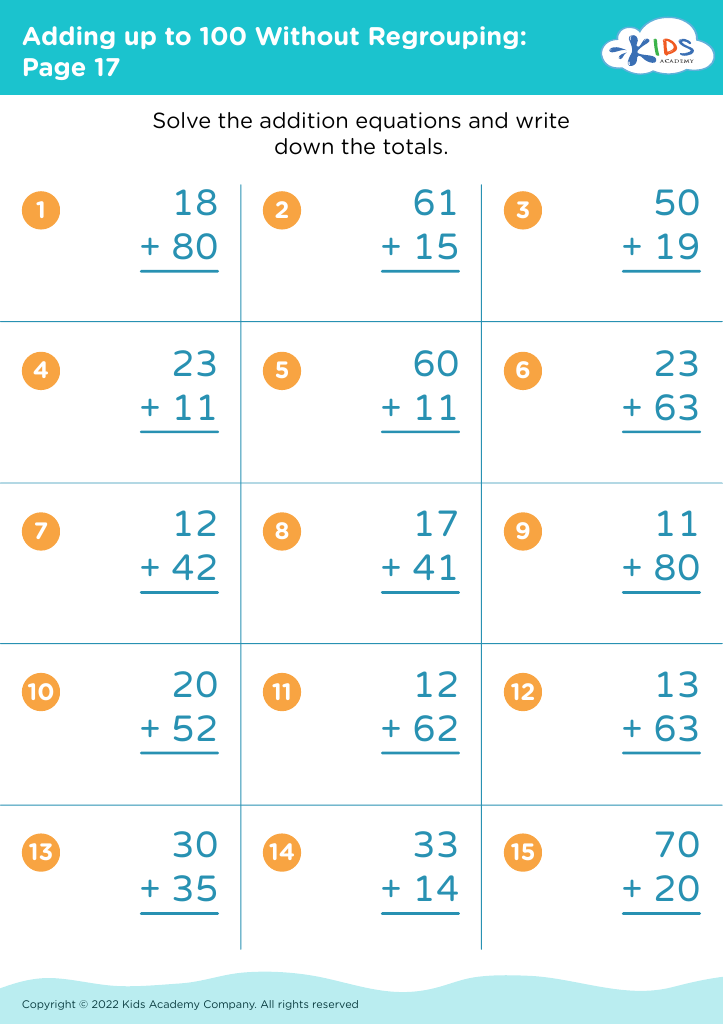
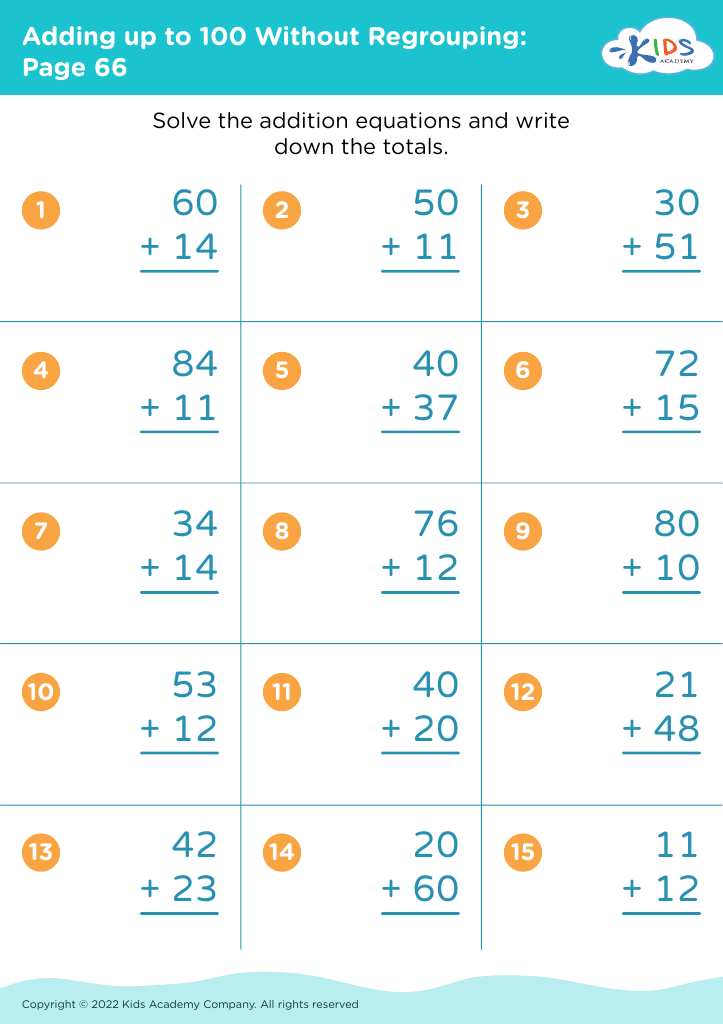
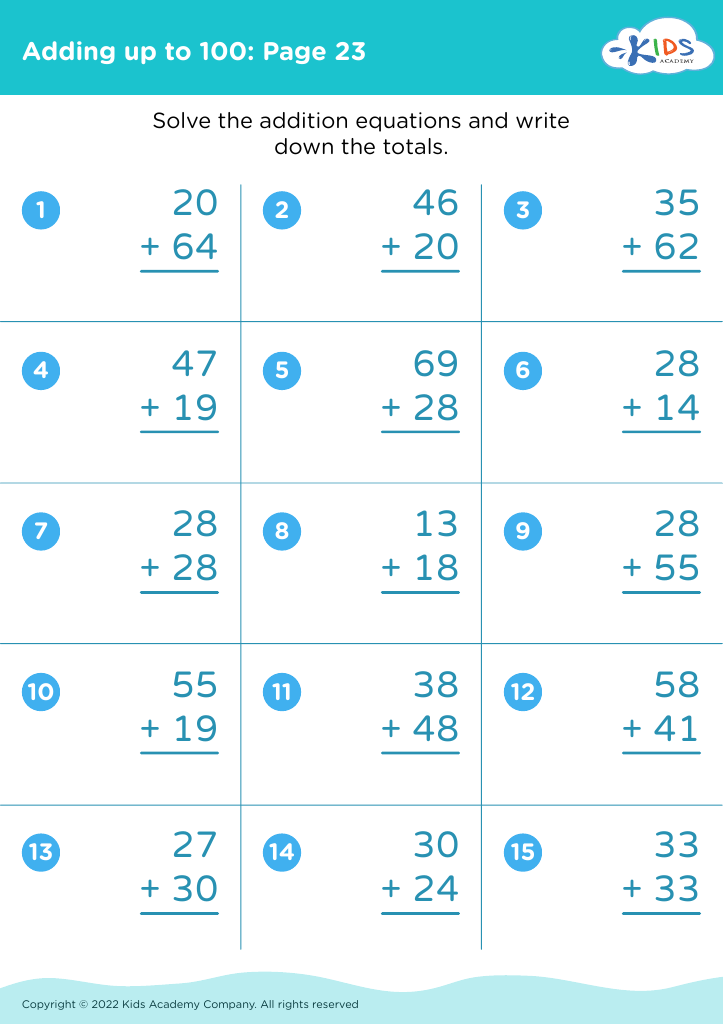
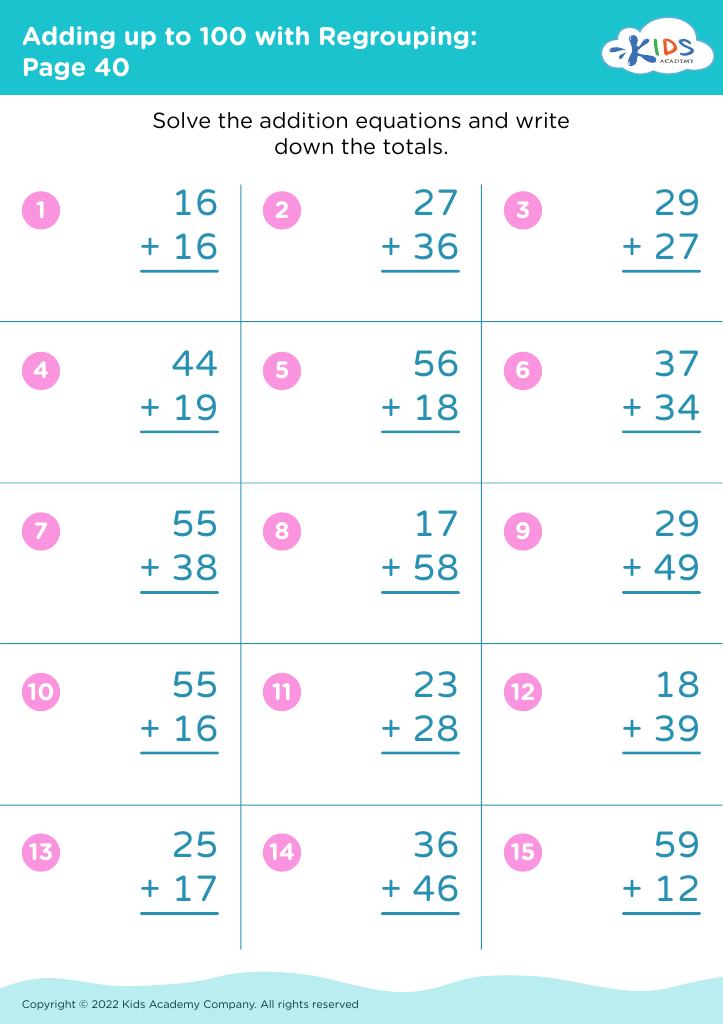
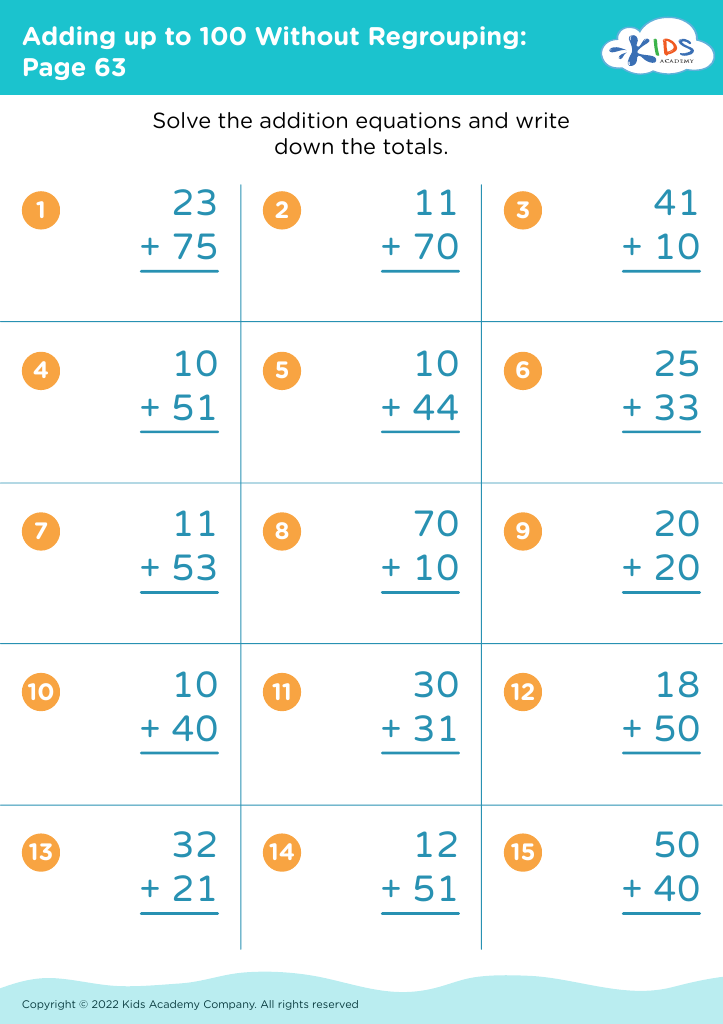
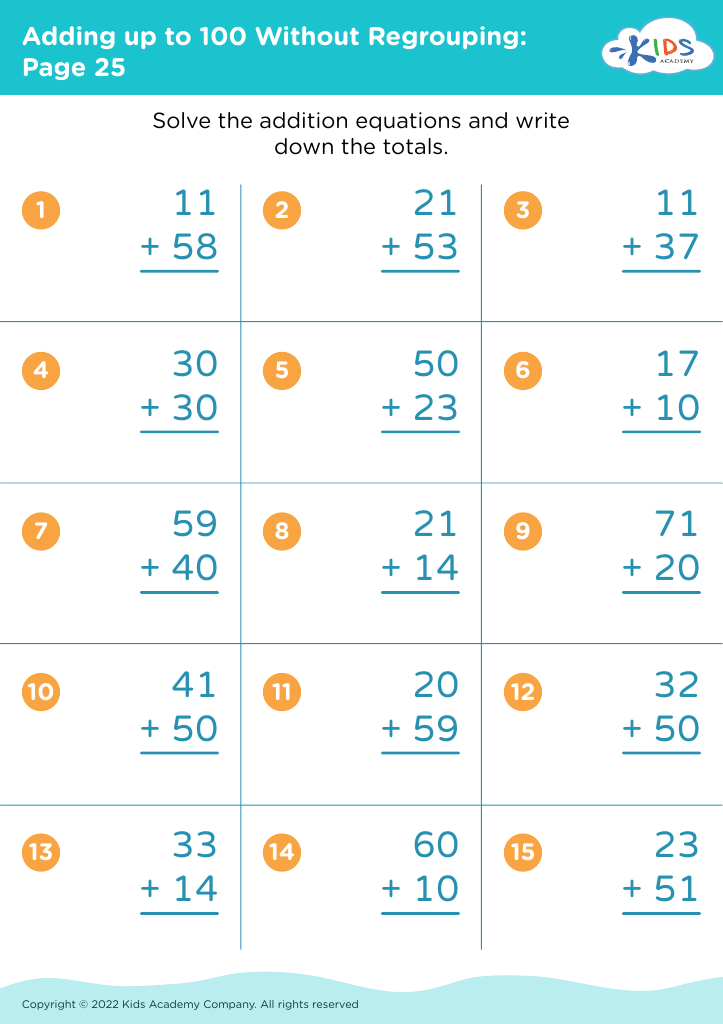
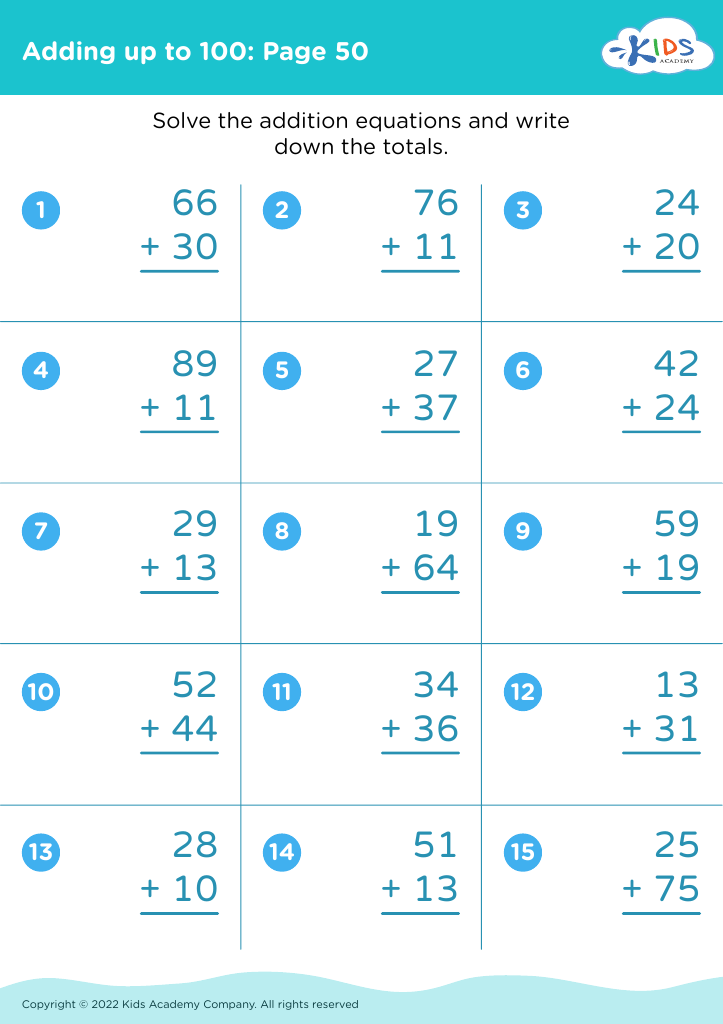
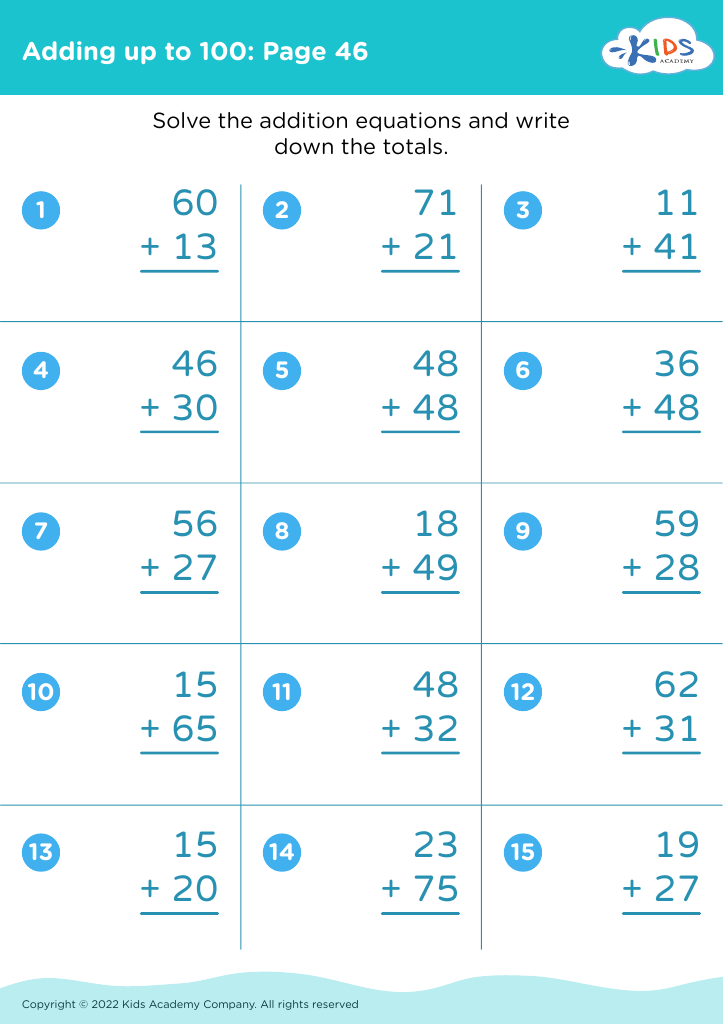
Discover our engaging "Identifying Shapes Adding Up to 100" worksheets, specially designed for children ages 3 to 8. These interactive resources help young learners develop shape recognition while practicing basic addition skills up to 100. Each worksheet features vibrant illustrations and fun activities that keep kids excited about learning. As students identify various shapes, they'll enjoy hands-on exercises that reinforce both math and critical thinking abilities. Perfect for home learning or classroom activities, these worksheets promote essential cognitive skills and enhance numerical understanding, ensuring that students build a solid foundation for future math success. Unlock your child’s potential today!






%20(1).jpg)
Identifying shapes and adding up to 100 are vital concepts for children aged 3-8, laying a strong foundation for their mathematical understanding and cognitive development. Recognizing shapes helps kids make sense of the world around them. These foundational skills are crucial for everyday tasks and future learning; for example, recognizing shapes enhances spatial awareness and critical thinking. As children identify and classify different shapes, they learn to observe their environment more closely, fostering curiosity and exploration.
Meanwhile, the ability to add up to 100 introduces young learners to basic arithmetic, setting the stage for more complex mathematical concepts. This skill enhances counting abilities, number recognition, and mental arithmetic, essential for academic success. Mastery of these basic numerical concepts leads to increased confidence in math, helping to address common anxieties in later grades.
Both shape identification and understanding addition up to 100 promote problem-solving skills and logical reasoning, key competencies in everyday life and future education. For parents and teachers, fostering these skills through engaging activities can unlock a child's potential, encourage a love of learning, and ensure they are well-prepared for subsequent academic challenges. Emphasizing these early concepts contributes to a holistic approach to childhood development.








