Improve math skills Adding up to 100 Worksheets for Ages 3-8
6 filtered results
-
From - To
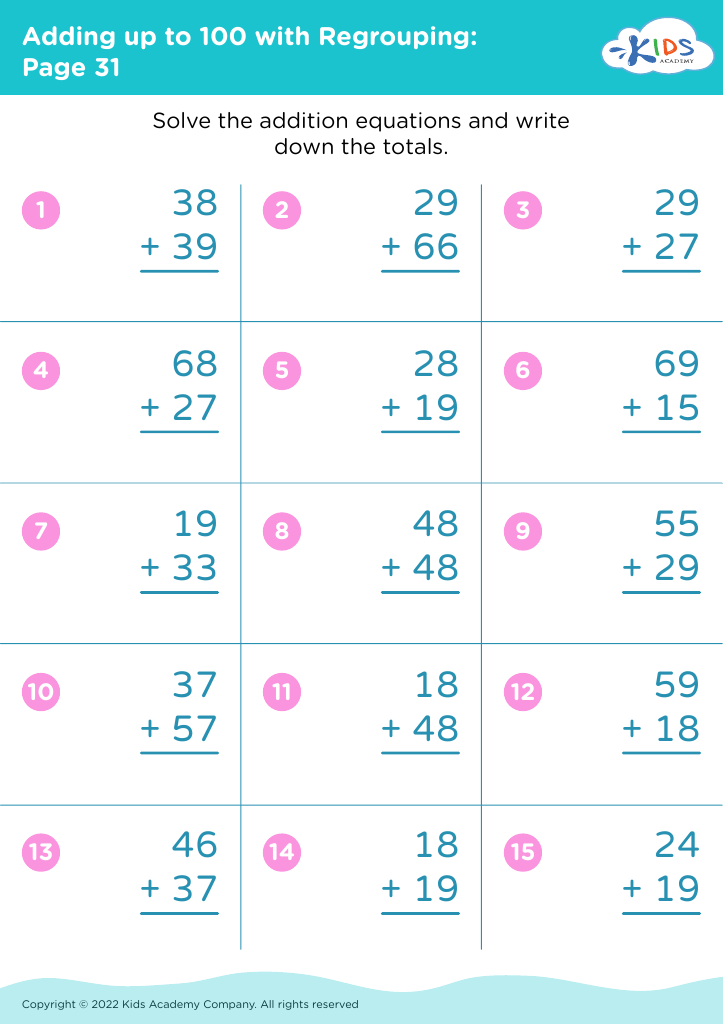
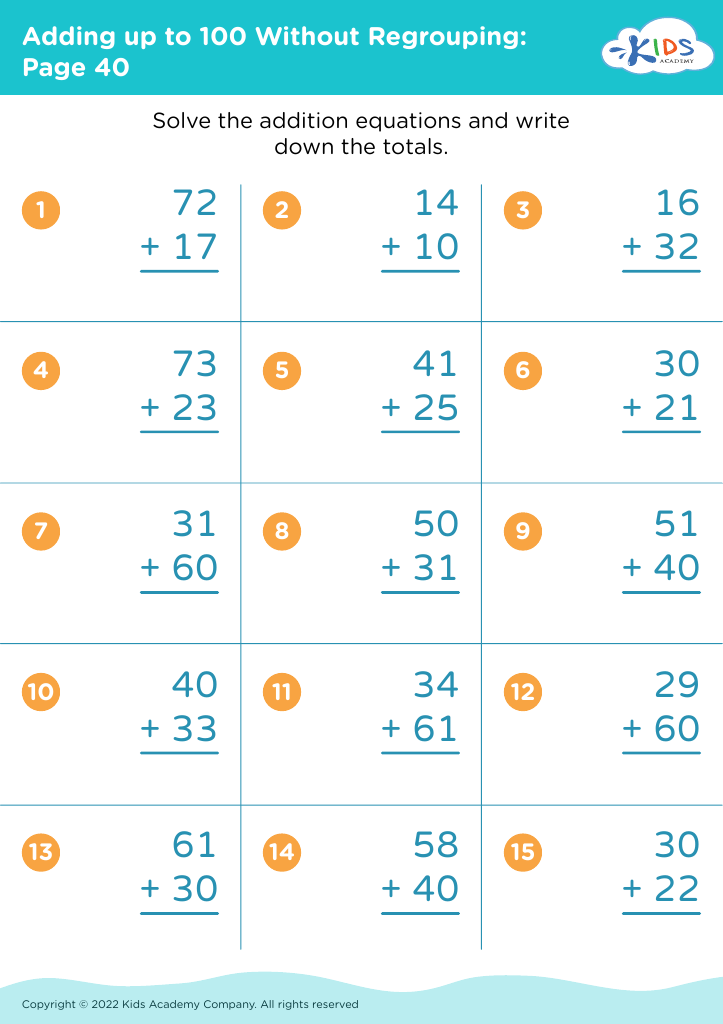
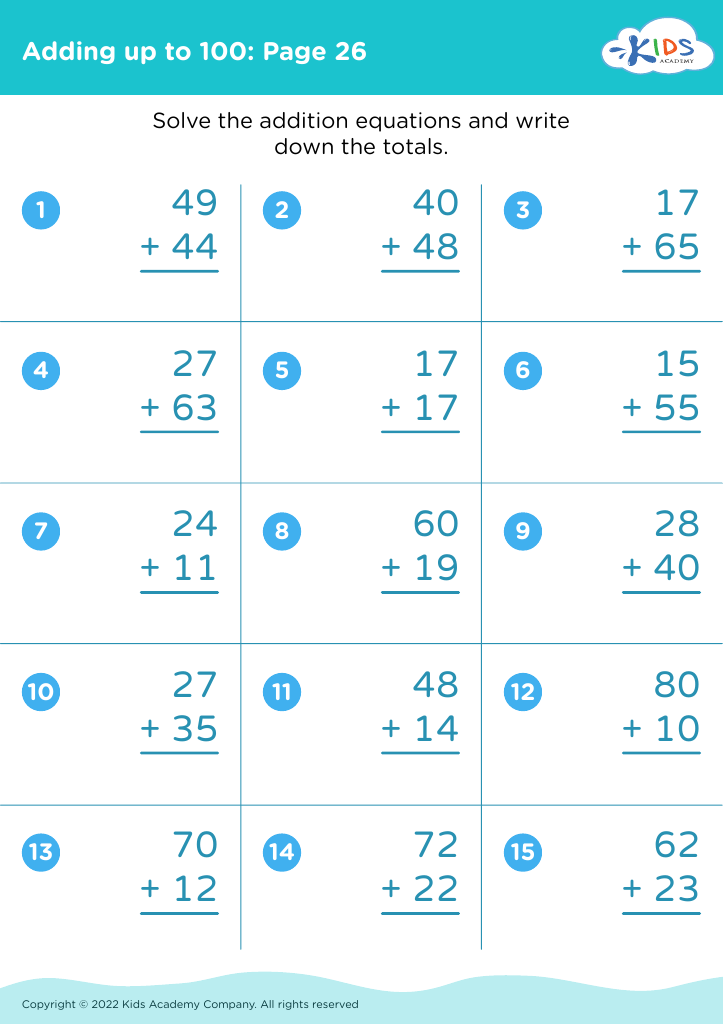
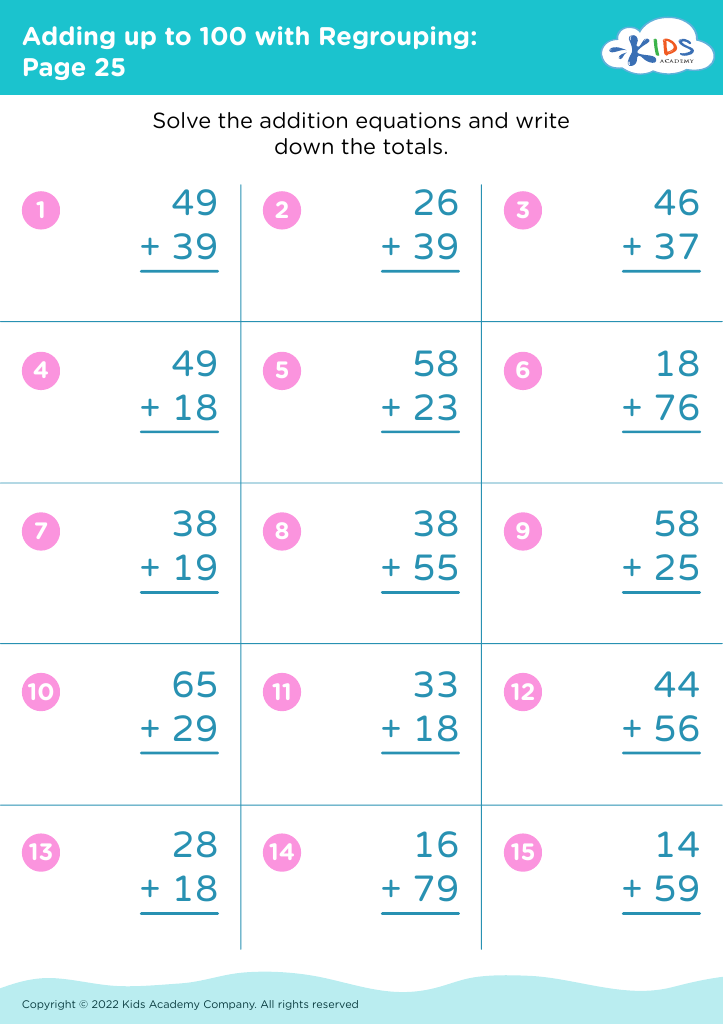
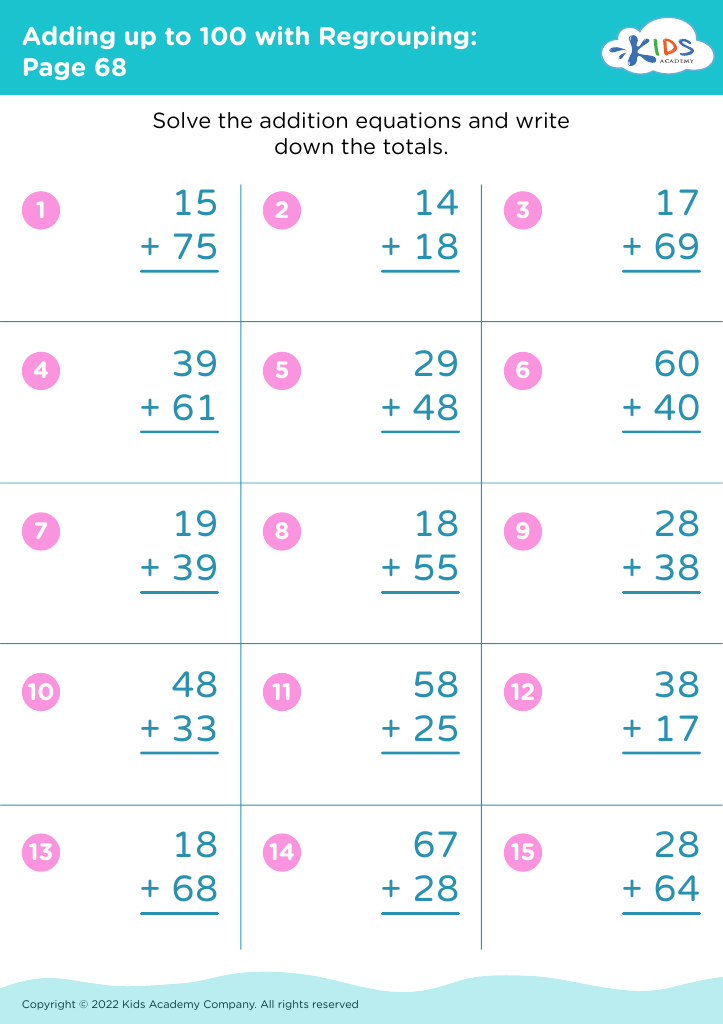
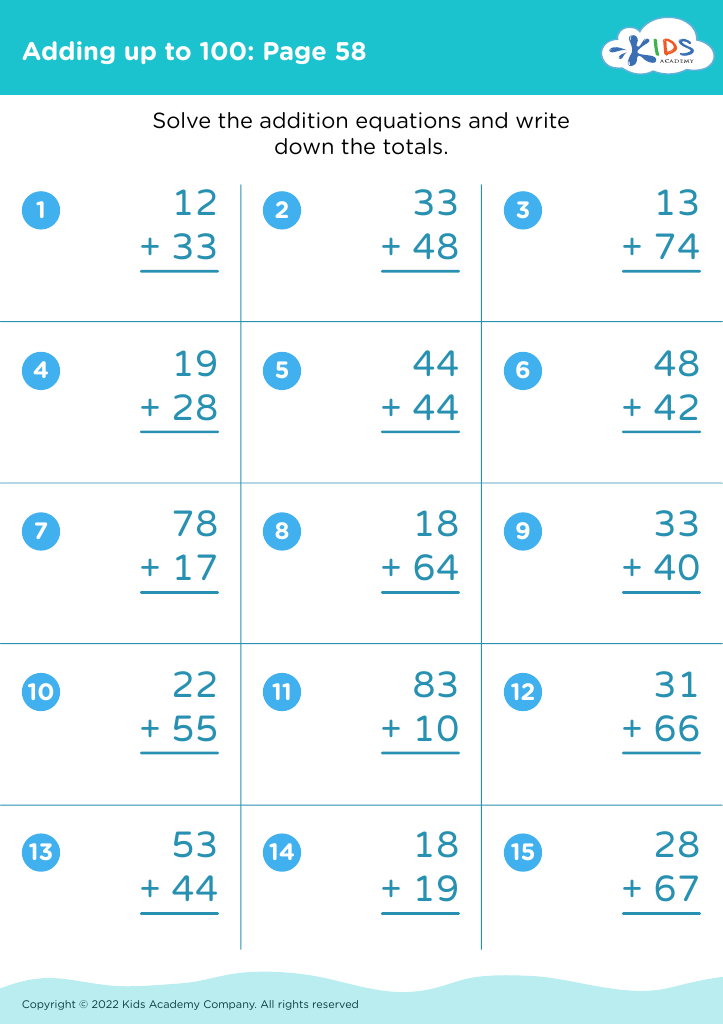
Boost your child's math skills with our engaging "Adding Up to 100 Worksheets," specially designed for ages 3-8. These interactive worksheets make learning fun, helping young learners grasp essential addition concepts in an enjoyable way. With colorful exercises and practical examples, children will practice adding numbers, develop problem-solving abilities, and build a solid foundation in math. Ideal for both classroom use and at-home learning, these worksheets cater to various skill levels, ensuring every child can advance at their own pace. Empower your little ones to master addition with these valuable resources that make math visually appealing and accessible!






%20(1).jpg)
Improving math skills, particularly the ability to add up to 100, is crucial for children aged 3-8 for several reasons. First, foundational numeracy instills confidence in young learners, laying the groundwork for more complex mathematical concepts later on. Mastery of addition helps promote logical thinking and problem-solving skills, essential for both academic and real-life situations.
Parents and teachers must recognize that early mathematical achievements are linked to lifelong learning trajectories. When children can comfortably add to 100, they develop a strong sense of number relationships and patterns, improving their overall mathematical fluency. This skill also fosters a better understanding of money, time management, and measurement, vital for daily living.
Additionally, a focus on math skills encourages a positive attitude towards learning. Engaging in interactive and enjoyable math-related activities at an early age can help eliminate anxiety commonly associated with mathematics in later years. Building these skills through play, games, and real-life applications also strengthens the bond between parents, teachers, and students, creating an enriching educational environment. Ultimately, investing in a child's mathematical competencies today empowers them with tools for future success in school and beyond.








