Improve reading comprehension Adding up to 100 Worksheets for Ages 3-8
4 filtered results
-
From - To
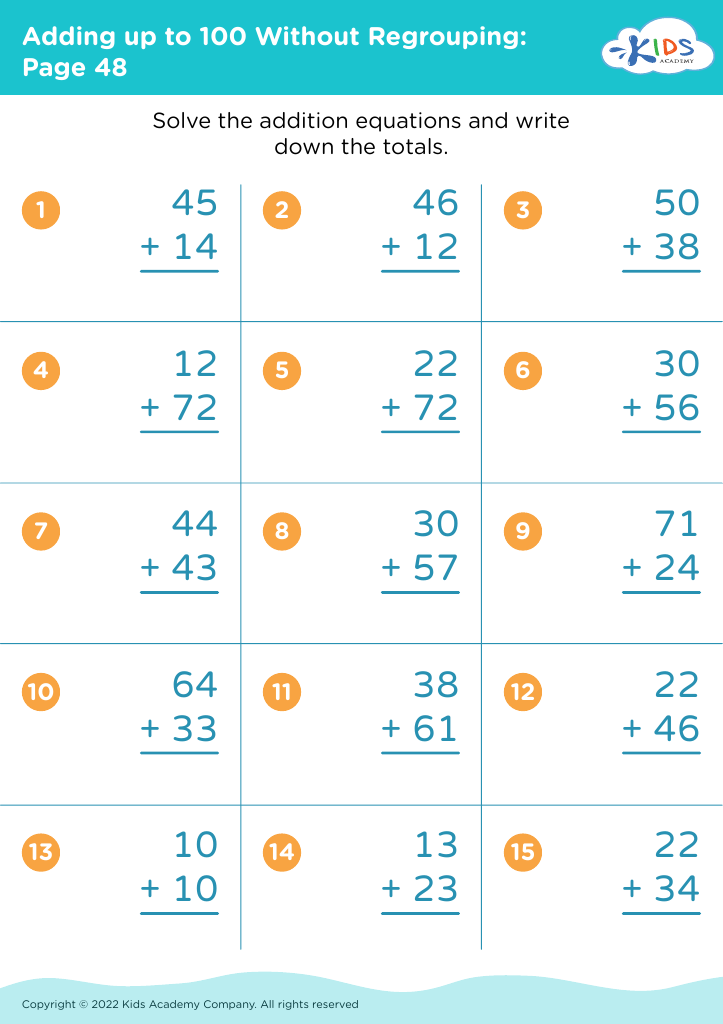
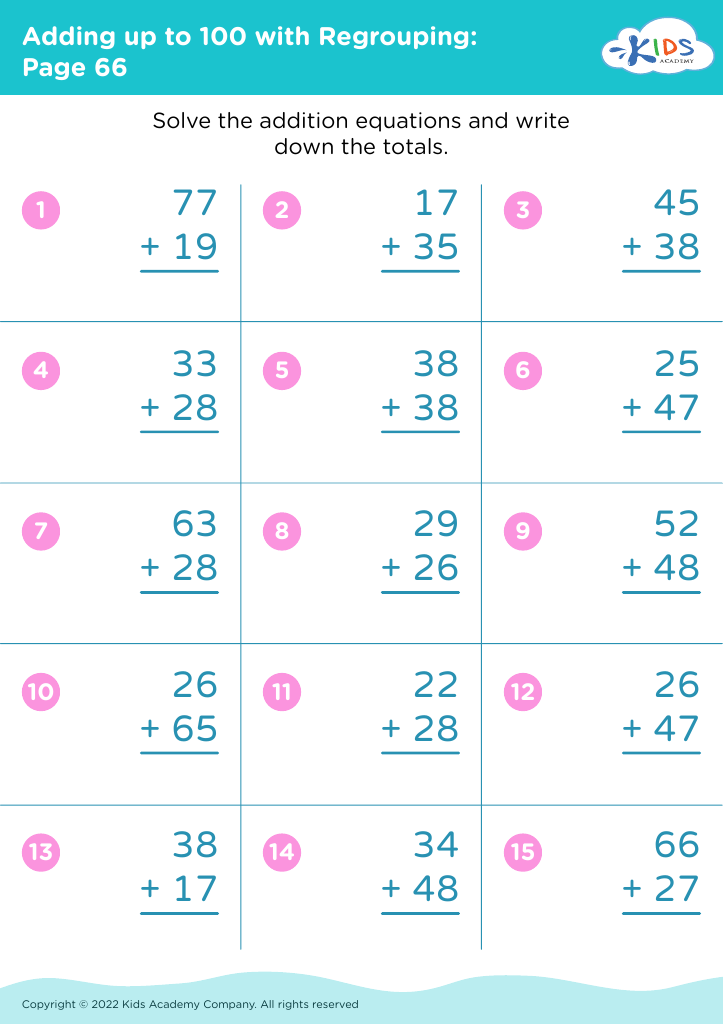
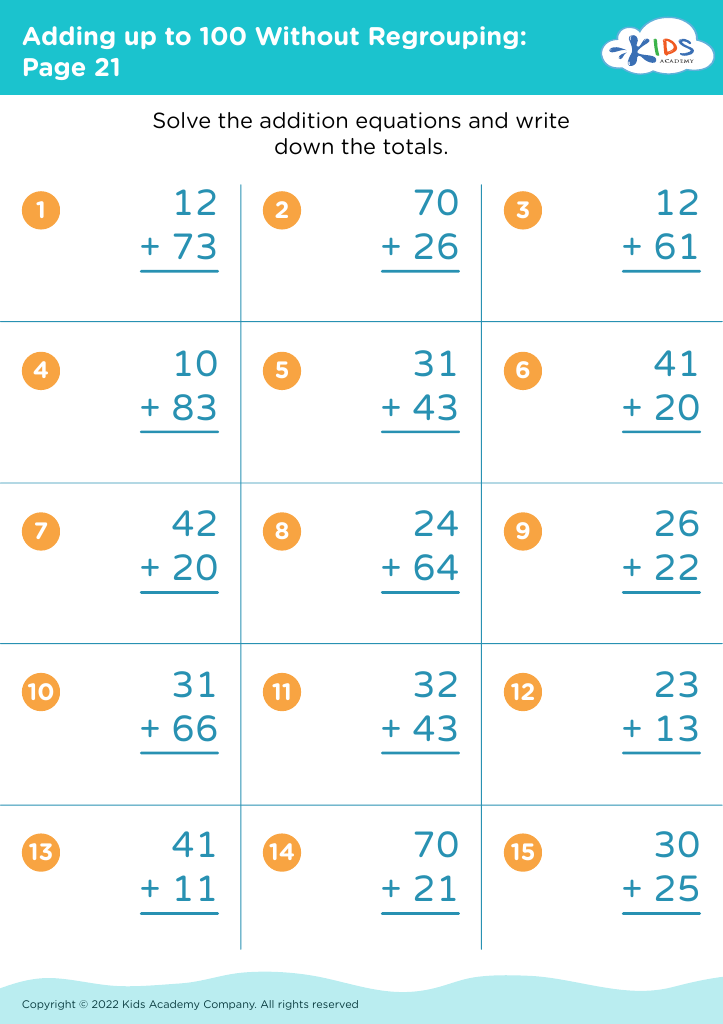
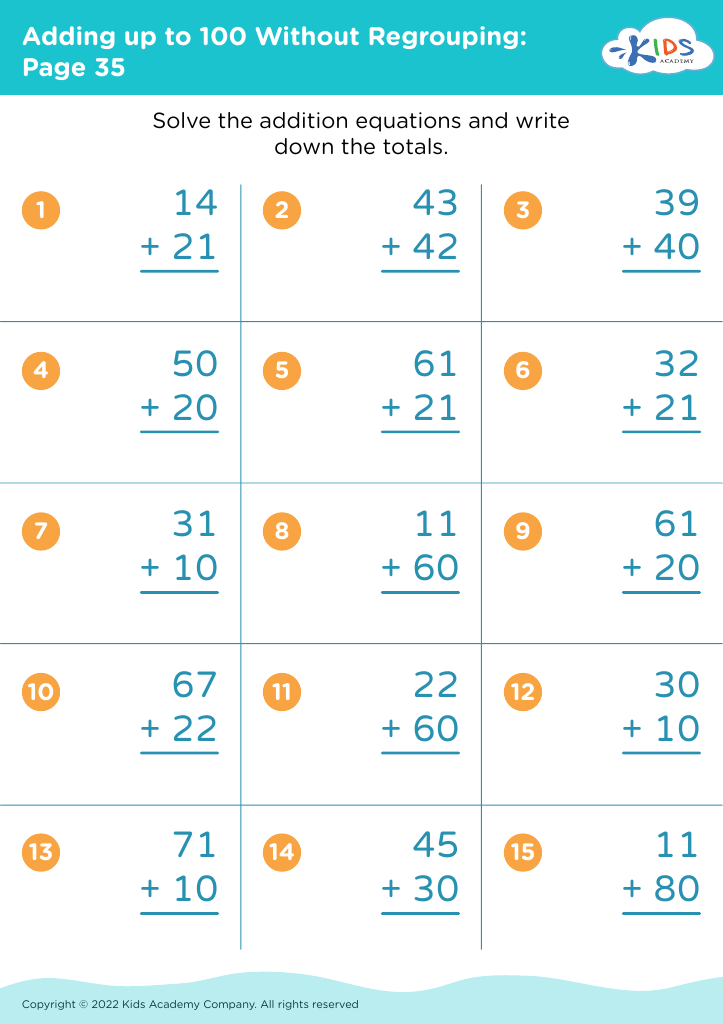
Enhance your child's reading comprehension skills with our "Improve Reading Comprehension: Adding Up to 100" worksheets designed for ages 3-8. This collection features 100 engaging and interactive worksheets that combine math practice with reading exercises, helping young learners develop essential skills in a fun way. Children will explore various topics through context-rich sentences and exciting stories, fostering their understanding of texts while reinforcing addition concepts. Ideal for parents and educators, these worksheets encourage critical thinking and help bolster confidence in reading. Start your child’s journey to improved reading comprehension today and watch their skills flourish!





%20(1).jpg)

Improving reading comprehension in children ages 3-8 is vital for their overall academic success and personal development. Reading comprehension goes beyond identifying words; it involves understanding, interpreting, and connecting ideas. Strong reading skills lay the foundation for lifelong learning by enhancing critical thinking and analytical abilities.
For parents and teachers, fostering reading comprehension helps children engage with the material more deeply, allowing them to think critically about what they read. This can boost their confidence, increase motivation, and instill a love of reading at an early age. Parents can support this by encouraging discussions about stories, asking open-ended questions, and relating stories to real-life experiences.
Teachers, on the other hand, play a crucial role by employing various strategies in the classroom, such as interactive storytelling, guided reading sessions, and teaching vocabulary in context. These techniques can make reading a more enjoyable and meaningful activity for children.
Moreover, good reading comprehension skills contribute to improved performance across subjects, as students who can understand texts effectively will excel in math, science, and social studies. In essence, nurturing reading comprehension is a crucial investment in children's future, fostering academic achievement and, ultimately, shaping literate and informed individuals.








