Practice problem-solving Adding up to 100 Worksheets for Ages 3-8
3 filtered results
-
From - To
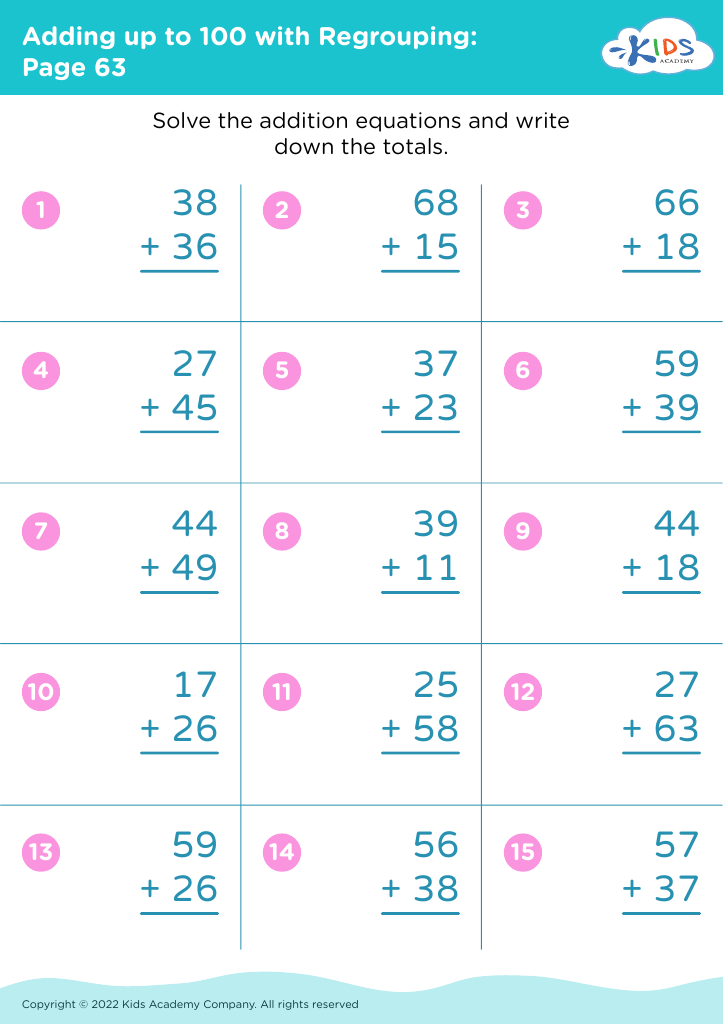
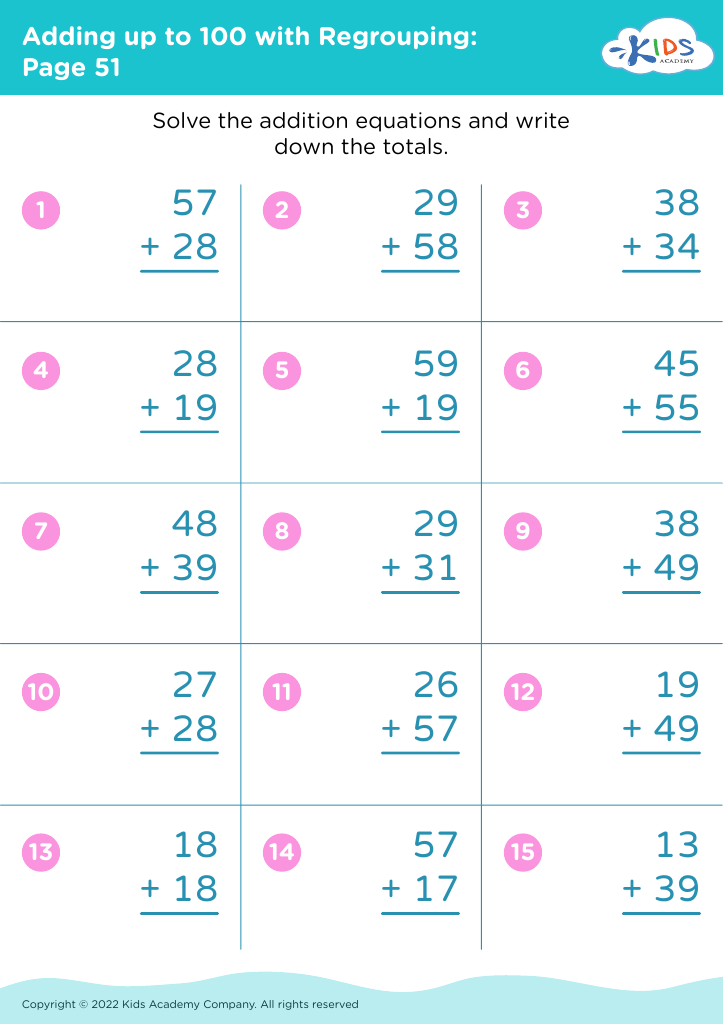
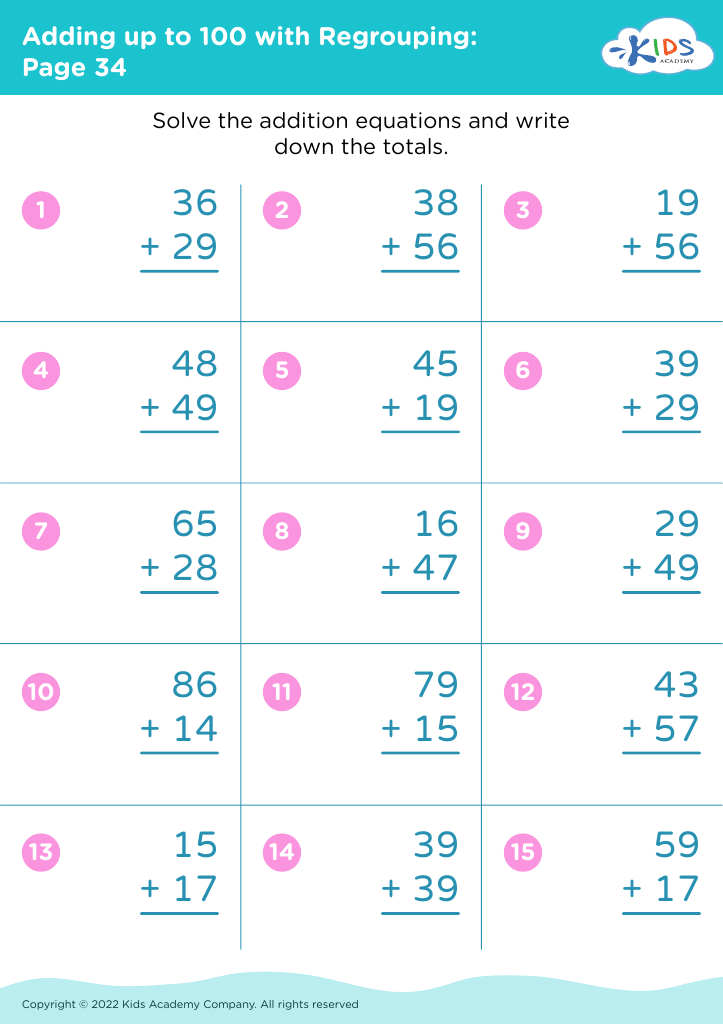
Our "Practice Problem-Solving Adding up to 100 Worksheets for Ages 3-8" makes learning math exciting and engaging. Specially designed for young learners, these worksheets help children build essential addition skills while promoting logical thinking and boosting confidence. Each worksheet features age-appropriate challenges that progress in difficulty, ensuring children grasp the concept of adding numbers up to 100. Colorful and fun, these activities are perfect for both classroom settings and home practice. With our worksheets, your child will develop a solid foundation in addition, setting the stage for future math success. Make learning enjoyable with our expertly crafted resources!





%20(1).jpg)

Parents and teachers should care about practice problem-solving adding up to 100 for children aged 3-8 because foundational mathematical skills form the building blocks for future academic success. Engaging young learners in these exercises enhances their number sense, the ability to understand and manipulate numbers, which is crucial for more complex arithmetic. Furthermore, it fosters critical thinking and analytical skills as children learn how to approach problems methodically.
Early exposure to problem-solving with sums up to 100 helps children gain confidence in their abilities. As they practice, they experience small victories that encourage a positive attitude towards learning and perseverance. Alongside cognitive benefits, collaboration with peers on these exercises can promote social skills, like teamwork and communication.
Practical problem-solving also aligns with key educational standards and prepares children for a smooth transition to more advanced topics in mathematics. Through repetition, games, and interactive activities, students can learn in a manner that feels fun and less intimidating, cultivating a lifelong interest in the subject.
Investing in these fundamental skills at an early age also means that children enter higher grades with a stronger grasp of basic arithmetic, making more advanced math less daunting. Laying this groundwork fosters an educational environment where children are motivated and equipped to succeed.








