Problem-solving practice Adding up to 100 Worksheets for Ages 3-8
5 filtered results
-
From - To
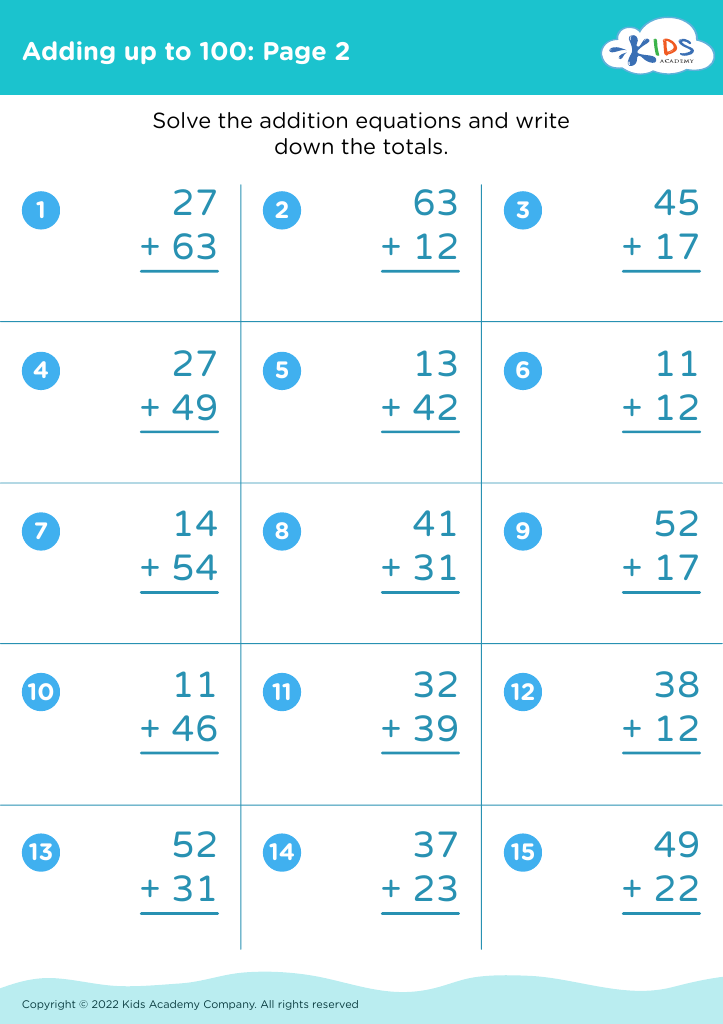
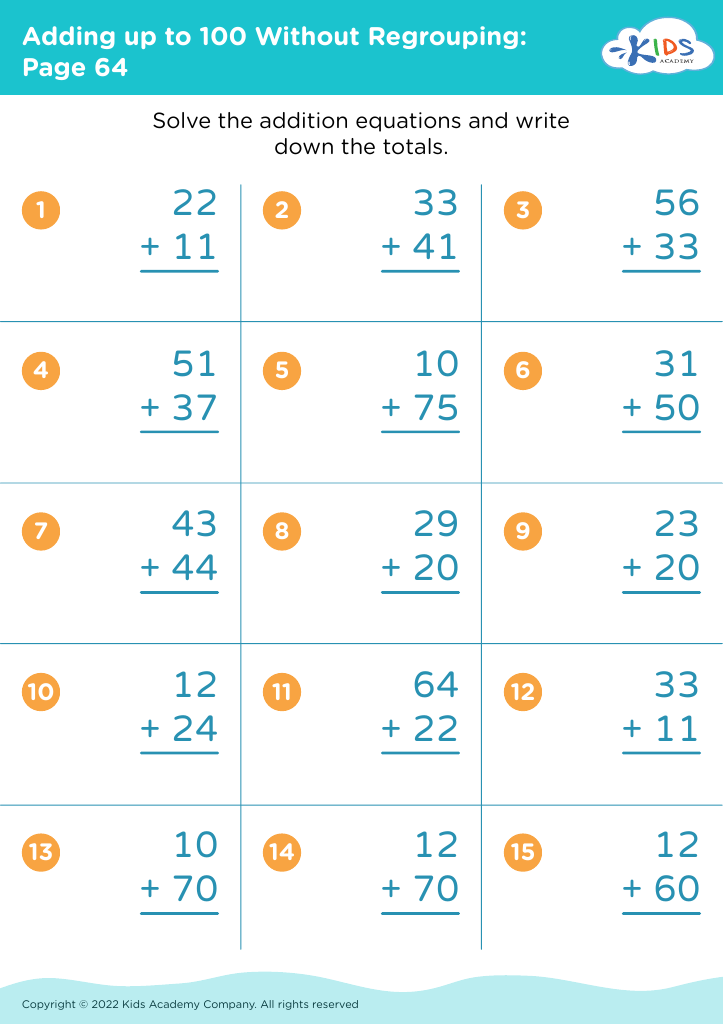
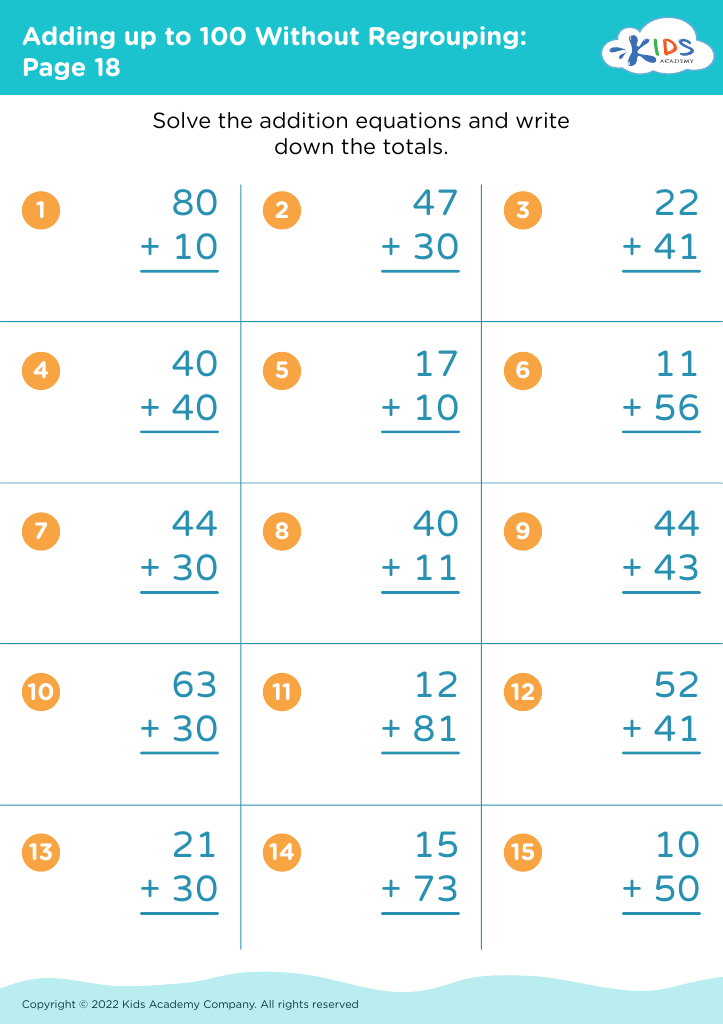
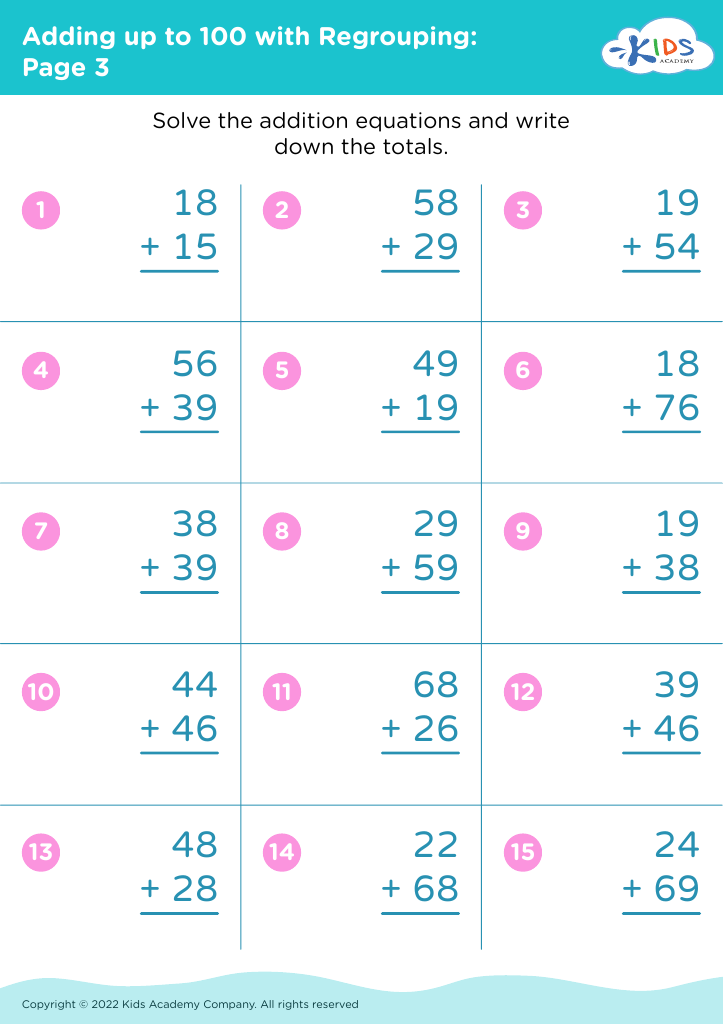
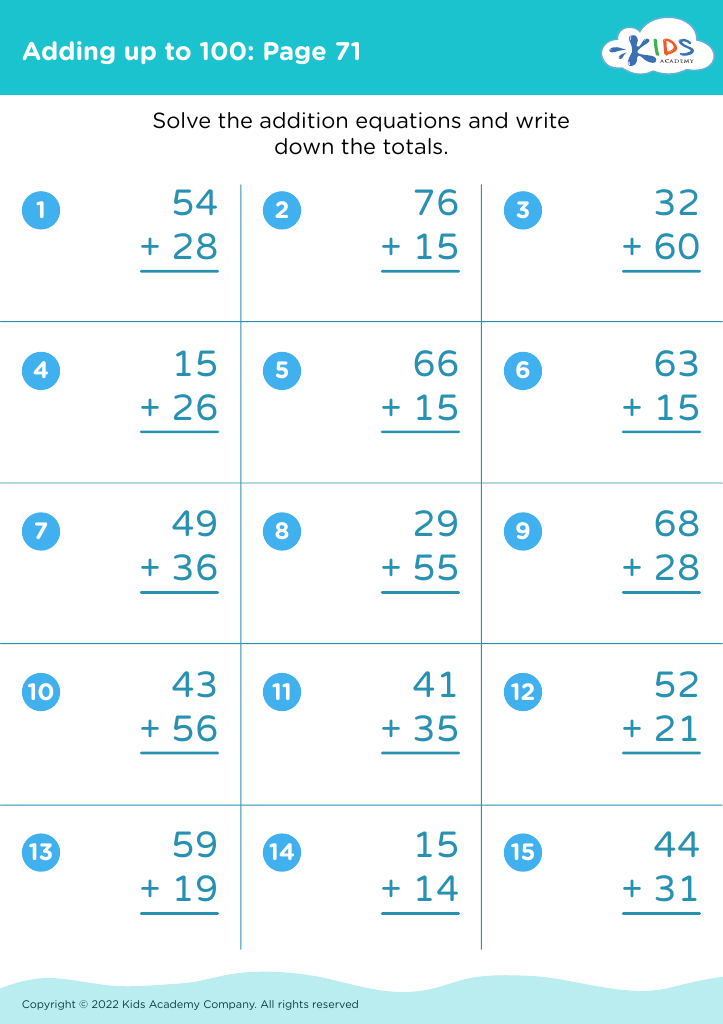
Enhance your child's math skills with our "Problem-Solving Practice Adding Up to 100 Worksheets" designed for ages 3-8. These engaging worksheets encourage young learners to develop critical thinking and problem-solving abilities while mastering addition concepts. Featuring a variety of fun exercises, children will explore different methods of combining numbers to reach the target sum of 100. Perfect for preschool and early elementary students, our worksheets foster confidence and enthusiasm for math through interactive challenges. Download these printable resources today and watch your child gain essential skills in arithmetic while having fun!



%20(1).jpg)



Problem-solving practice, particularly focused on adding up to 100, is crucial for children aged 3-8 for several reasons. Firstly, this foundational mathematical skill enhances cognitive development. Engaging young learners in problem-solving activities allows them to explore different strategies, encouraging critical thinking, logical reasoning, and creativity, which are skills that extend beyond mathematics.
Secondly, early exposure to addition and problem-solving builds confidence. When children successfully navigate challenges, they develop a sense of accomplishment that fosters a positive attitude towards learning. This confidence is vital as they encounter more complex mathematical concepts in the future.
Moreover, understanding addition up to 100 helps in everyday situations. It prepares children for real-life problems they will face as they grow older, such as handling money or understanding time. By making learning relevant, parents and teachers can maintain children's interest and motivation.
Finally, problem-solving fosters collaboration and communication when children work together to solve mathematical challenges. These social skills are intertwined with academic success. Thus, both parents and teachers should prioritize and invest time in problem-solving practices that enhance relevant mathematical skills and prepare children for future learning with confidence and enthusiasm.








