Problem-Solving Skills Adding up to 100 Worksheets for Ages 3-8
24 filtered results
-
From - To
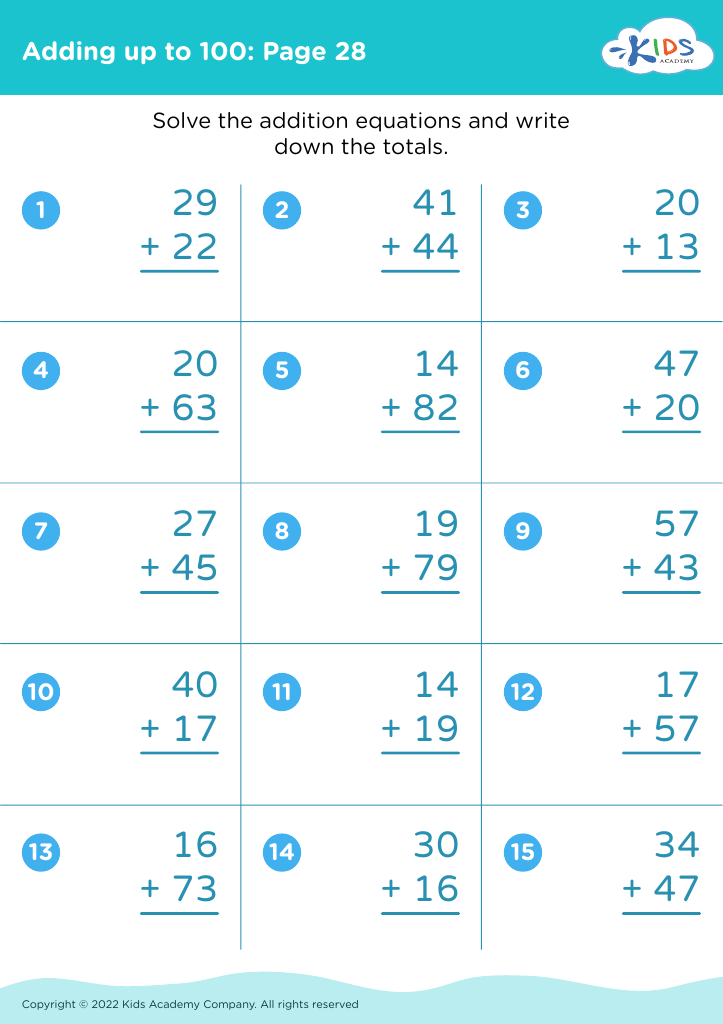
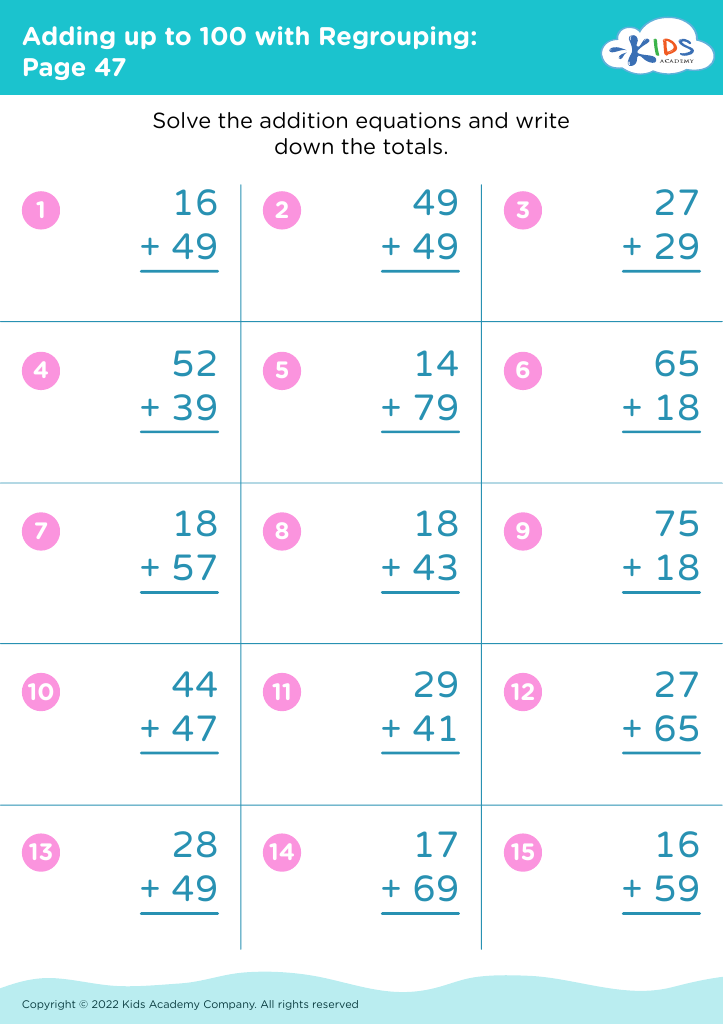
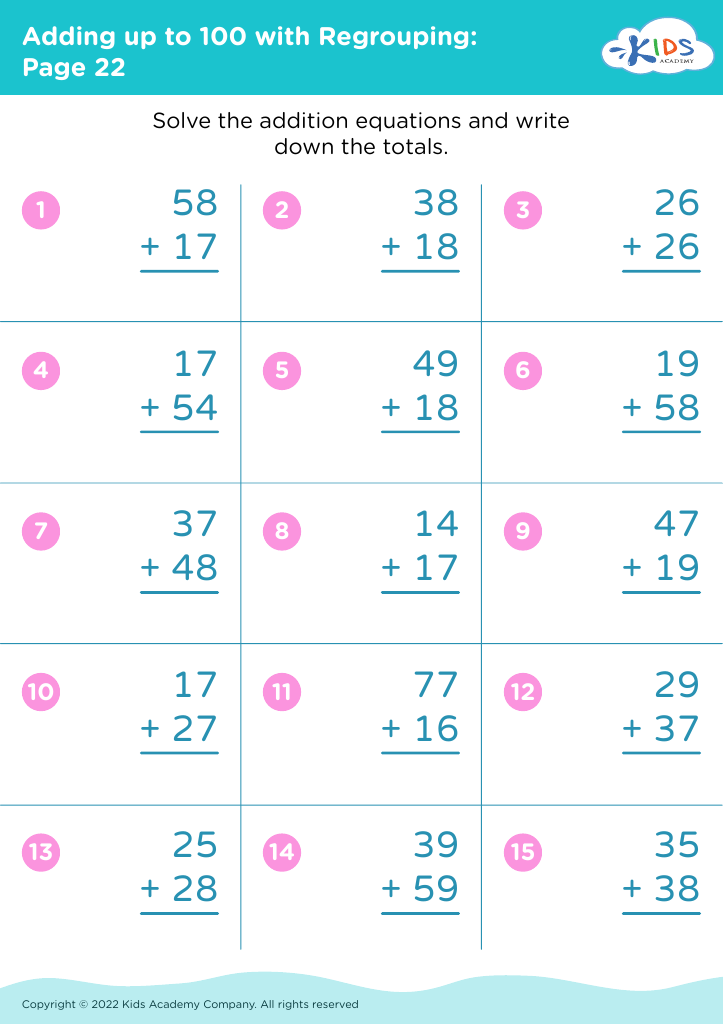
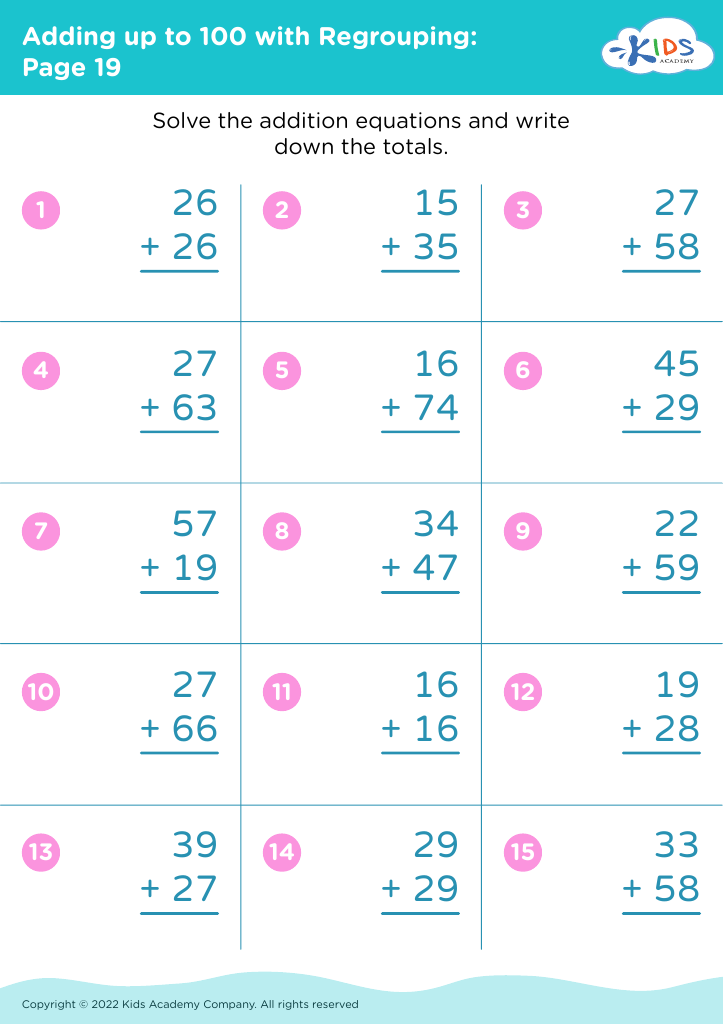
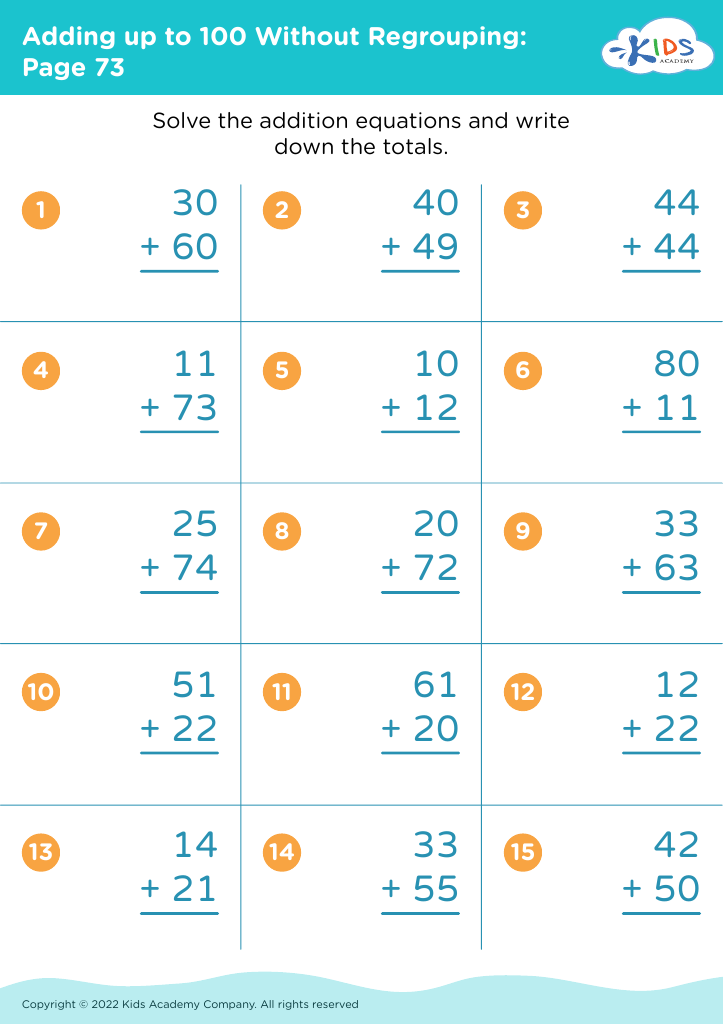
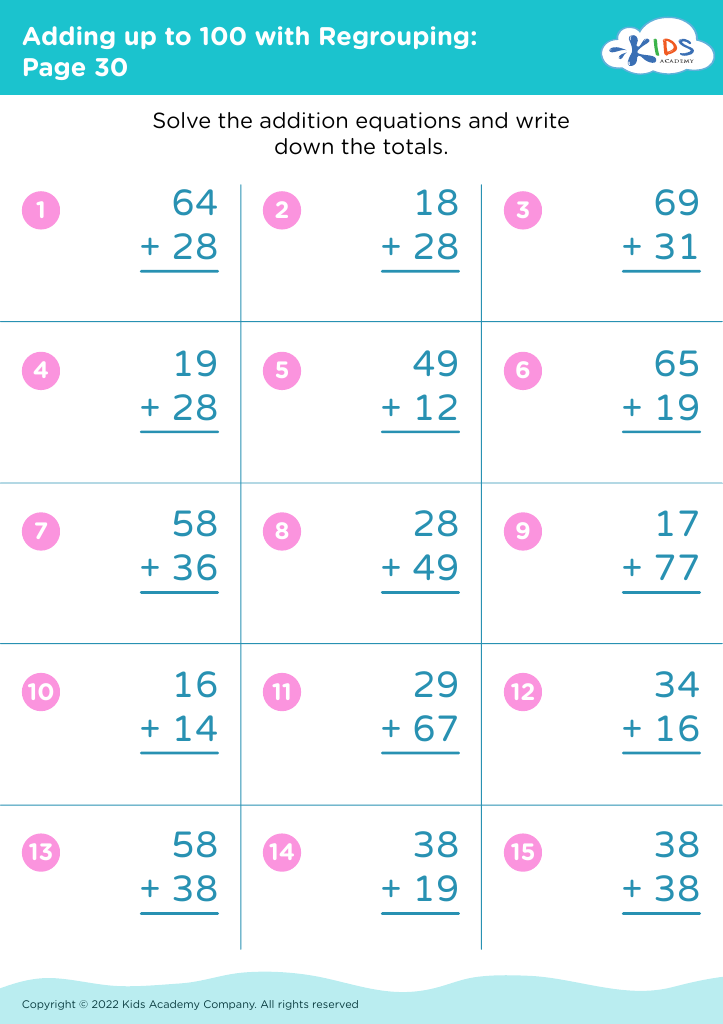
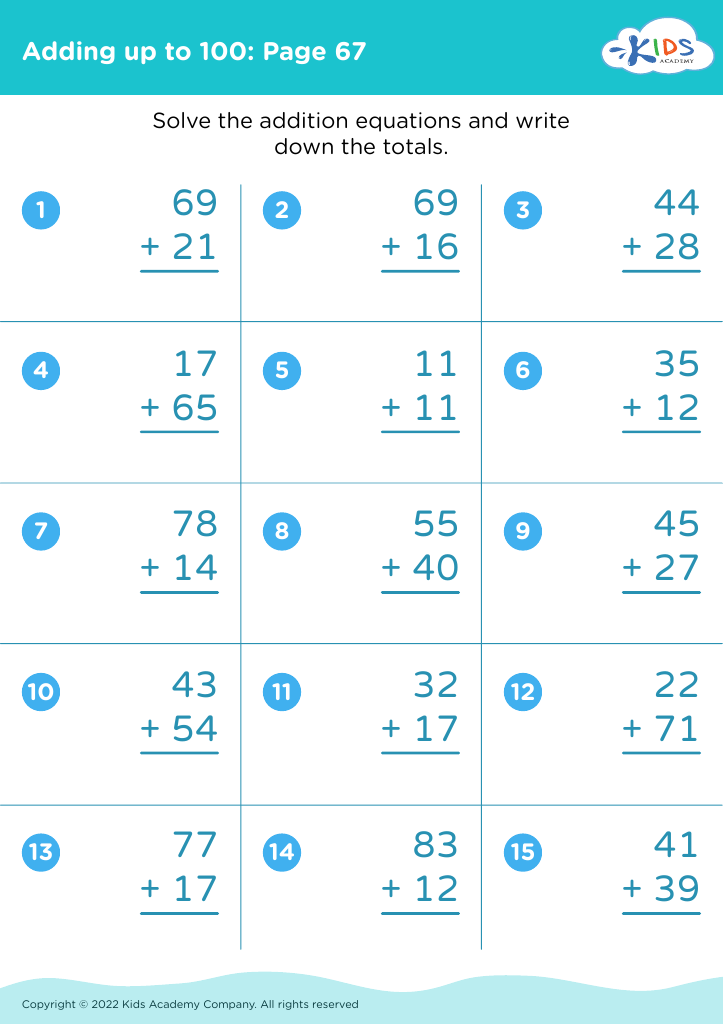
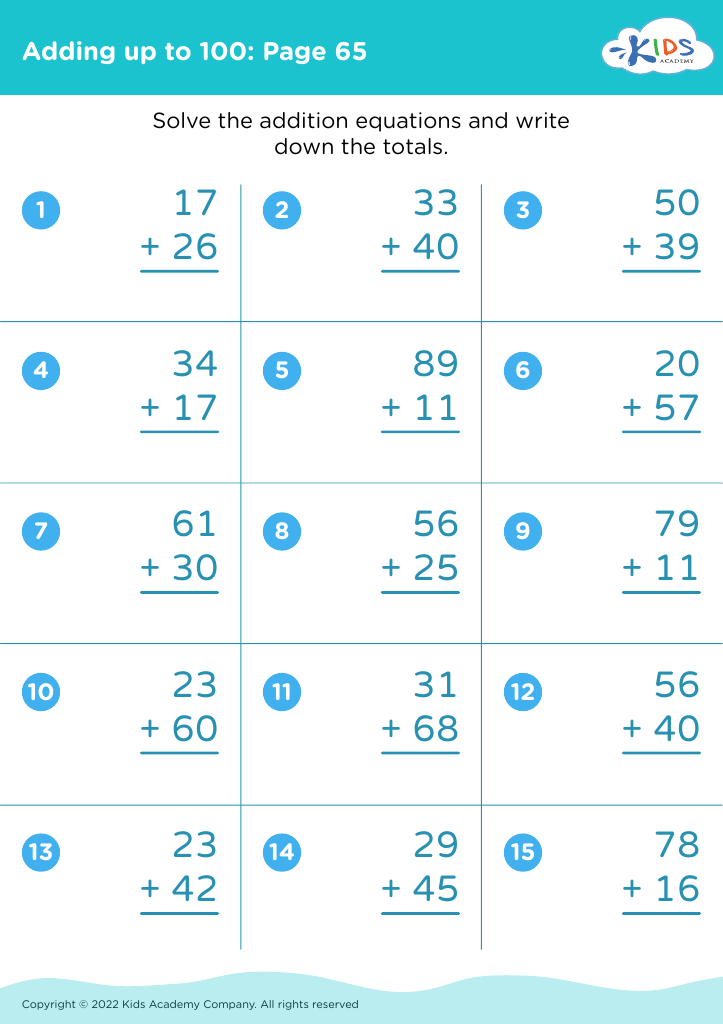
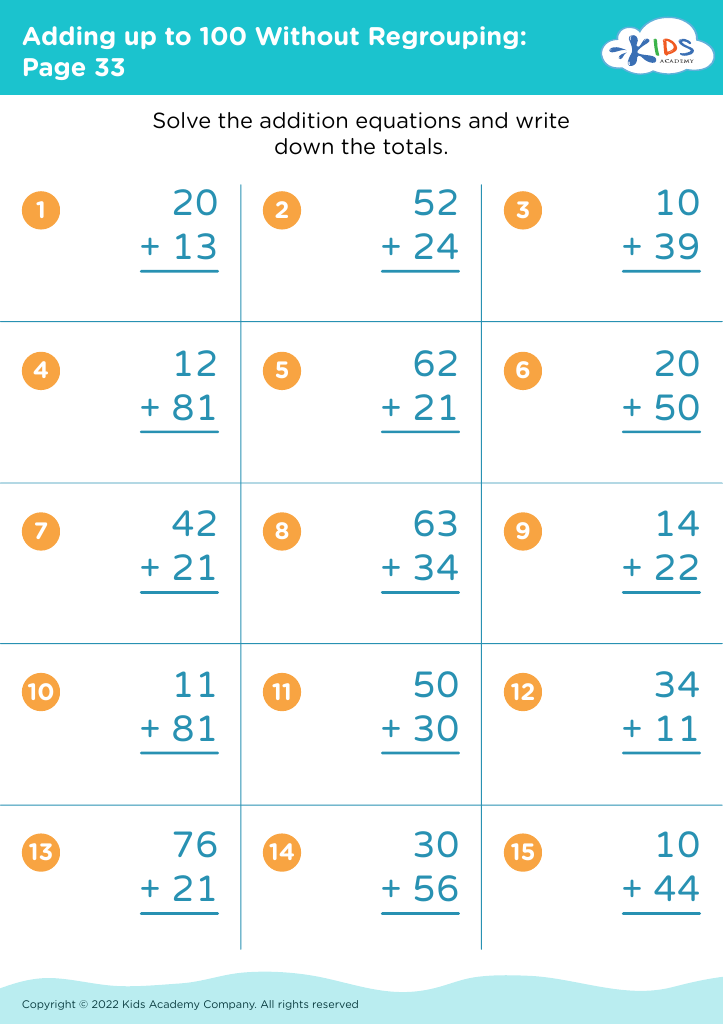
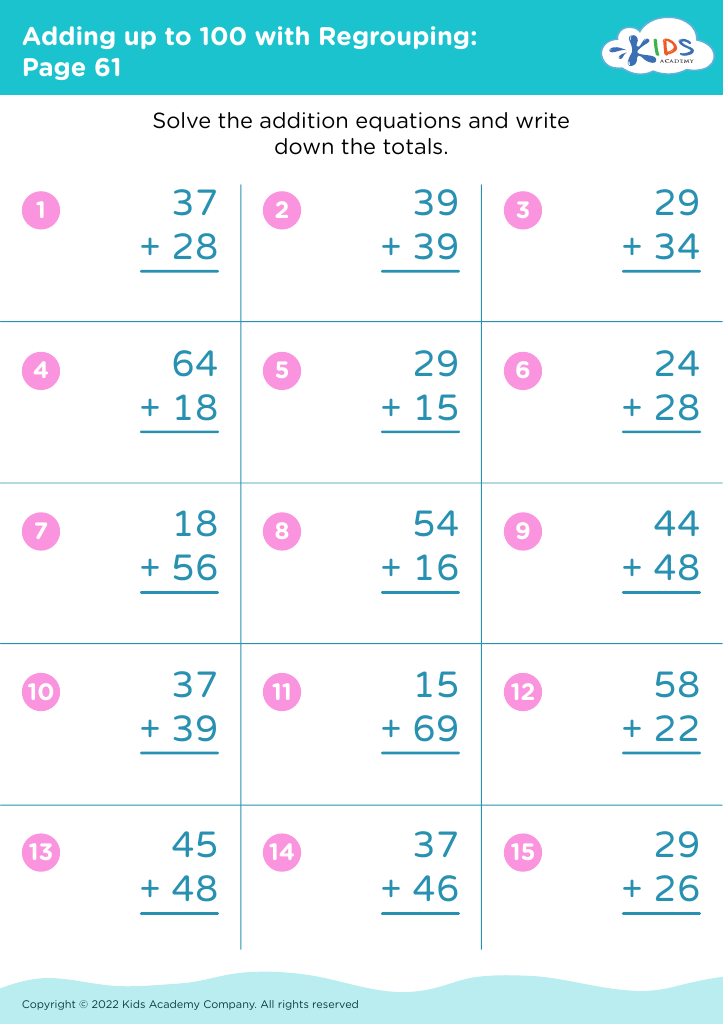
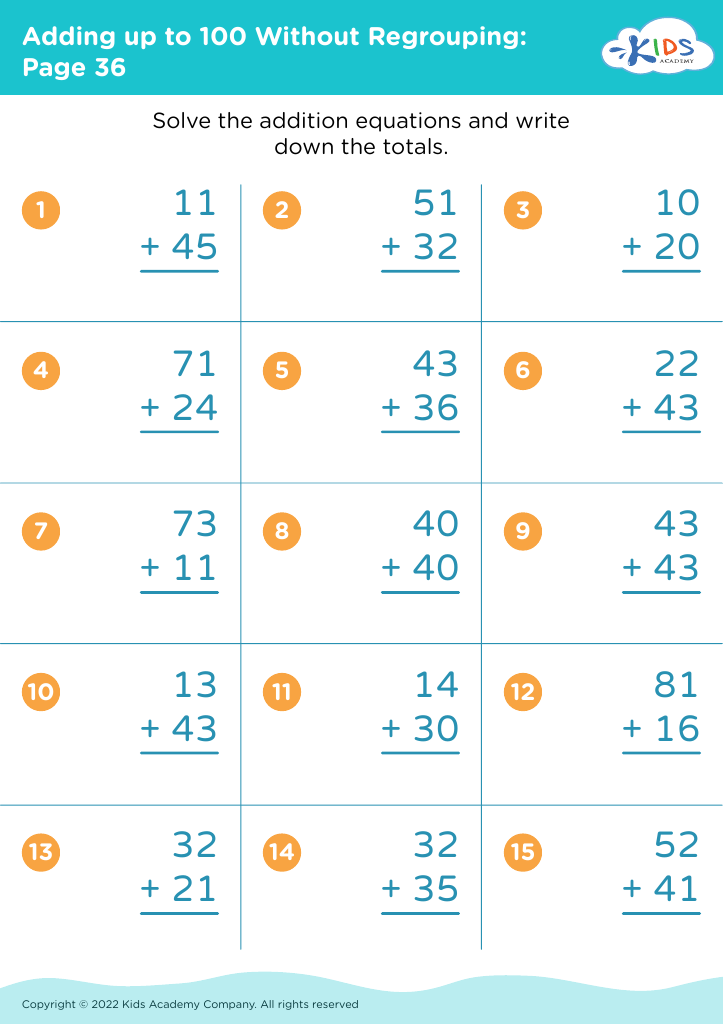
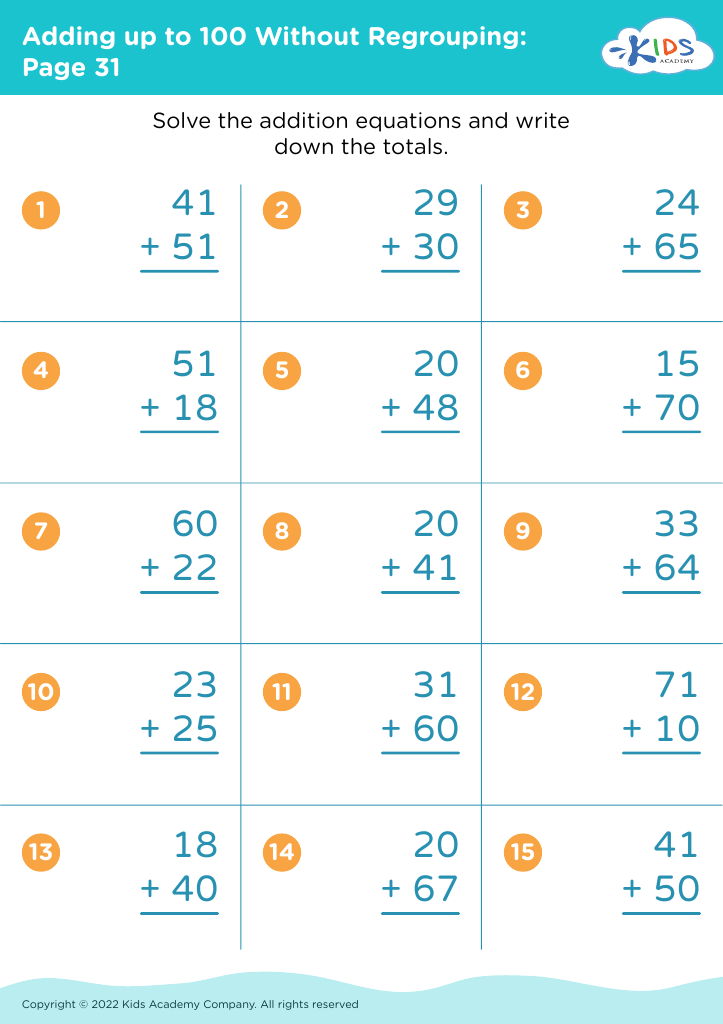
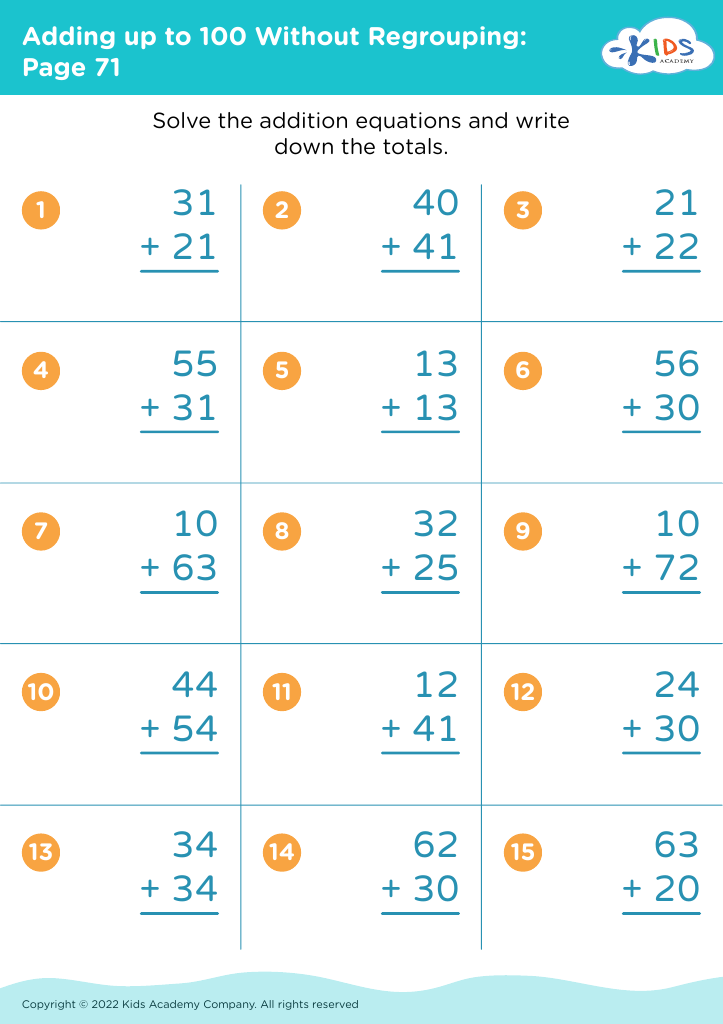
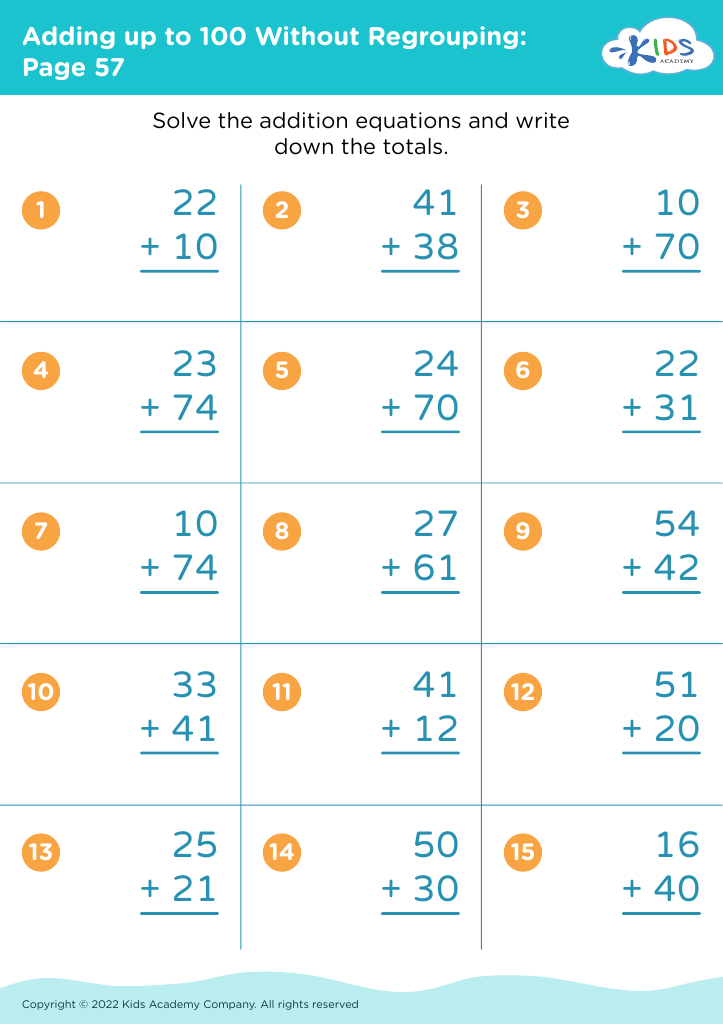
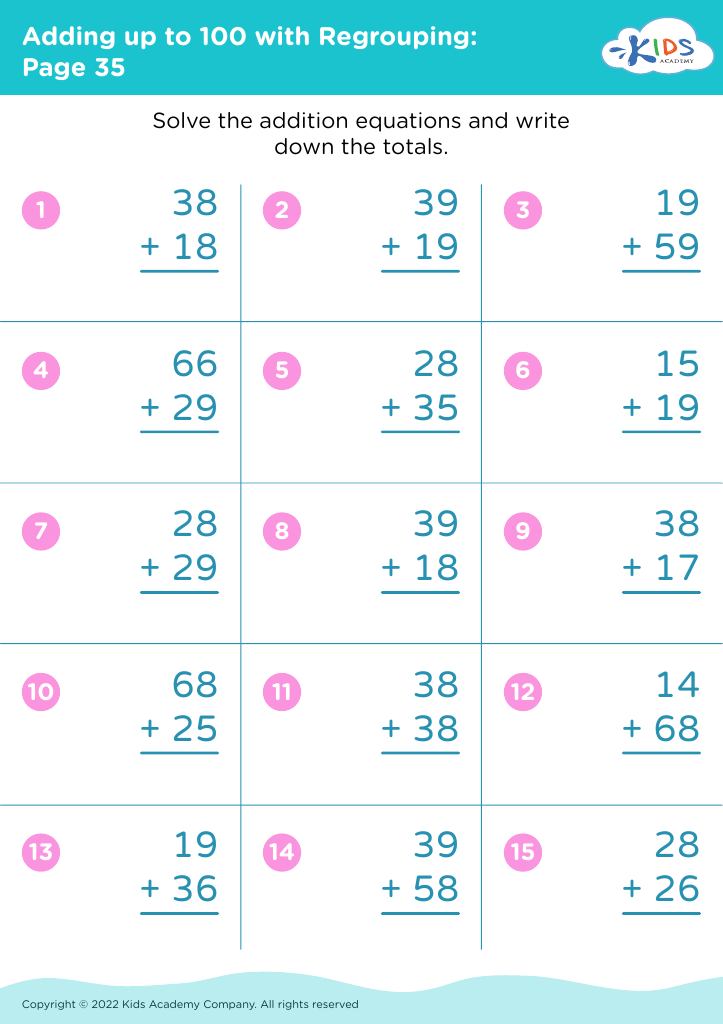
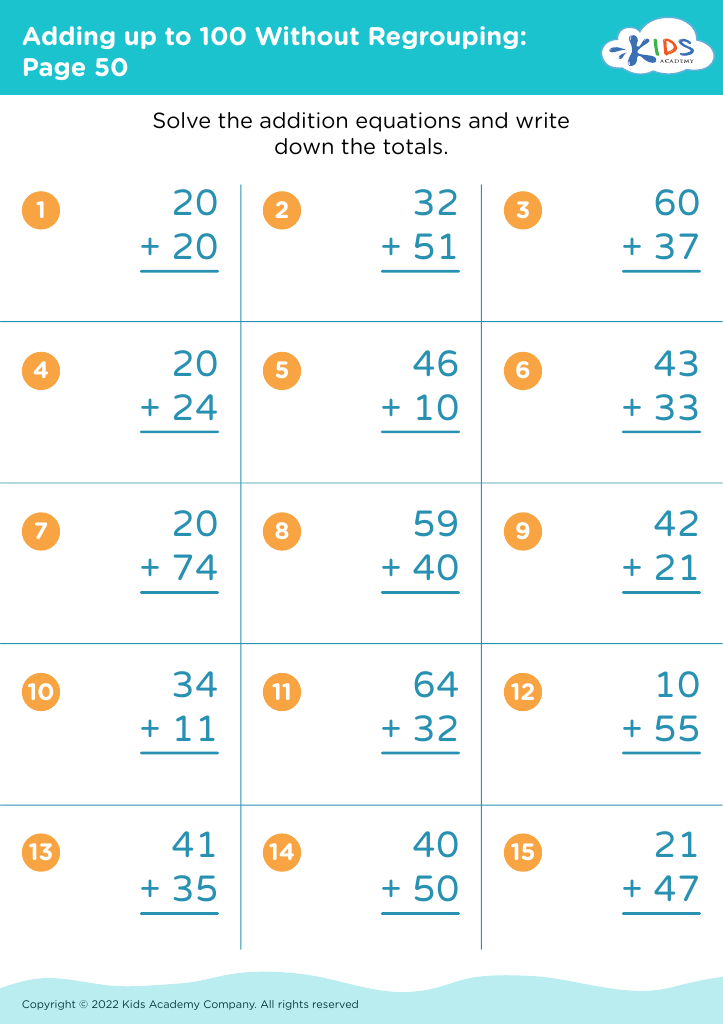
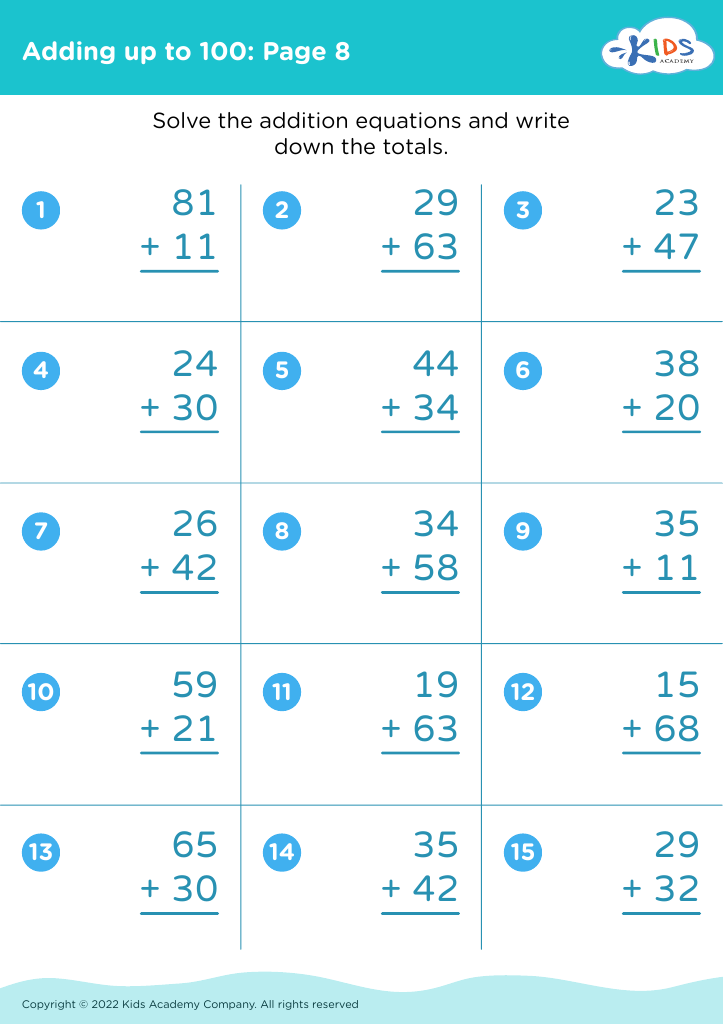
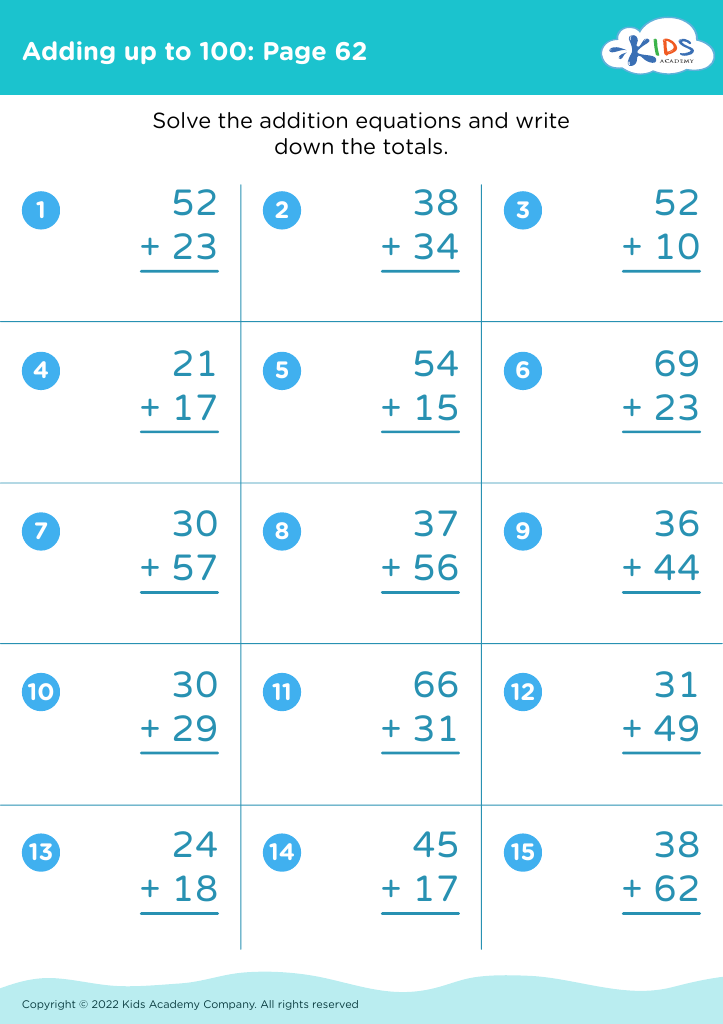
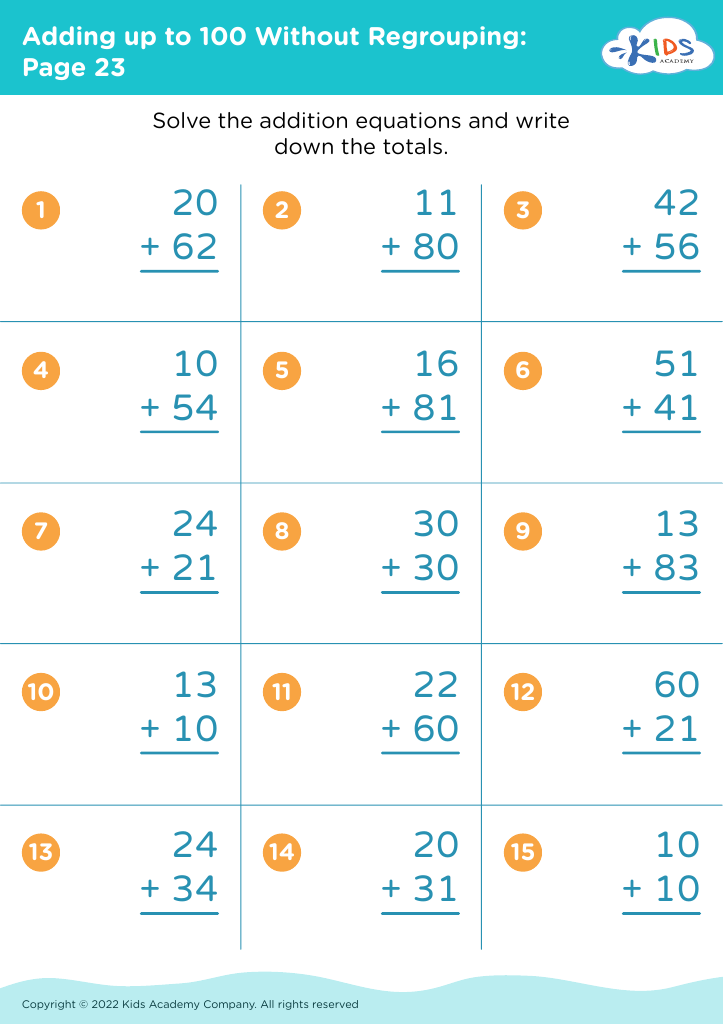
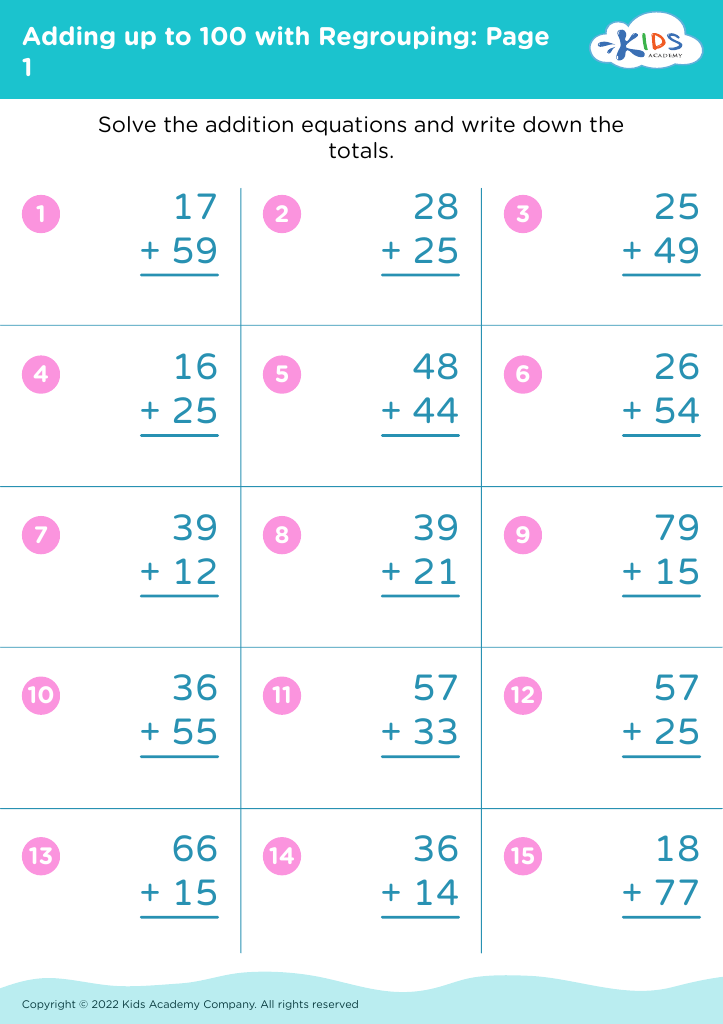
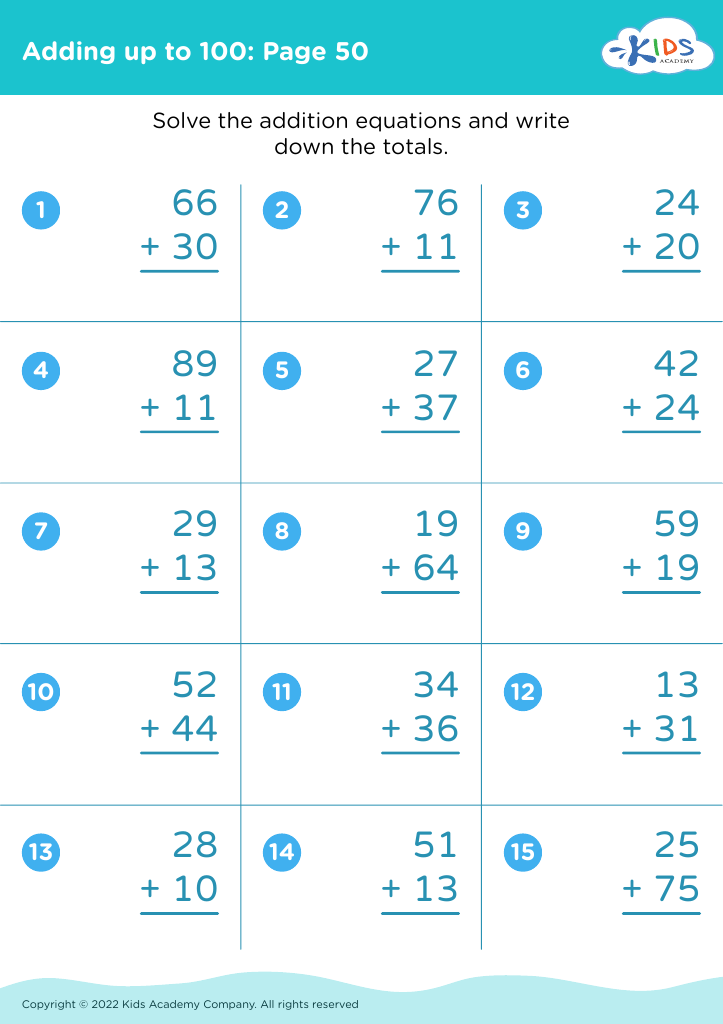
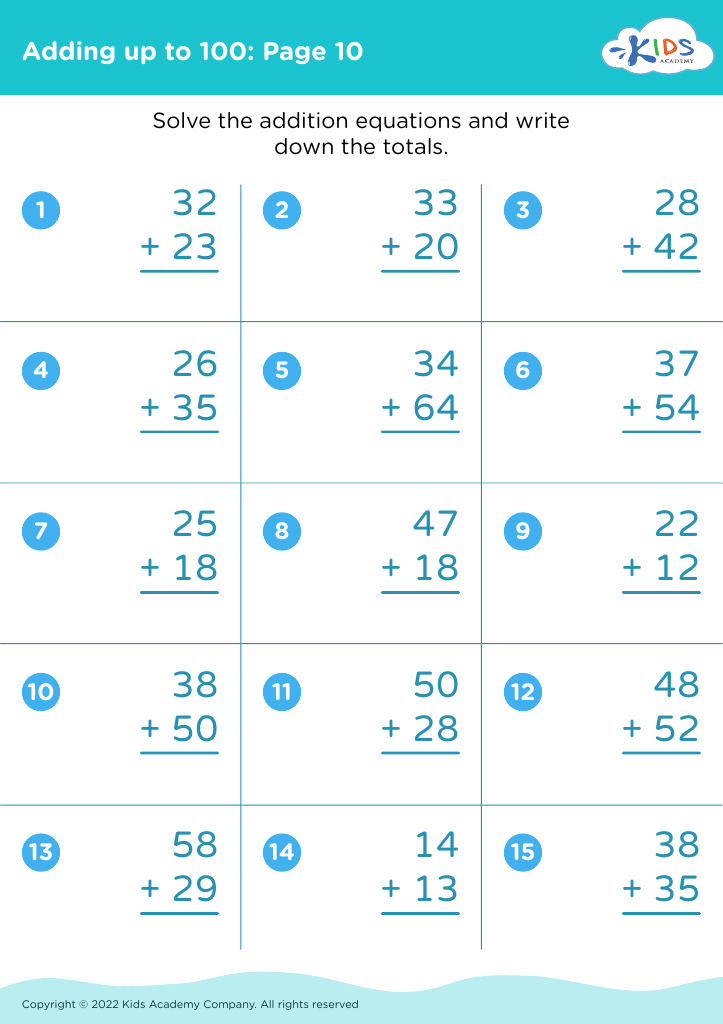
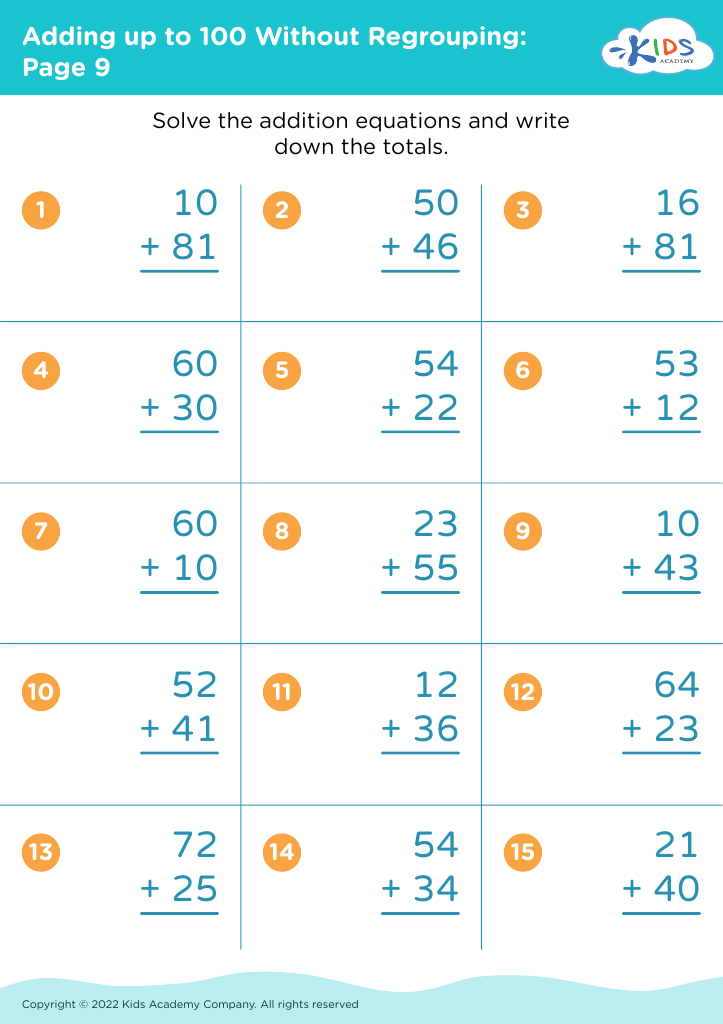
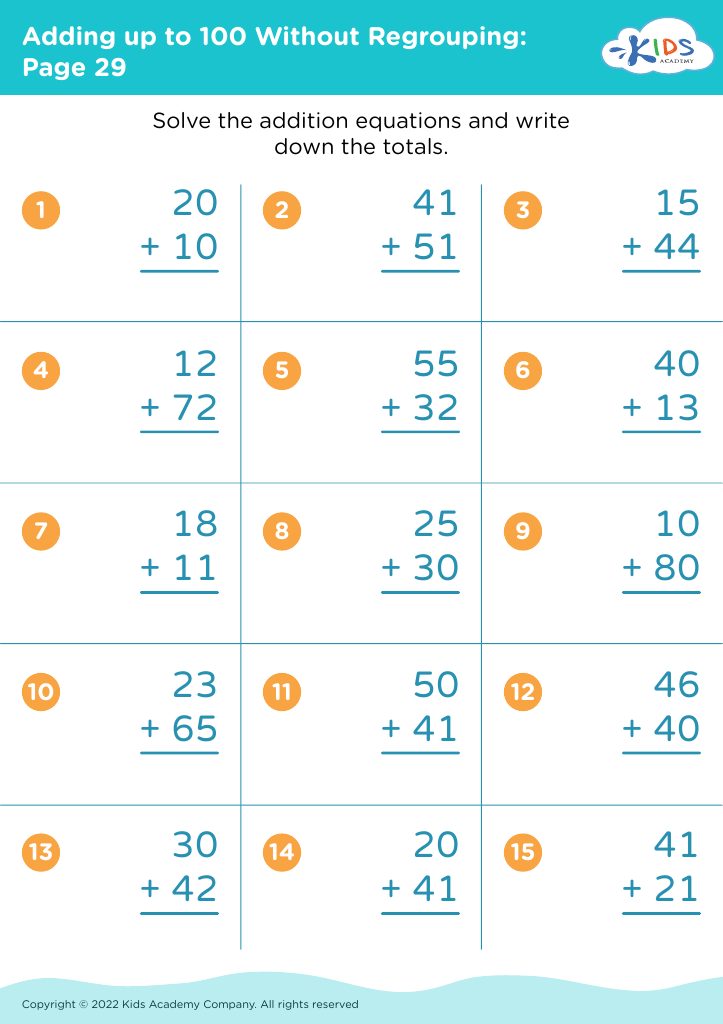
Introduce your young learners, ages 3-8, to the exciting world of mathematics with our Problem-Solving Skills Adding up to 100 Worksheets! These engaging and age-appropriate worksheets are designed to develop critical thinking and foundational math skills. Featuring colorful and interactive content, they make learning addition up to 100 a fun and rewarding experience. By solving a variety of problems, children enhance their problem-solving abilities while gaining confidence in their math skills. Perfect for classroom use or at-home practice, these worksheets provide an essential blend of challenge and enjoyment, setting the stage for a lifelong love of learning.






%20(1).jpg)
Problem-solving skills, particularly in the context of mathematical exercises like adding up to 100, are crucial for children ages 3-8 as they lay the foundational groundwork for cognitive development and critical thinking. During these formative years, engaging young minds in activities like adding numbers up to 100 helps to nurture their numeracy skills, an essential component of overall academic competency.
Fostering problem-solving skills in math cultivates logical thinking and the ability to approach challenges methodically. Children who regularly practice these skills become adept at recognizing patterns, making predictions, and understanding the relationships between numbers. These abilities not only help in mathematics but also in other subjects that require analytical thinking and the application of logic.
Moreover, early engagement with problem-solving tasks boosts a child’s confidence and persistence. As children experience the satisfaction of overcoming mathematical challenges, they develop a positive attitude towards learning and a growth mindset. This resilience is crucial for lifelong learning and adaptability.
Lastly, problem-solving skills are vital for real-life situations. The ability to tackle tasks that require basic addition, like handling money or sharing items equitably, prepares children for everyday responsibilities. For these reasons, investing in problem-solving educational tools and activities is of paramount importance for young children’s development.








