Recognizing Patterns Adding up to 100 Worksheets for Ages 3-8
5 filtered results
-
From - To
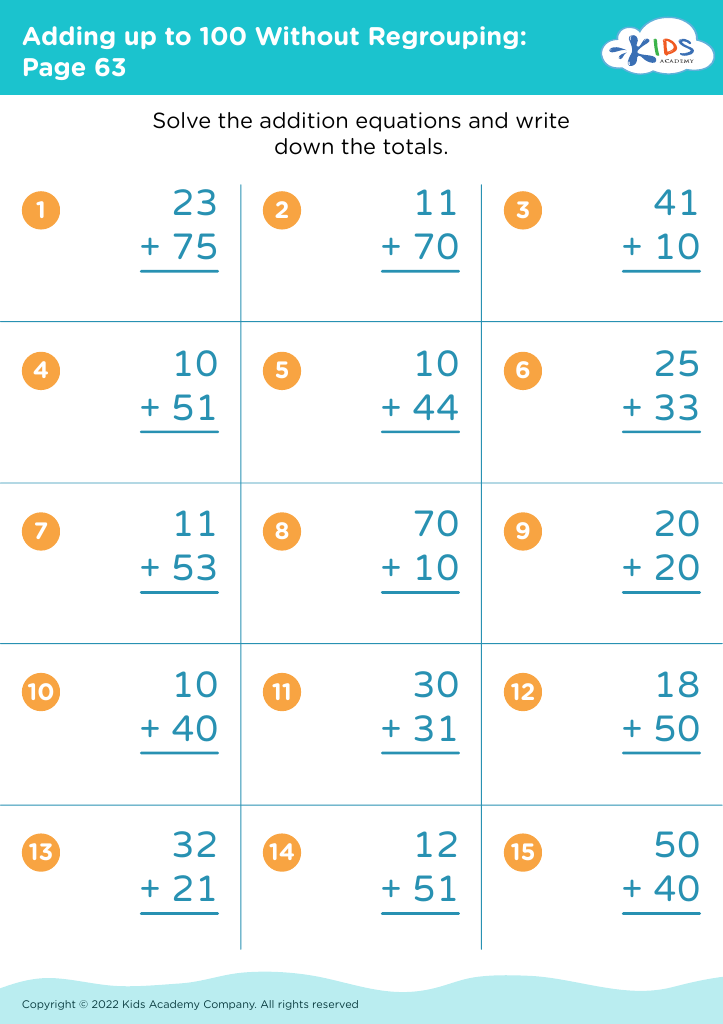
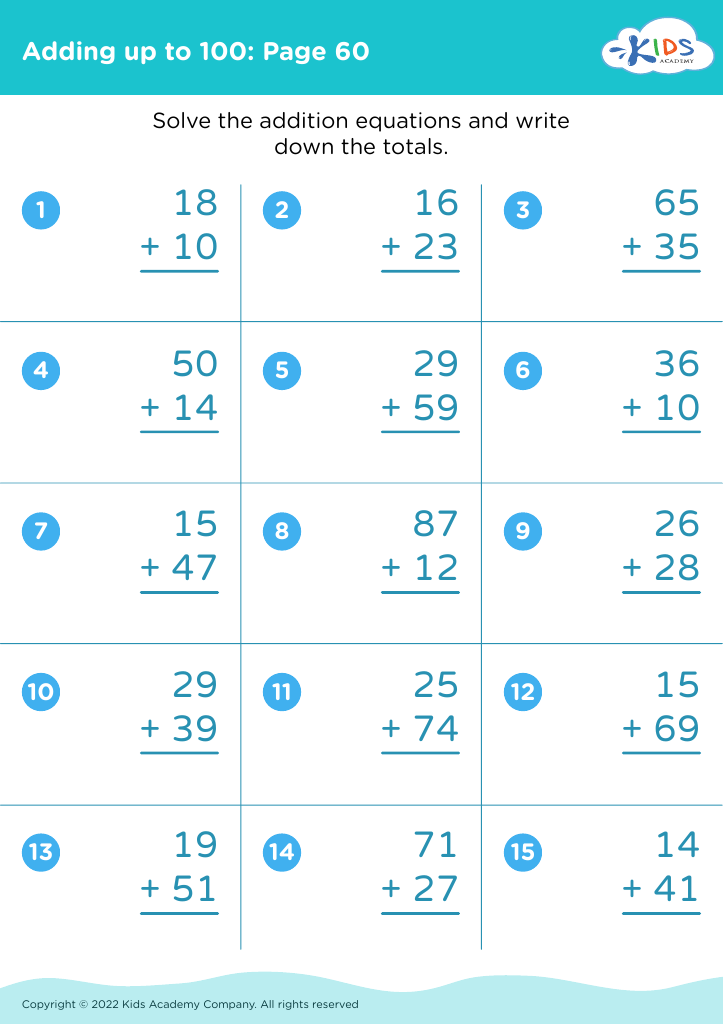
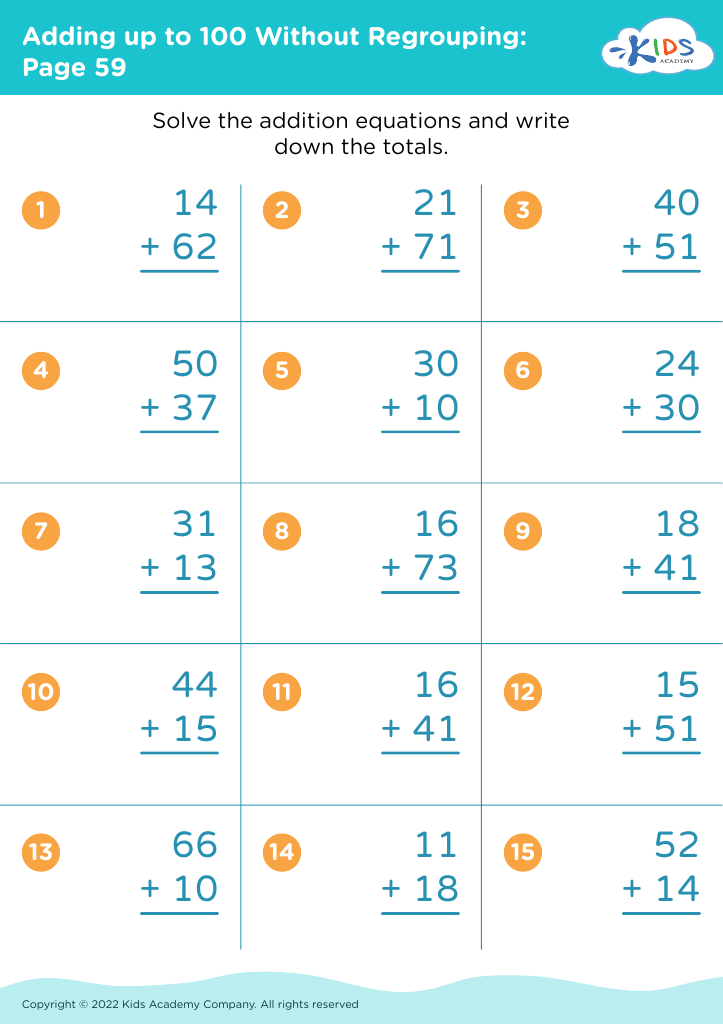
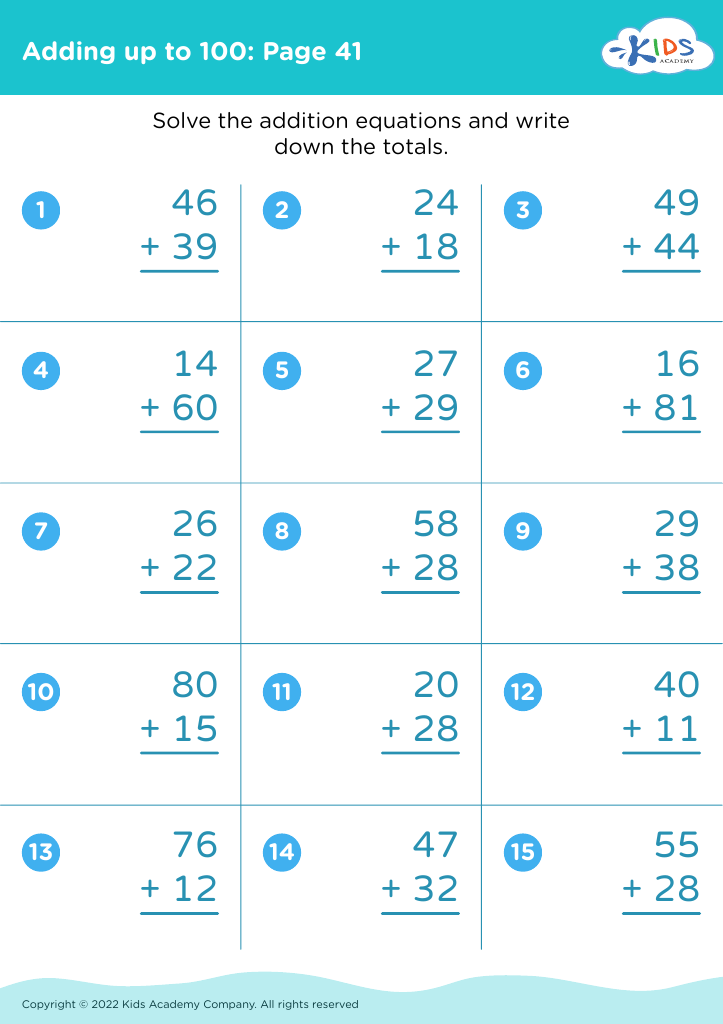
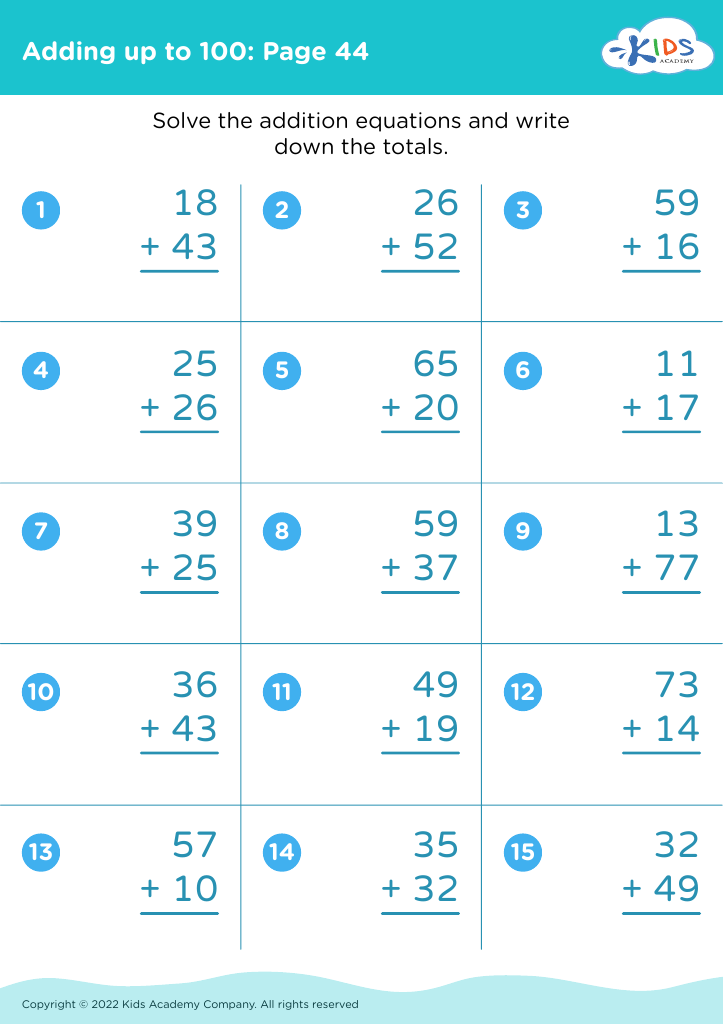
Discover our engaging "Recognizing Patterns: Adding Up to 100 Worksheets" designed for children ages 3-8! These worksheets make learning mathematics fun by helping young learners identify and understand patterns while mastering the concept of addition up to 100. With colorful illustrations and interactive exercises, your child will enhance their problem-solving skills and critical thinking abilities. Perfect for classroom or at-home practice, these resources encourage independent learning and boost confidence in math. Download our printable worksheets today to support your child's numerical journey and set a strong foundation for their future education. Let's make math enjoyable together!




%20(1).jpg)


Recognizing patterns and understanding numbers that add up to 100 is essential for children aged 3-8, as it lays the foundation for later mathematical skills. Children learn to identify relationships between numbers, which enhances their problem-solving and critical thinking abilities. By recognizing patterns—be it numerical sequences, shapes, or colors—children develop cognitive skills that improve memory and promote mathematical fluency.
For parents and teachers, fostering these skills can increase a child's confidence and enjoyment of math. When children successfully learn to recognize patterns, they can approach more complex concepts with a positive mindset, reducing math anxiety. Engaging with concepts that lead up to 100 encourages creativity, as children often discover different ways numbers can fit together, enhancing their ability to think outside the box.
Additionally, understanding these foundational skills in mathematics supports literacy development and general analytical behaviors, translating to improved academic performance. Parents and teachers can create a supportive environment using games and everyday experiences to encourage pattern recognition. Consequently, by emphasizing these early learning stages, they help nurture a lifelong love for math and increase the likelihood that children will develop strong academic skills as they progress in their education.








