Understand fractions Adding up to 100 Worksheets for Ages 3-8
5 filtered results
-
From - To
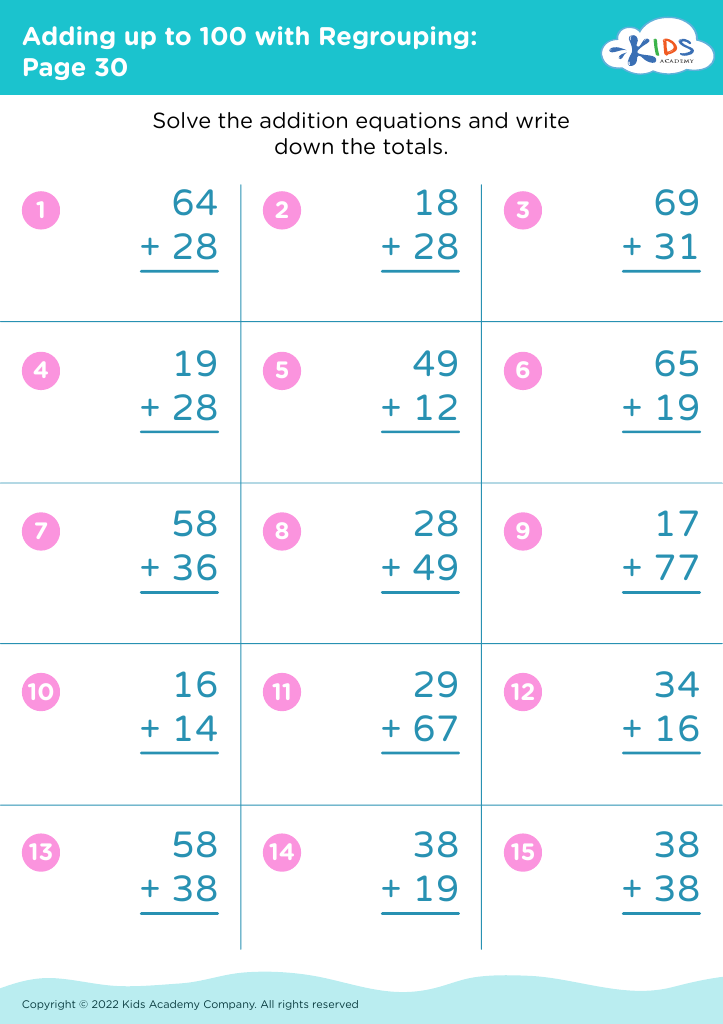
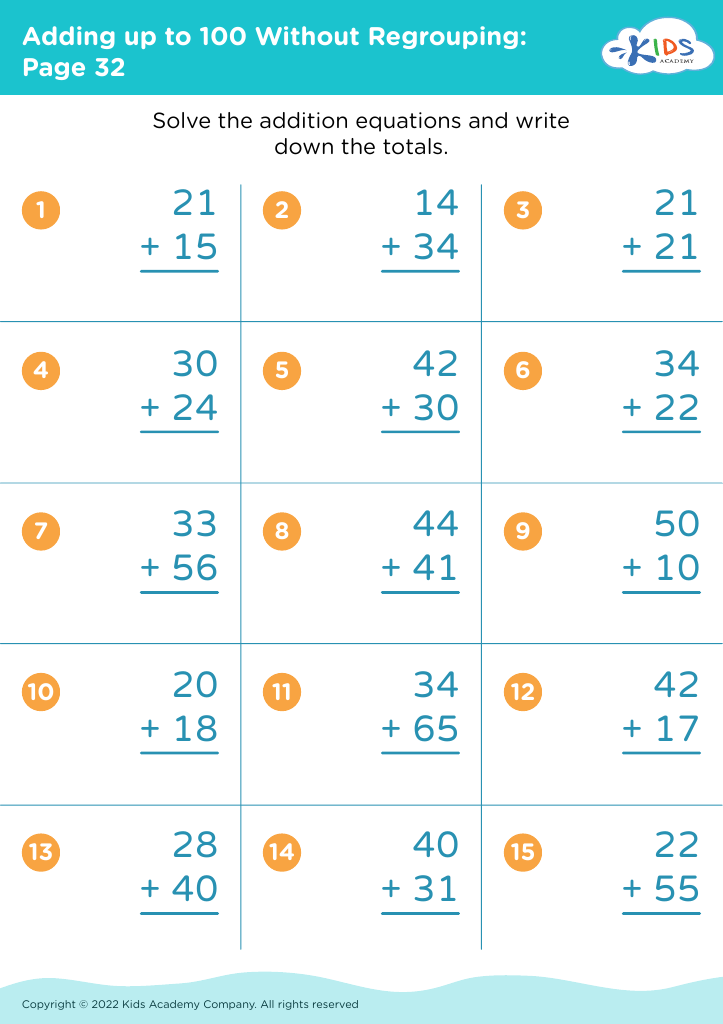
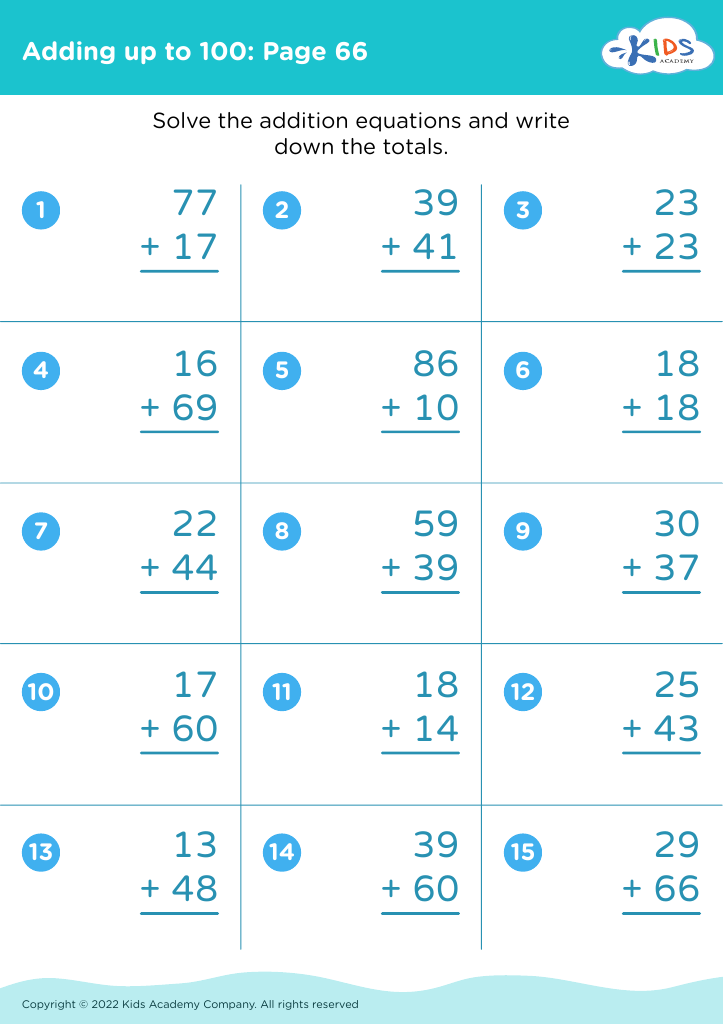
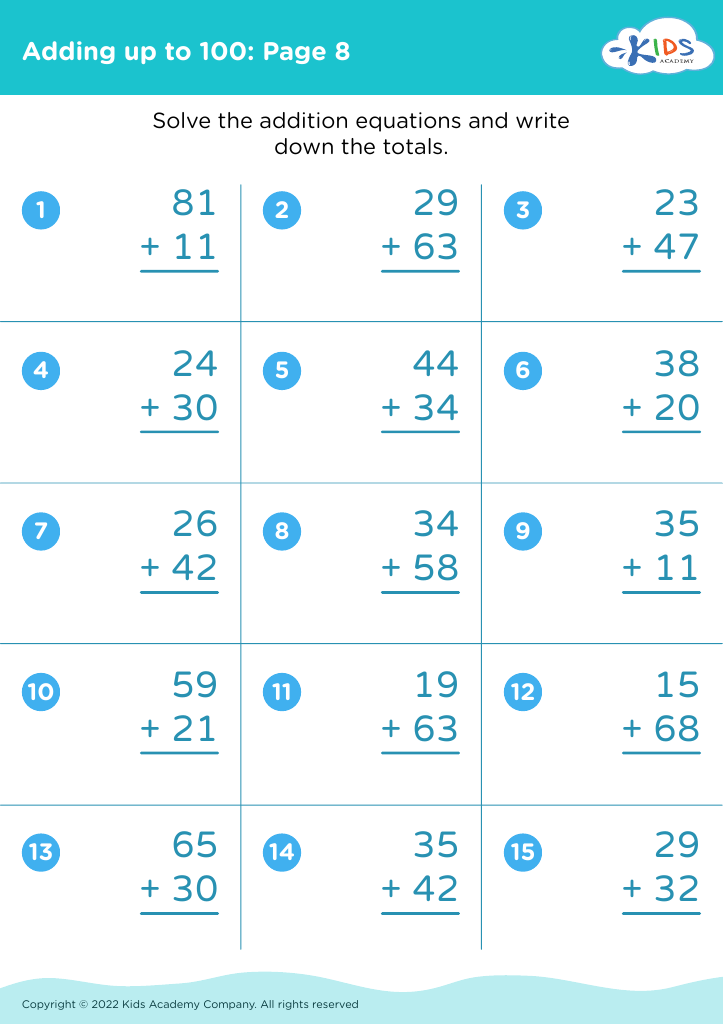
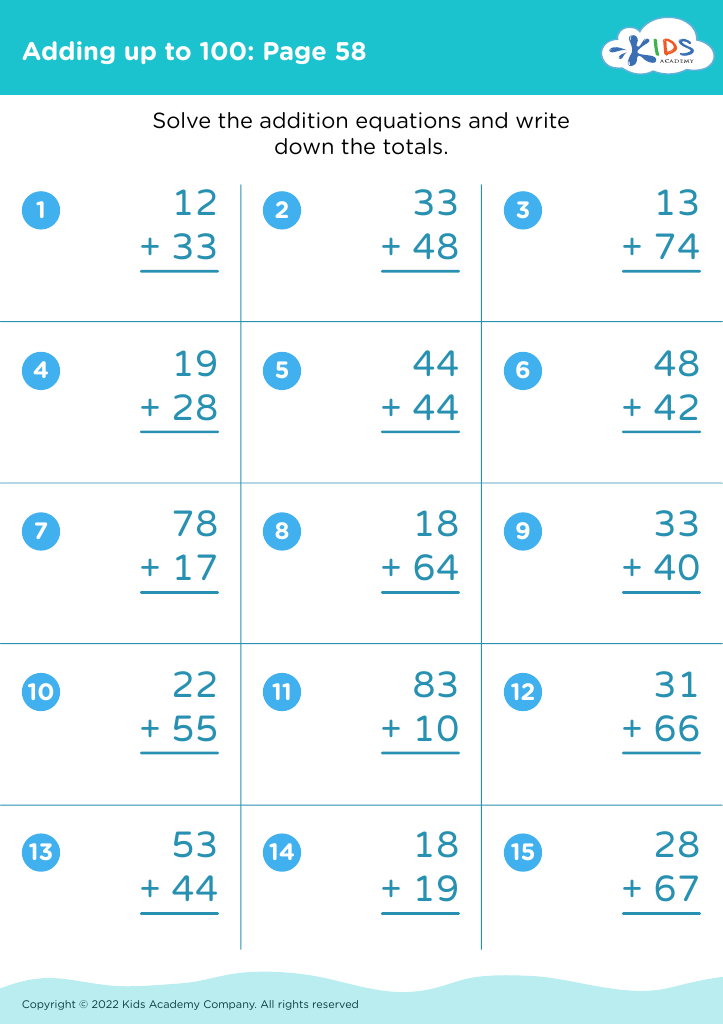
Enhance your child's math skills with our "Understand Fractions Adding Up to 100" worksheets, designed for ages 3-8! These engaging resources introduce young learners to the world of fractions through fun and interactive activities. Each worksheet promotes critical thinking as children practice adding fractions that total up to 100, laying a solid foundation for their mathematical understanding. Visual aids and colorful illustrations make learning enjoyable, ensuring kids stay motivated. Perfect for both classroom and at-home use, these worksheets foster essential skills and boost confidence in young minds. Explore our collection today to help your child master fractions with ease!




%20(1).jpg)


Understanding fractions and concepts of addition up to 100 is essential for children aged 3-8 because it lays the foundation for their numerical literacy and critical thinking skills. From a young age, grasping the idea of parts of a whole helps children make sense of the world around them. For instance, when kids share a pizza or divide candies, they intuitively engage with fractions, enhancing their understanding of fairness and teamwork.
Teaching fractions that add up to 100 can also improve children's engagement with math. It opens avenues for interactive games and hands-on activities that make learning enjoyable. Such experiences build confidence and reduce math anxiety, which can impact lifelong attitudes toward the subject.
Additionally, an early grasp of fractions prepares students for more complex mathematical concepts in later grades. It fosters logical reasoning, problem-solving skills, and encourages them to think abstractly.
For parents and teachers, emphasizing fractions in fun and relatable terms cultivates a collaborative learning environment, enhancing children's social and cognitive development. Ultimately, a solid foundation in fractions contributes to broader educational success and equips children to navigate a number-driven world. Hence, early math education should prioritize these crucial concepts.








