Understanding Sequences Adding up to 100 Worksheets for Ages 3-8
5 filtered results
-
From - To
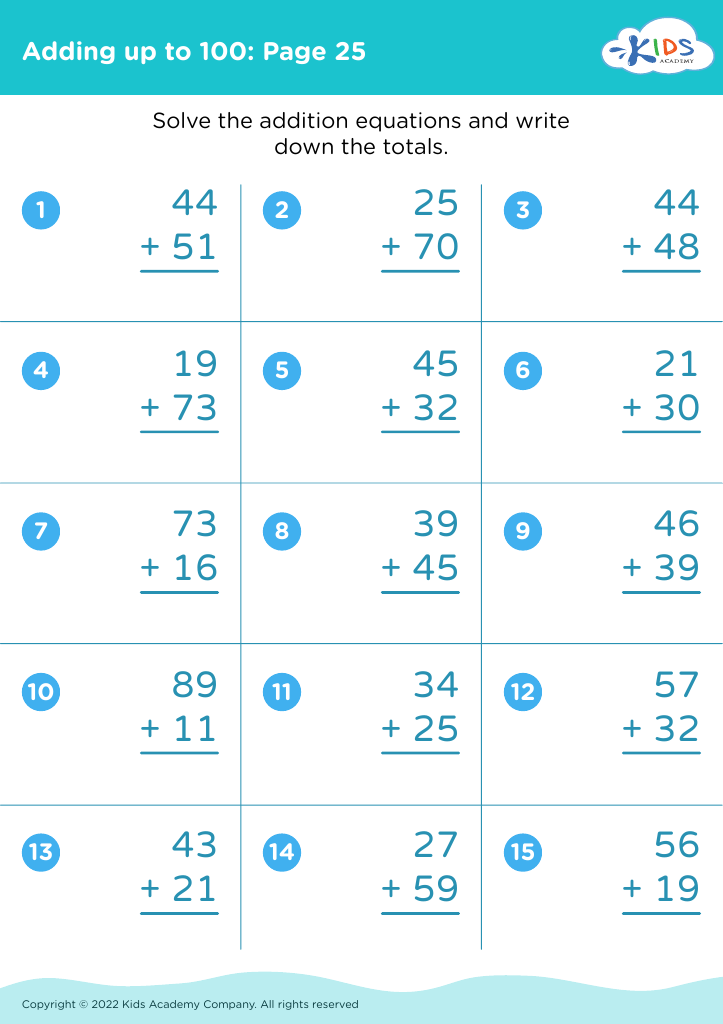
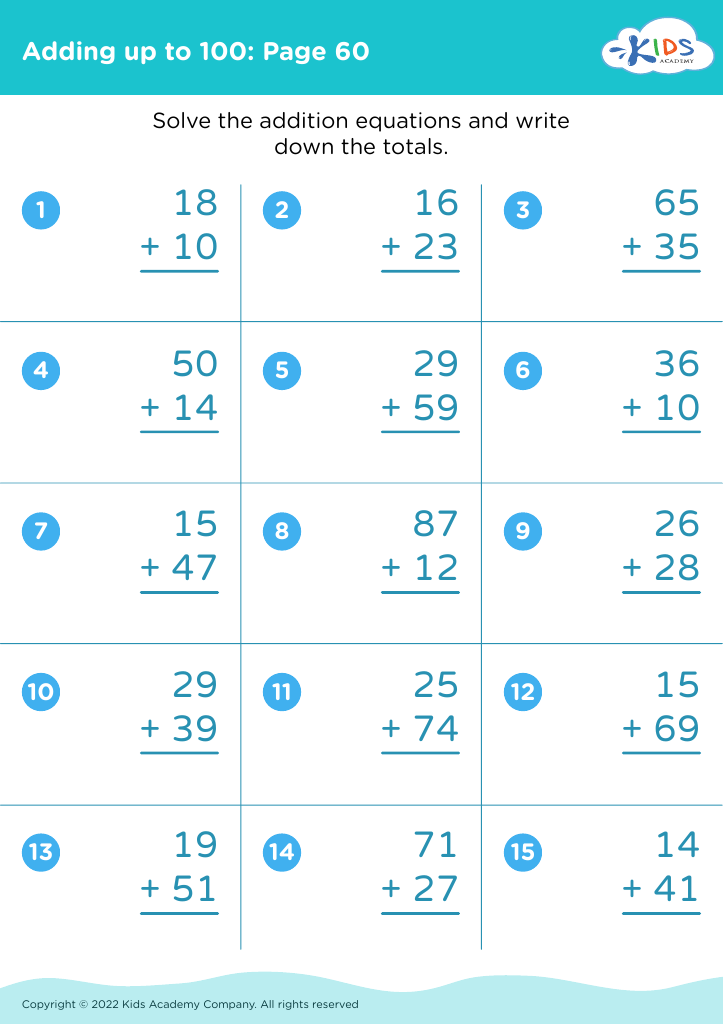
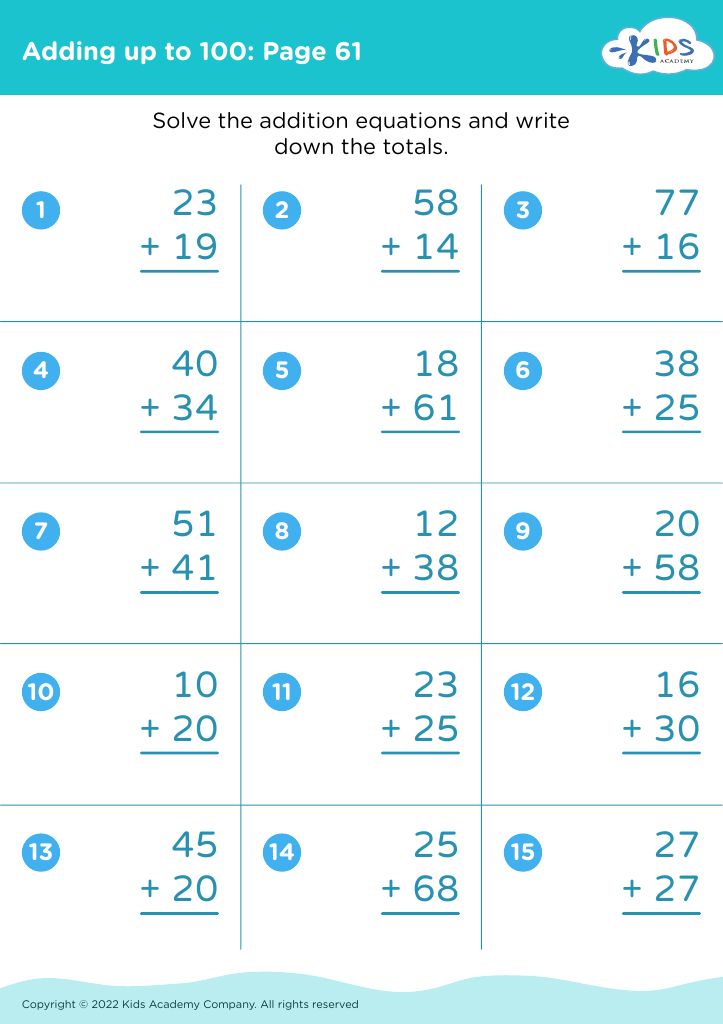
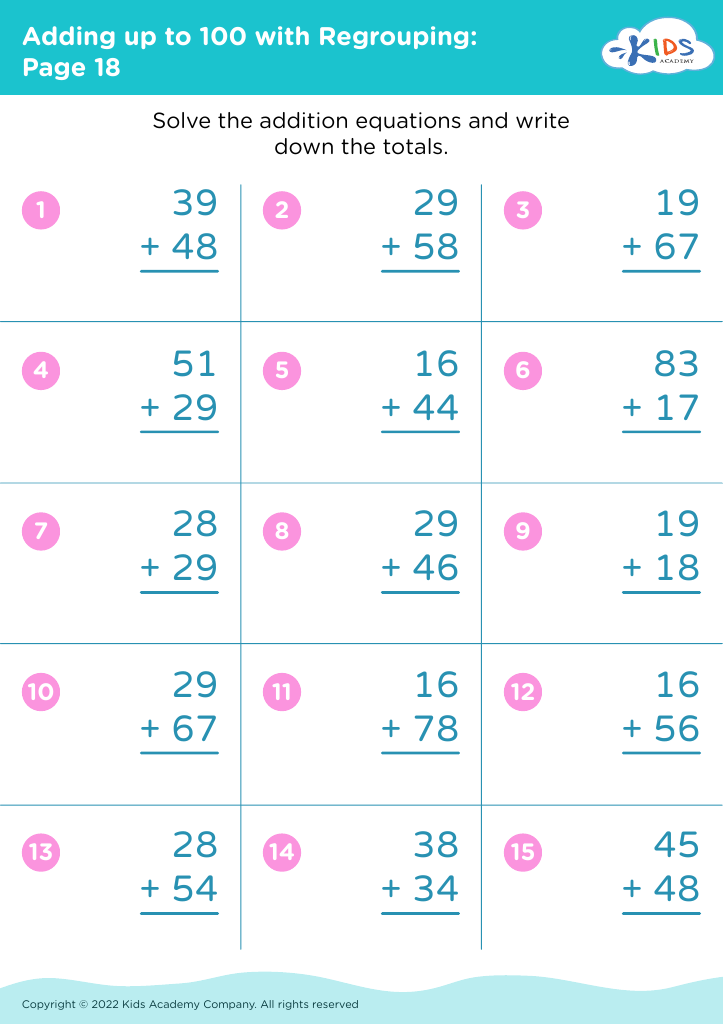
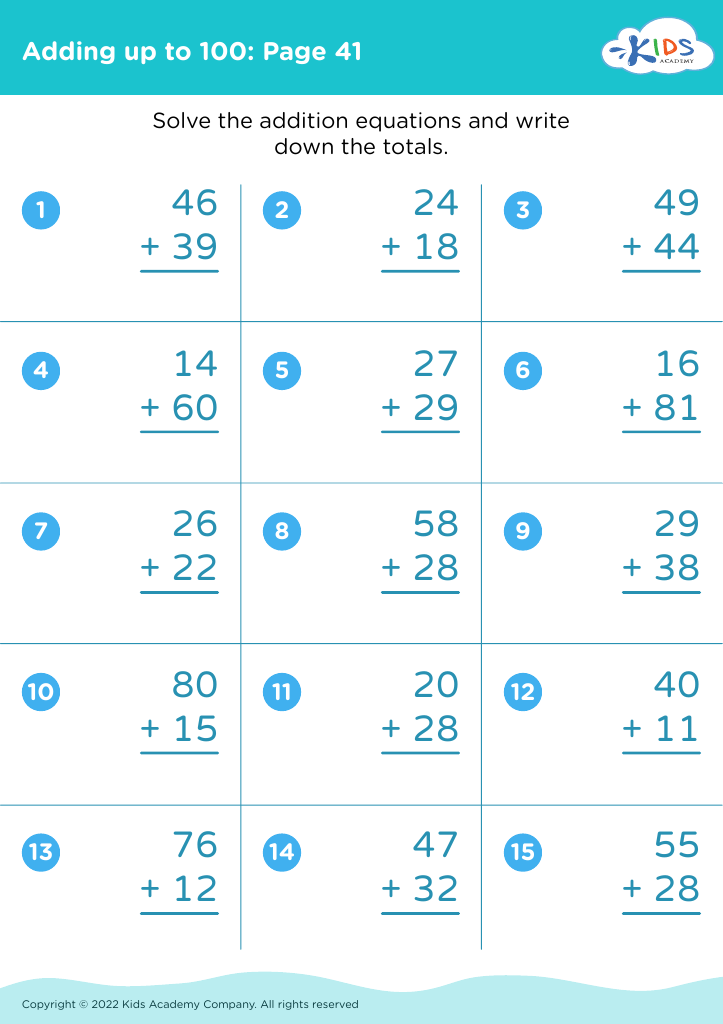
Welcome to our "Understanding Sequences Adding up to 100 Worksheets" designed specifically for children aged 3-8! These engaging and colorful worksheets help young learners develop foundational math skills by focusing on number sequences and addition. Through a variety of fun activities, your child will practice counting, recognizing patterns, and mastering the concept of adding up to 100. With easy-to-follow instructions and visual aids, our resources make learning enjoyable and effective. Perfect for homework, classroom reinforcement, or homeschooling, these worksheets empower children to build confidence in their math abilities while fostering a solid understanding of number relationships. Start their mathematical journey today!






%20(1).jpg)
Understanding sequences and addition, particularly concepts like adding up to 100, is paramount for children ages 3-8 as it lays the foundation for essential mathematical skills that they will use throughout their lives. For young learners, grasping number sequences helps them recognize patterns, enhancing their problem-solving abilities. This understanding fosters logical thinking, which is not only crucial in math but also in various day-to-day scenarios.
Parents and teachers should prioritize this skill because it supports cognitive development and boosts self-confidence in young learners. By engaging children in activities that involve sequences and addition, educators can make math enjoyable and relatable. Engaging in exercises like counting, grouping, and simple addition games introduces these concepts naturally, allowing children to learn intuitively.
Moreover, as mathematics becomes increasingly complex in later grades, a strong grasp of fundamental skills becomes essential. Understanding how numbers fit together prepares children for future learning, including advanced concepts such as place value and operations.
Lastly, reinforcing these skills at home and in the classroom fosters a positive academic environment, encouraging lifelong learning and curiosity about mathematics, which is vital in our increasingly numerical world.








