Understanding symmetry Adding up to 100 Worksheets for Ages 3-8
5 filtered results
-
From - To
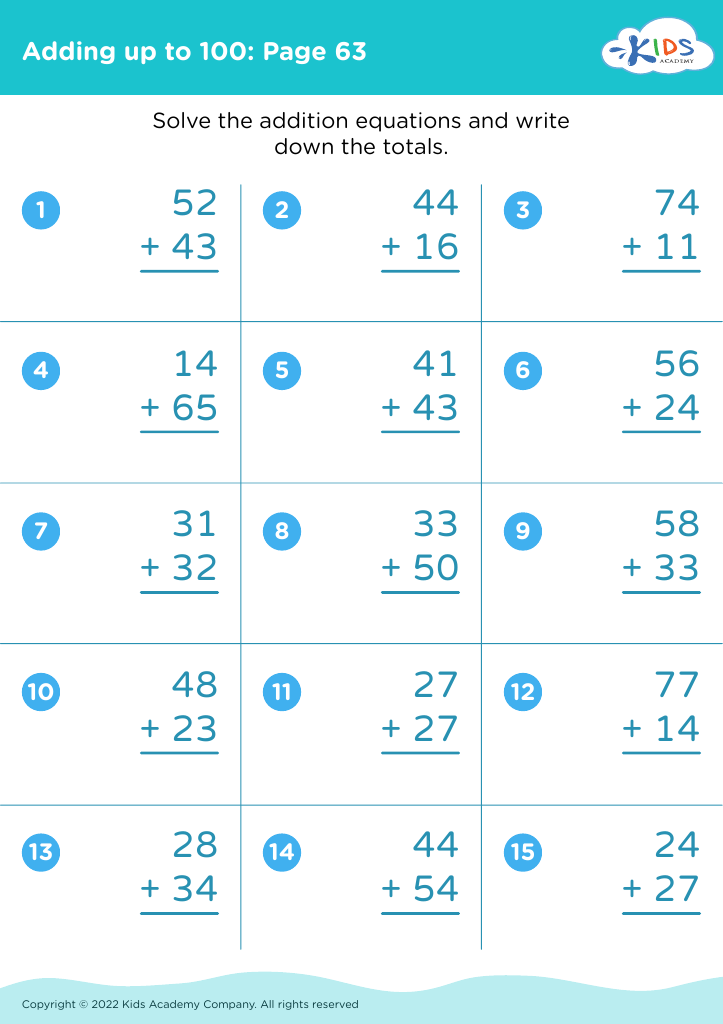
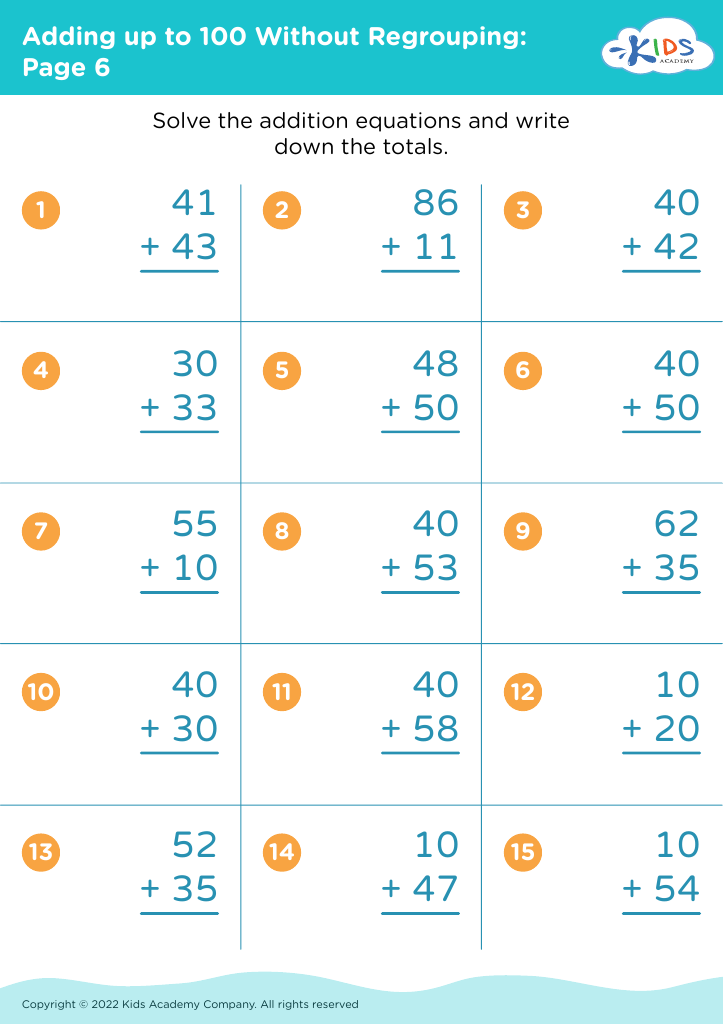
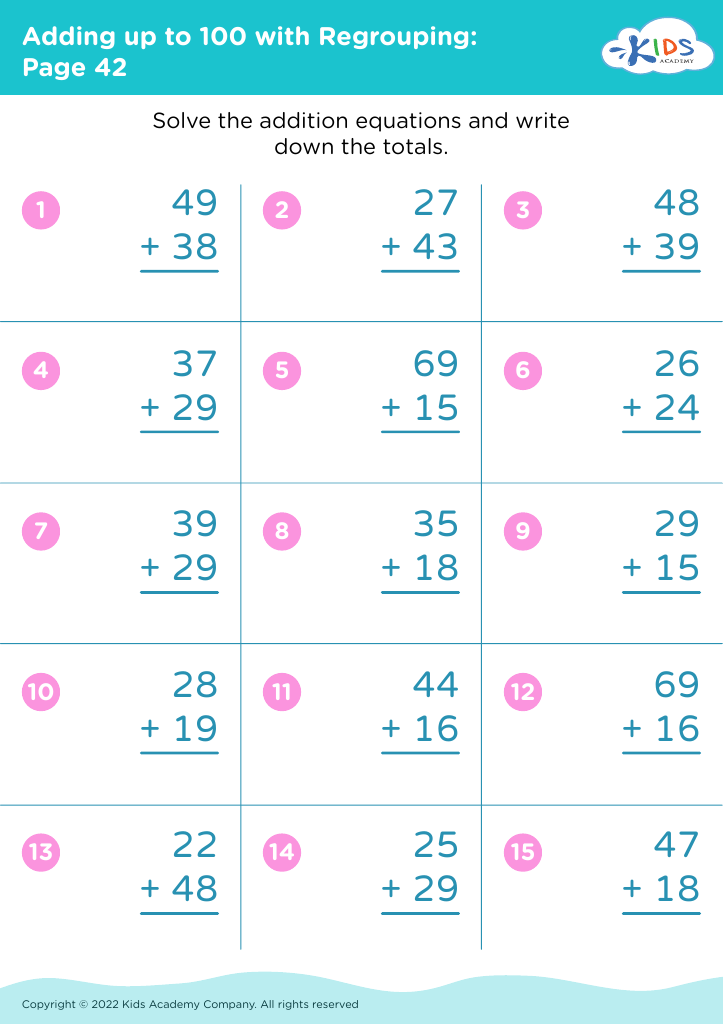
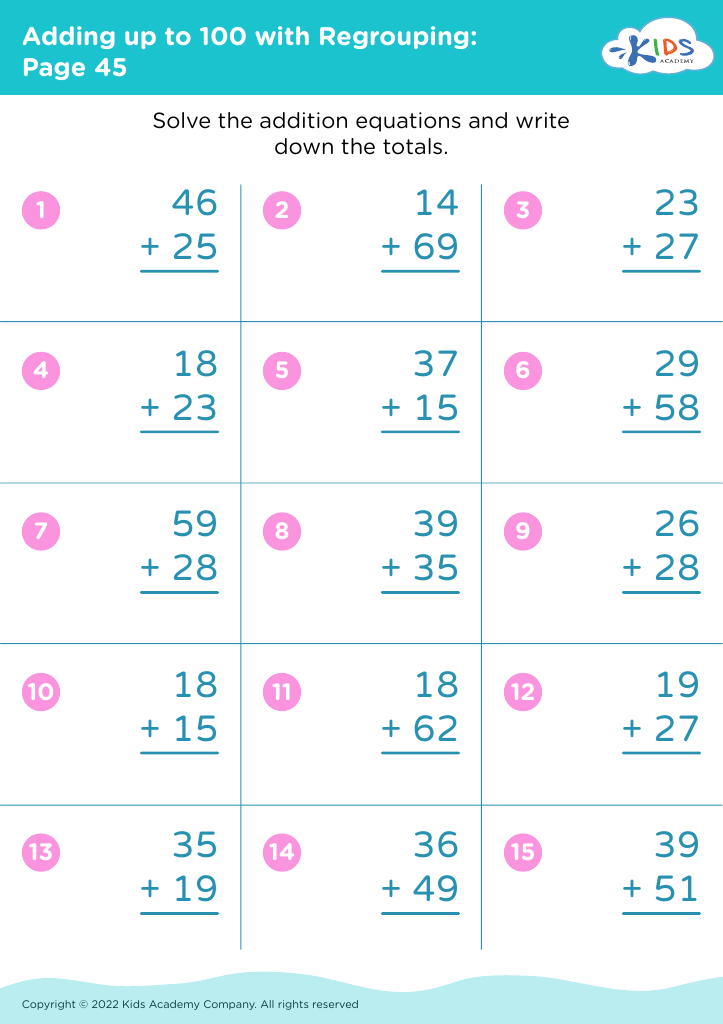
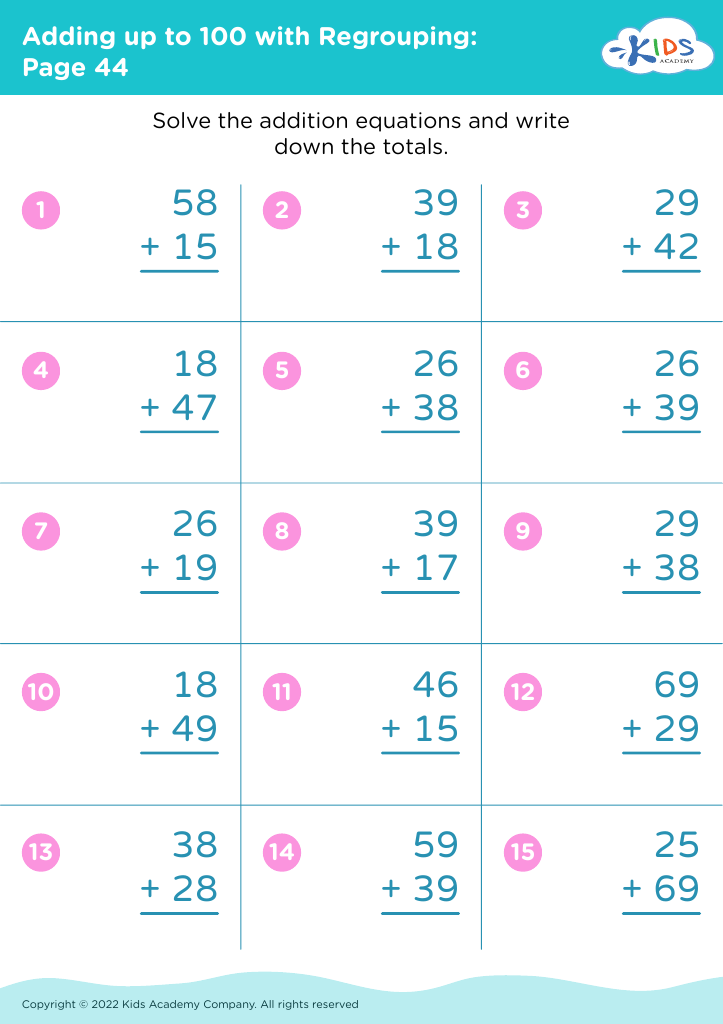
Explore our engaging "Understanding Symmetry & Adding Up to 100 Worksheets" designed for ages 3-8. These worksheets offer a fun and interactive way to teach young learners about symmetry and basic addition up to 100. With colorful visuals and age-appropriate activities, kids can develop their math skills while enhancing their critical thinking. Perfect for classroom and at-home learning, these worksheets support both foundational and advanced concepts in symmetry and arithmetic, ensuring a comprehensive understanding. Motivate your child's learning journey by utilizing our expertly crafted resources to make math exciting and accessible!






%20(1).jpg)
Understanding symmetry and being able to add up to 100 are foundational skills that play a crucial role in early childhood development. Symmetry, the concept that an object is the same on both sides, helps children develop spatial awareness and critical thinking skills. Recognizing symmetry enhances their ability to observe and describe objects accurately, which strengthens vocabulary and communication skills. It also lays the groundwork for more complex mathematical concepts they will encounter later, such as geometry and pattern recognition.
Similarly, being comfortable with addition up to 100 provides a solid mathematical foundation. It is not just about counting but understanding numbers, grouping, and how adding or taking away parts affects the whole. This skill is fundamental for real-world scenarios, such as time management (e.g., understanding a 60-minute hour) and money handling. Also, early proficiency in basic arithmetic fosters confidence and reduces math anxiety, setting a positive tone for future learning.
Together, these skills support cognitive development and problem-solving abilities. By focusing on these key concepts, parents and teachers equip children with tools that are essential for academic success and everyday life, laying a holistic foundation that supports not only mathematical understanding but overall intellectual confidence.








