
Vocabulary enhancement Adding up to 100 Worksheets for Ages 3-8
3 filtered results
Difficulty Level
Grade
Age
-
From - To
Subject
Activity
Standards
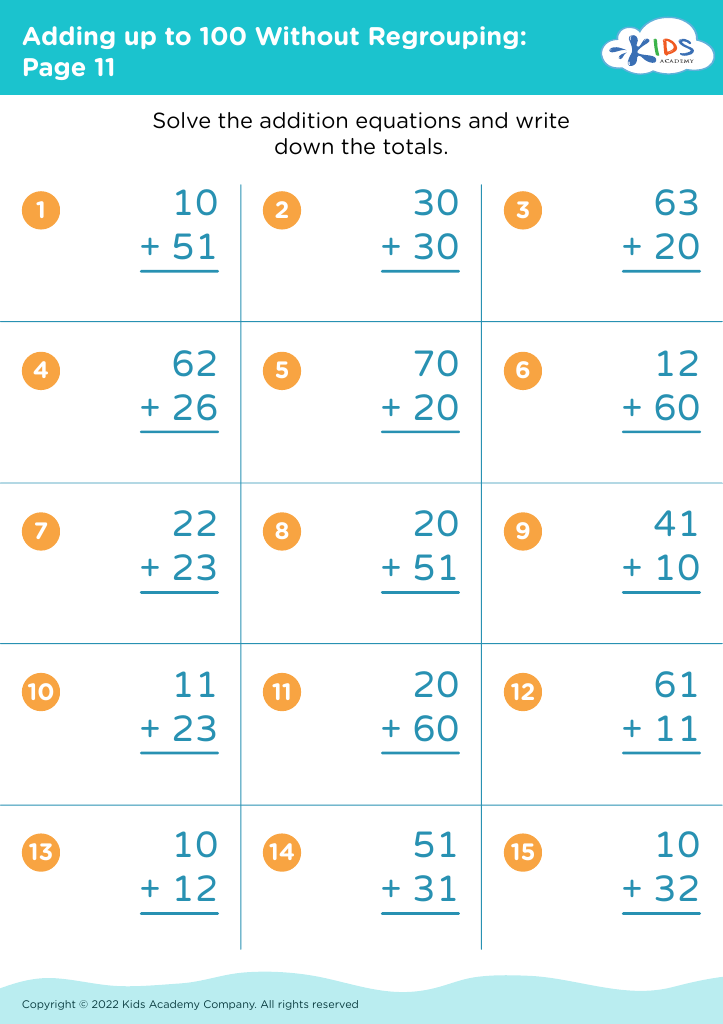
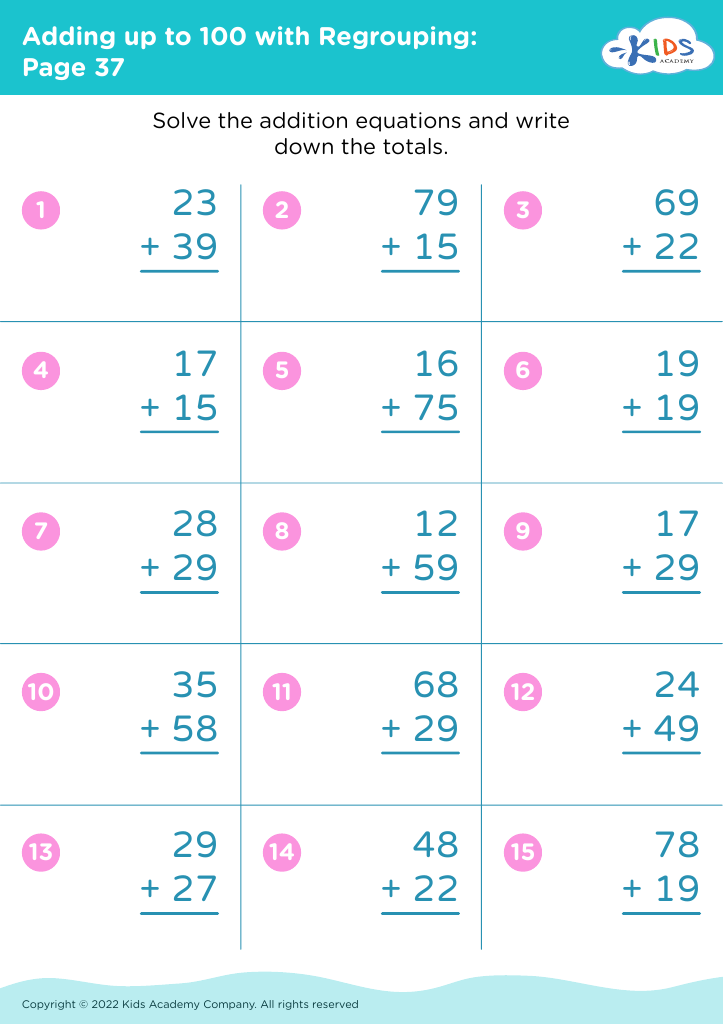
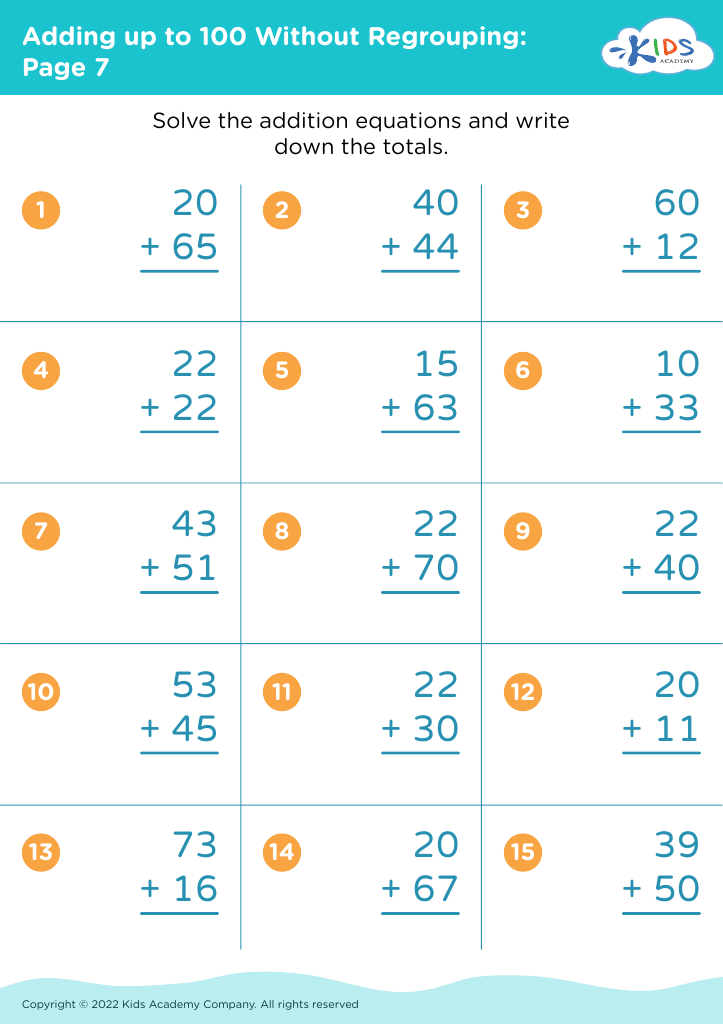
Boost your child's vocabulary and math skills with our "Vocabulary Enhancement: Adding up to 100 Worksheets" designed specifically for ages 3-8. These engaging worksheets from Kids Academy merge basic addition with vocabulary enrichment to make learning fun and educational. Perfect for early learners, each worksheet helps build foundational math skills while introducing new words, promoting literacy and numeracy simultaneously. Your child will enjoy a variety of activities that encourage word recognition and comprehension alongside their arithmetic practice. Download these worksheets today to support holistic development and make learning enjoyable for your young ones!
Favorites
With answer key
Interactive
Join Kids Academy for Free
Who is primarily going to use this learning content?



%20(1).jpg)



Enhancing vocabulary and introducing fundamental math concepts, like adding up to 100, for children ages 3-8 is crucial for their cognitive and academic development. During these formative years, children's brains are exceptionally receptive to learning new information, and a strong vocabulary forms the foundation for effective communication, reading comprehension, and critical thinking. When children understand and can comfortably use a broad range of words, they are better equipped to express themselves clearly and navigate diverse situations with confidence.
Simultaneously, grasping basic mathematical concepts, such as addition up to 100, lays the groundwork for numerical literacy and problem-solving skills. Developing a solid understanding of numbers and simple math operations at an early age helps children build confidence in their abilities to tackle more complex math problems later in life. Incorporating vocabulary enhancement alongside math learning engages multiple areas of the brain, fostering a more robust and integrated educational experience.
Overall, attention to vocabulary and basic arithmetic for young learners supports holistic development, enhances their ability to learn more complex subjects in the future, and builds a strong educational foundation. Parents and teachers who prioritize these areas help foster learners who are not only academically prepared but also proficient in their communication and analytical skills.








