Basic arithmetic practice Adding Up to 5 Worksheets for Ages 3-8
8 filtered results
-
From - To
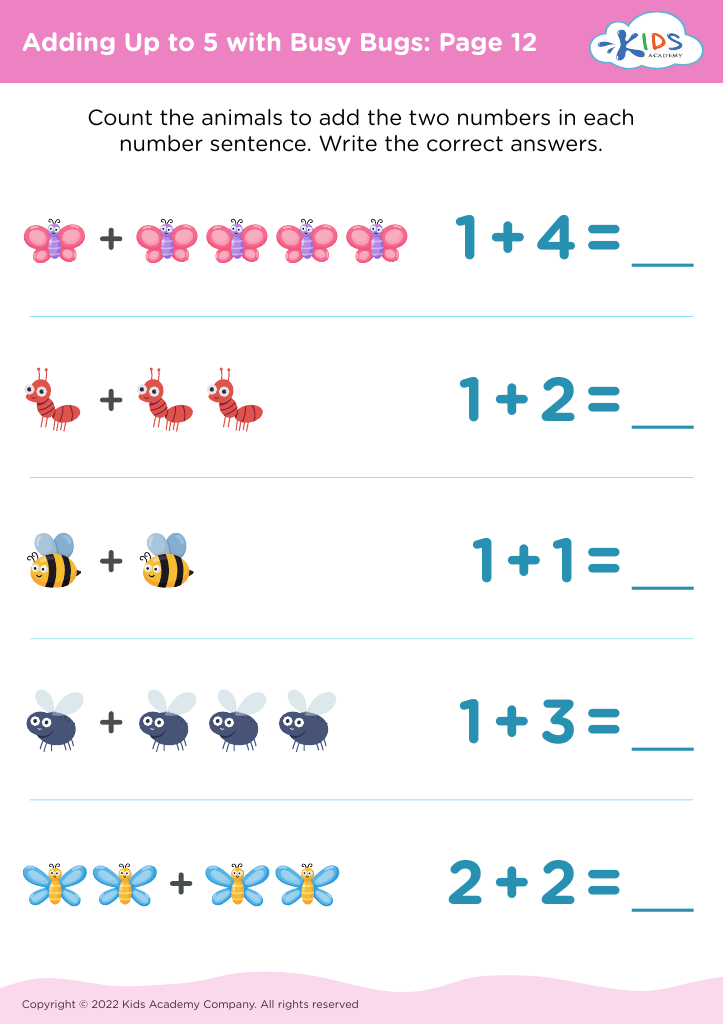
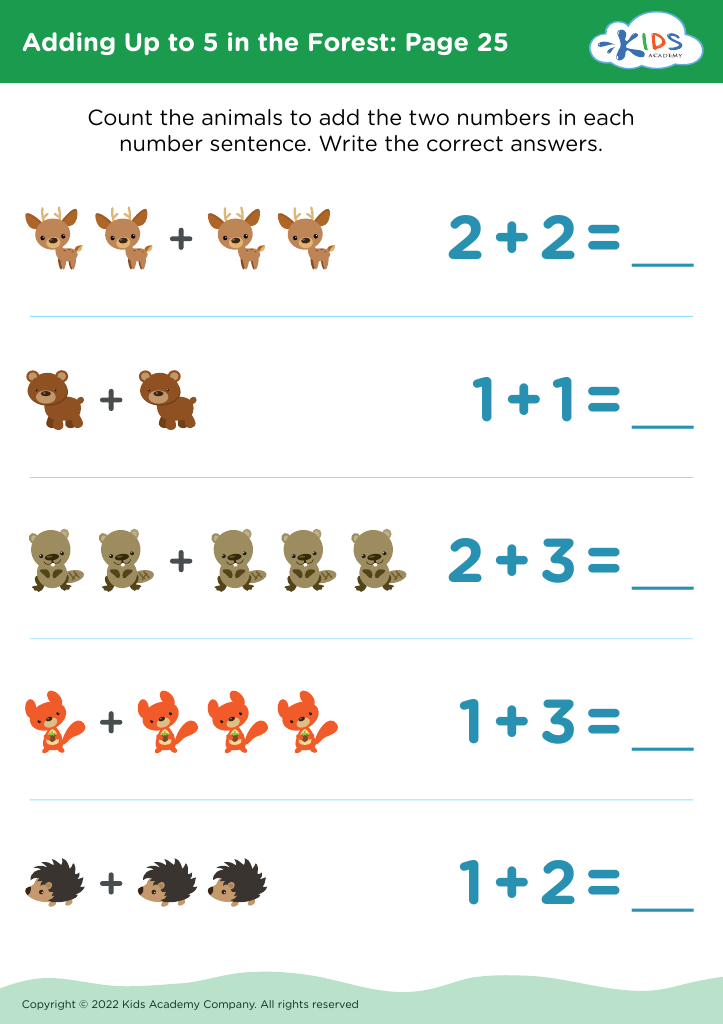
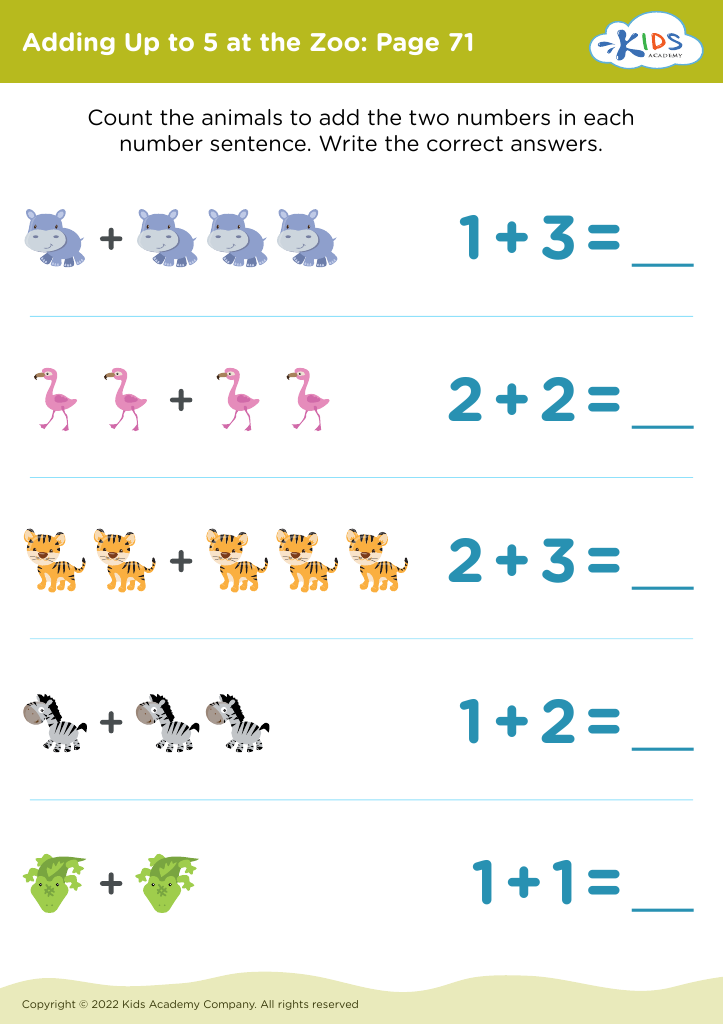
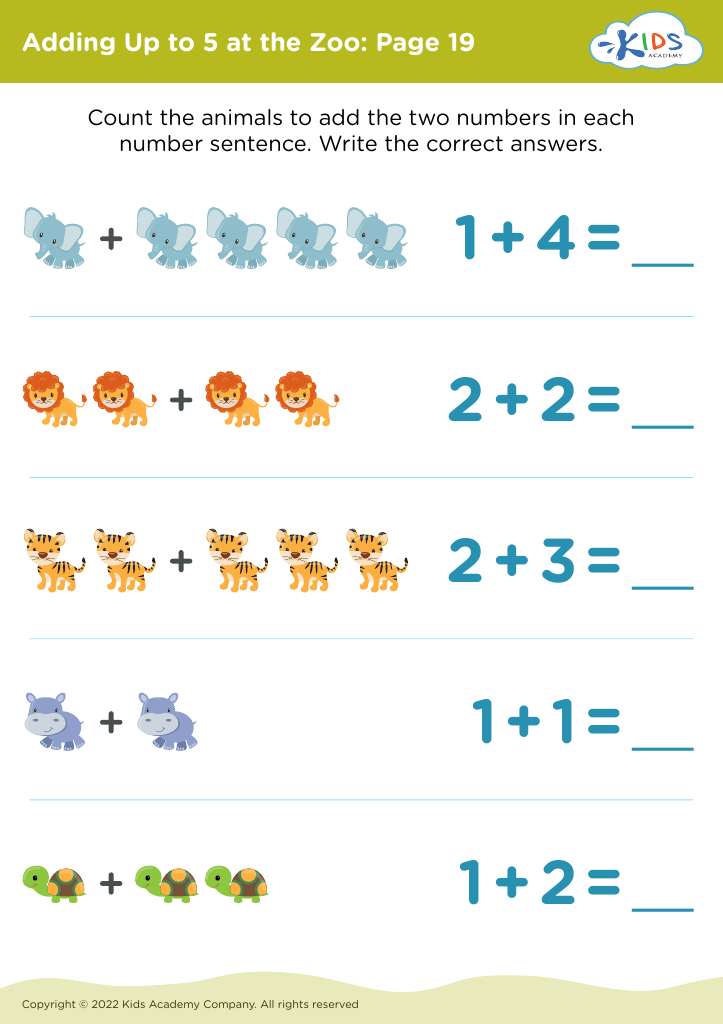
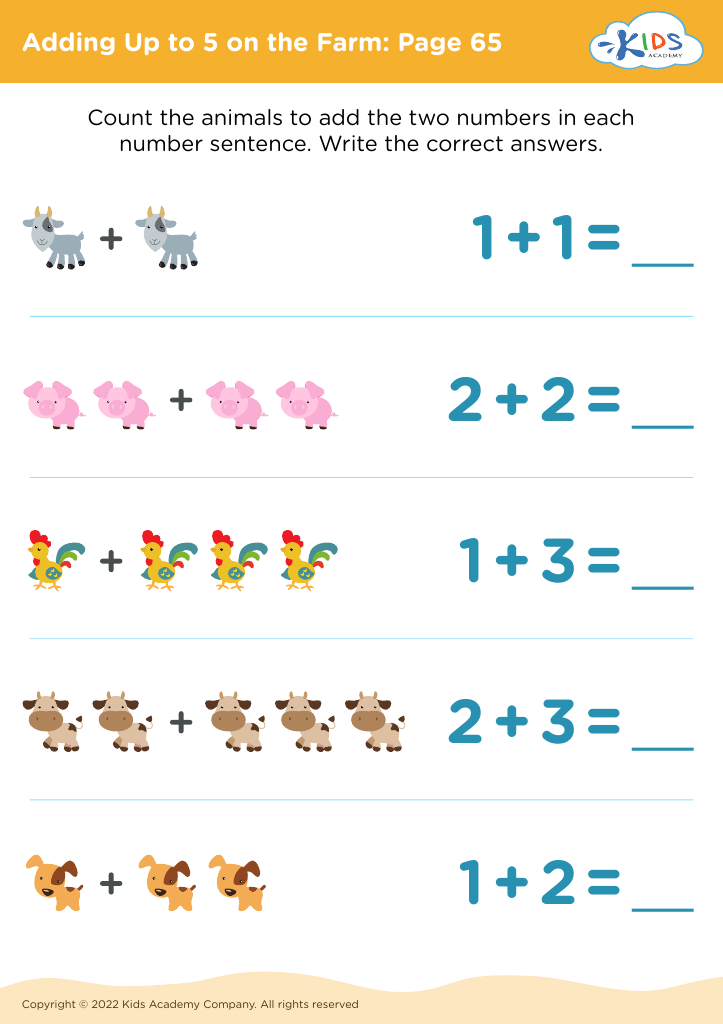
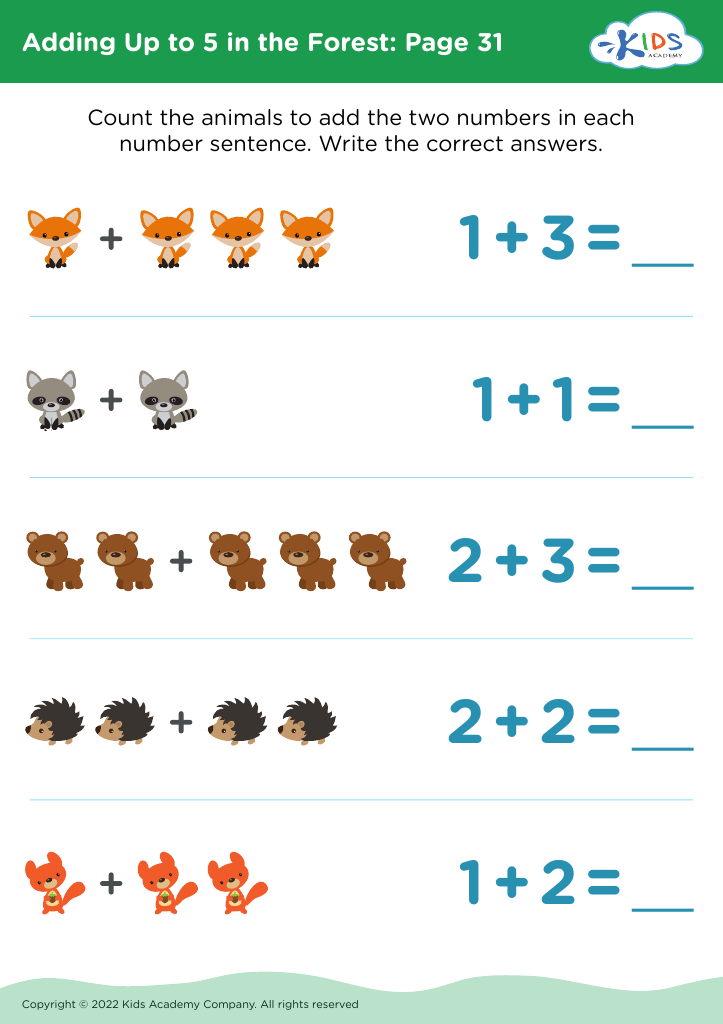
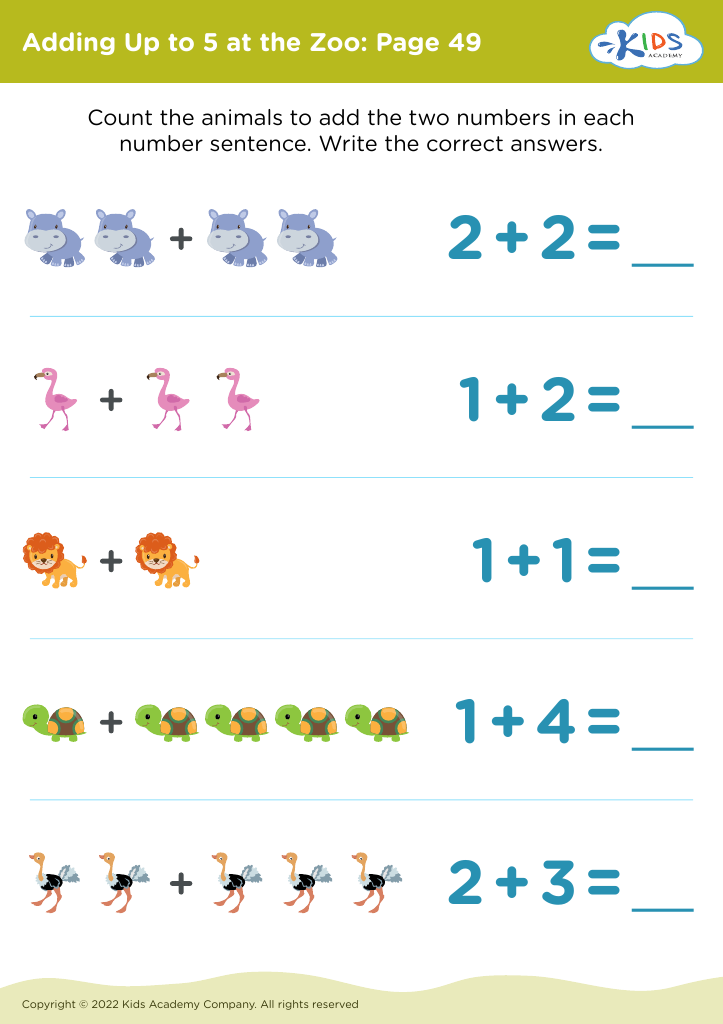
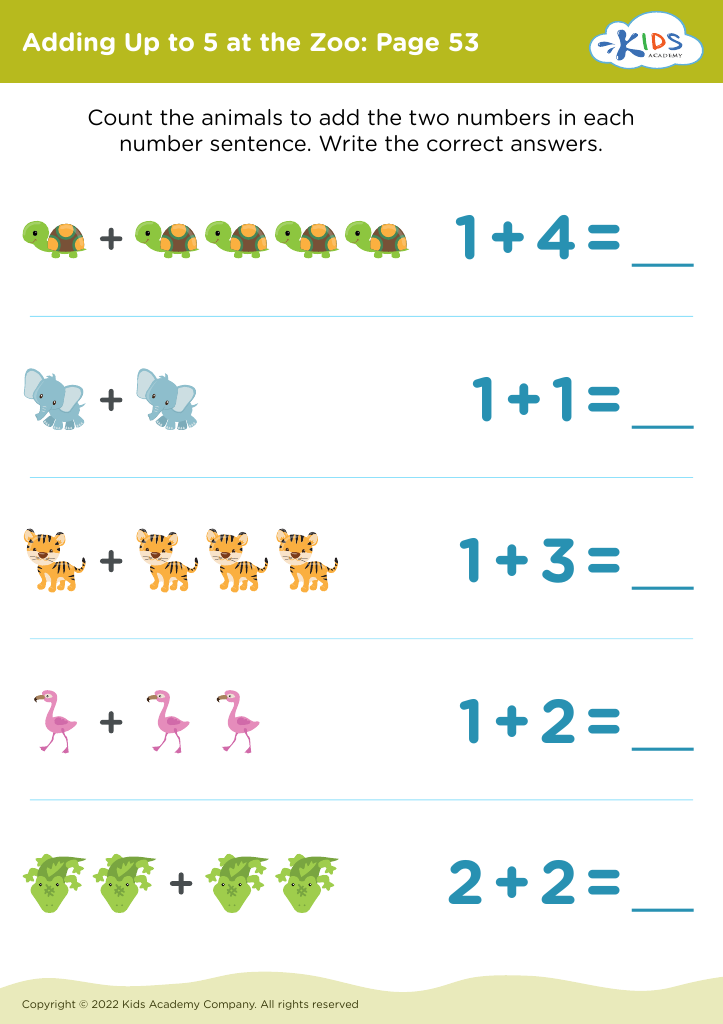
Welcome to our "Basic Arithmetic Practice: Adding Up to 5 Worksheets" designed for children ages 3-8. These engaging worksheets help young learners develop foundational math skills through fun and interactive activities. Each worksheet focuses on simple addition problems, guiding kids to understand concepts like number recognition and counting. Perfect for homeschooling or supplementary practice, our materials foster confidence in early mathematics. With colorful illustrations and age-appropriate challenges, children will enjoy learning to add up to 5 in an enjoyable way. Explore this essential resource to nurture your child’s mathematical development while having fun along the way!



.jpg)




Basic arithmetic practice, such as "Adding Up to 5," is crucial for children aged 3-8 for several important reasons. Firstly, this foundational skill fosters essential cognitive development. Understanding basic addition helps children learn how to solve problems, think logically, and approach tasks methodically. As they grasp these concepts, they build a strong mathematical base that supports future learning in more complex arithmetic and problem-solving.
Furthermore, early arithmetic practice enhances a child's confidence and self-esteem. Mastering addition to 5 allows young learners to experience success in their mathematical endeavors, which encourages a positive attitude towards learning. This confidence can translate into a lifelong love for mathematics and an eagerness to explore new topics.
In addition to cognitive benefits, arithmetic practice promotes social skills. Collaborative activities, where children work together to solve simple addition problems, foster communication and teamwork. Teachers and parents should prioritize these learning experiences to create an engaging and interactive environment that encourages participation and dialogue.
Ultimately, investing time in basic arithmetic skills sets the foundation for academic success, encourages a growth mindset, and creates enjoyable learning opportunities. It equips children with the essential tools they need to navigate mathematical challenges in their future education and everyday life.








