Filters

232 filtered results

Clear all filters
Favorites
With answer key
Interactive

232 filtered results

Difficulty Level

Grade


Check out this FREE Trial Lesson on Adding Up to 5 for age 3-8!

Exactly the Same, or Not

Favorites
With answer key
Interactive
  • 3-8
  • Counting practice
  • Adding Up to 5
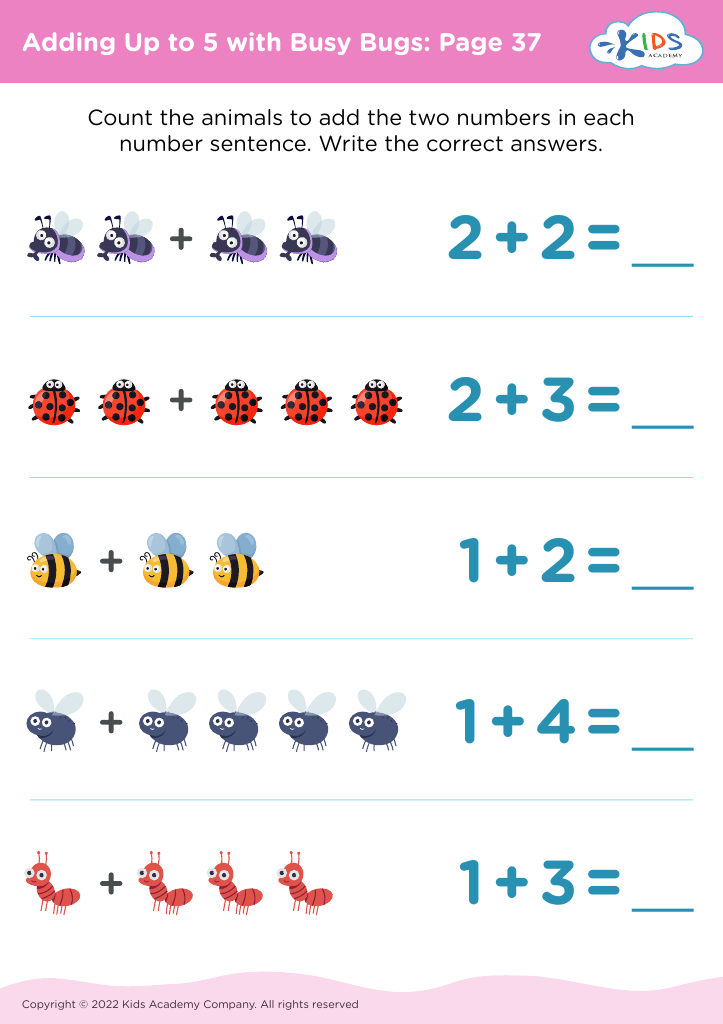
Adding Up to 5 with Busy Bugs: Page 37
Worksheet
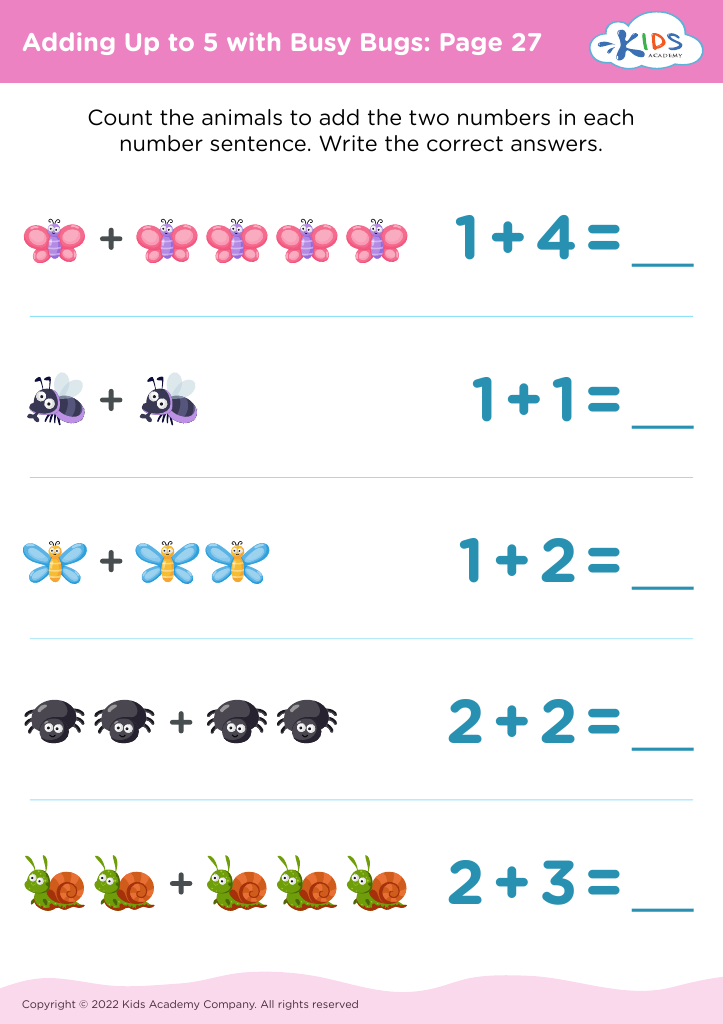
Adding Up to 5 with Busy Bugs: Page 27
Worksheet
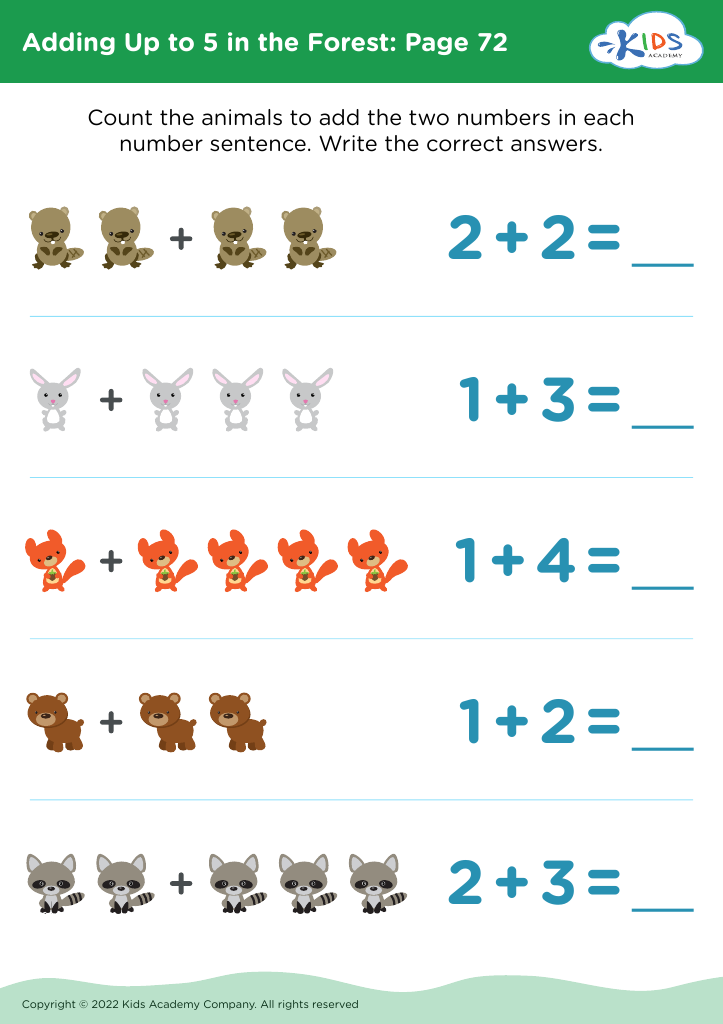
Adding Up to 5 in the Forest: Page 72
Worksheet
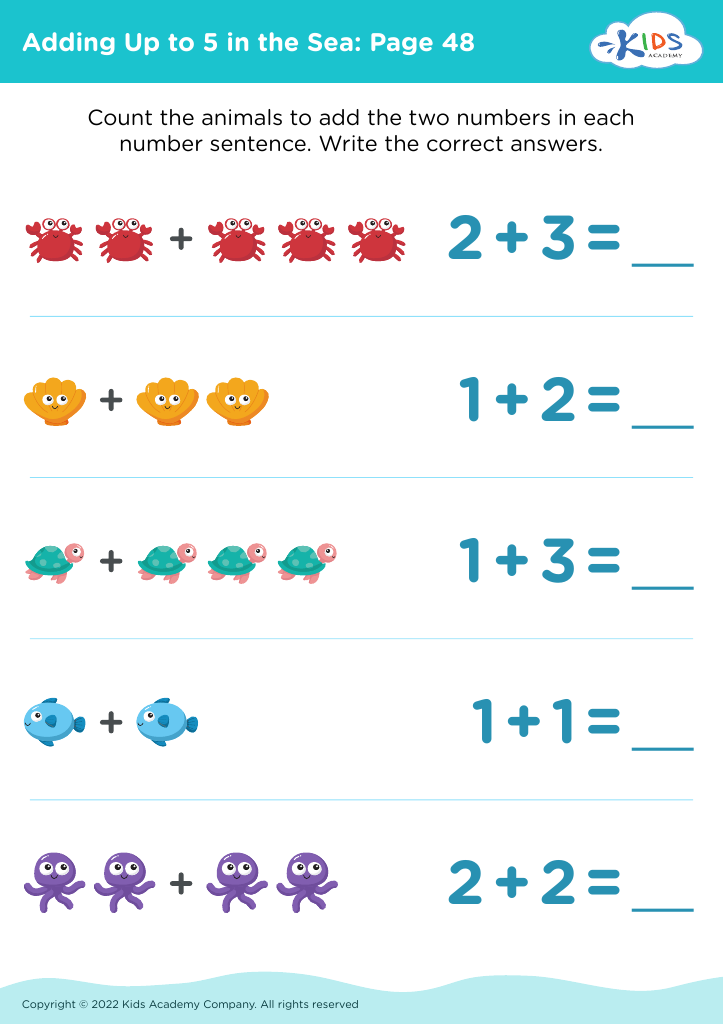
Adding Up to 5 in the Sea: Page 48
Worksheet
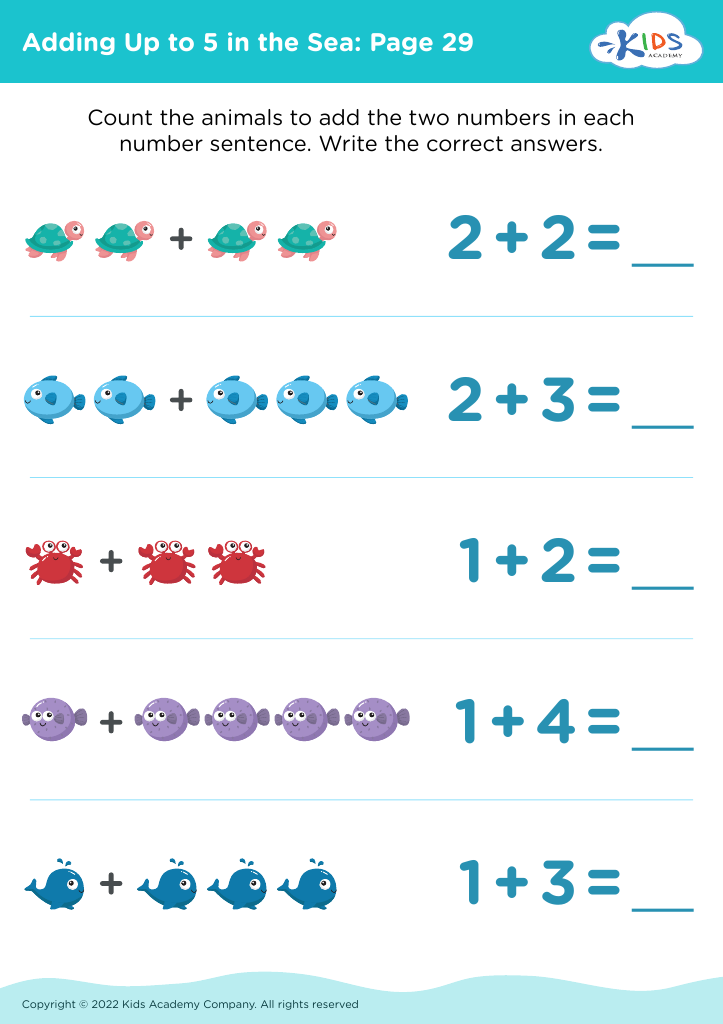
Adding Up to 5 in the Sea: Page 29
Worksheet
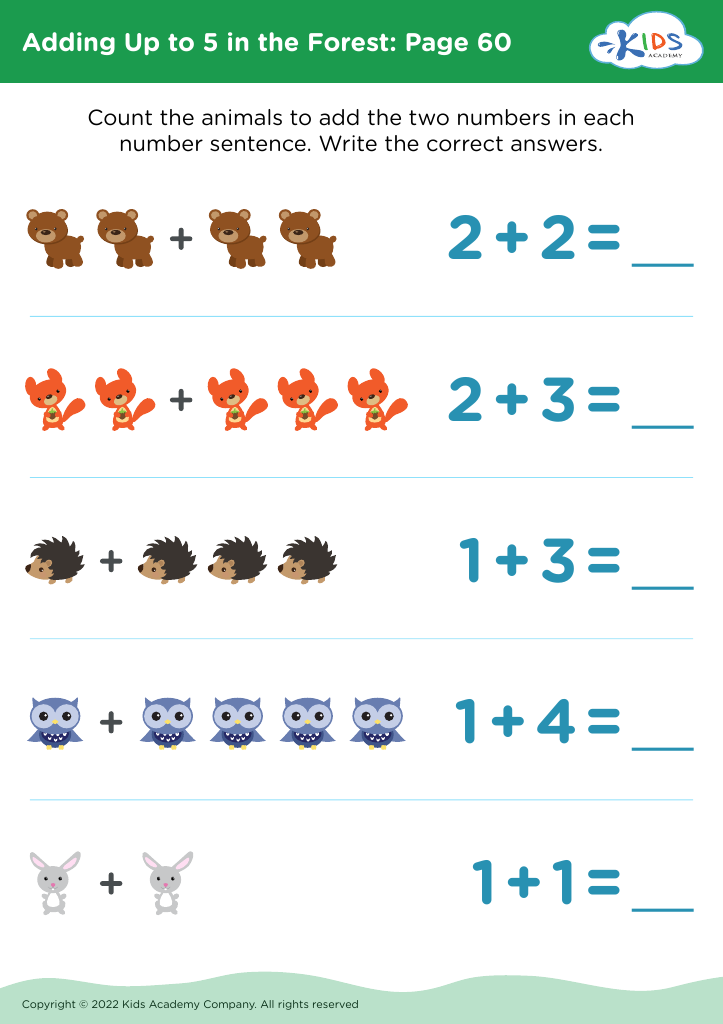
Adding Up to 5 in the Forest: Page 60
Worksheet
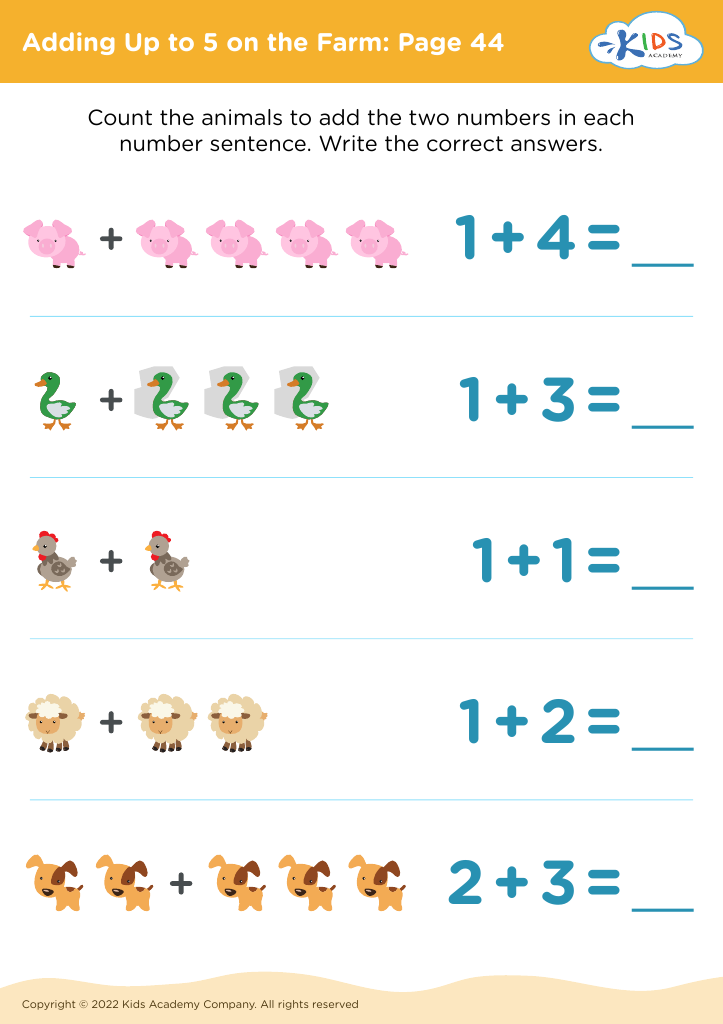
Adding Up to 5 on the Farm: Page 44
Worksheet
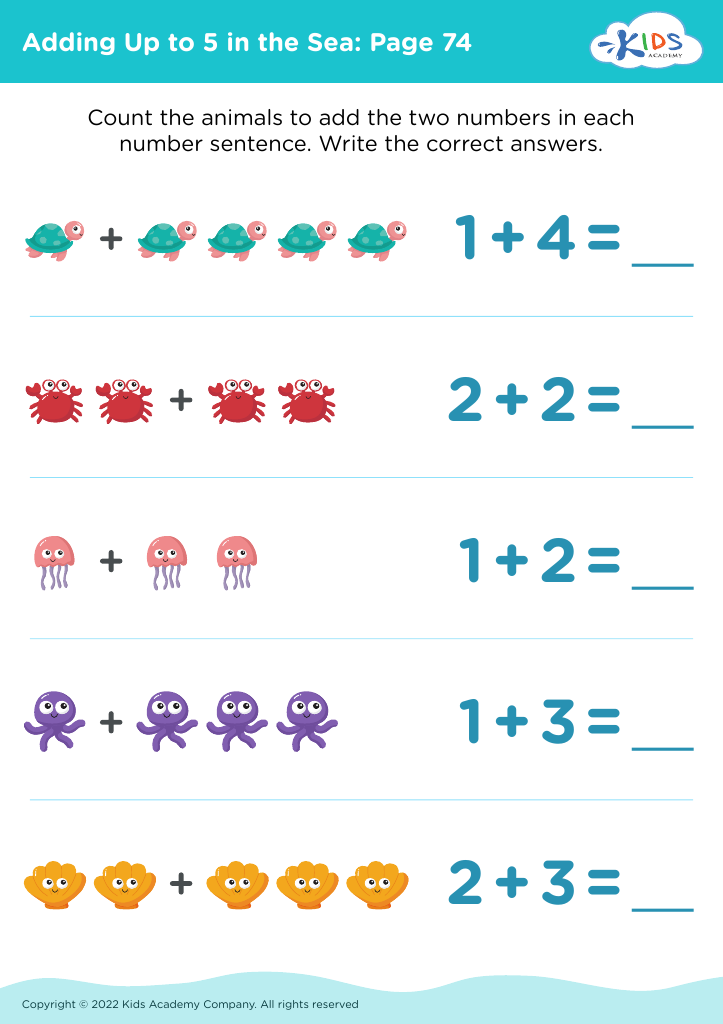
Adding Up to 5 in the Sea: Page 74
Worksheet
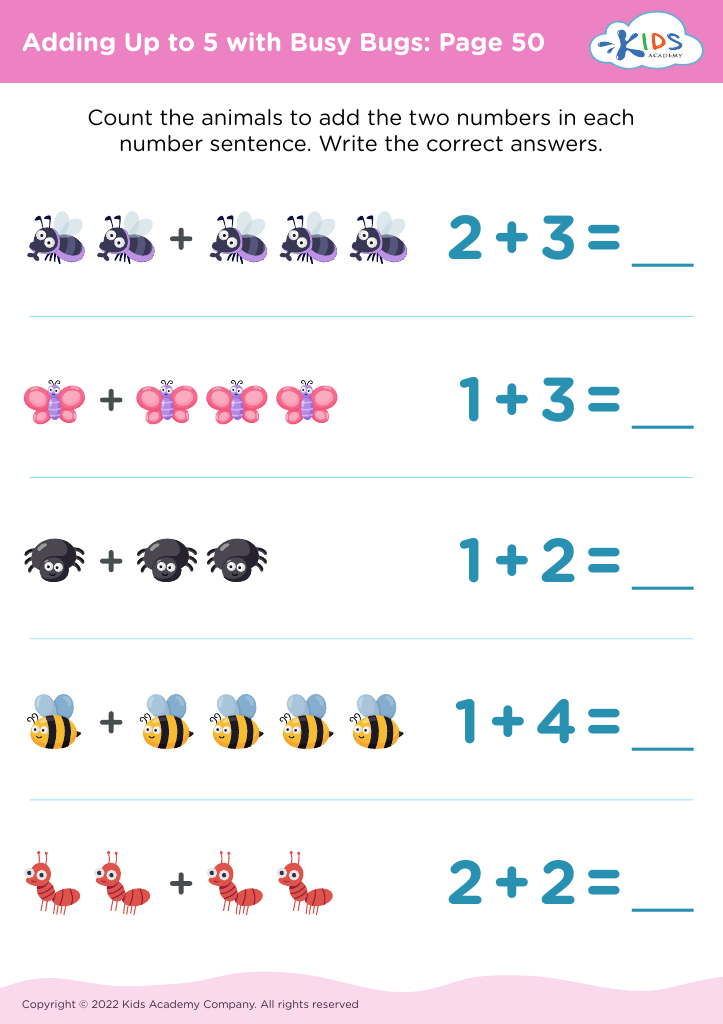
Adding Up to 5 with Busy Bugs: Page 50
Worksheet
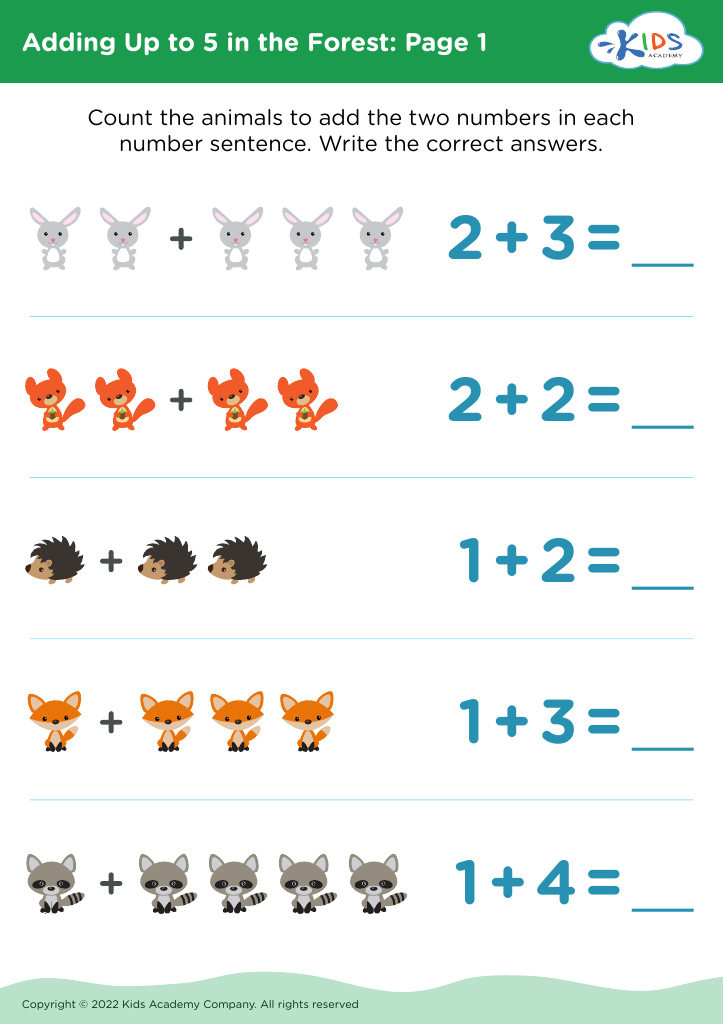
Adding Up to 5 in the Forest: Page 1
Worksheet
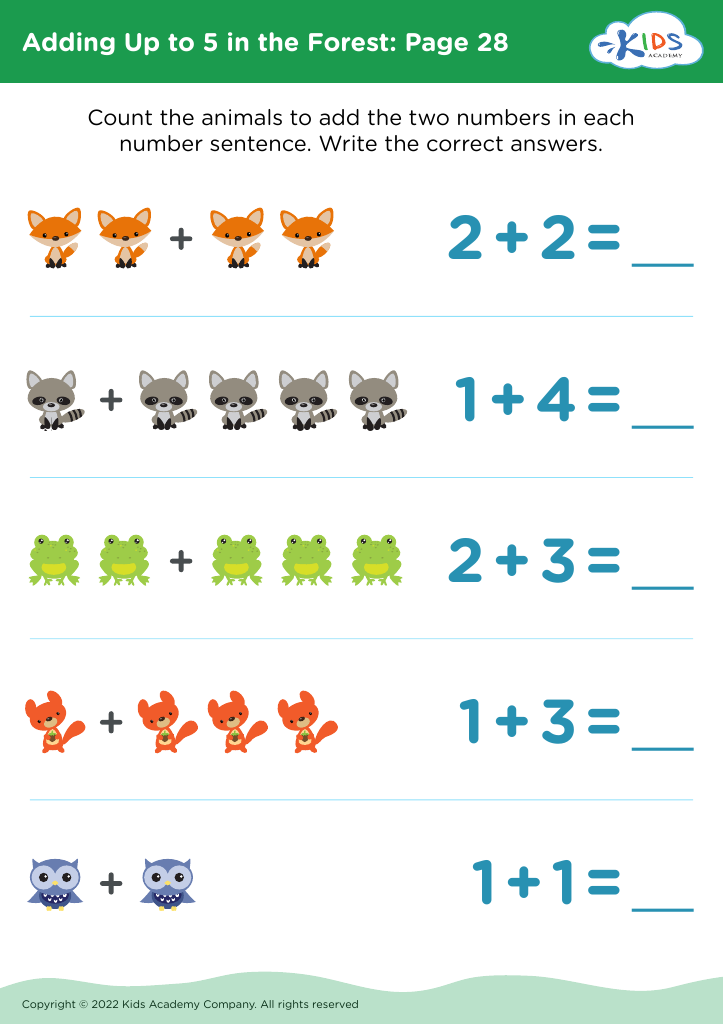
Adding Up to 5 in the Forest: Page 28
Worksheet
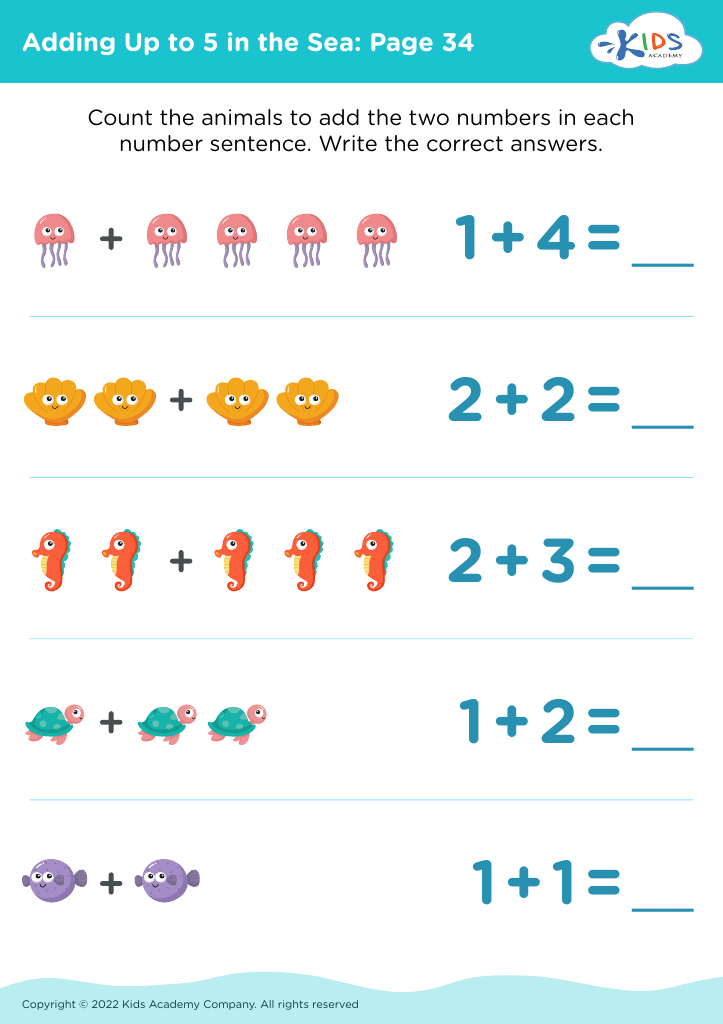
Adding Up to 5 in the Sea: Page 34
Worksheet
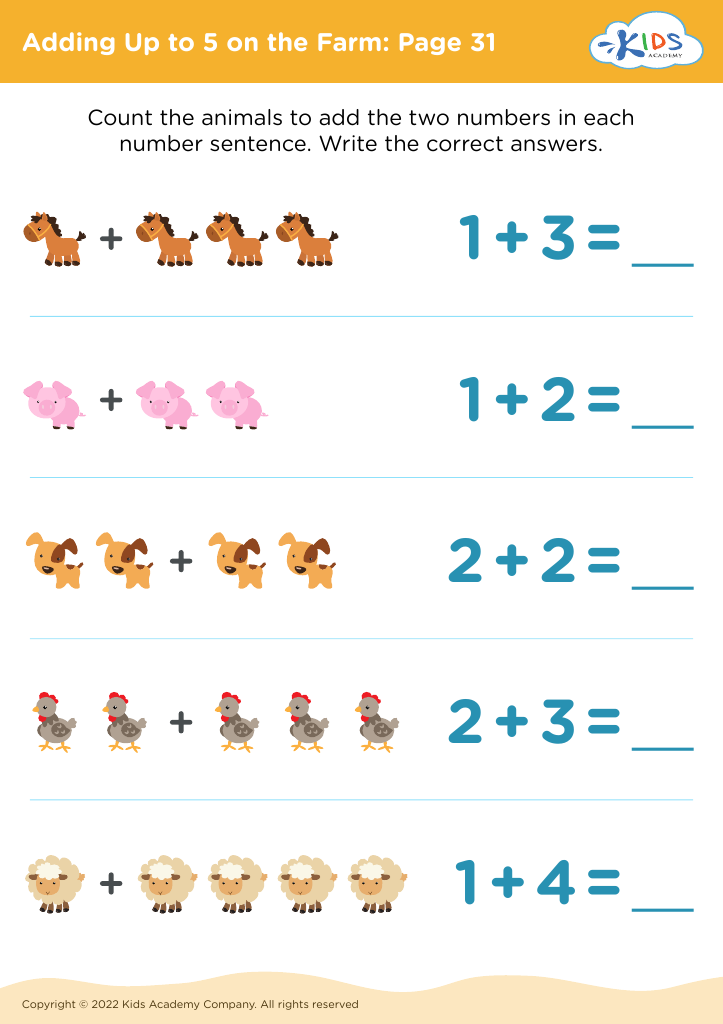
Adding Up to 5 on the Farm: Page 31
Worksheet
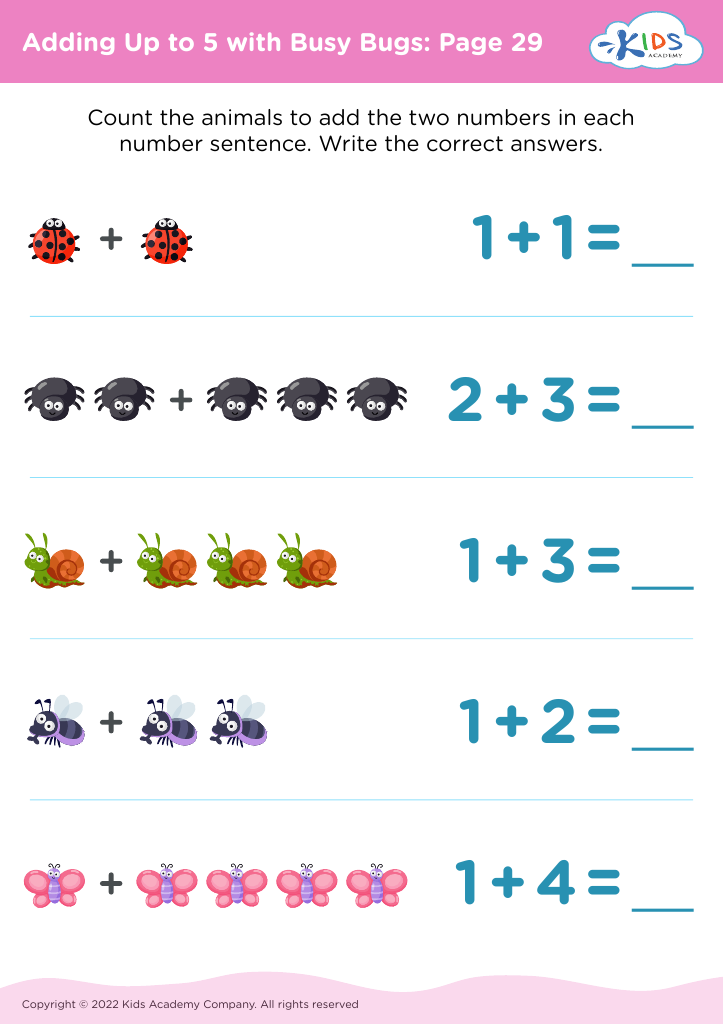
Adding Up to 5 with Busy Bugs: Page 29
Worksheet
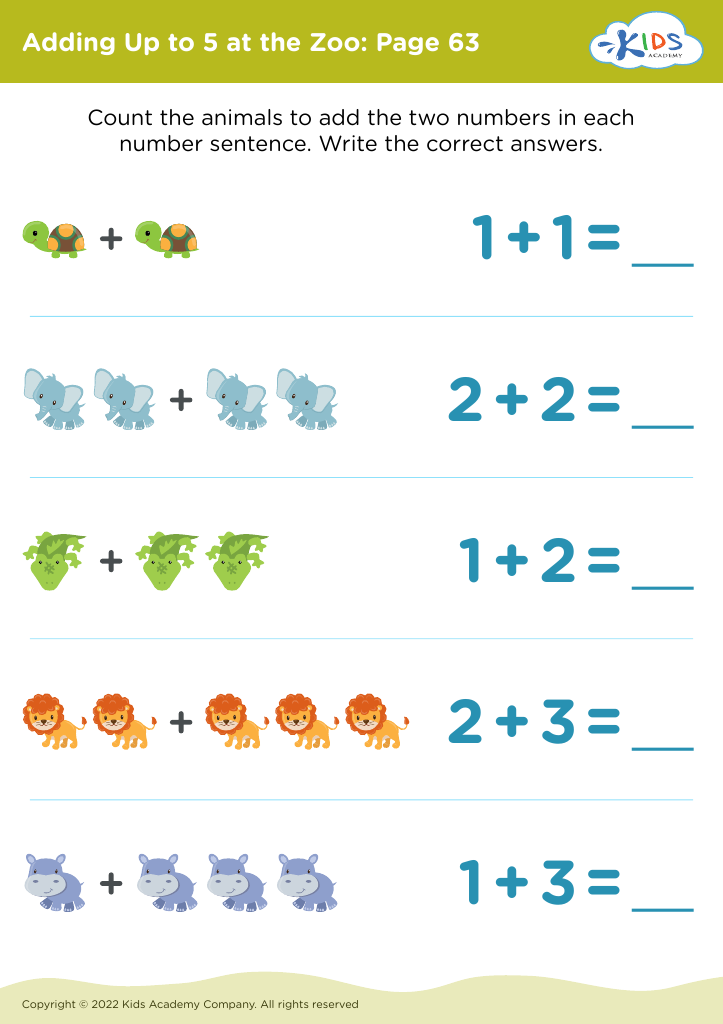
Adding Up to 5 at the Zoo: Page 63
Worksheet
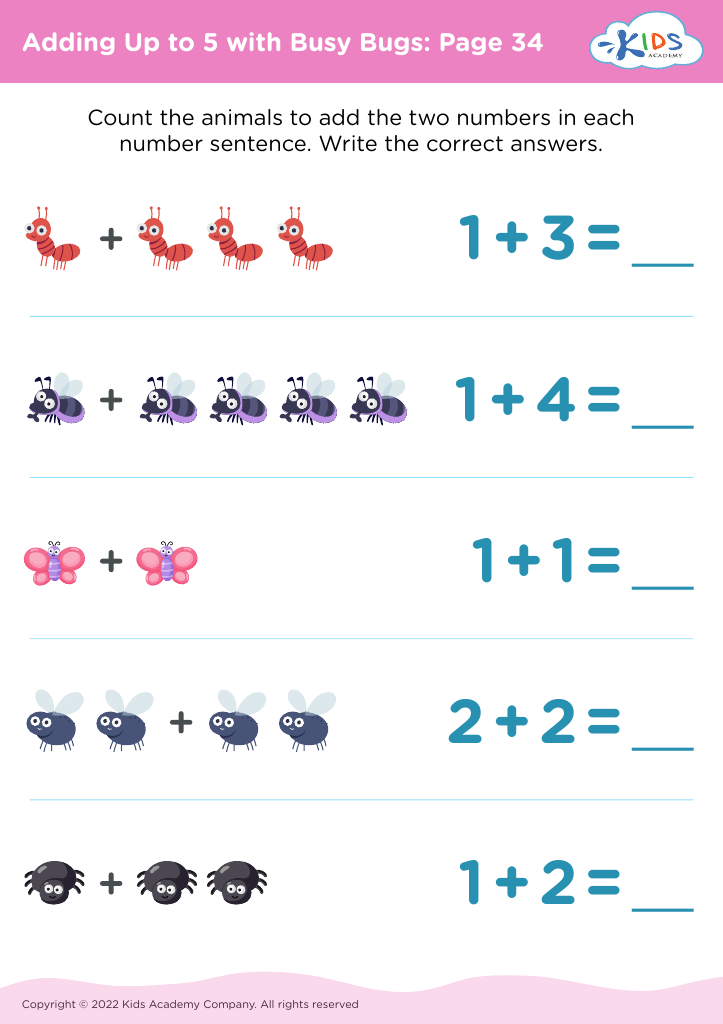
Adding Up to 5 with Busy Bugs: Page 34
Worksheet
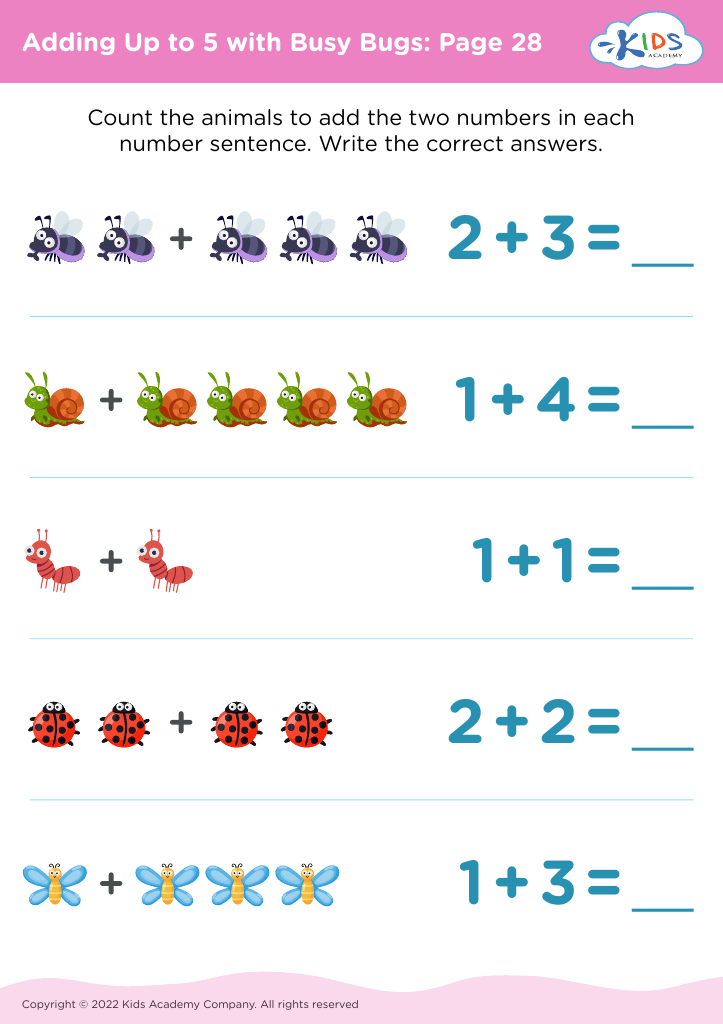
Adding Up to 5 with Busy Bugs: Page 28
Worksheet
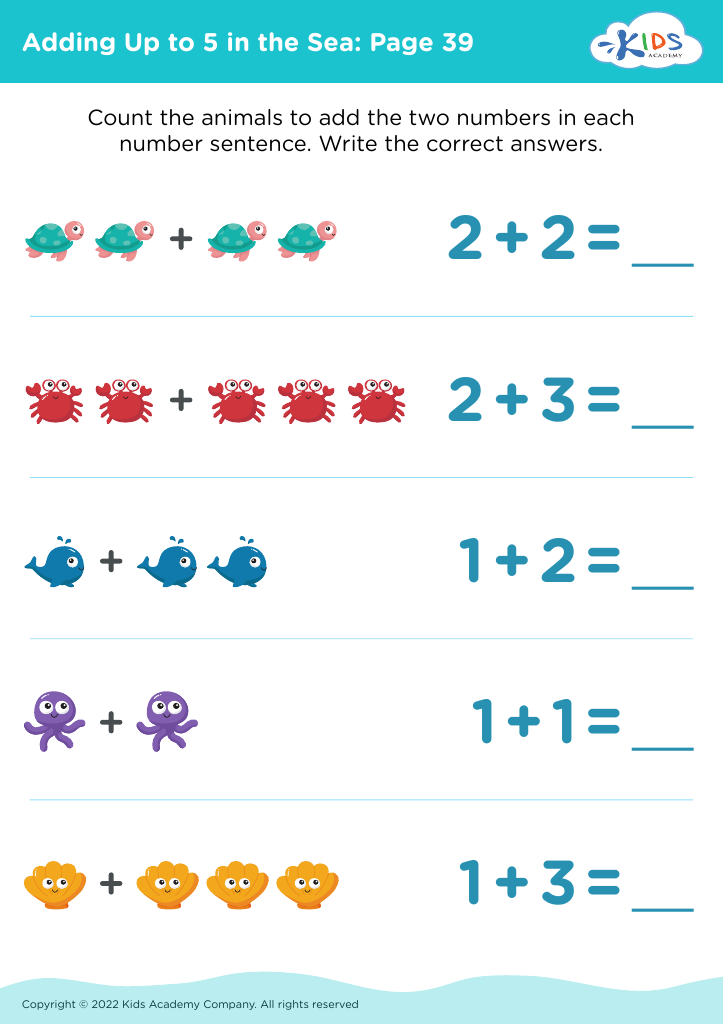
Adding Up to 5 in the Sea: Page 39
Worksheet
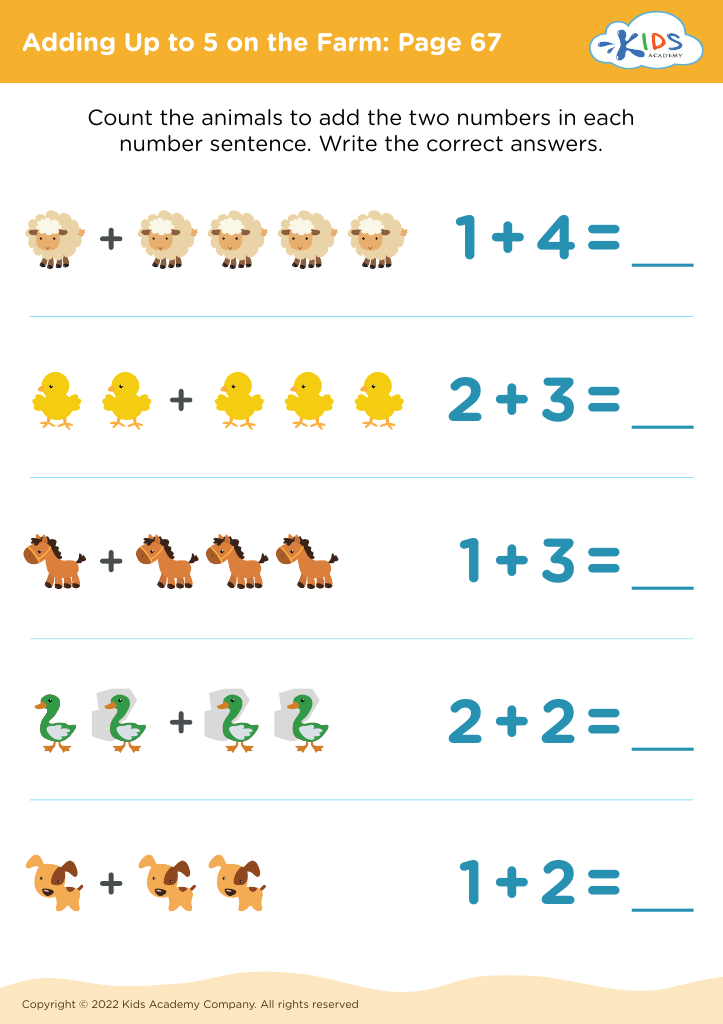
Adding Up to 5 on the Farm: Page 67
Worksheet
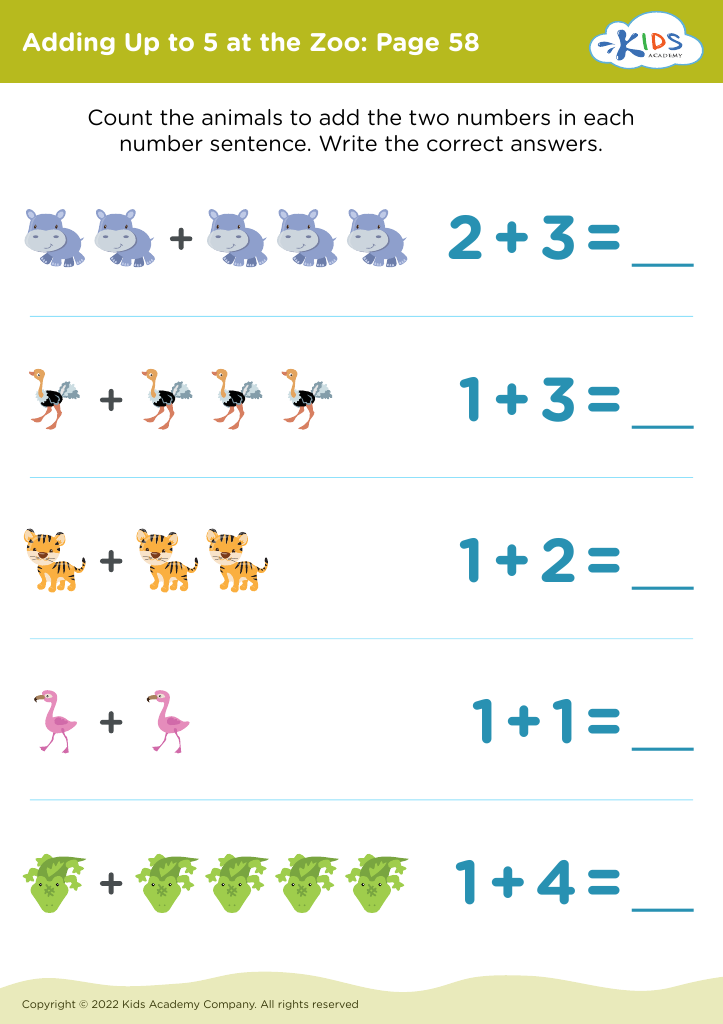
Adding Up to 5 at the Zoo: Page 58
Worksheet
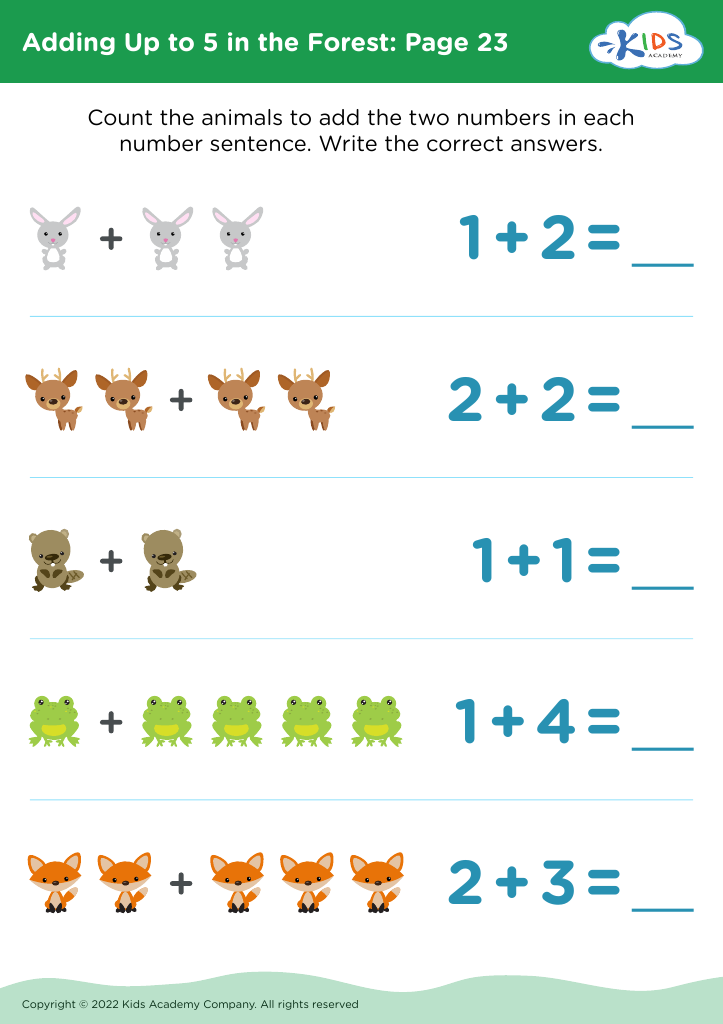
Adding Up to 5 in the Forest: Page 23
Worksheet
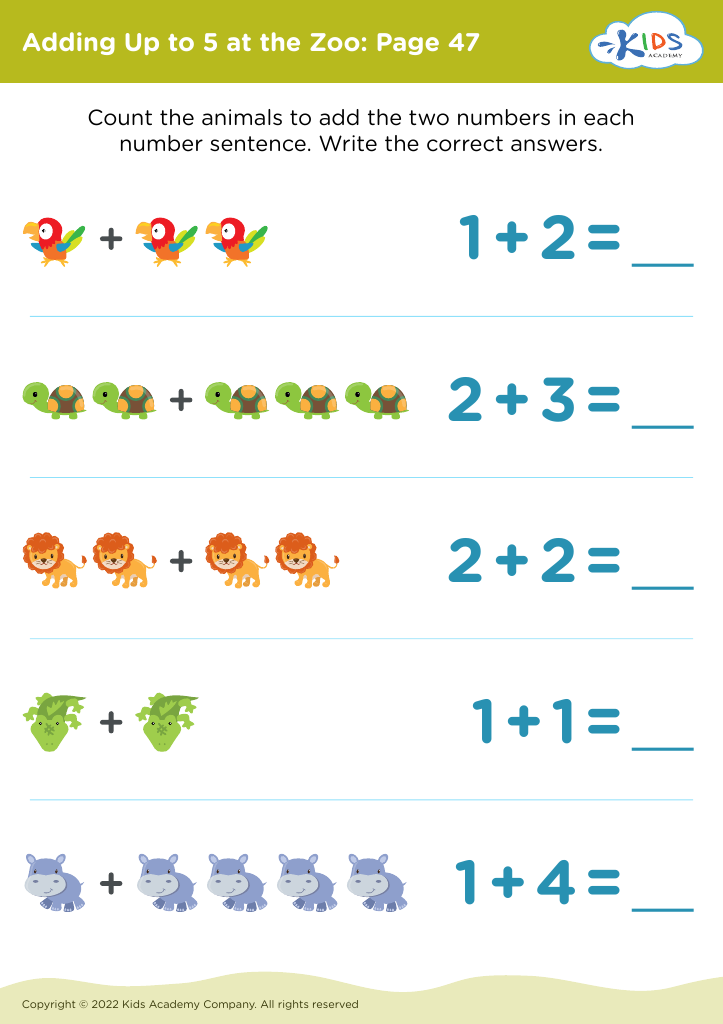
Adding Up to 5 at the Zoo: Page 47
Worksheet
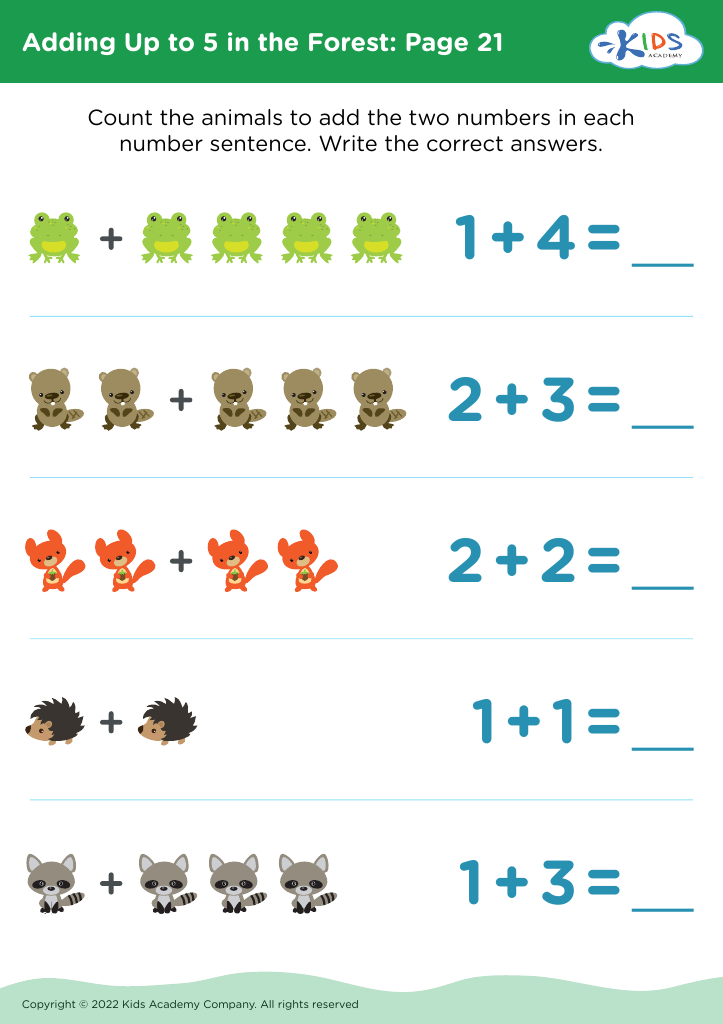
Adding Up to 5 in the Forest: Page 21
Worksheet
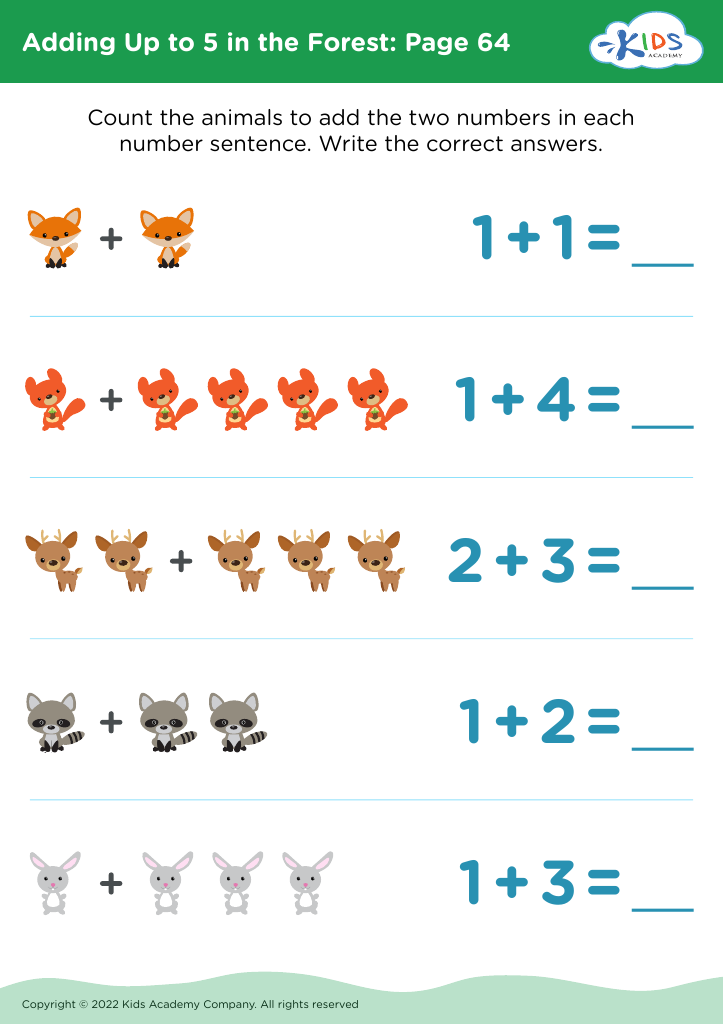
Adding Up to 5 in the Forest: Page 64
Worksheet


Counting practice and mastering basic addition up to five form a critical foundation for young children's mathematical understanding, generally those aged 3-8. At this stage, children are developing essential cognitive and motor skills. Learning to count and add helps to improve their number sense, which is the ability to understand numbers and their relationships. This early arithmetic practice is crucial as it underpins all later mathematical learning.

Counting up to five allows children to understand the concepts of quantity, order, and simple numerical operations, making them comfortable with manipulating numbers. These skills are not just about math but also help in problem-solving and critical thinking. For example, recognizing the difference between having three toys versus five toys or determining how many toys they need to make it five when they have only three can be practically beneficial in real-life situations.

Moreover, hands-on activities related to counting enhance fine motor skills and eye-hand coordination while keeping learning engaging and tactile. For parents and teachers, supporting these practices blazes a trail for a child’s self-confidence and promotes a positive attitude toward learning. Early math skills predict later academic success more strongly than early reading skills. Therefore, fostering strong foundational math skills through counting and basic addition is integral to children's overall intellectual development and future educational achievements.