Enhancing concentration Adding Up to 5 Worksheets for Ages 3-8
8 filtered results
-
From - To
Boost your child's focus and math skills with our "Adding Up to 5" worksheets, perfect for ages 3-8. Expertly designed to enhance concentration, these engaging activities keep young learners absorbed while they practice adding numbers up to 5. Ideal for individual or group use, each worksheet encourages critical thinking, fine motor skill development, and a love for numbers. Fun visual aids and clear instructions ensure that children remain attentive and enjoy their learning journey. Turn math practice into an exciting adventure with our concentration-boosting, child-friendly worksheets, tailored to ignite a lifelong passion for mathematics.
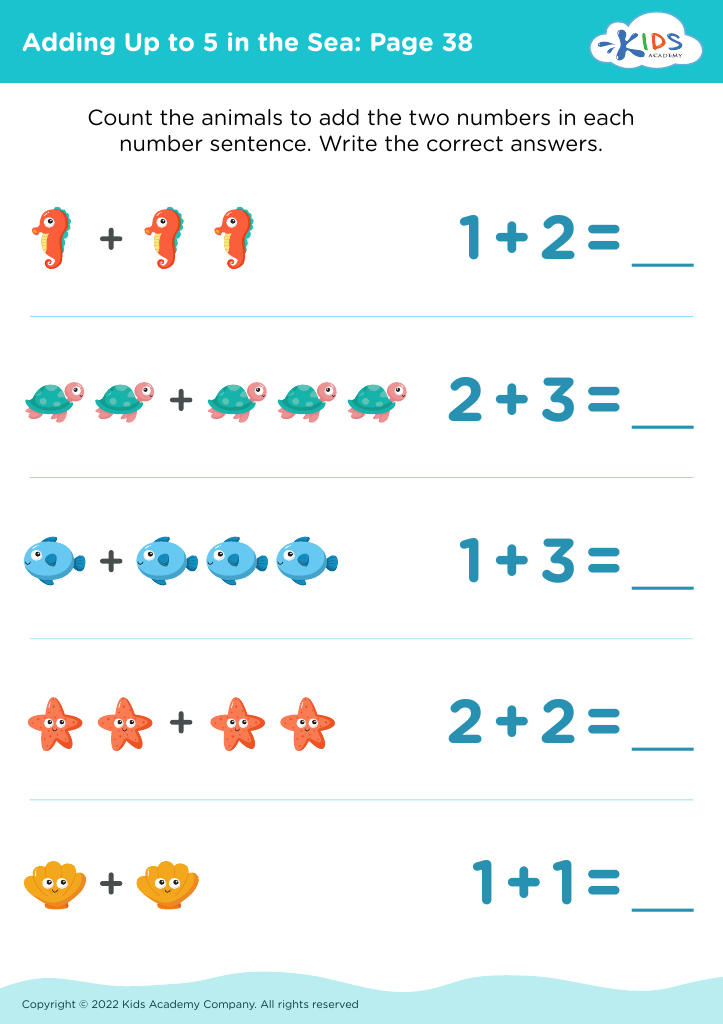
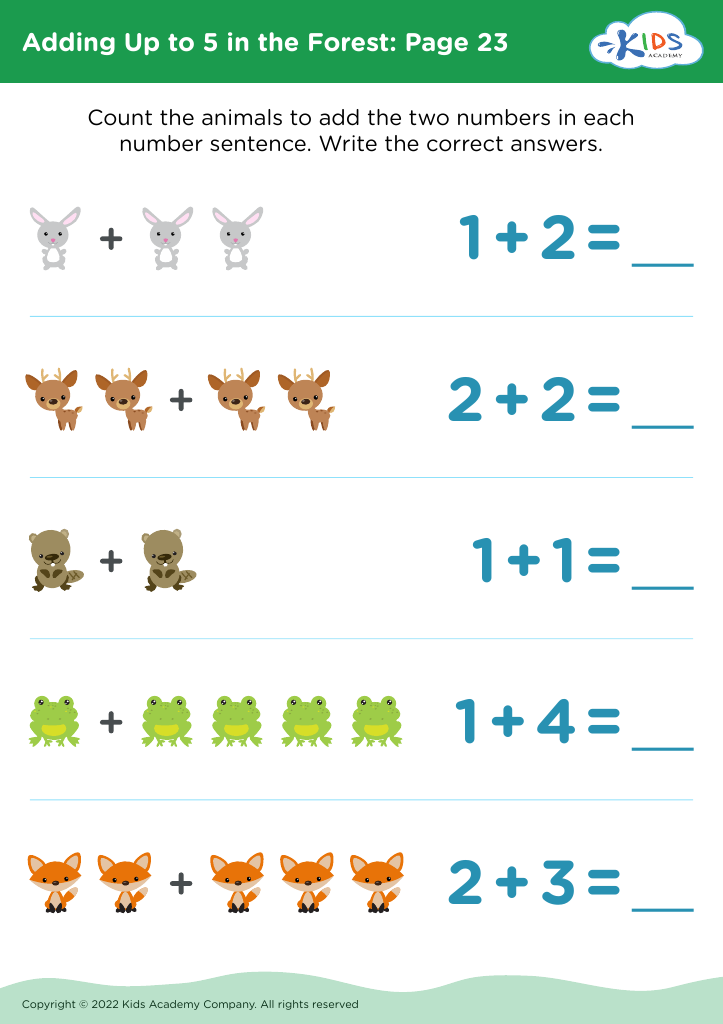
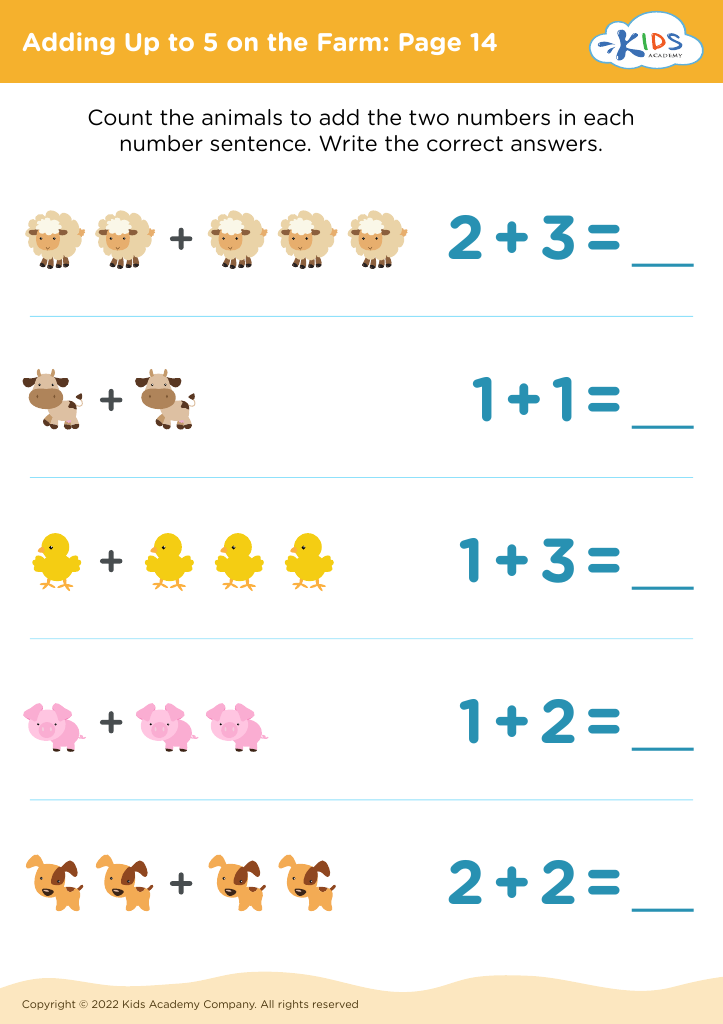
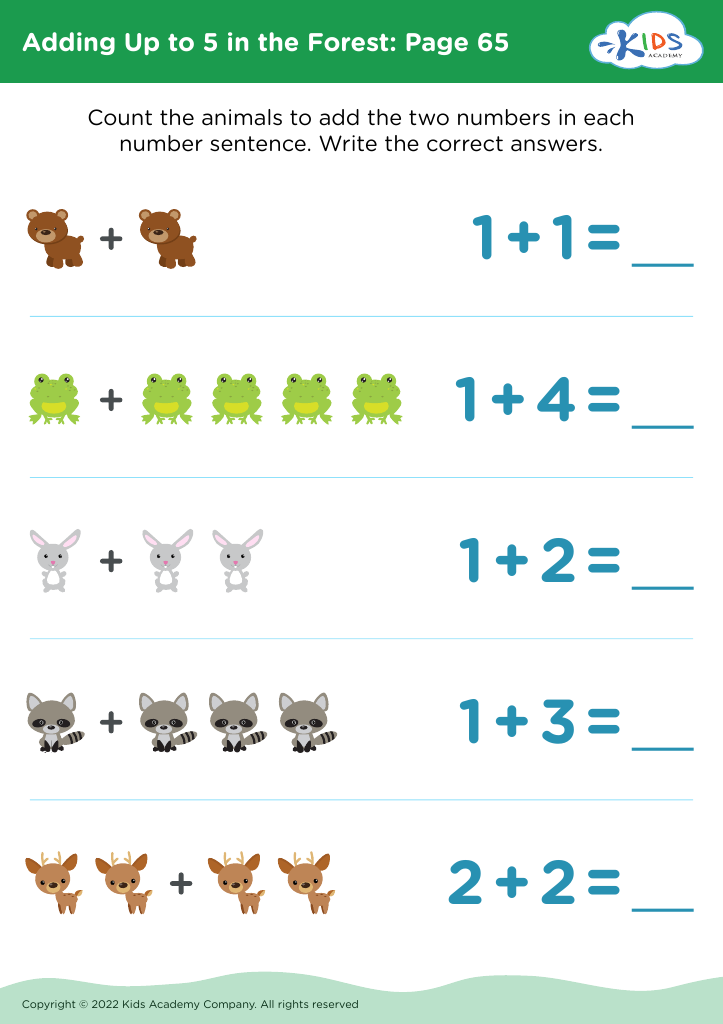
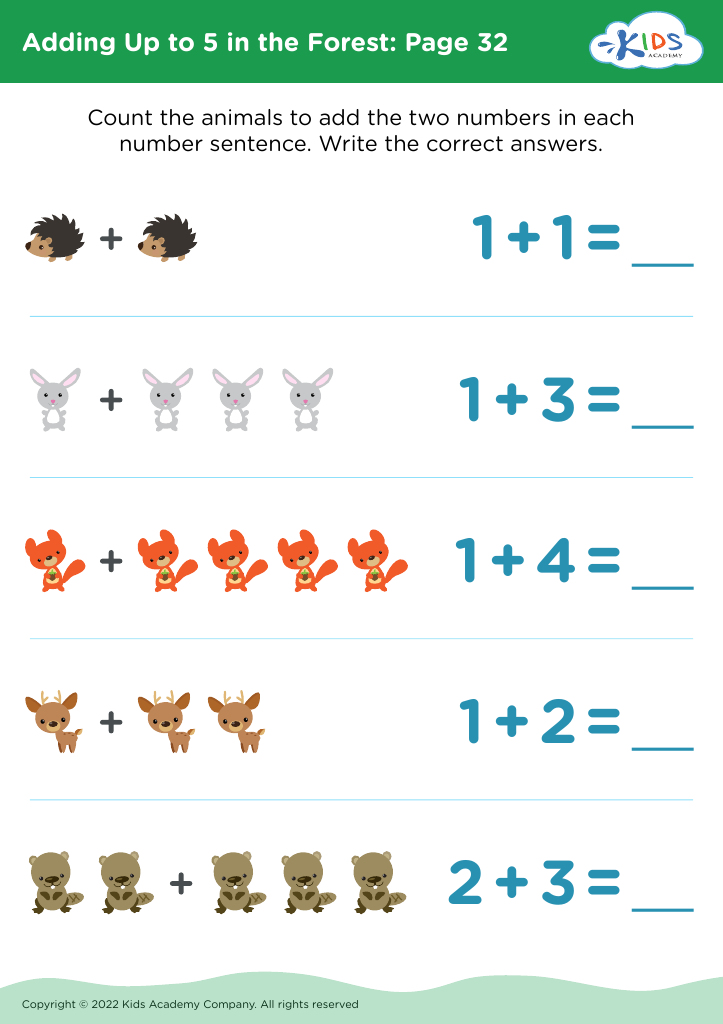
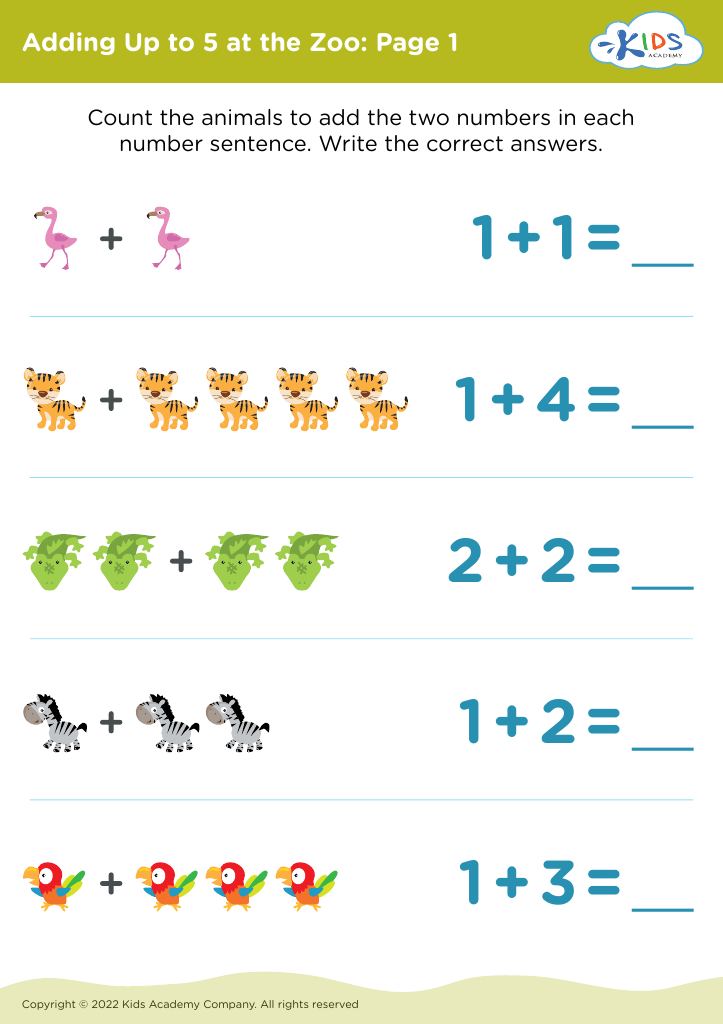
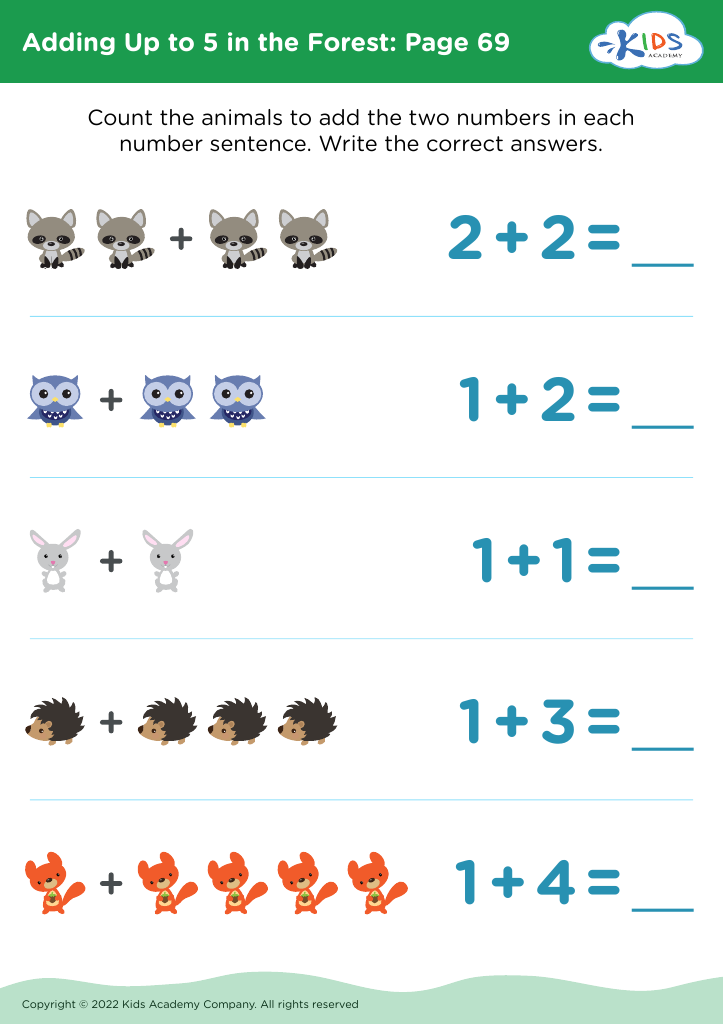
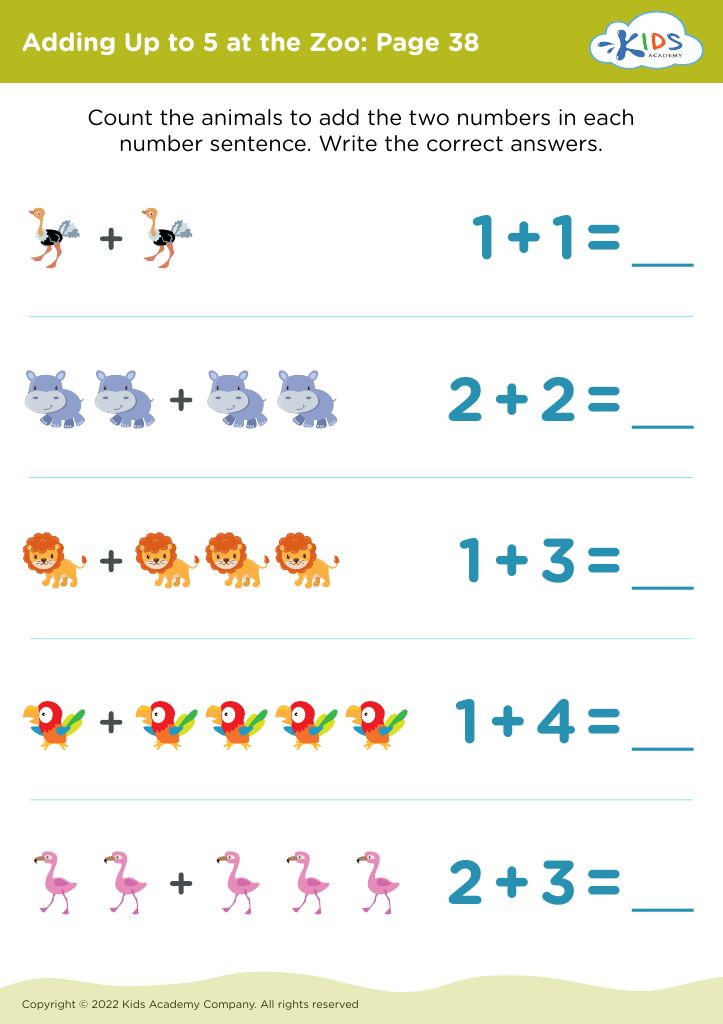








Enhancing concentration while teaching addition up to 5 is crucial for young children aged 3-8 because it builds a strong mathematical foundation and influences their future academic success. At this early developmental stage, children's brains are rapidly growing and incredibly adaptable, making it an optimal time for learning fundamental skills. By focusing on addition up to 5, children develop essential cognitive abilities like attention, memory, and problem-solving.
Parents and teachers should prioritize this because young children's mathematical skills are strongly linked with their later academic performance. A solid grasp of basic addition fosters confidence and reduces math-related anxiety, setting a positive tone for future mathematical learning. Concentration, specifically, enables children to understand tasks better and retain information longer, facilitating efficient learning.
Furthermore, early math skills are predictive of children's future achievements not just in math, but in general academic willingness and performance. In essence, when parents and teachers engage children in exercises that enhance both concentration and basic arithmetic, they invest in developing well-rounded learners. This holistic approach drives improved cognitive development, laying the groundwork for success in more complex subjects and life skills as they grow.








