Fine motor skills (writing) Adding Up to 5 Worksheets for Ages 3-8 - Page 2
32 filtered results
-
From - To
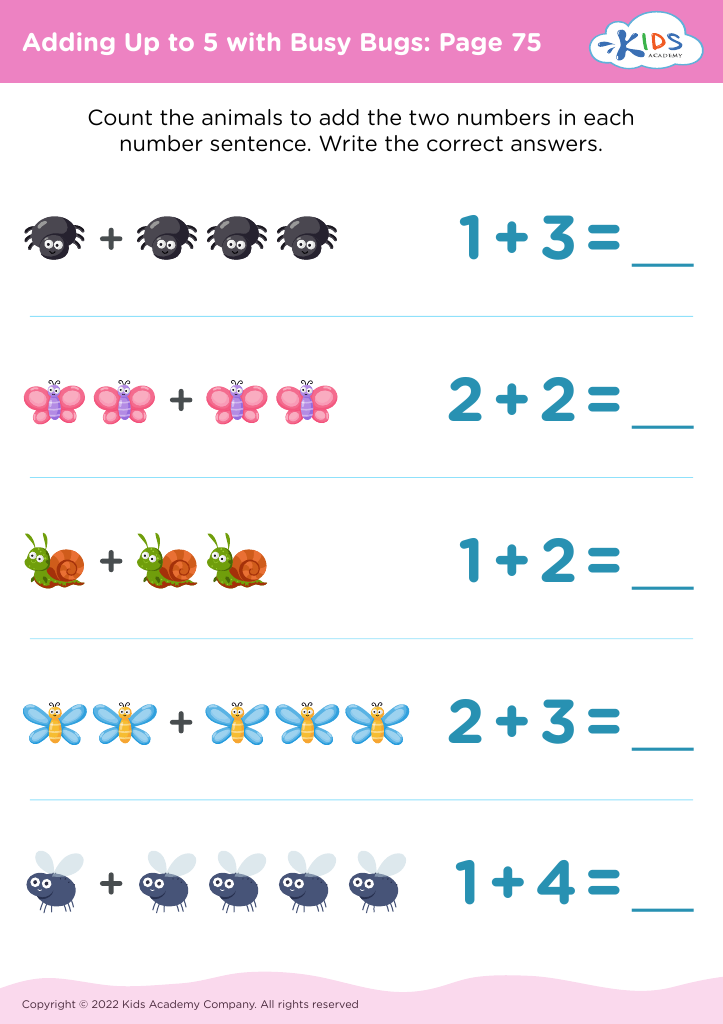
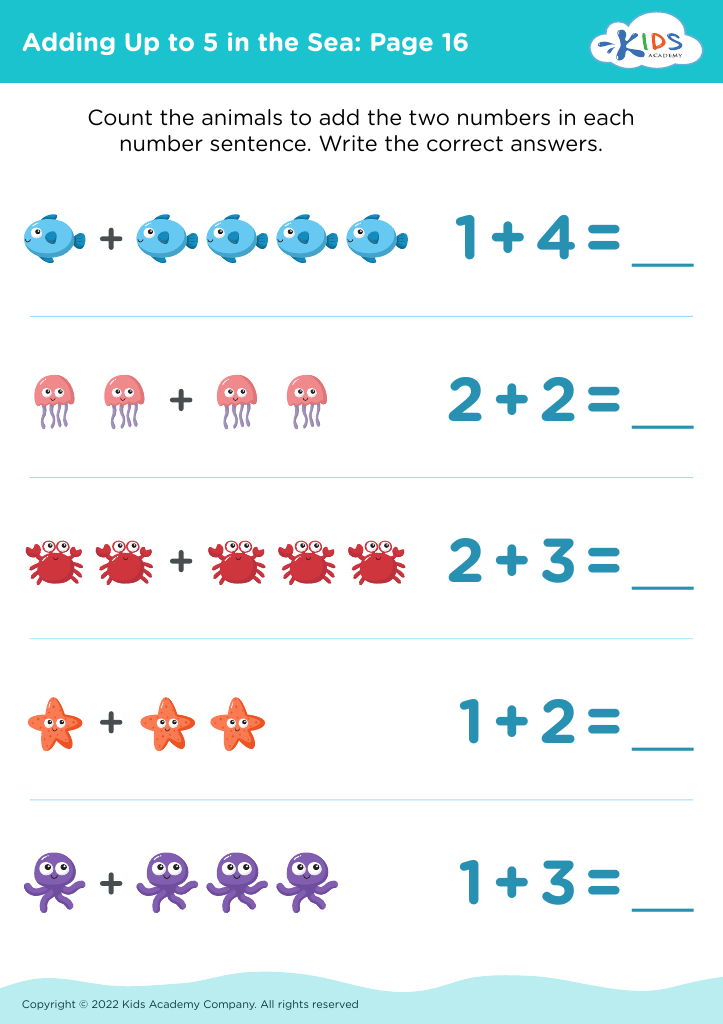
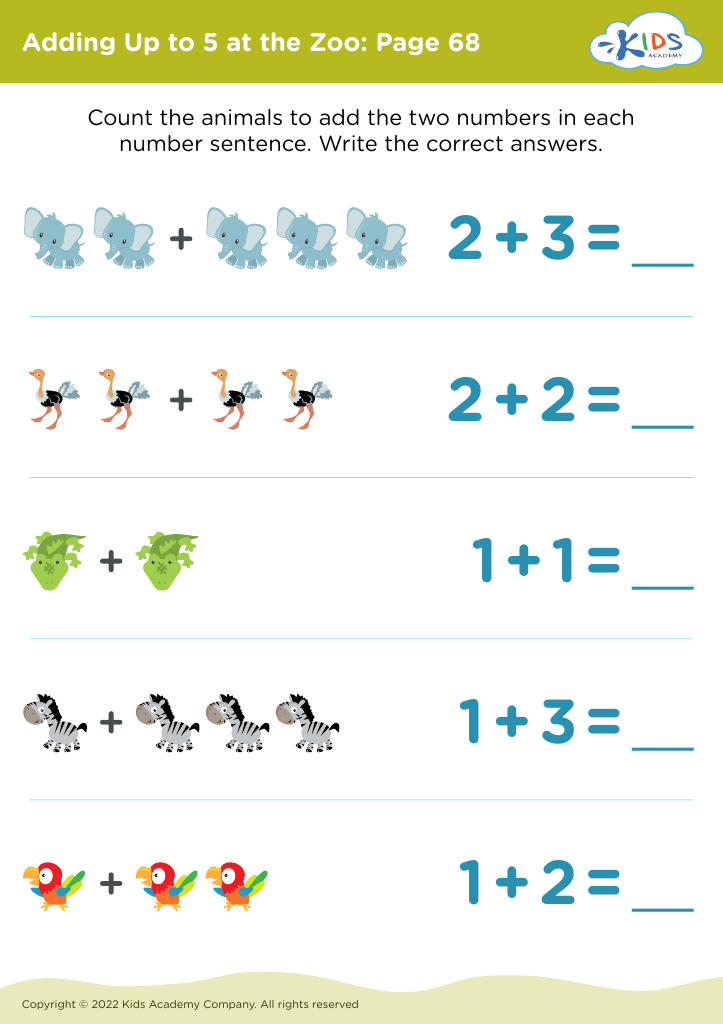
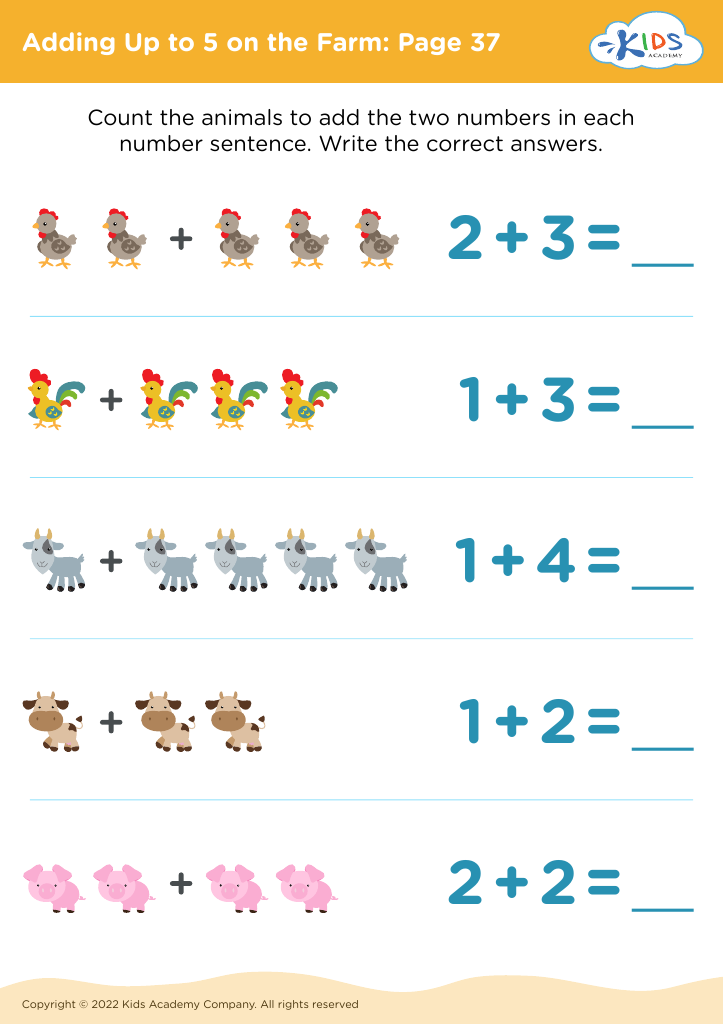
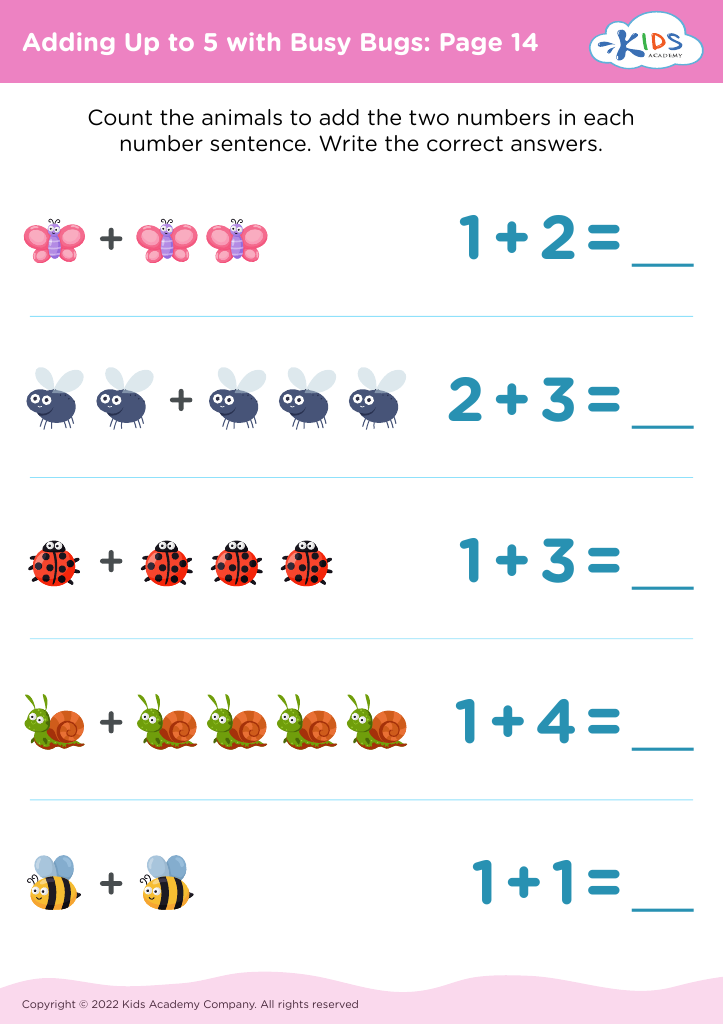
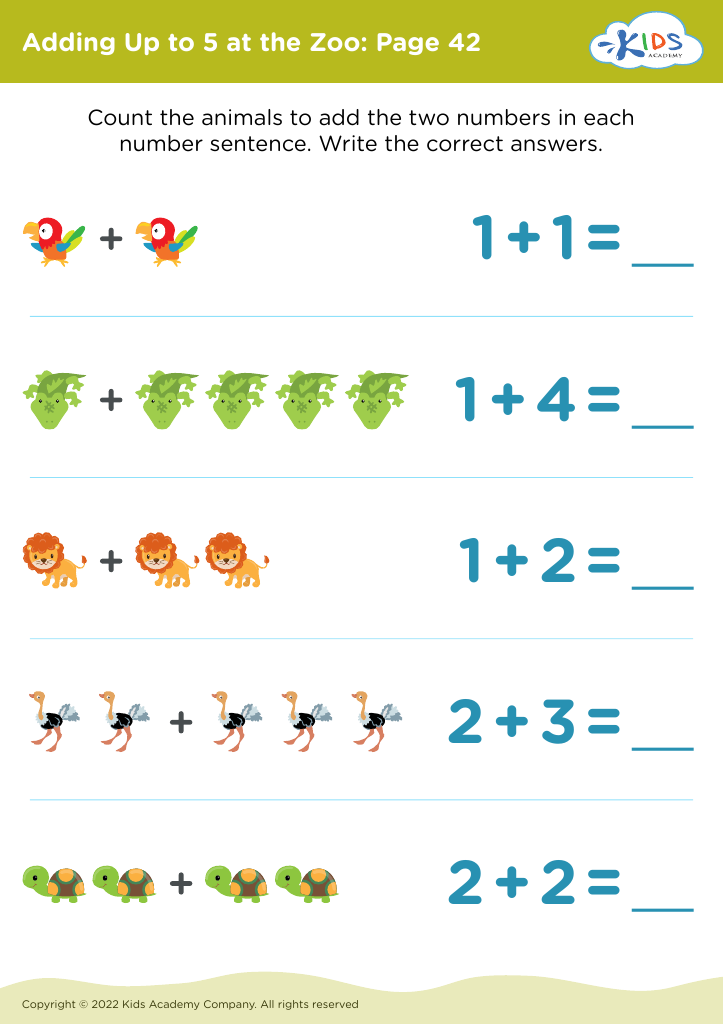
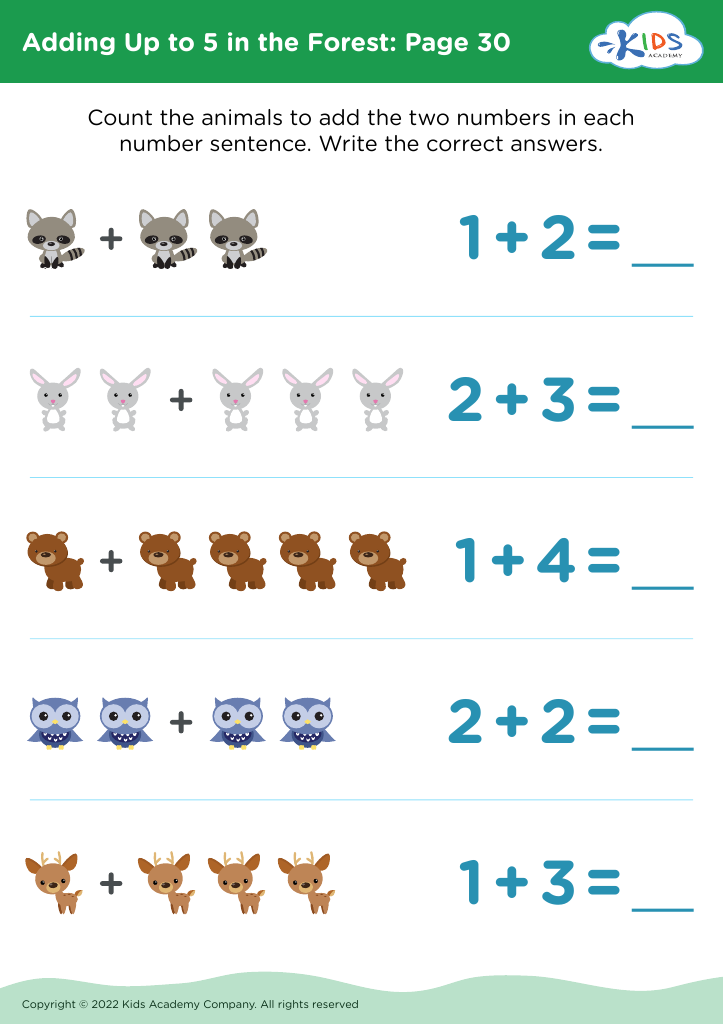
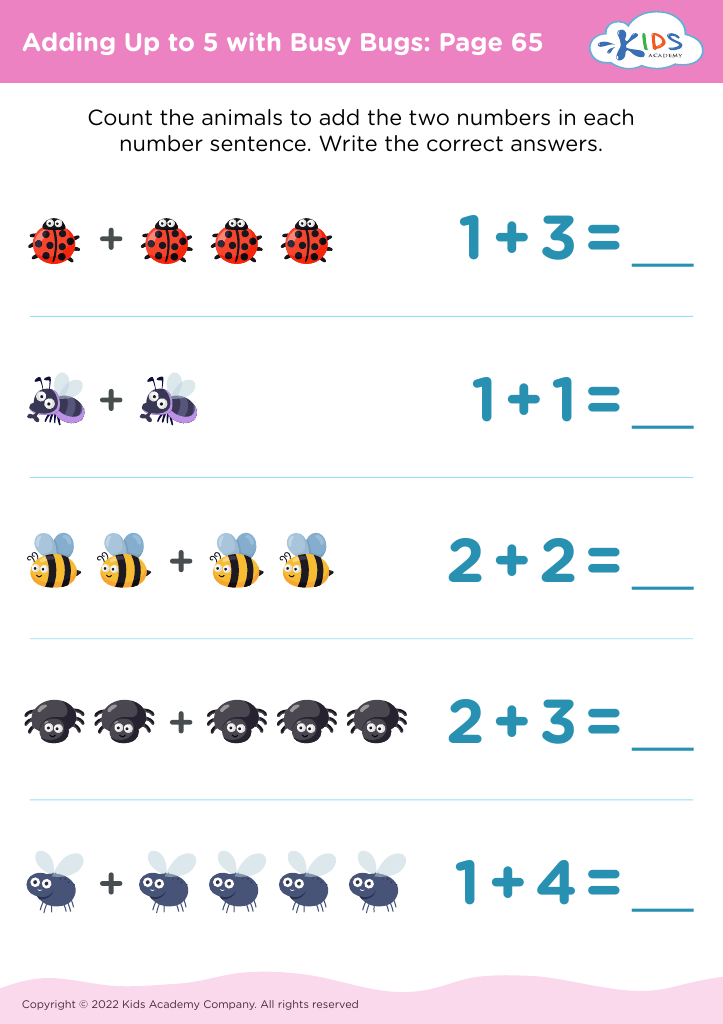








Fine motor skills are crucial for children aged 3-8, as they play a vital role in everyday activities, including writing, drawing, and performing self-care tasks. Developing these skills lays the foundation for academic success and enhances a child’s ability to express creativity. Specifically, writing is not only a way to communicate but also a form of self-expression and confidence-building.
Parents and teachers should care about fine motor skills because they directly impact a child's readiness for school. Strong fine motor abilities facilitate better control over writing tools, which increases legibility and encourages children to enjoy the writing process. As children grasp letters and numbers through activities that enhance fine motor skills, they also acquire foundational mathematics skills, such as adding up to 5. This is a critical developmental stage where they make connections between letters, shapes, and numbers, reinforcing cognitive development.
Additionally, enhancing fine motor skills promotes problem-solving and coordination, which are vital in all areas of learning. By providing opportunities for hands-on activities, such as crafts or play, adults can aid in a child’s overall growth and development, fostering not just academic skills but holistic progress in social, emotional, and physical domains. Investing in fine motor skills prepares children for future learning challenges.








