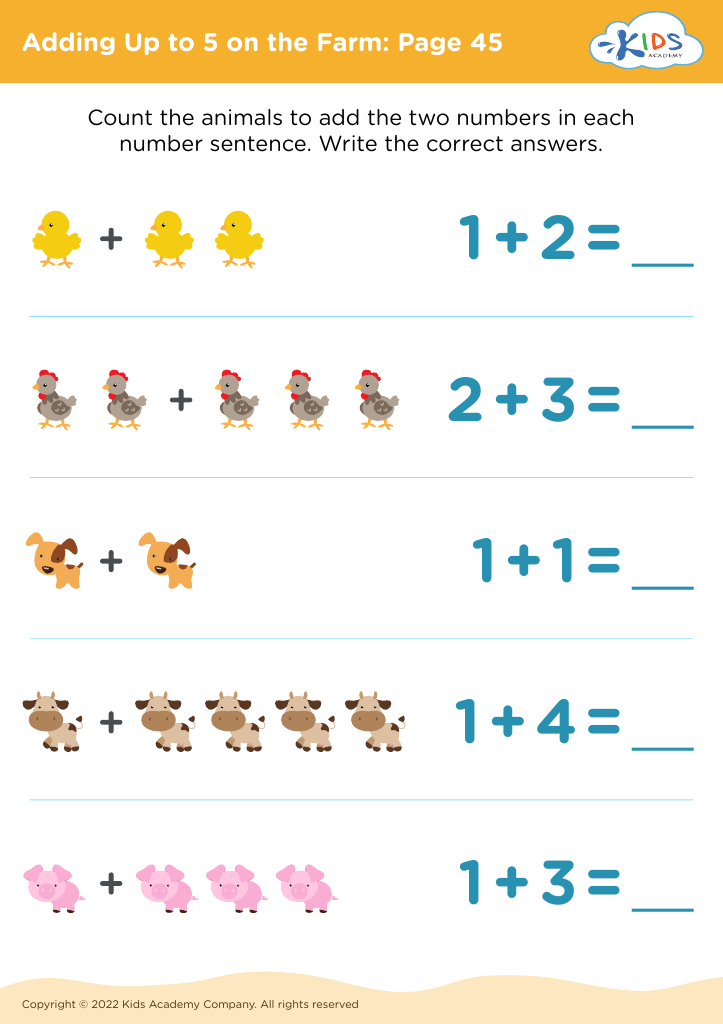
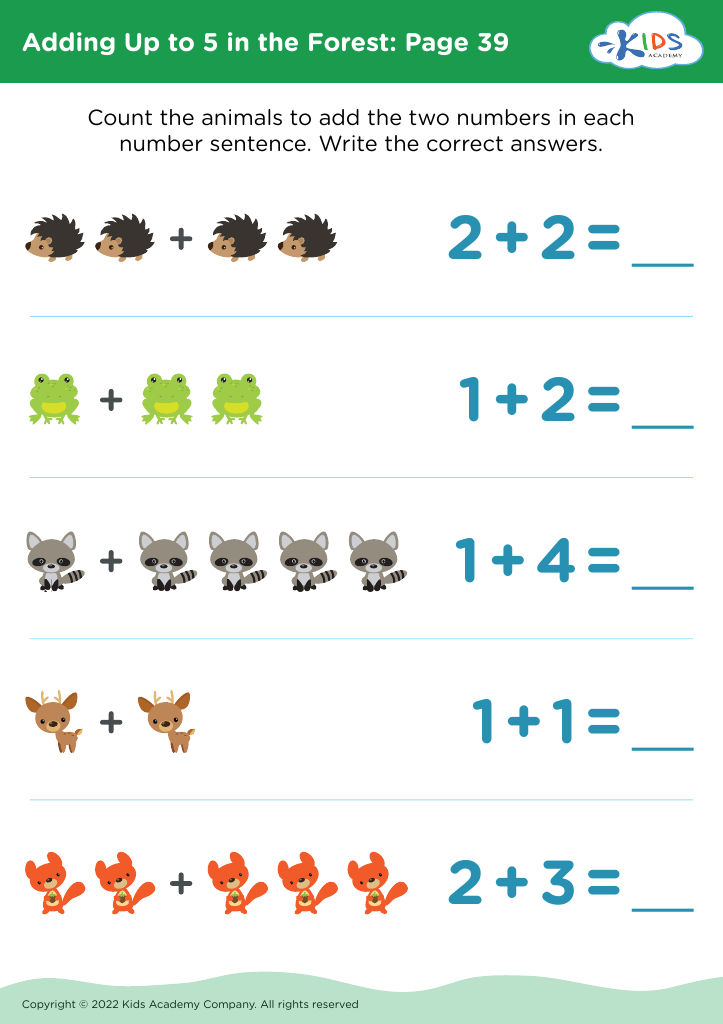
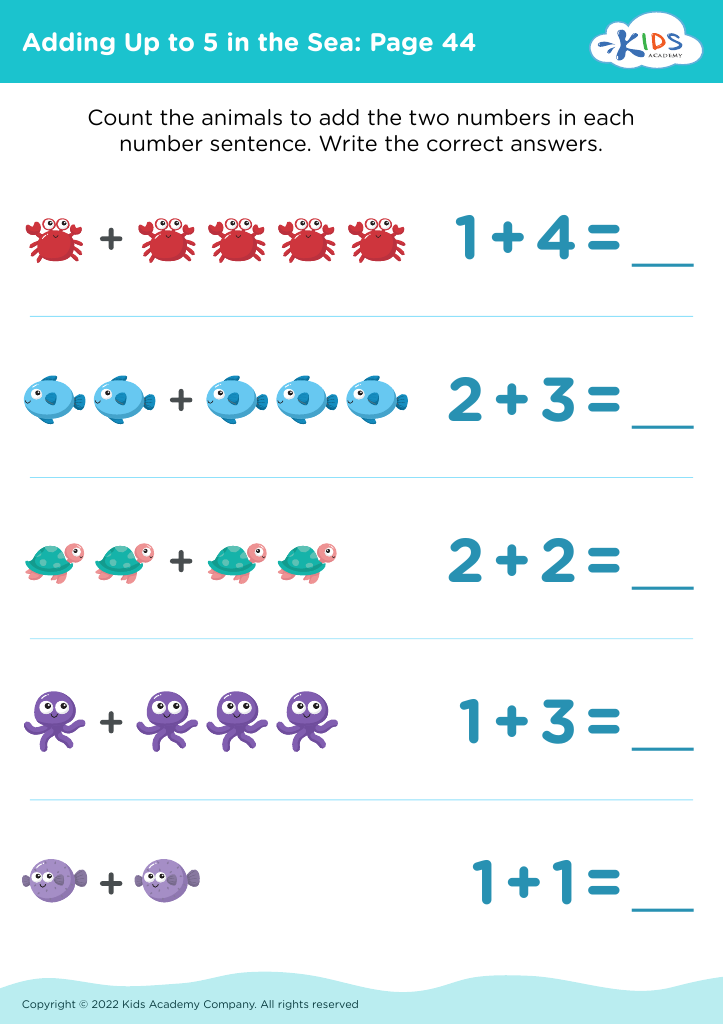
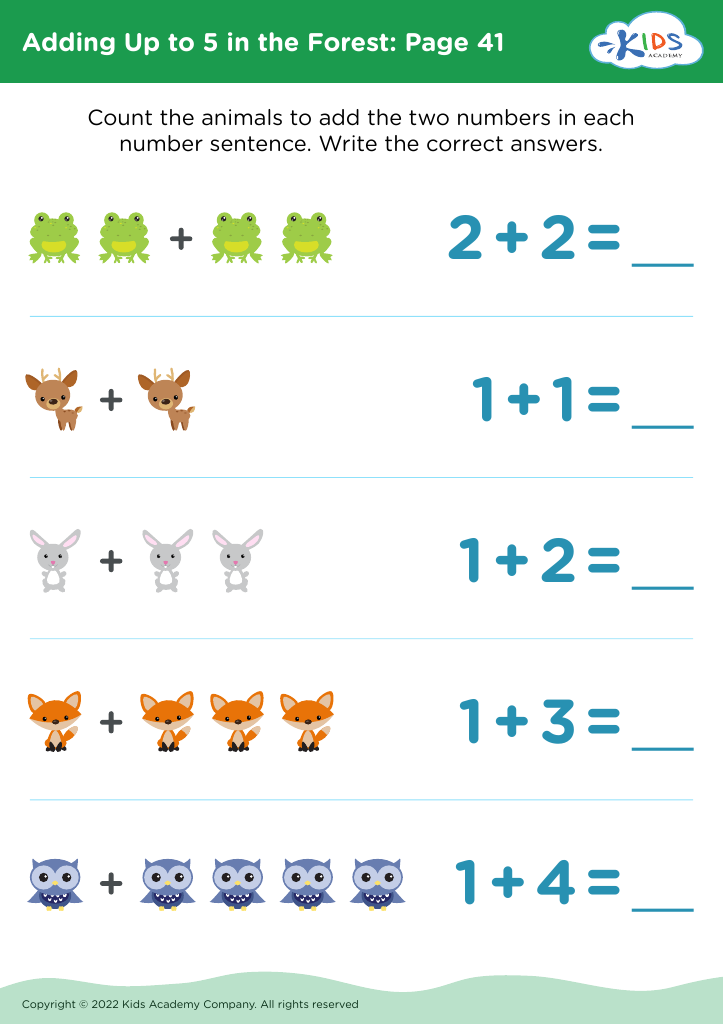








Fine motor skills are crucial for young children, particularly from ages 3 to 8, as these skills lay the foundation for numerous academic and life tasks. Incorporating the practice of adding up to 5 not only helps with basic math proficiency but also engages and develops fine motor skills through activities such as counting with beads, buttons, or drawing.
Fine motor skills involve the small muscle movements of the hands and fingers, which are essential for grasping tools, writing, and self-care tasks like buttoning clothes. As children practice counting or adding small quantities, they engage their hands and fingers in various manipulative tasks, enhancing coordination and dexterity. Good fine motor skills also cultivate independence and confidence in children, especially as they tackle early academic challenges.
Moreover, combining fine motor activities with mathematical concepts reinforces cognitive connections. Activities that promote fine motor skills while learning to add can significantly enhance engagement and retention. For both parents and teachers, fostering an environment where fine motor development is intertwined with early math education is a vital investment in a child's overall growth, ensuring they are well-equipped for future learning and life tasks.








