Nature awareness Adding Up to 5 Worksheets for Ages 3-8
8 filtered results
-
From - To
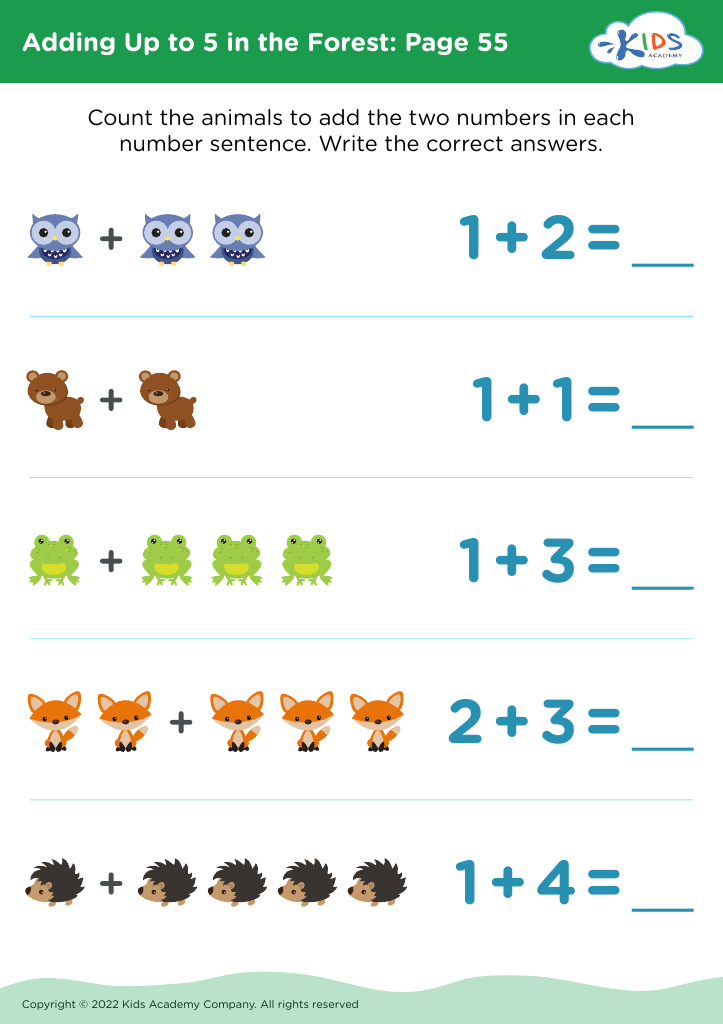
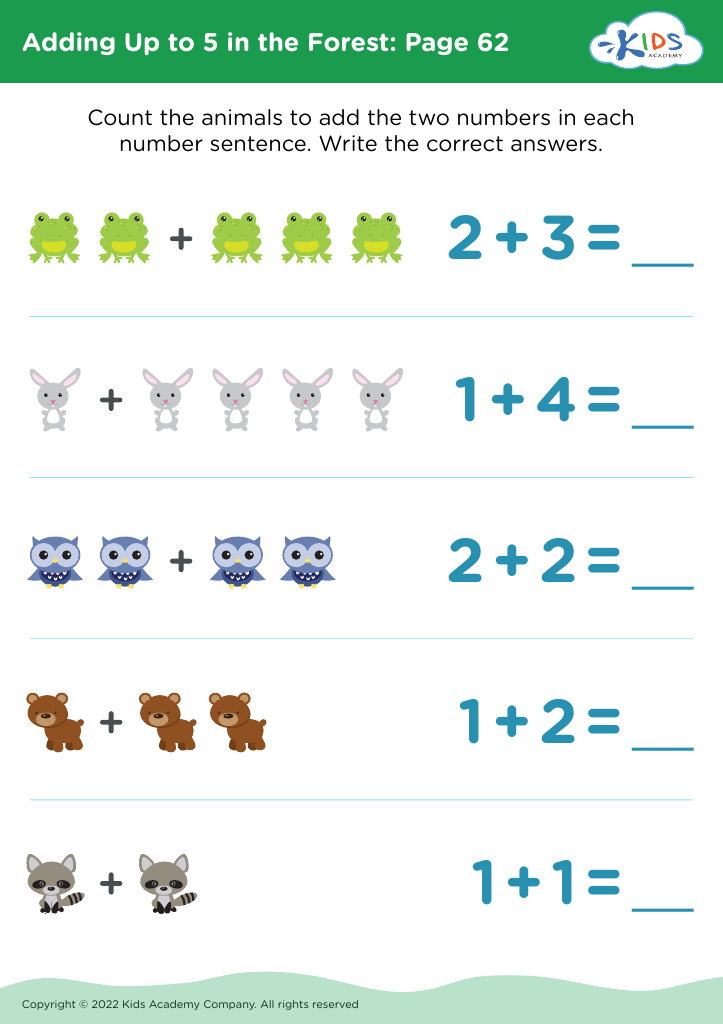
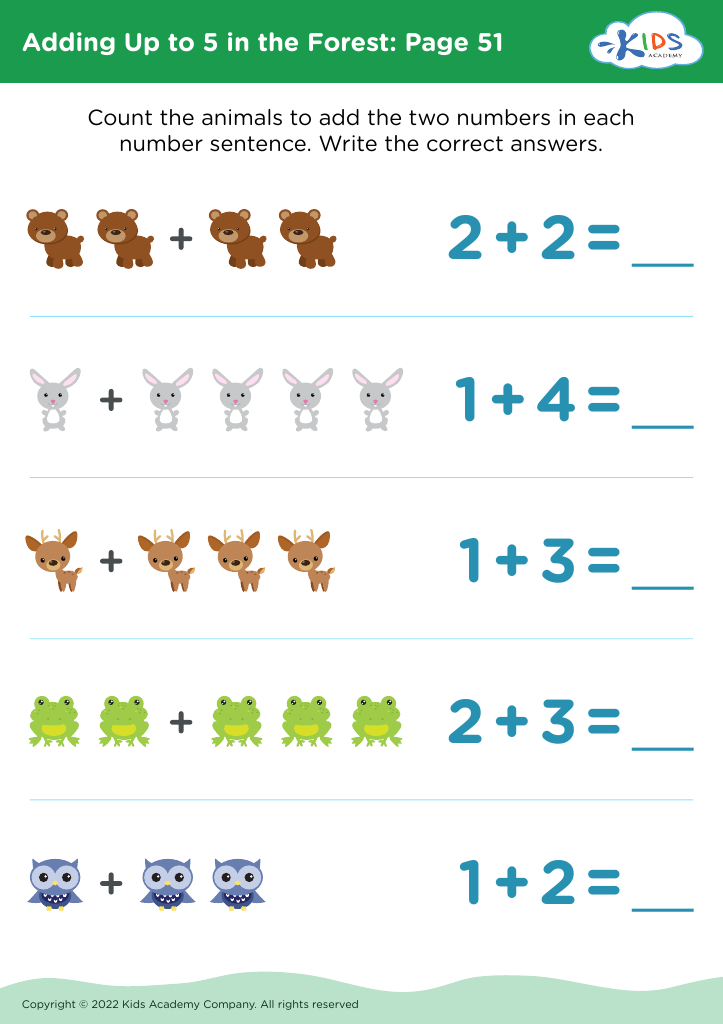
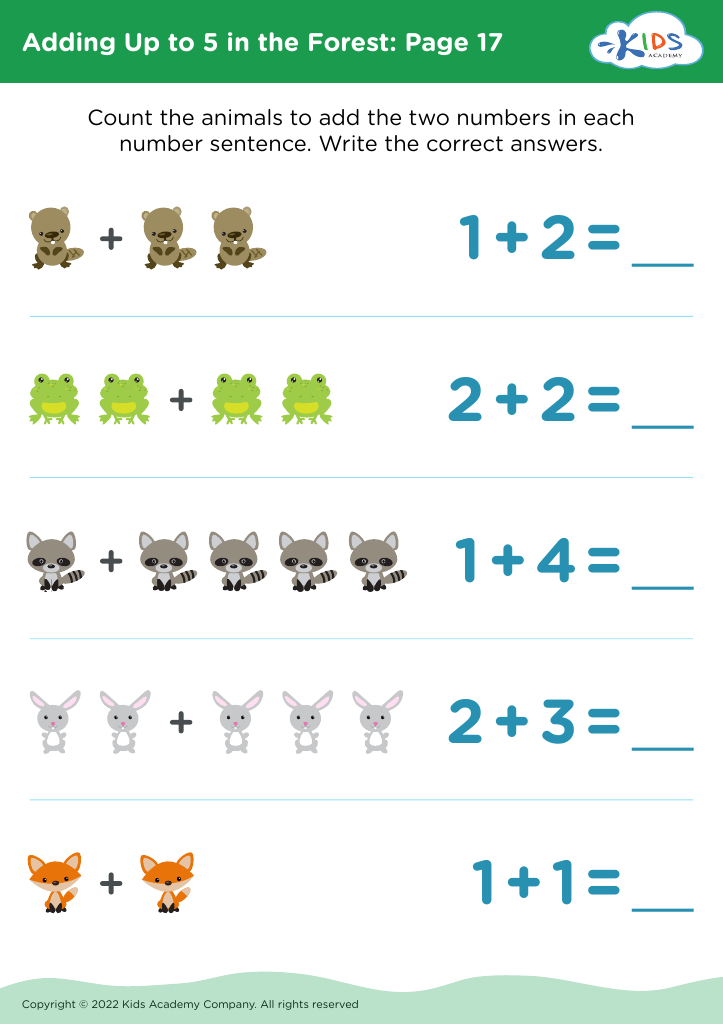
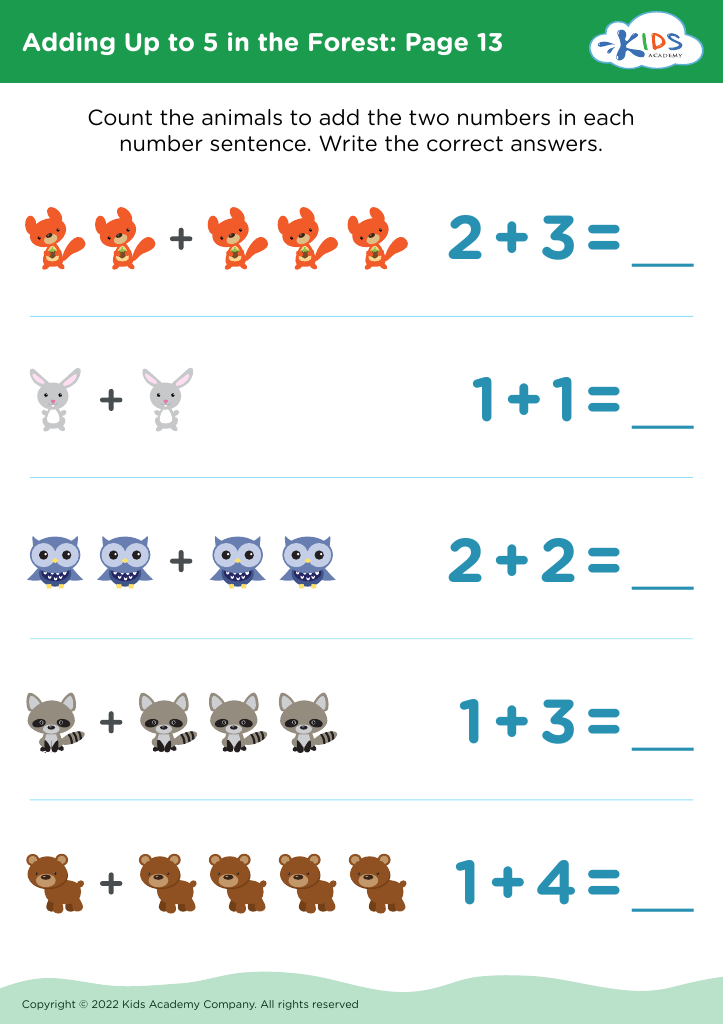
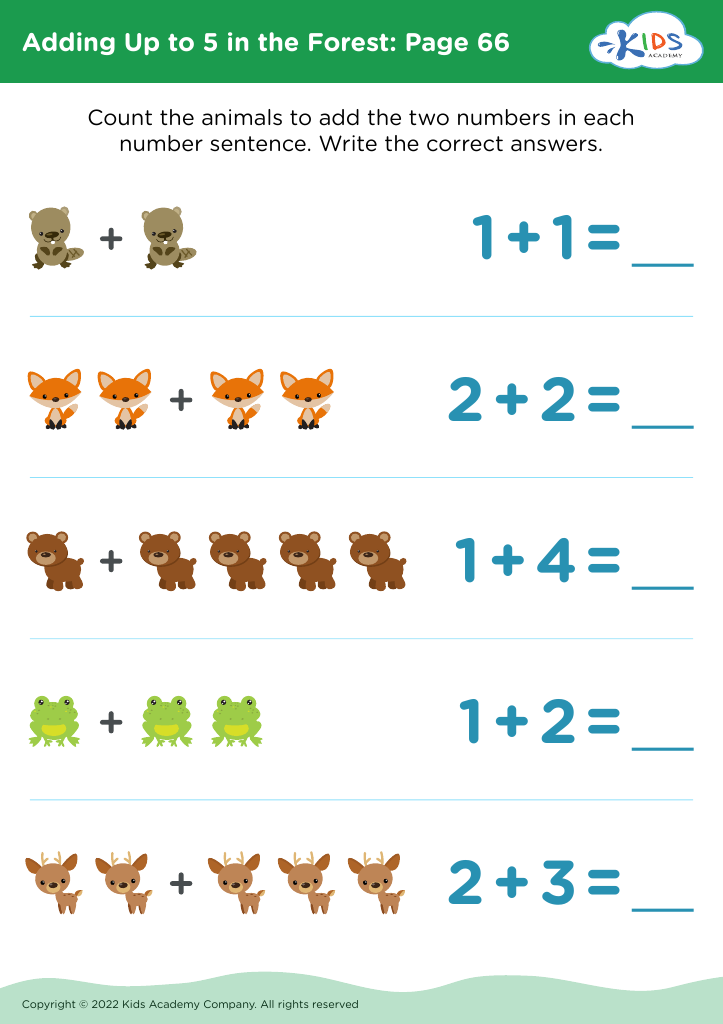
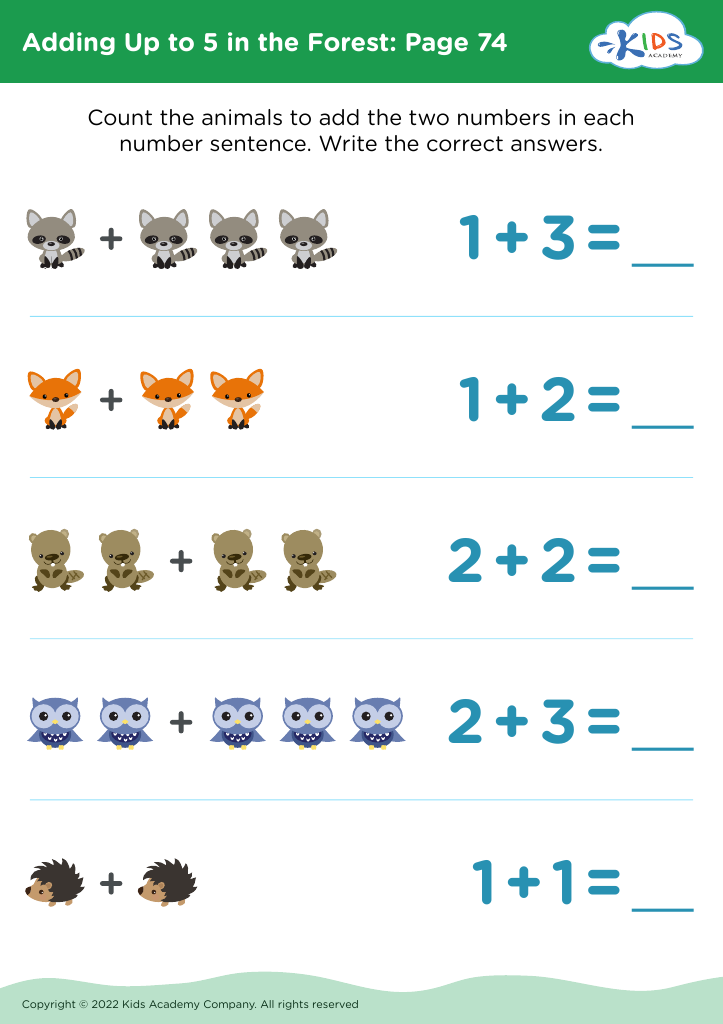
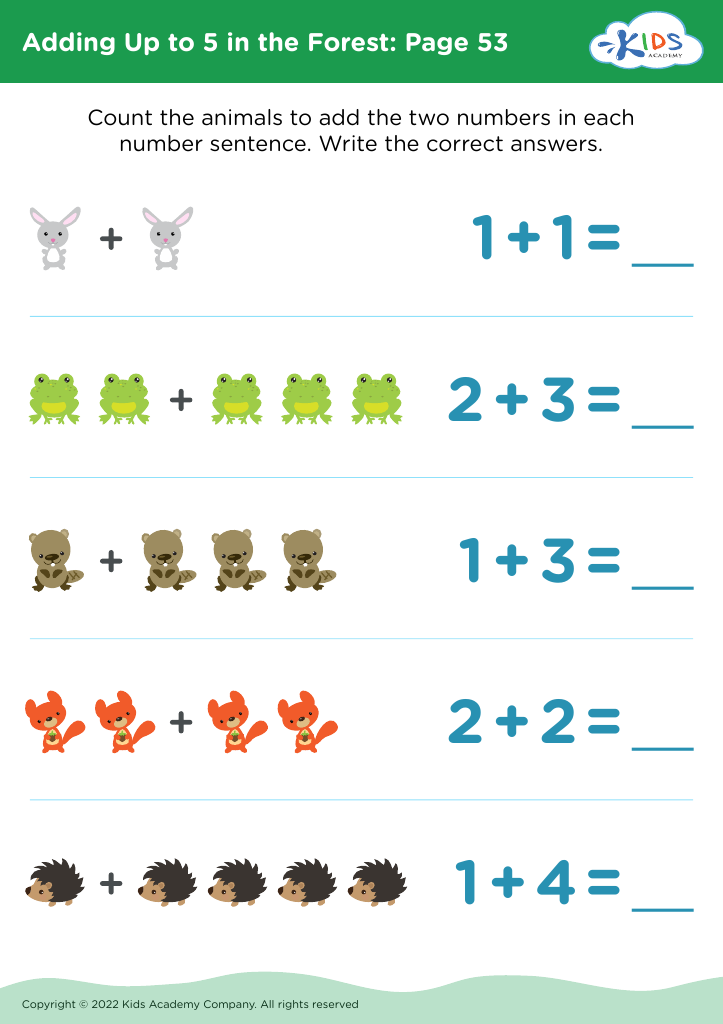
Discover the "Nature Awareness Adding Up to 5 Worksheets" designed for children ages 3-8! These engaging worksheets blend early math skills with the beauty of nature, making learning both fun and educational. Kids will explore simple addition concepts by counting delightful natural elements like leaves, flowers, and animals. Each worksheet encourages hands-on interaction, fostering a deeper appreciation for the environment while enhancing numeracy skills. Perfect for at-home learning or classroom activities, these worksheets will stimulate curiosity and creativity. Help your child develop a love for math and nature simultaneously! Start their adventure in learning today with our thoughtfully crafted resources!





%20(1).jpg)
.jpg)

Nature awareness is crucial for children aged 3-8, as it fosters a deep connection to the world around them. First, it encourages curiosity and exploration, allowing kids to learn about different plants, animals, and ecosystems. This engagement enhances their observational skills and critical thinking, vital for cognitive development.
Second, being aware of nature promotes emotional health. Exposure to green spaces reduces stress, enhances mood, and nurtures a sense of peace. Children who interact with nature often develop greater resilience and coping strategies.
Third, nature awareness fosters environmental stewardship. Teaching children about their role in the ecosystem instills a sense of responsibility for protecting the environment, promoting sustainability from a young age.
Fourth, it integrates seamlessly into learning. Nature can serve as a dynamic backdrop for lessons in math and science, as well as storytelling and art, making learning more engaging and relevant.
Finally, nature awareness facilitates physical activity. Outdoor exploration promotes movement and play, crucial for developing motor skills and encouraging a healthy lifestyle.
Thus, parents and teachers should prioritize nature awareness, as it significantly contributes to children's holistic development, preparing them to be informed, compassionate global citizens.








