Understanding Quantities Adding Up to 5 Worksheets for Ages 3-8
36 filtered results
-
From - To
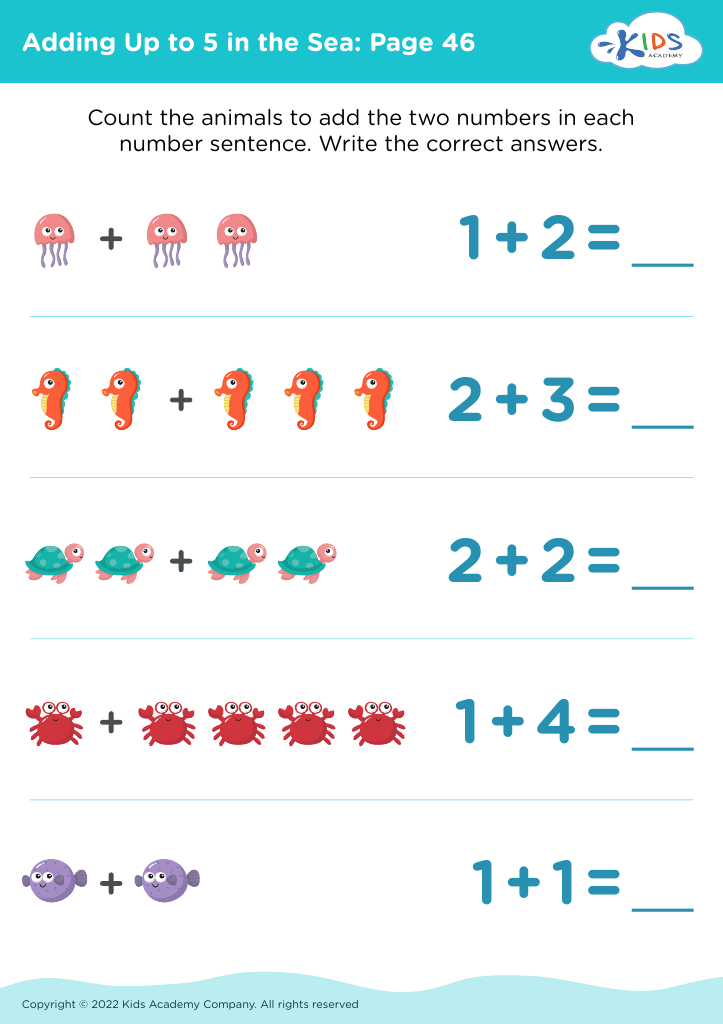
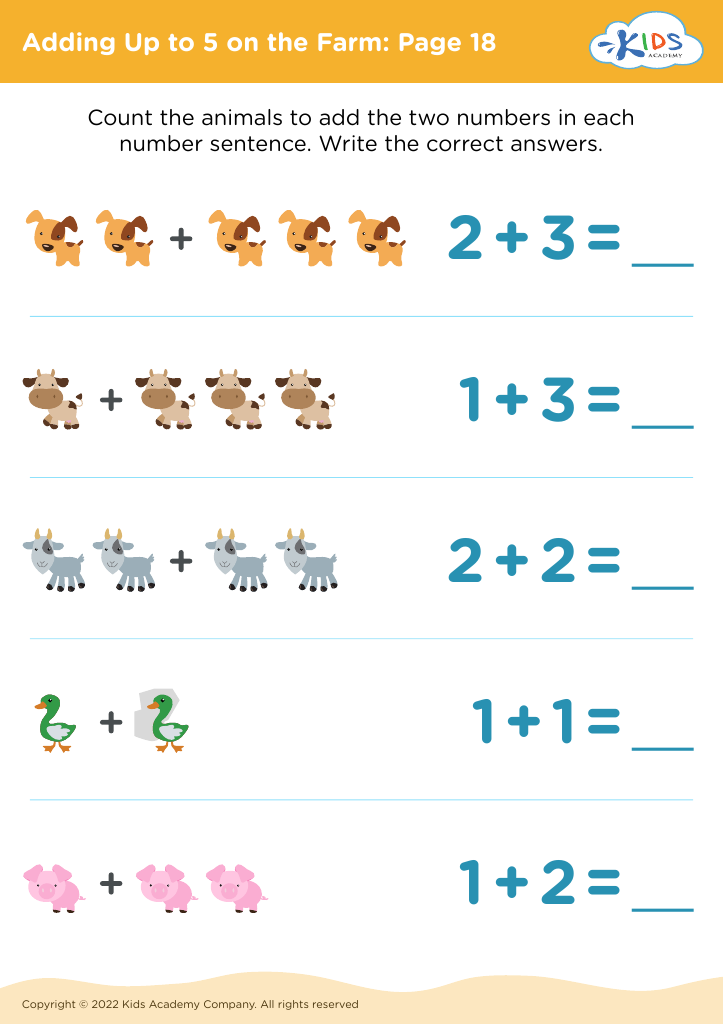
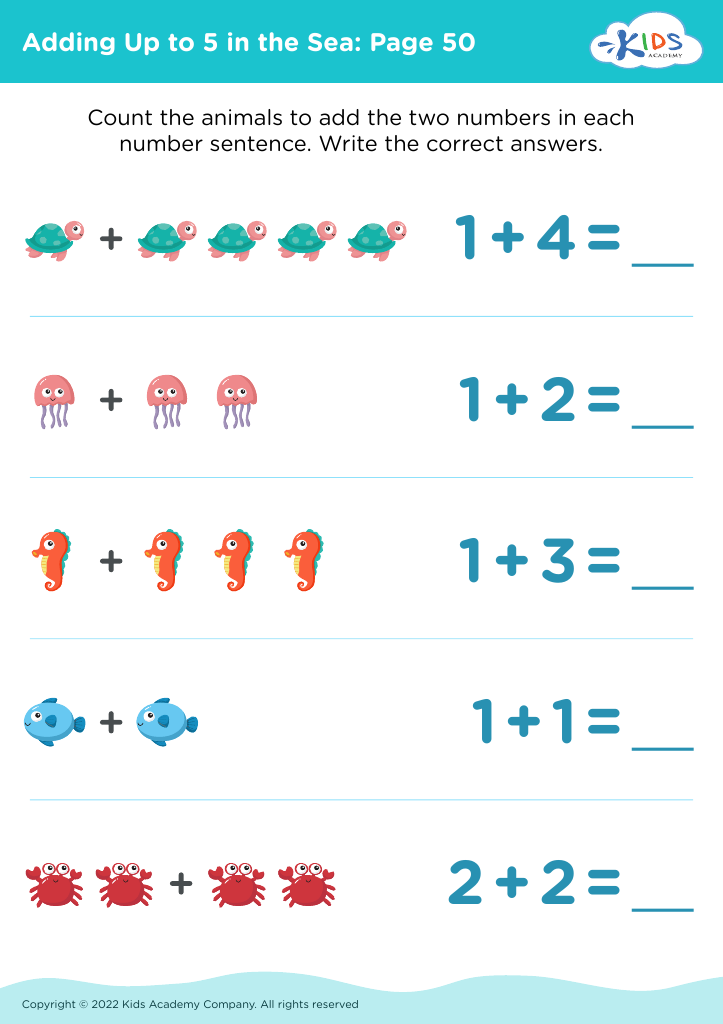
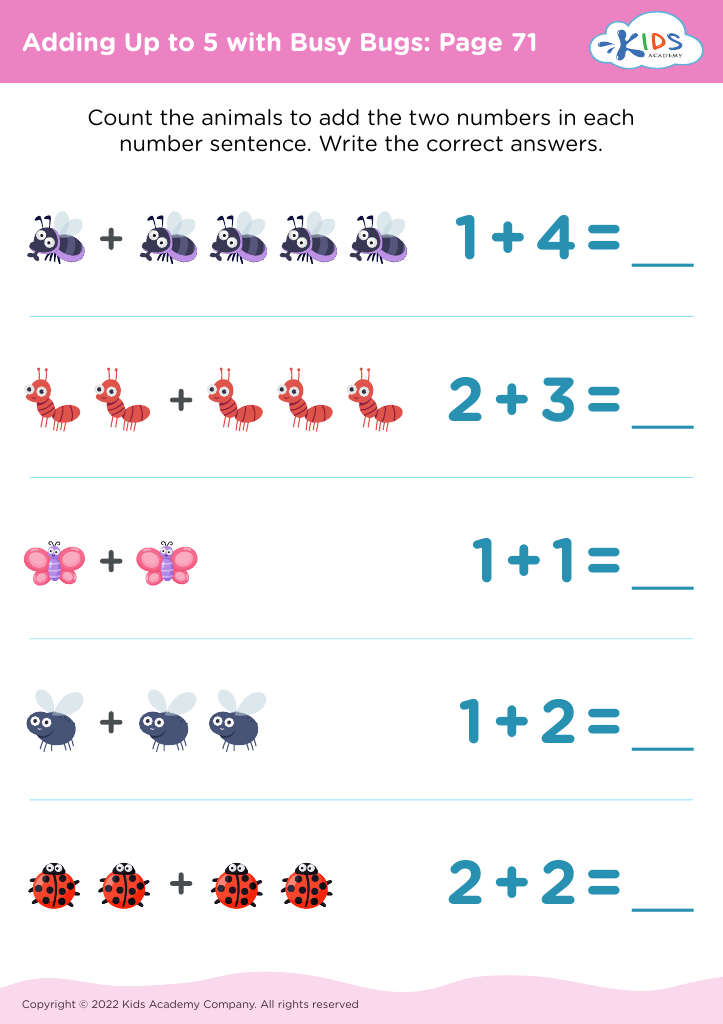
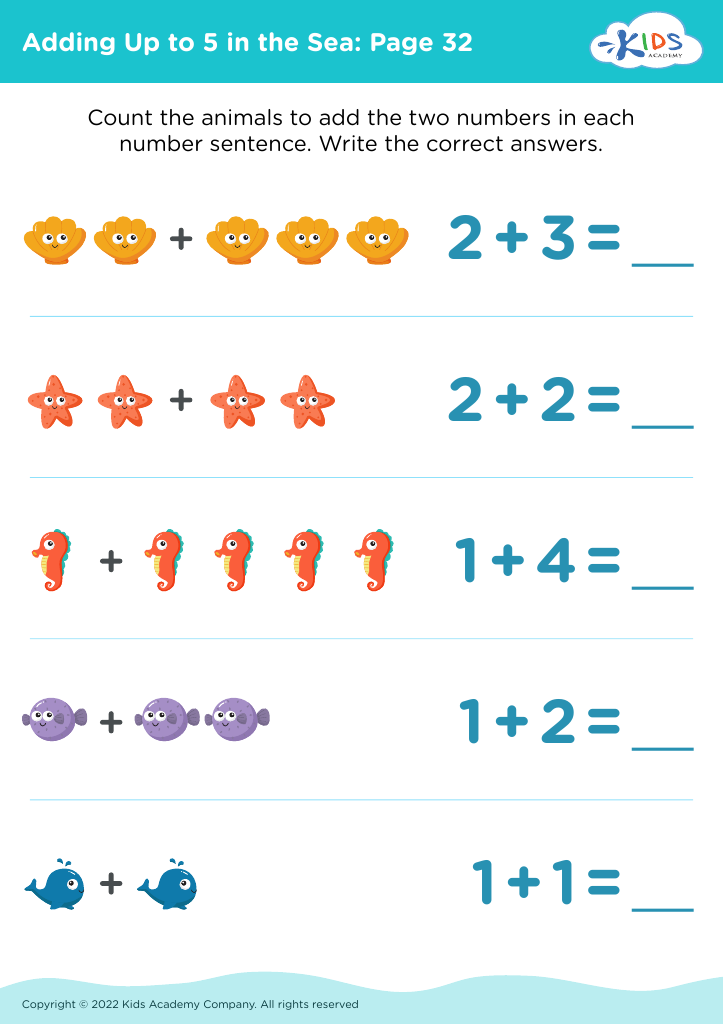
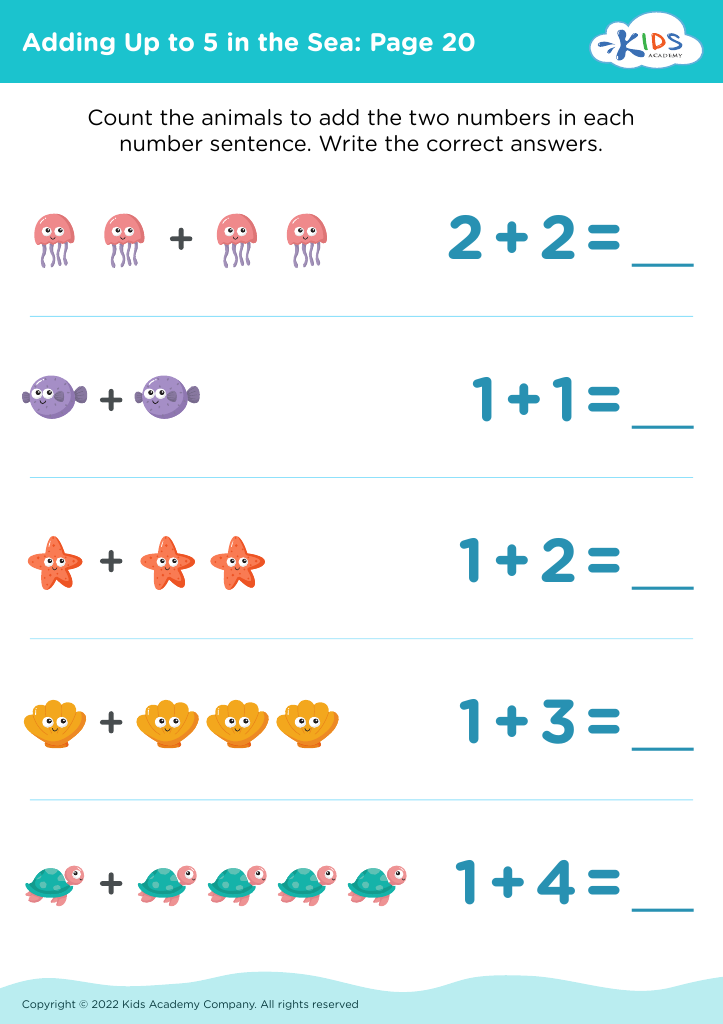
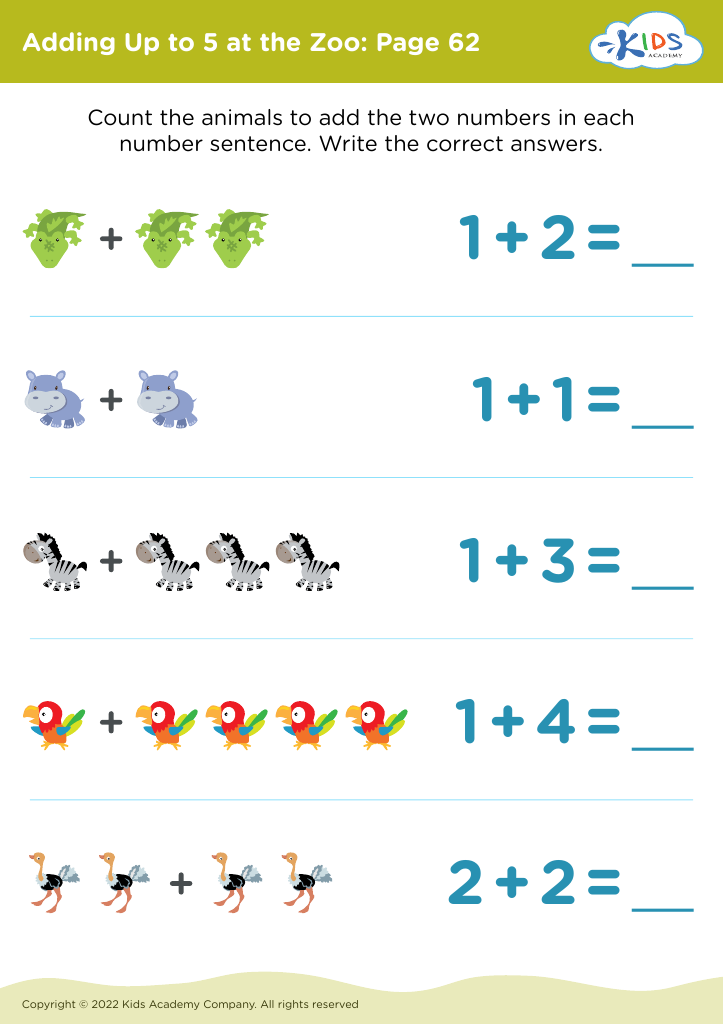
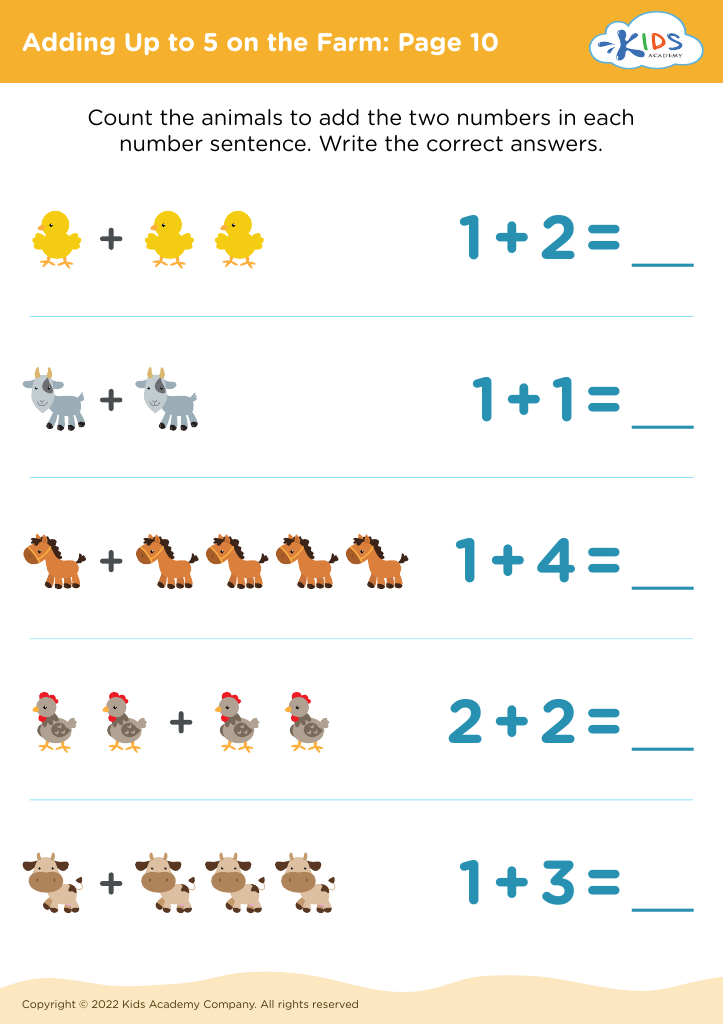
Explore our "Understanding Quantities Adding Up to 5" worksheets designed for children ages 3-8. These engaging resources help young learners grasp basic addition concepts in a fun and interactive way. Through colorful visuals and hands-on activities, kids will develop strong foundational skills by practicing how to combine quantities to make five. Our worksheets promote critical thinking and encourage problem-solving, making math enjoyable and accessible for early learners. Perfect for classroom use or at-home reinforcement, these worksheets will support your child's mathematical journey while boosting confidence. Download now and create a solid math foundation for your little ones!
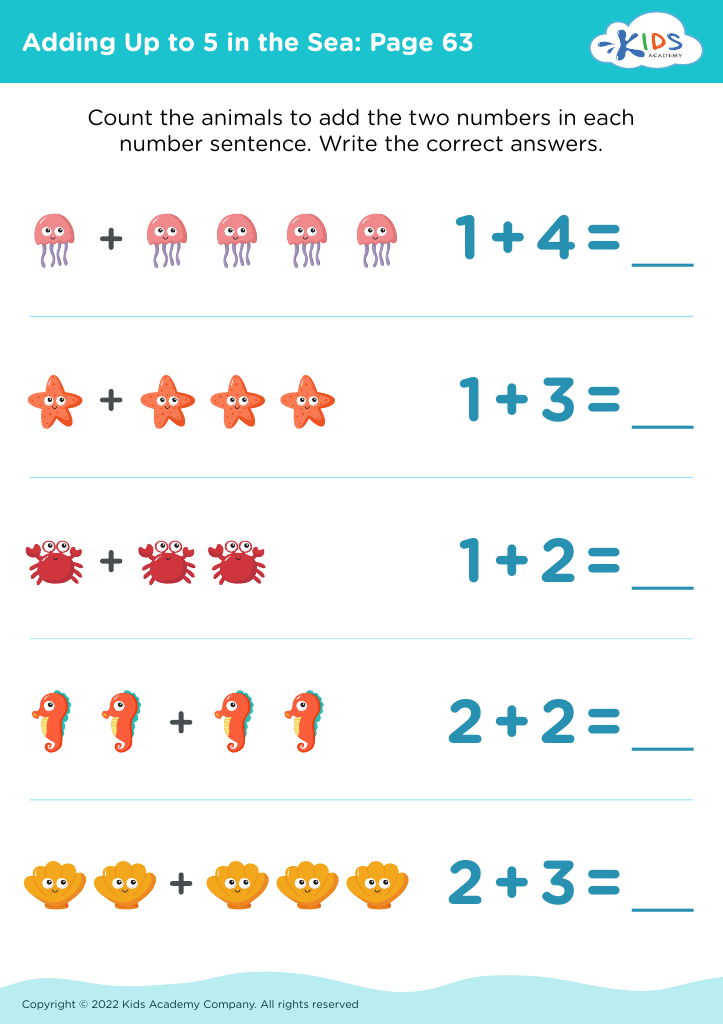
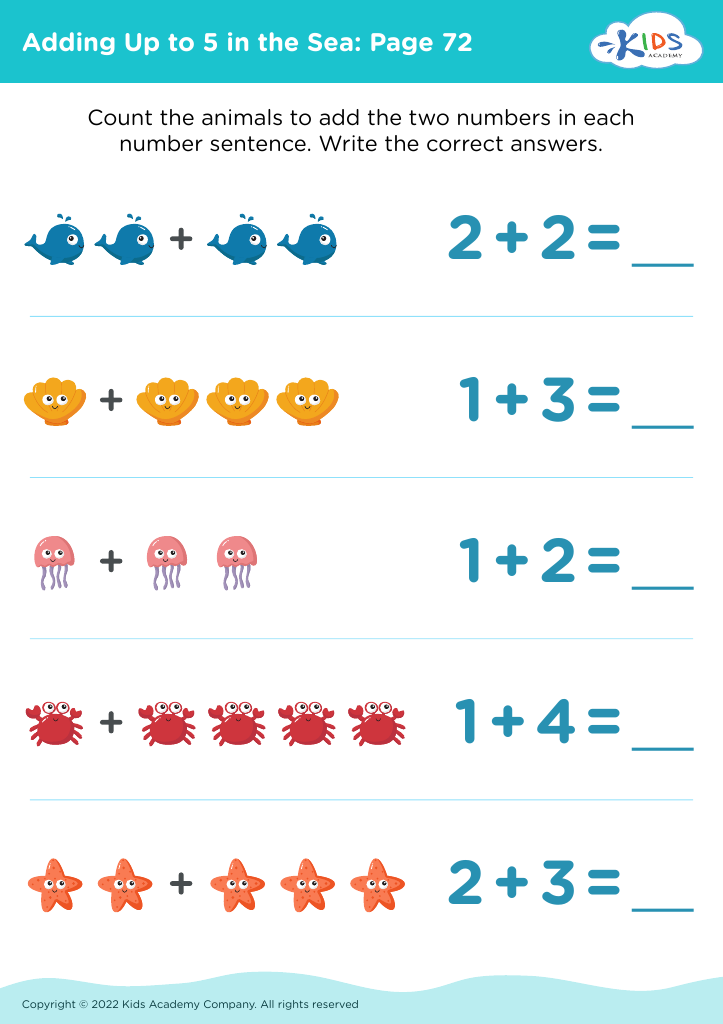
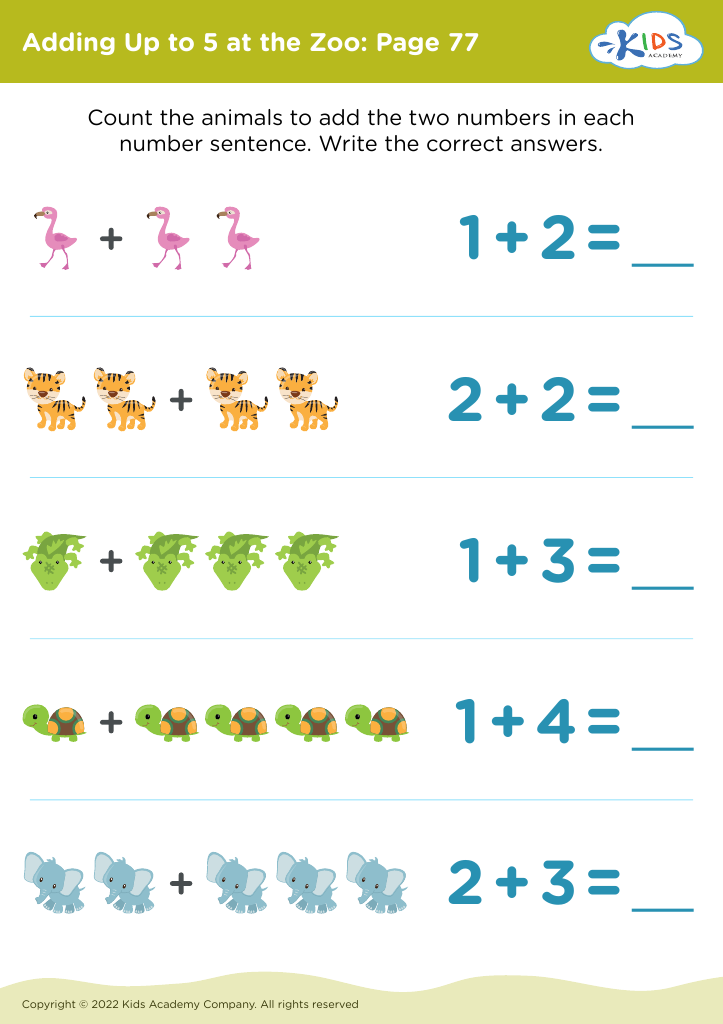
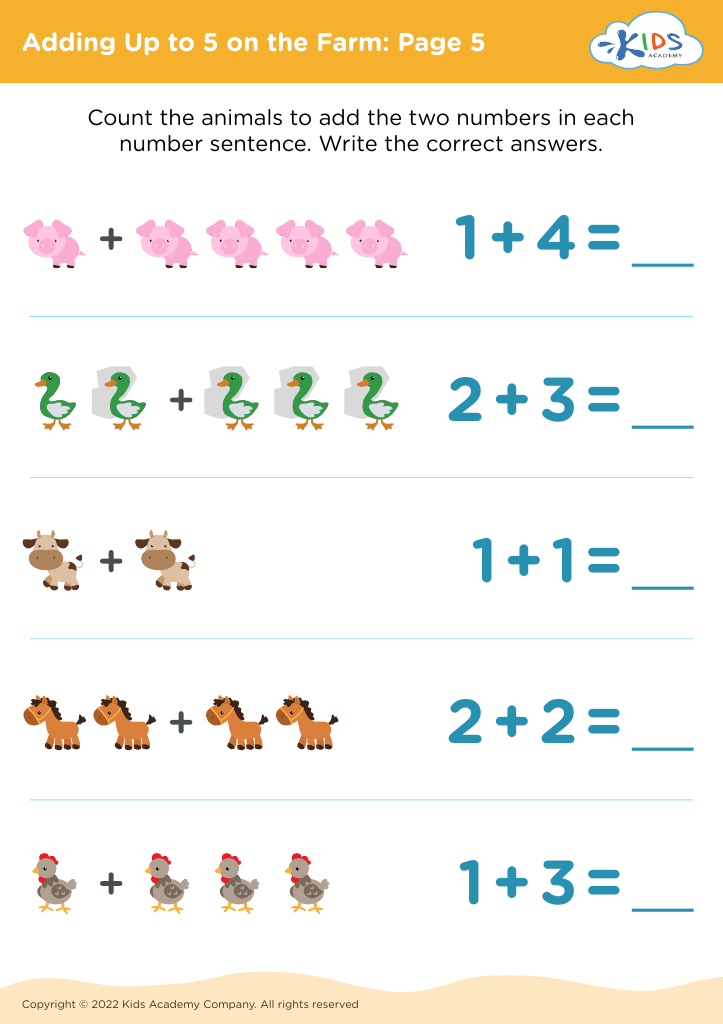
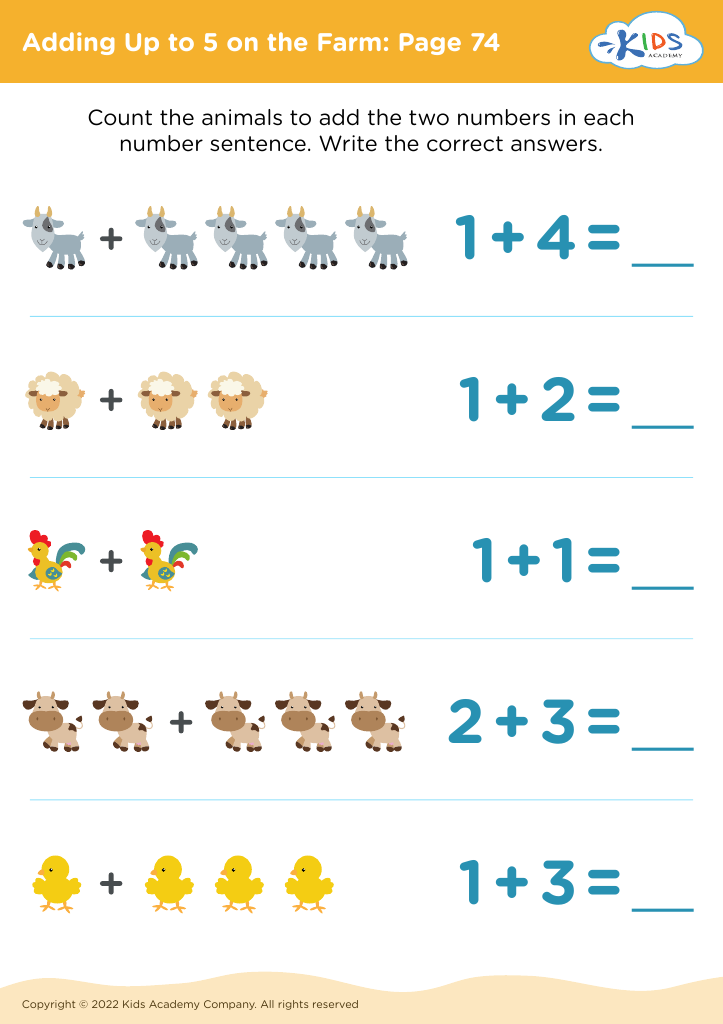
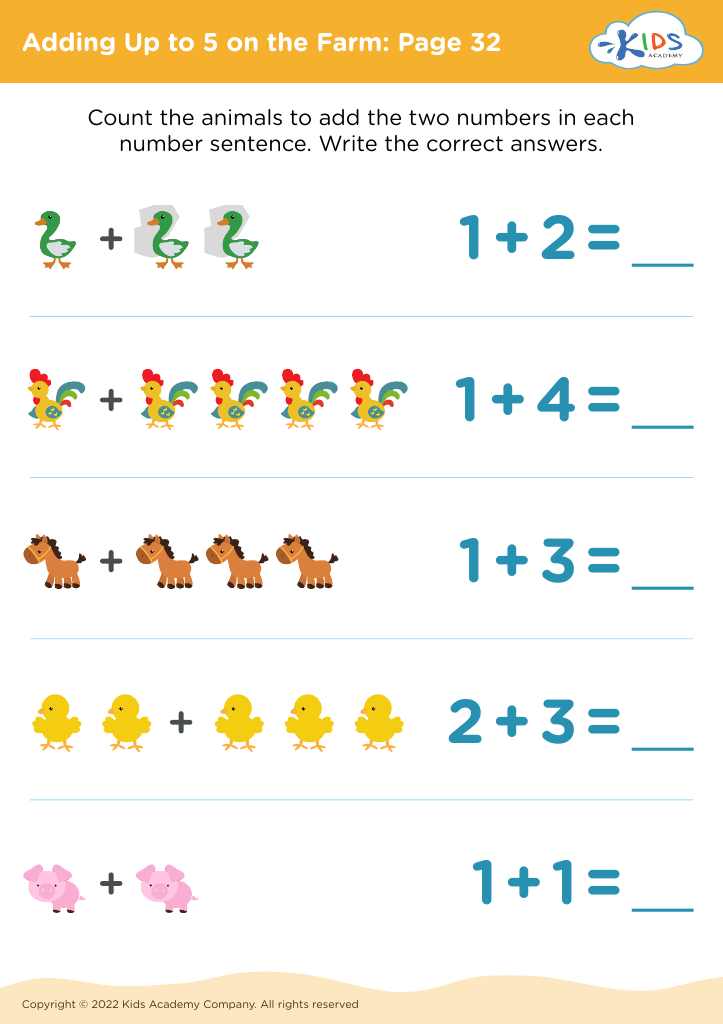
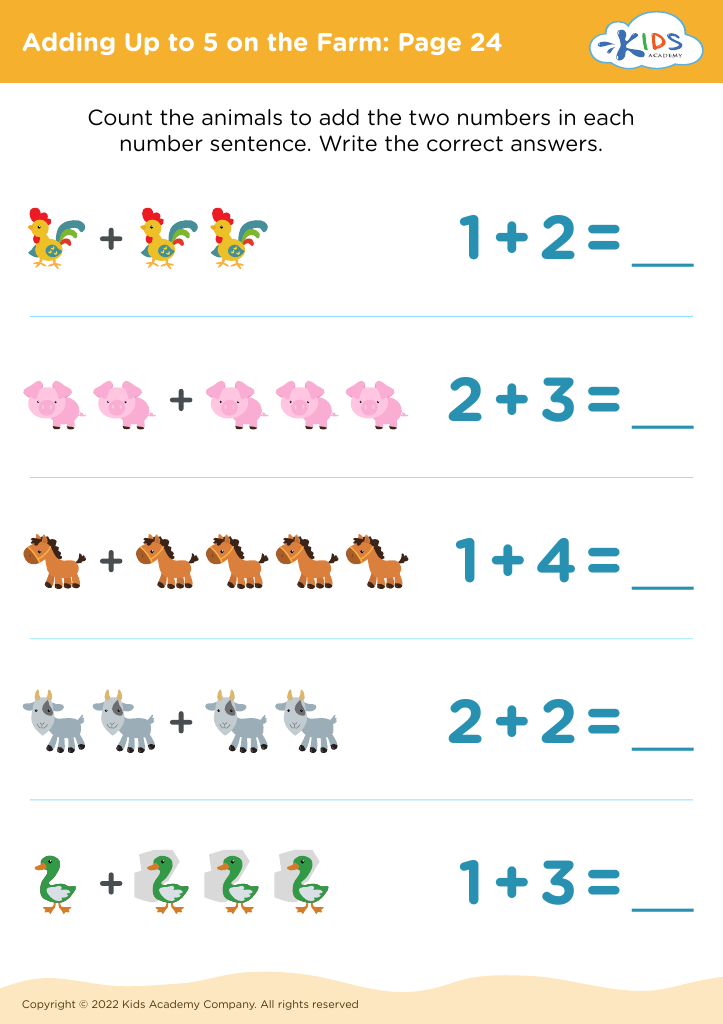
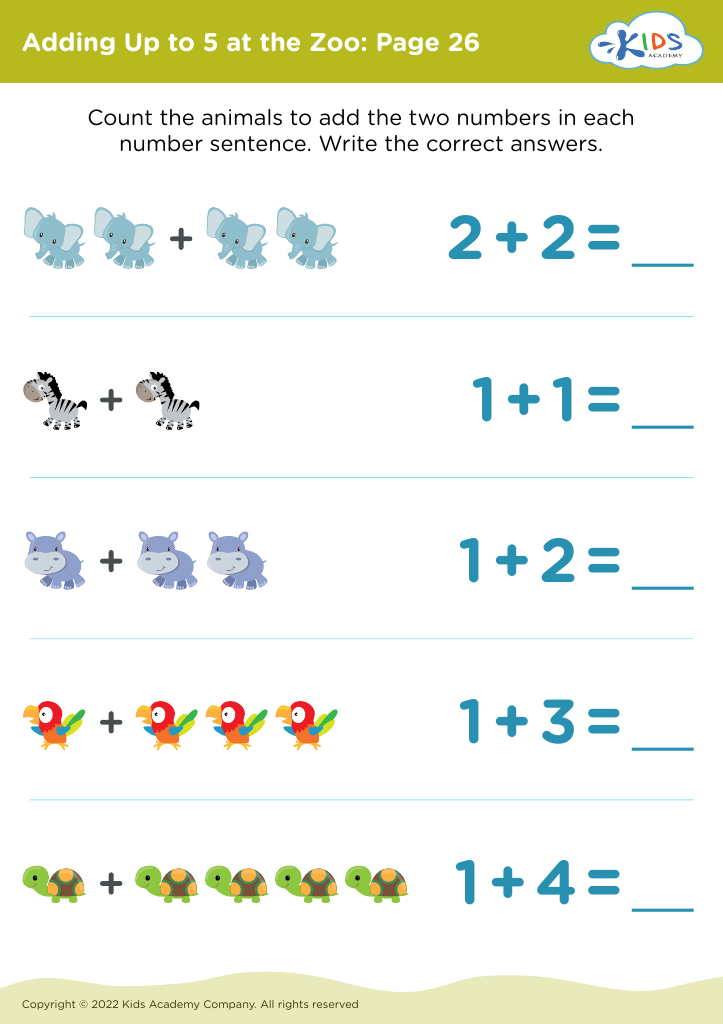
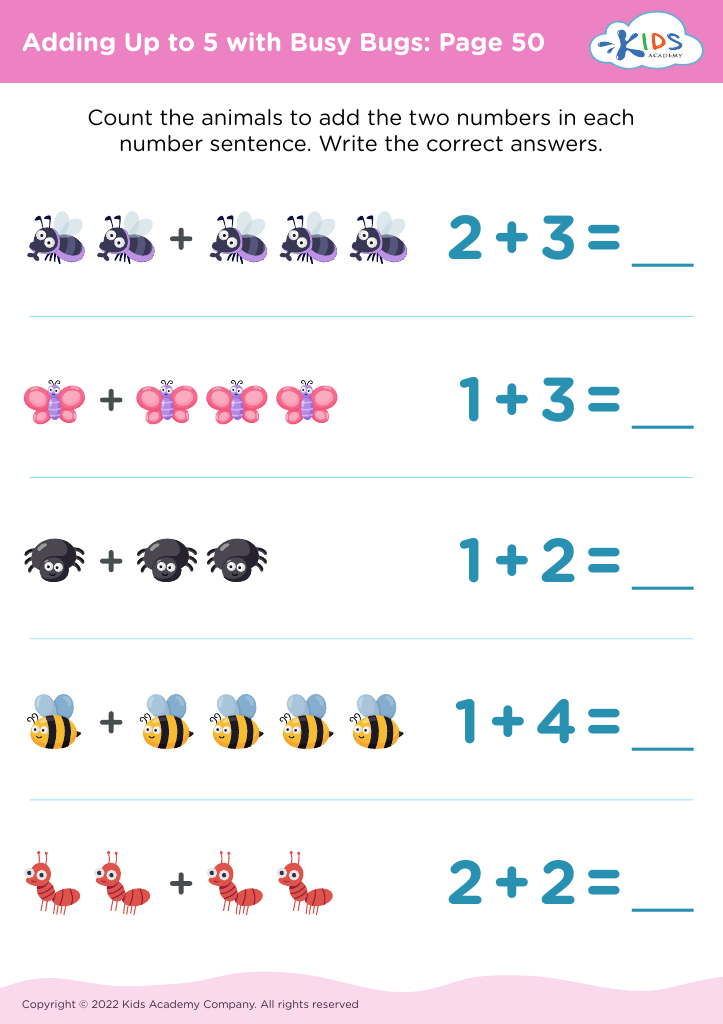
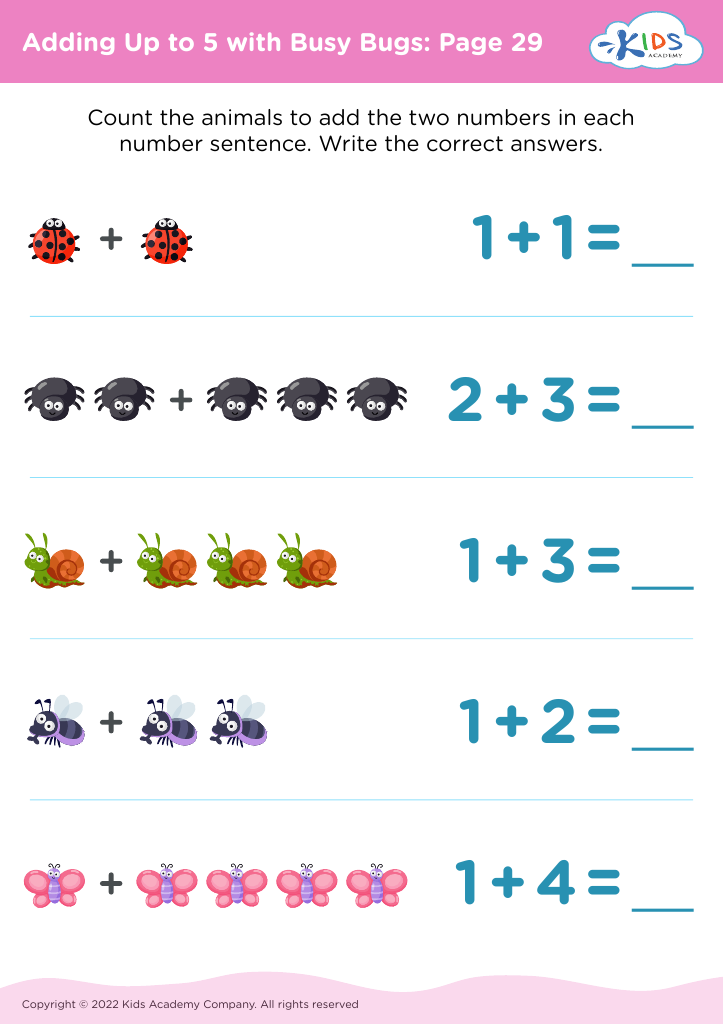
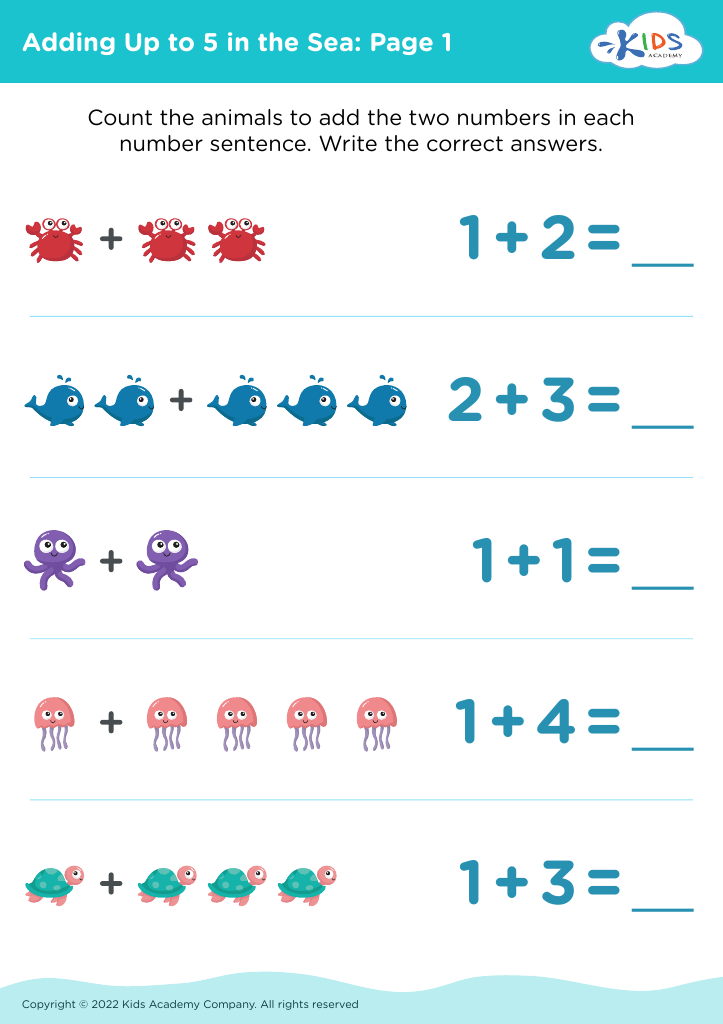
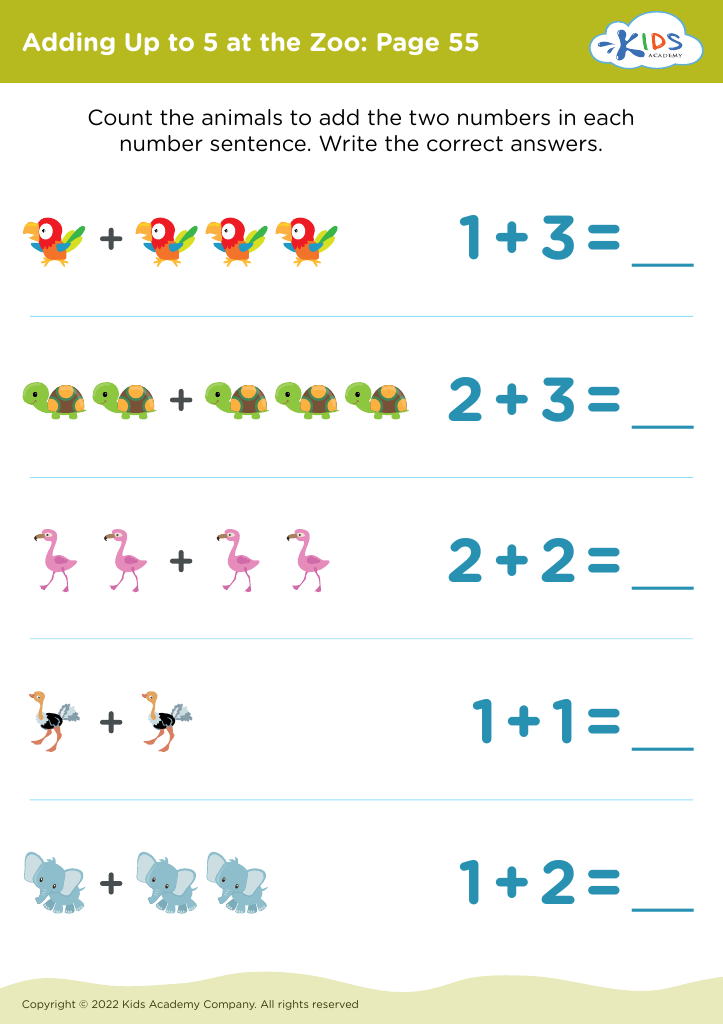
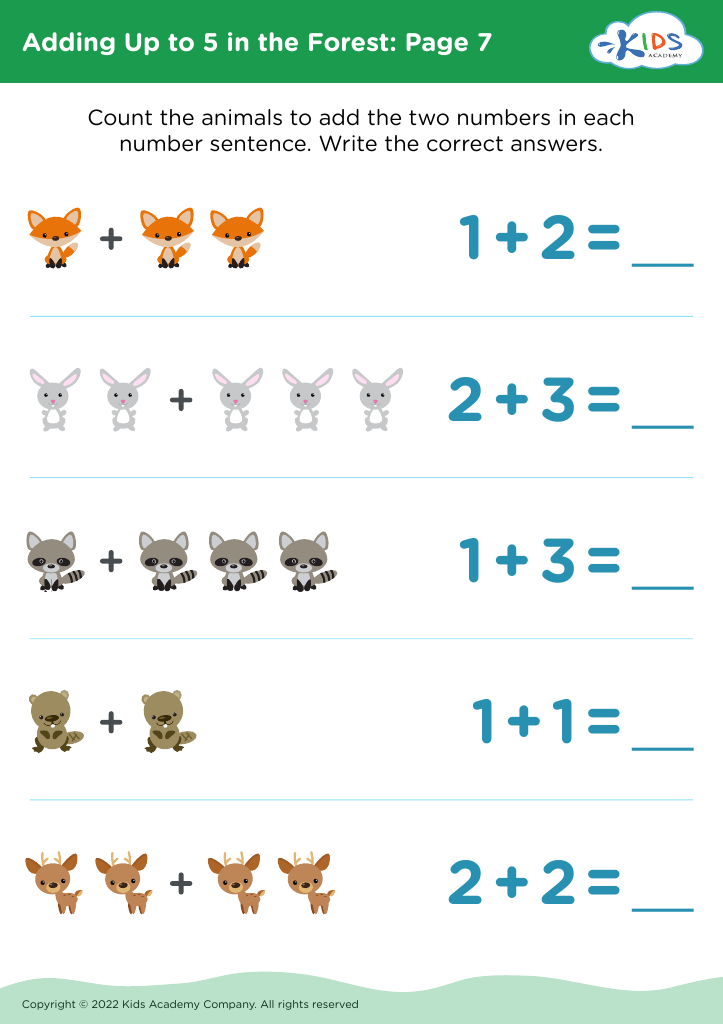
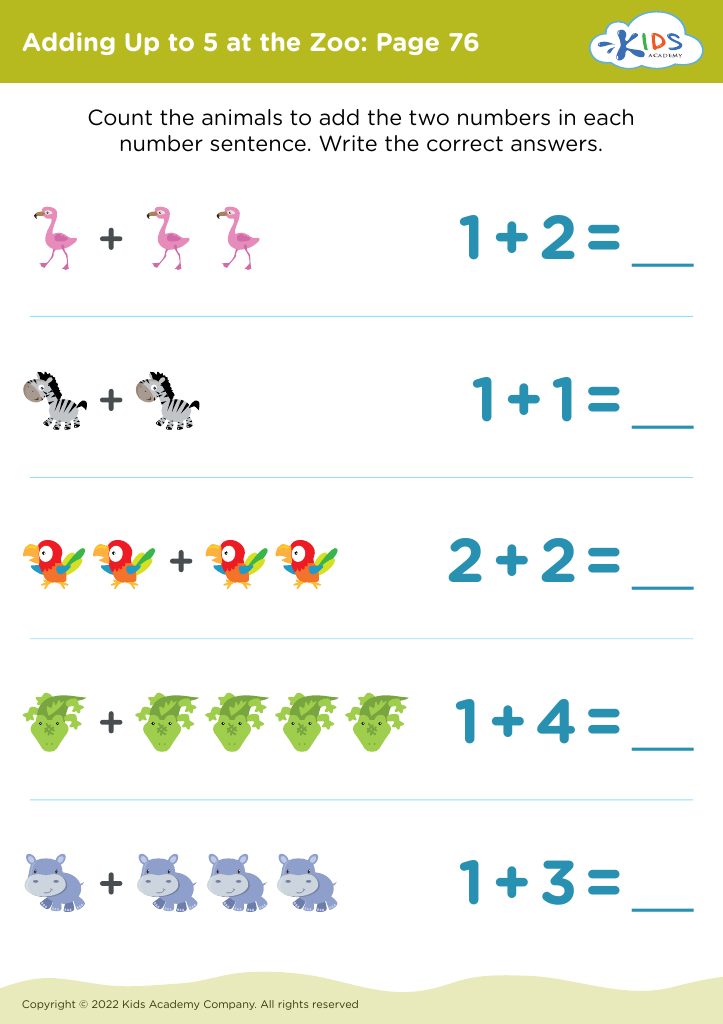
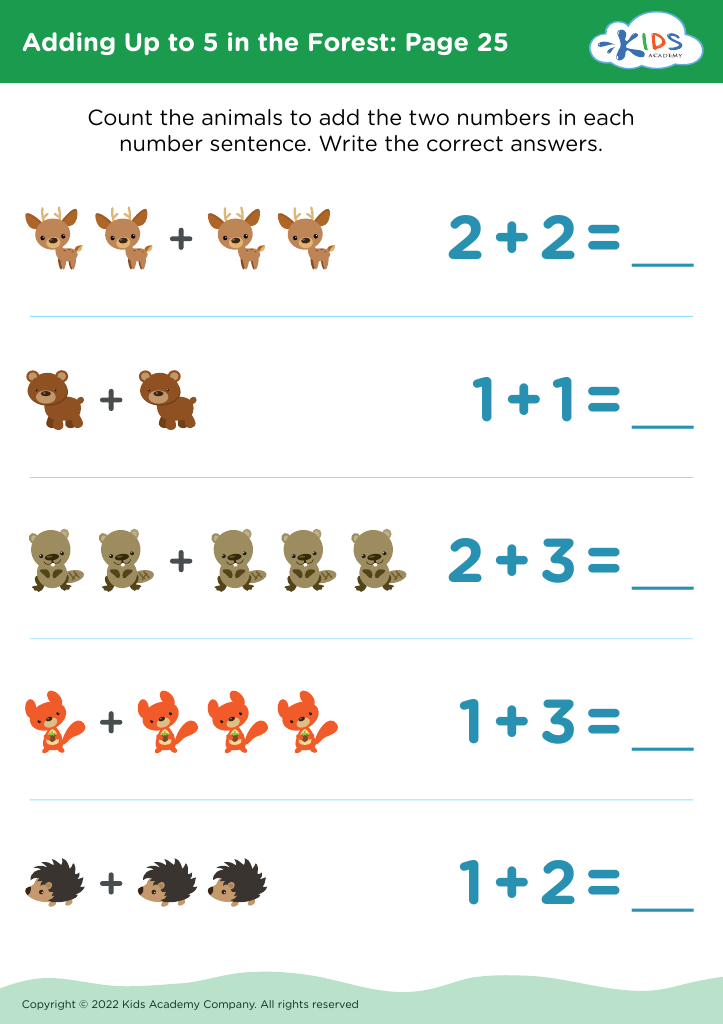
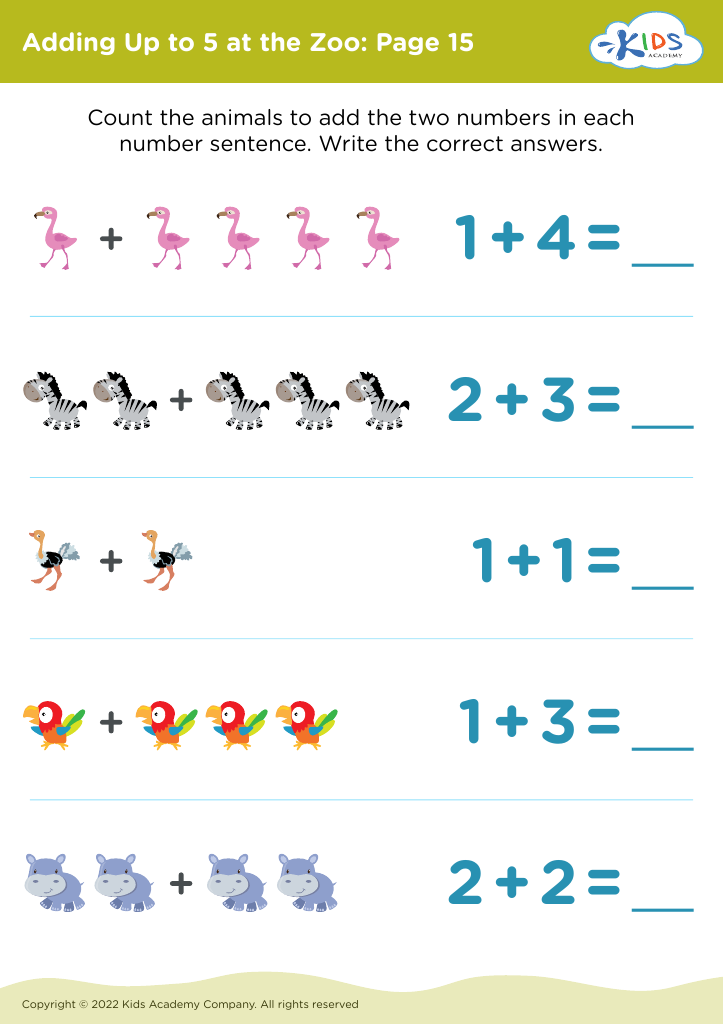








Understanding quantities adding up to 5 is a crucial foundational skill for children aged 3-8, making it essential for parents and teachers to prioritize this concept. At this age, children are not only developing mathematical skills but also enhancing their cognitive abilities. Mastering quantities up to 5 helps children make sense of their environment, particularly through everyday activities such as counting objects, sharing snacks, or playing games.
When children grasp the idea of combining smaller numbers to form a larger quantity, they begin to develop strong number sense, which is critical for later, more complex mathematical concepts. This understanding lays the groundwork for addition, subtraction, and problem-solving skills that they will encounter as they progress in school.
Additionally, focusing on quantities up to 5 fosters critical thinking and logical reasoning. Through engaging activities by parents and teachers, like counting toys or grouping flowers, children learn to visualize numbers, promoting engagement and enthusiasm towards learning.
Moreover, early intervention in mathematical understanding supports long-term academic success, enabling children to build confidence and resilience in their mathematical abilities. Therefore, investing time in teaching this fundamental concept can significantly impact a child's overall educational journey and lifelong relationships with math.








