Filters

17 filtered results

Clear all filters
Favorites
With answer key
Interactive

17 filtered results

Difficulty Level

Grade


Unlock the joy of learning with our "Understanding Quantity: Adding Up to 5 Worksheets" designed for children aged 3-8! These engaging activities help young learners develop foundational math skills by exploring the concept of quantity through interactive exercises. Each worksheet encourages children to practice counting, adding, and recognizing numbers, fostering their ability to manipulate quantities up to 5. Perfect for home or classroom use, our resources blend fun and education to build confidence in early math. Guided by vibrant illustrations and clear instructions, these worksheets hold the key to strengthen your child's understanding of numbers and enhance their problem-solving skills.
Check out this FREE Trial Lesson on Adding Up to 5 for age 3-8!

A

Favorites
With answer key
Interactive
  • 3-8
  • Understanding quantity
  • Adding Up to 5
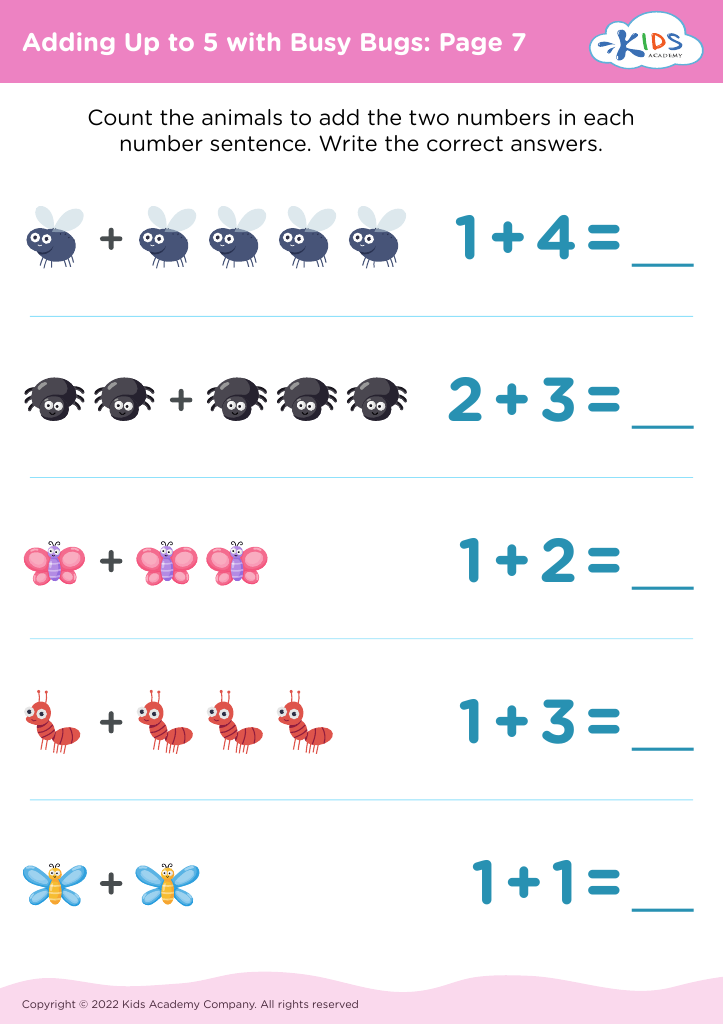
Adding Up to 5 with Busy Bugs: Page 7
Worksheet
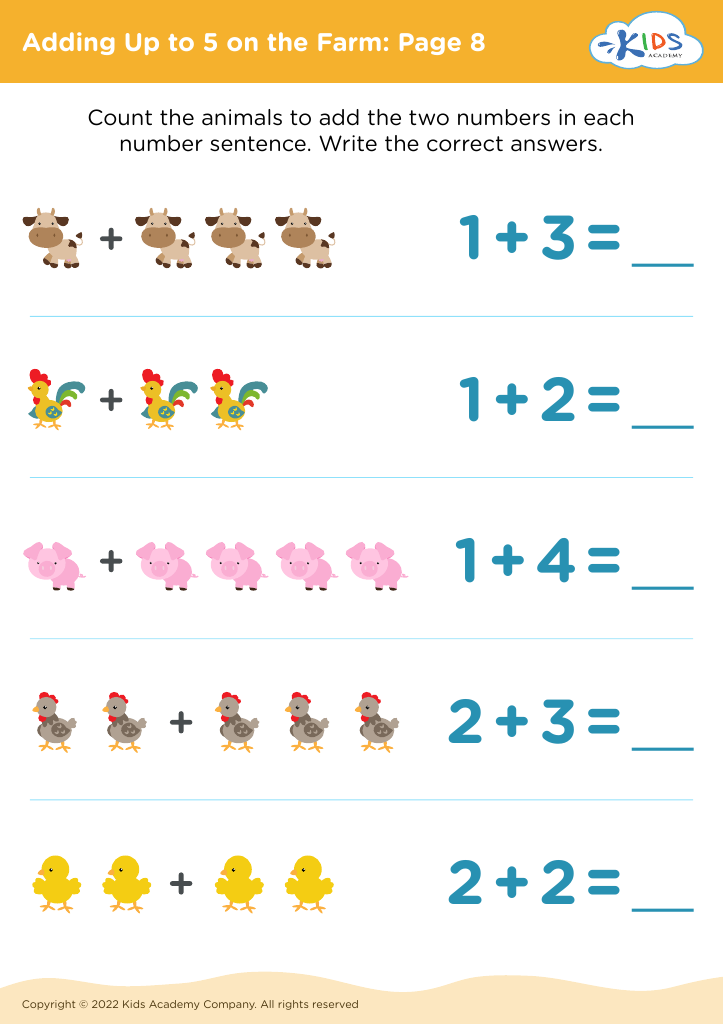
Adding Up to 5 on the Farm: Page 8
Worksheet
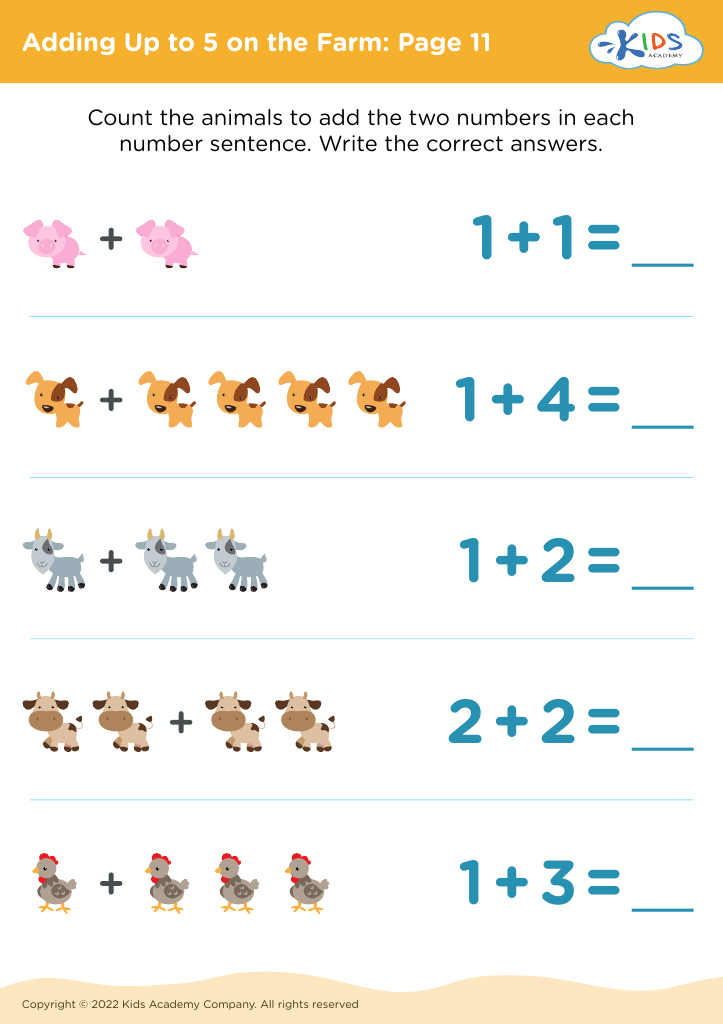
Adding Up to 5 on the Farm: Page 11
Worksheet
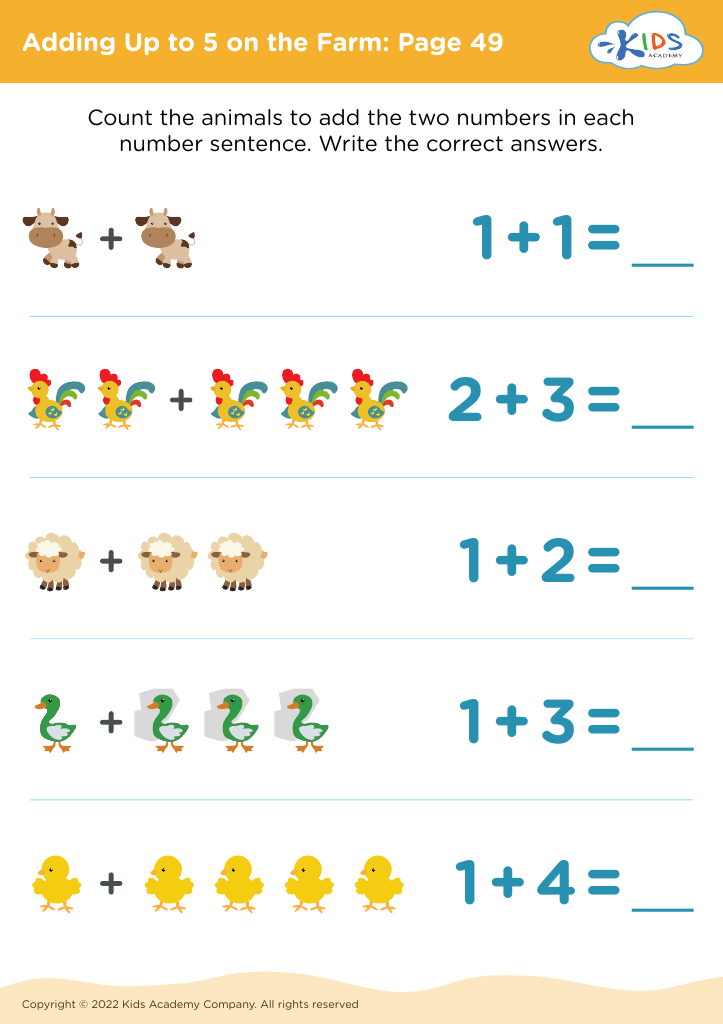
Adding Up to 5 on the Farm: Page 49
Worksheet
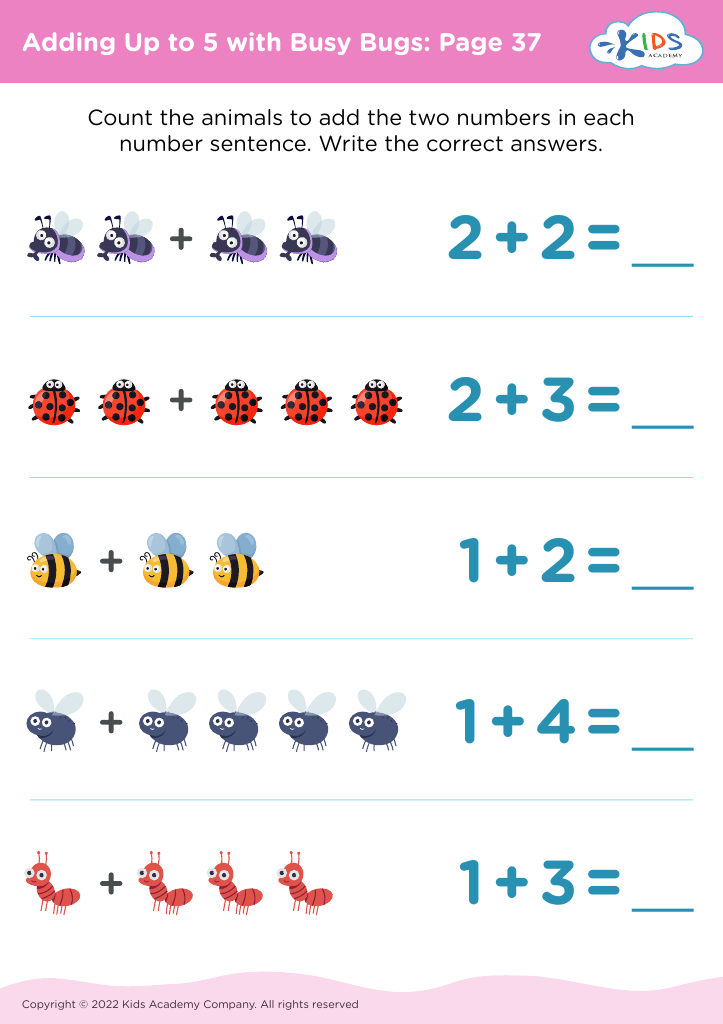
Adding Up to 5 with Busy Bugs: Page 37
Worksheet
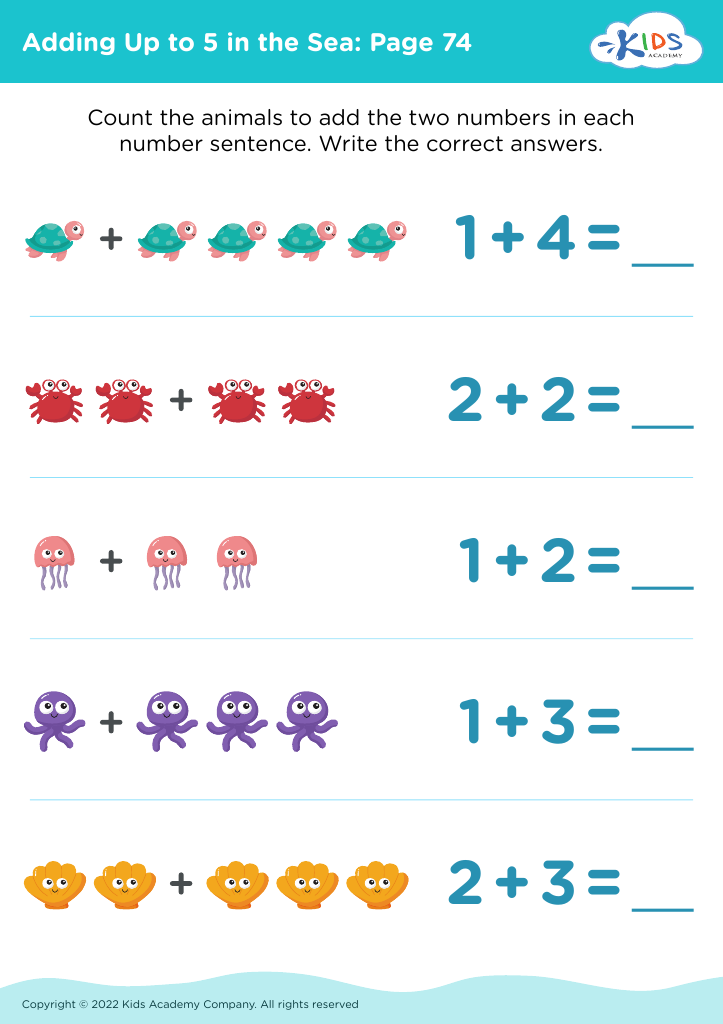
Adding Up to 5 in the Sea: Page 74
Worksheet
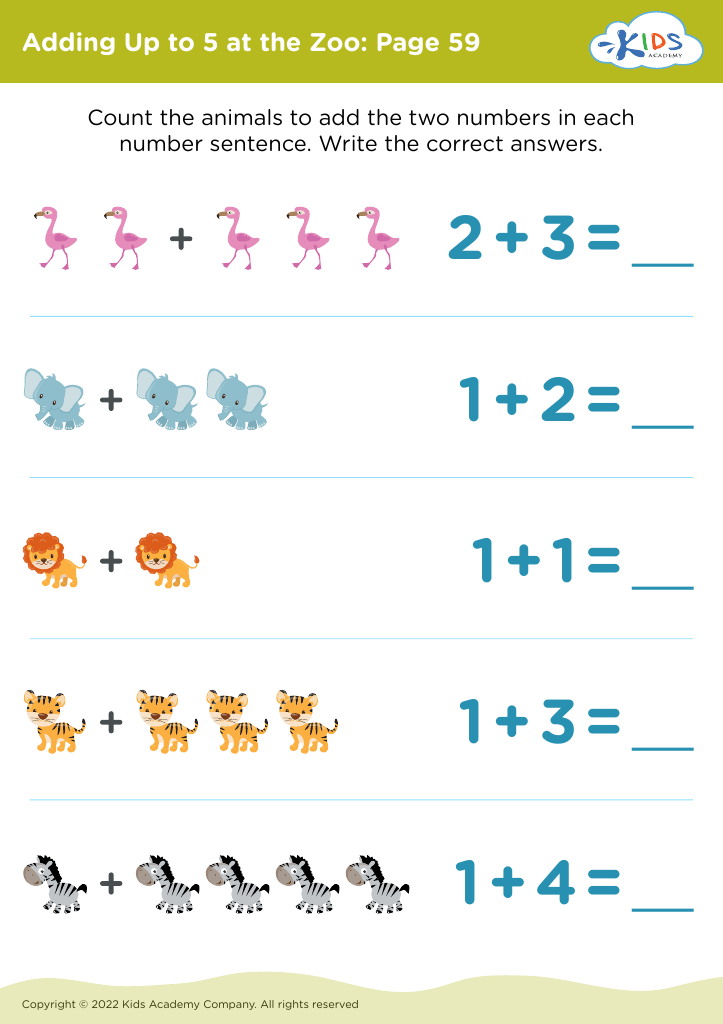
Adding Up to 5 at the Zoo: Page 59
Worksheet
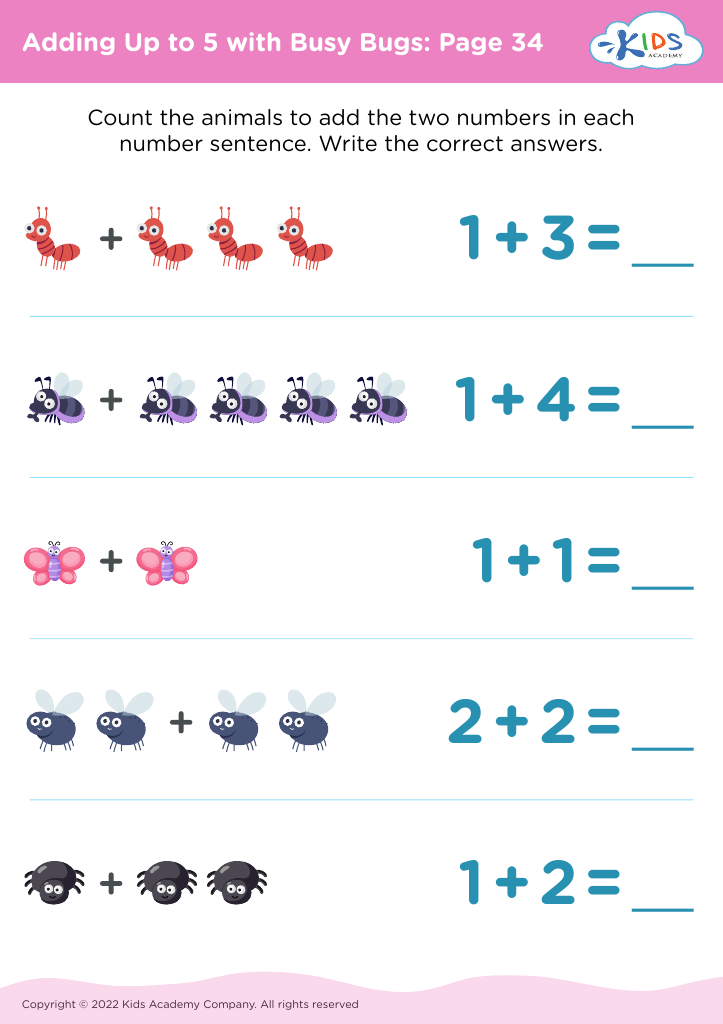
Adding Up to 5 with Busy Bugs: Page 34
Worksheet
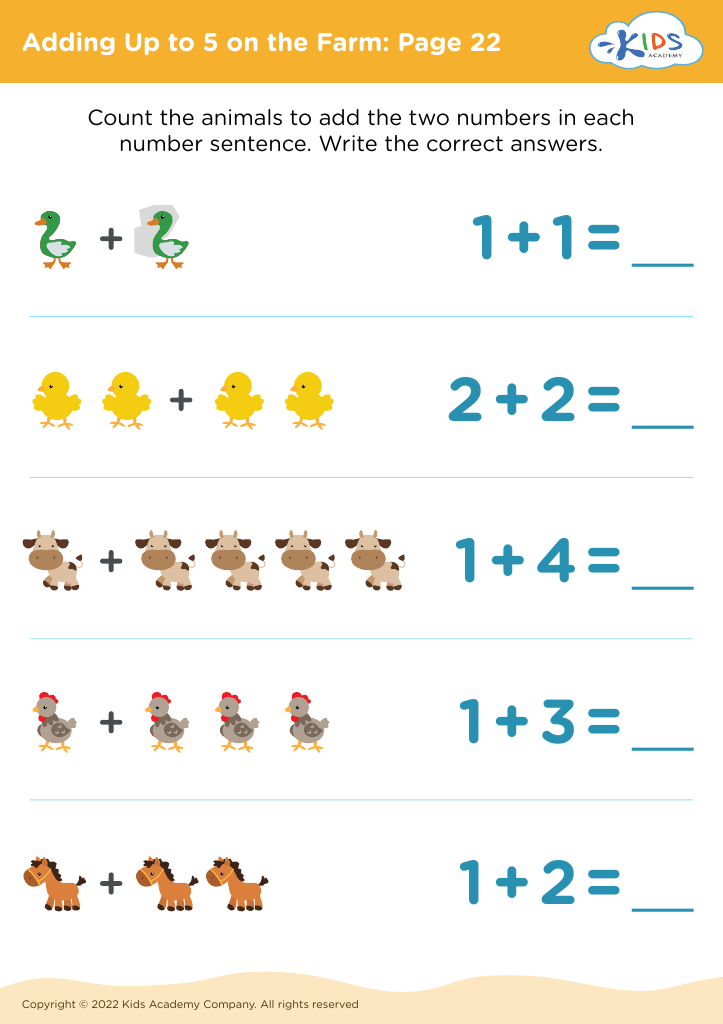
Adding Up to 5 on the Farm: Page 22
Worksheet
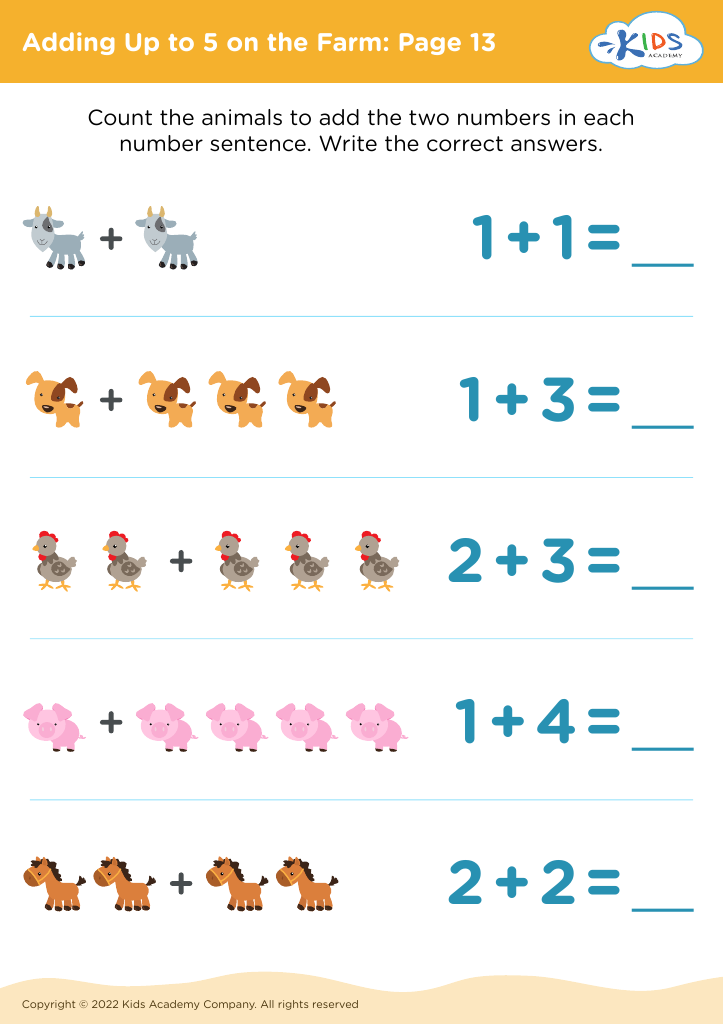
Adding Up to 5 on the Farm: Page 13
Worksheet
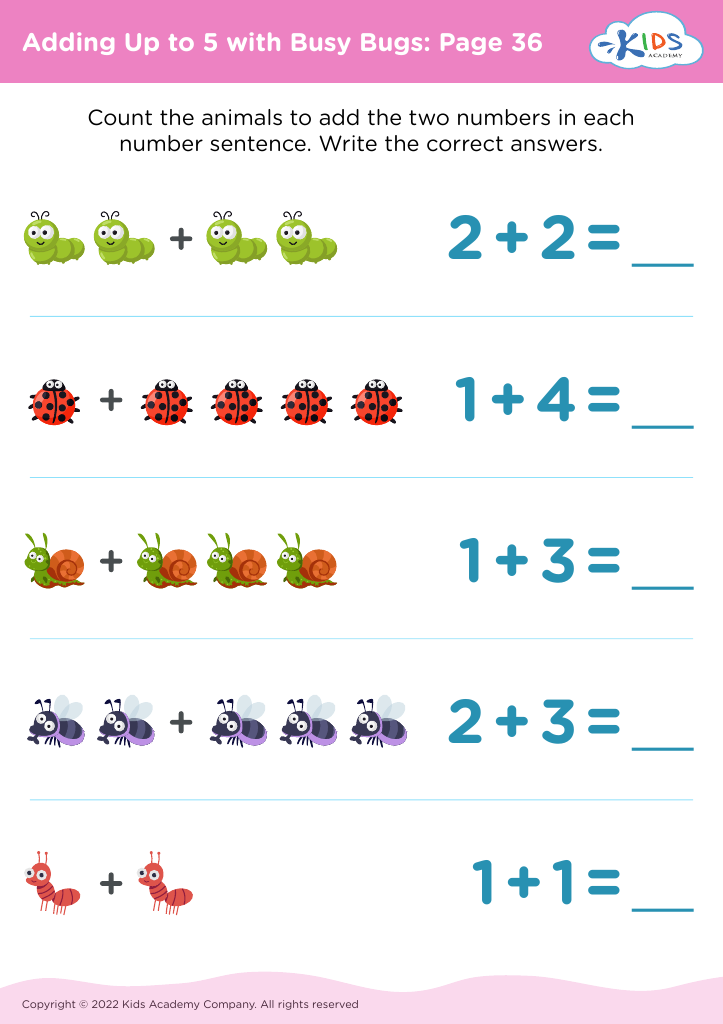
Adding Up to 5 with Busy Bugs: Page 36
Worksheet
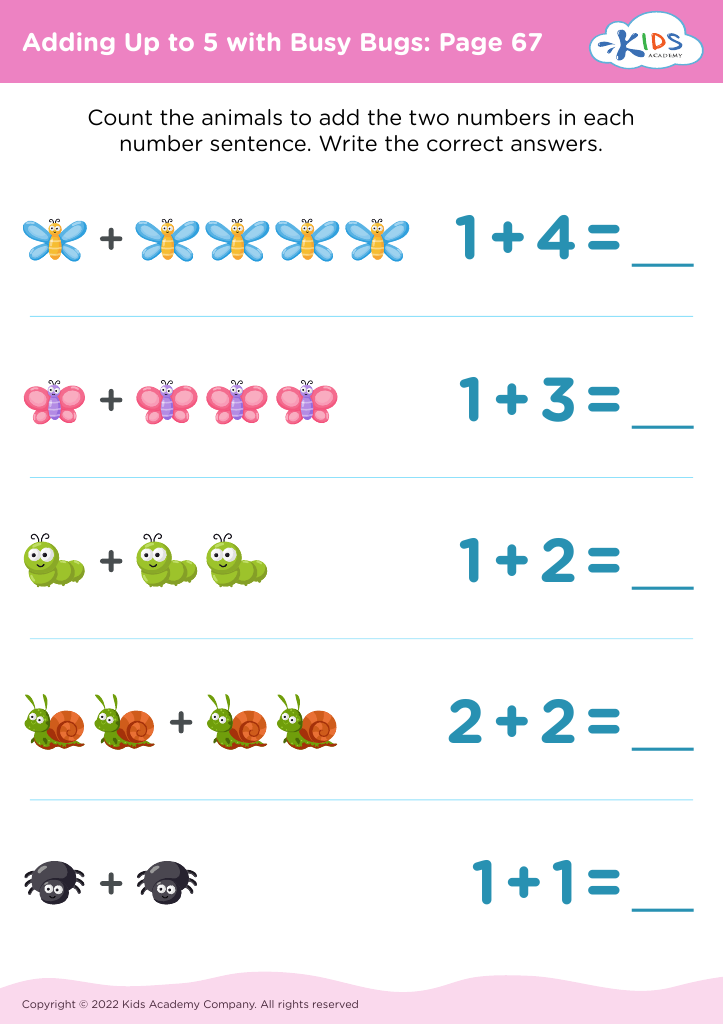
Adding Up to 5 with Busy Bugs: Page 67
Worksheet
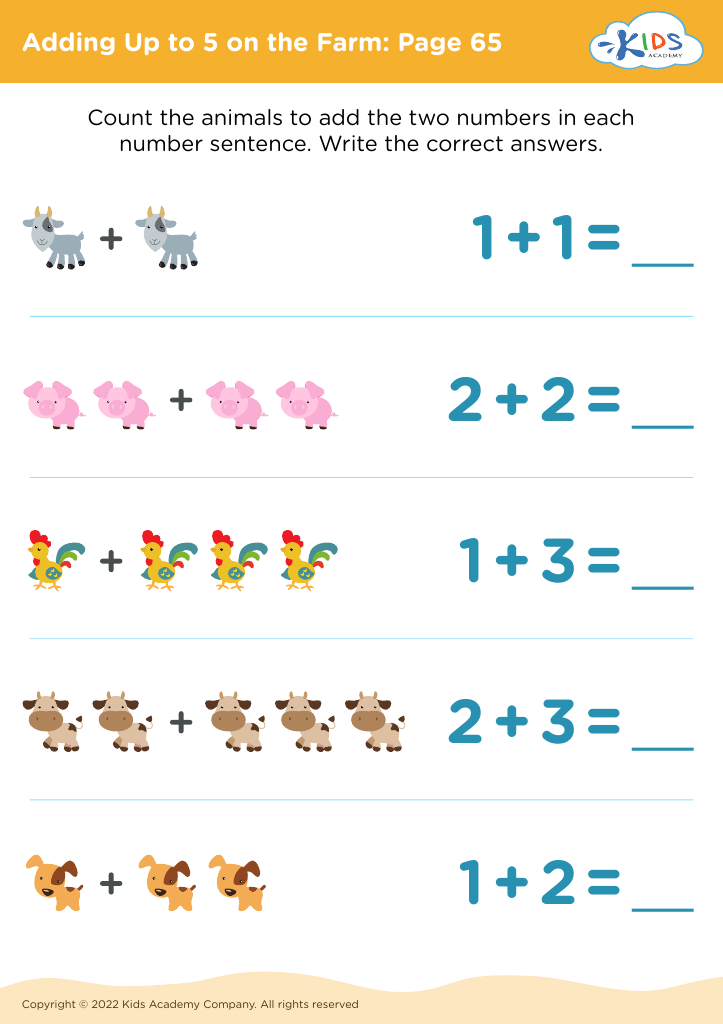
Adding Up to 5 on the Farm: Page 65
Worksheet
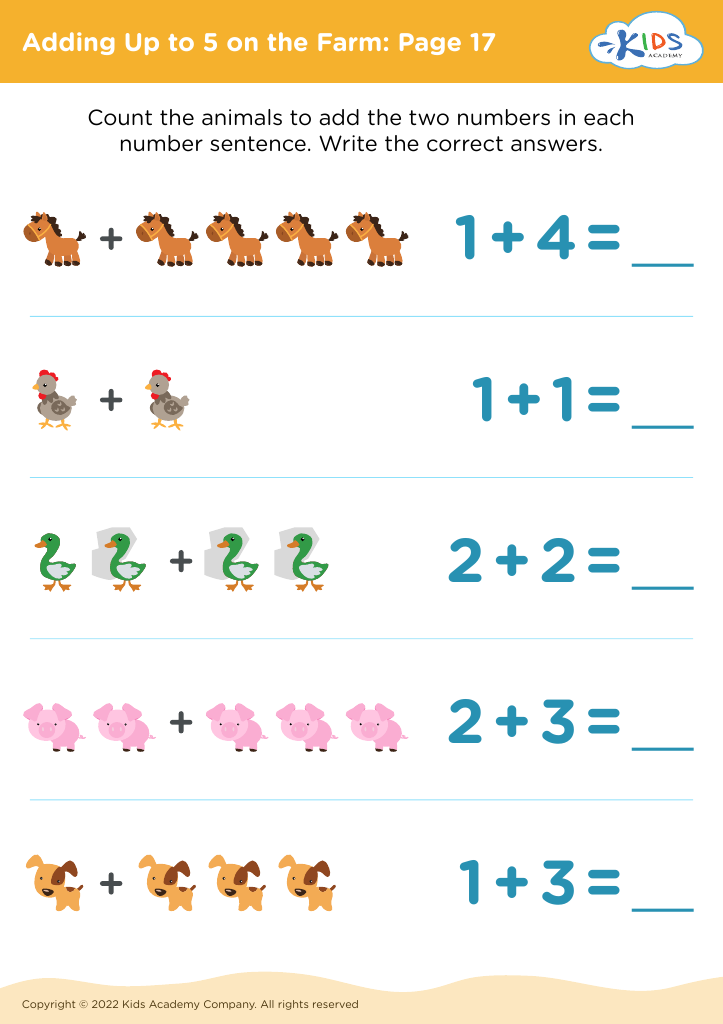
Adding Up to 5 on the Farm: Page 17
Worksheet
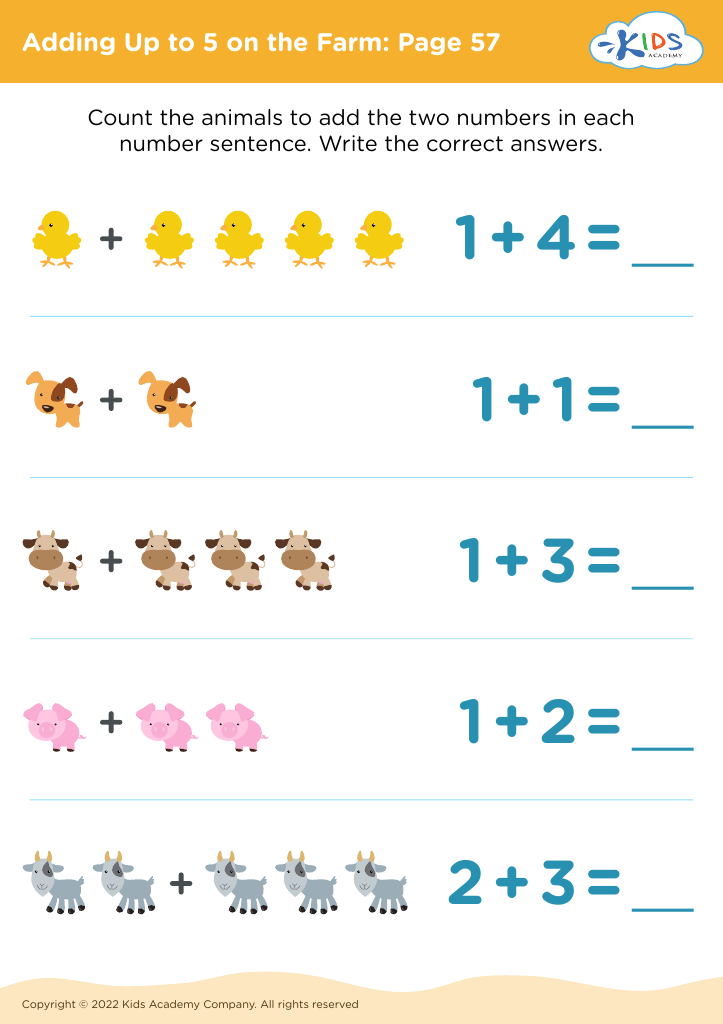
Adding Up to 5 on the Farm: Page 57
Worksheet
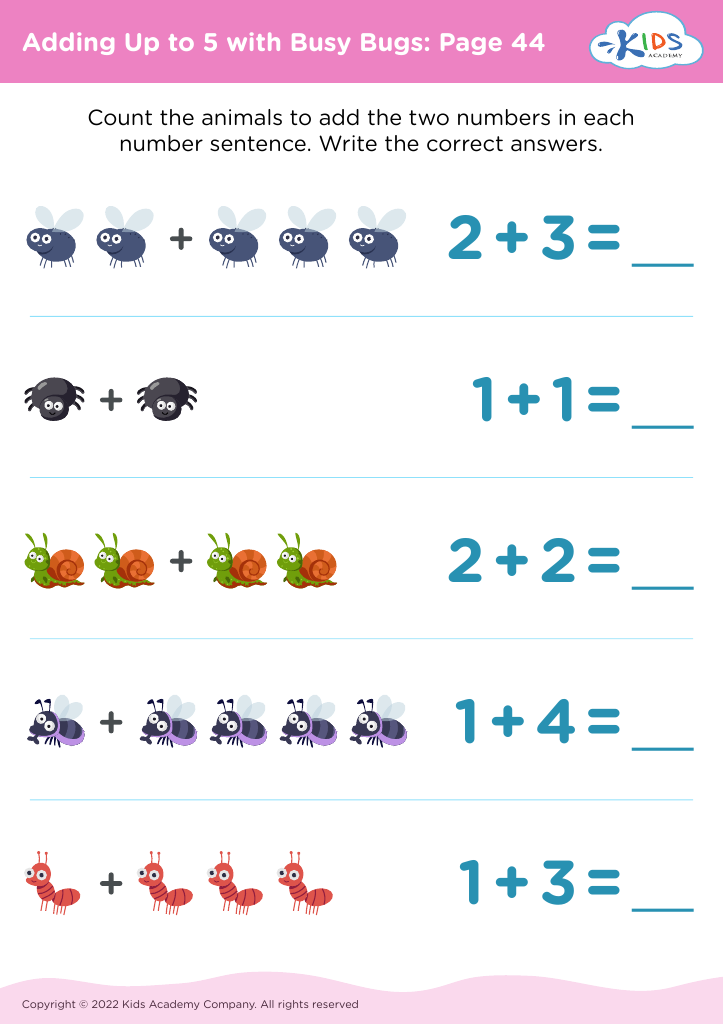
Adding Up to 5 with Busy Bugs: Page 44
Worksheet
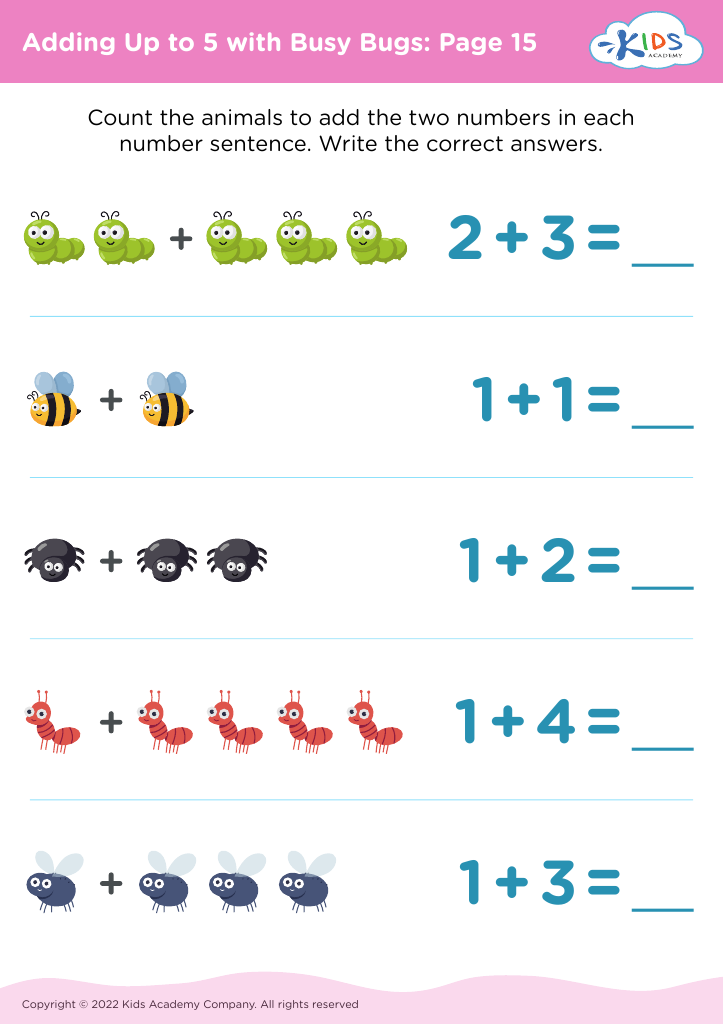
Adding Up to 5 with Busy Bugs: Page 15
Worksheet


Understanding quantity and the concept of adding up to 5 is fundamental for children aged 3-8, as it forms the foundation of their mathematical education. At this age, children develop critical numeracy skills that influence their ability to understand both simple and complex mathematical principles later in life.

By grasping the concept of quantity and performing basic addition within the range of 5, children enhance their cognitive development, improve problem-solving skills, and reinforce their understanding of number relationships. This crucial understanding lays the groundwork for more advanced topics, such as subtraction, multiplication, and even fractions as they progress in school.

Moreover, when parents and teachers prioritize these foundational skills, they foster a positive attitude towards mathematics, reducing anxiety associated with the subject. Engaging in playful activities like counting objects, using visual aids, or playing math games makes learning enjoyable and relatable for young learners.

Additionally, these skills contribute to daily life experiences—such as sharing snacks or counting toys—making math relevant and applicable outside of school. Ultimately, supporting children in understanding quantity and addition up to 5 enables them to approach future math challenges with confidence and enthusiasm.