Underwater animal identification Adding Up to 5 Worksheets for Ages 3-8
3 filtered results
-
From - To
Explore our engaging "Underwater Animal Identification: Adding Up to 5 Worksheets" designed for ages 3-8. These fun and educational worksheets combine the excitement of marine life with essential math skills, helping children enhance their counting and addition abilities. Each worksheet features colorful underwater animals, prompting kids to identify and add groups of creatures up to five. With interactive exercises, children will not only develop numeracy skills but also foster a love for ocean wildlife. Perfect for classrooms or at-home learning, these worksheets make math inviting and enjoyable while nurturing a sense of curiosity about the underwater world. Dive in today!
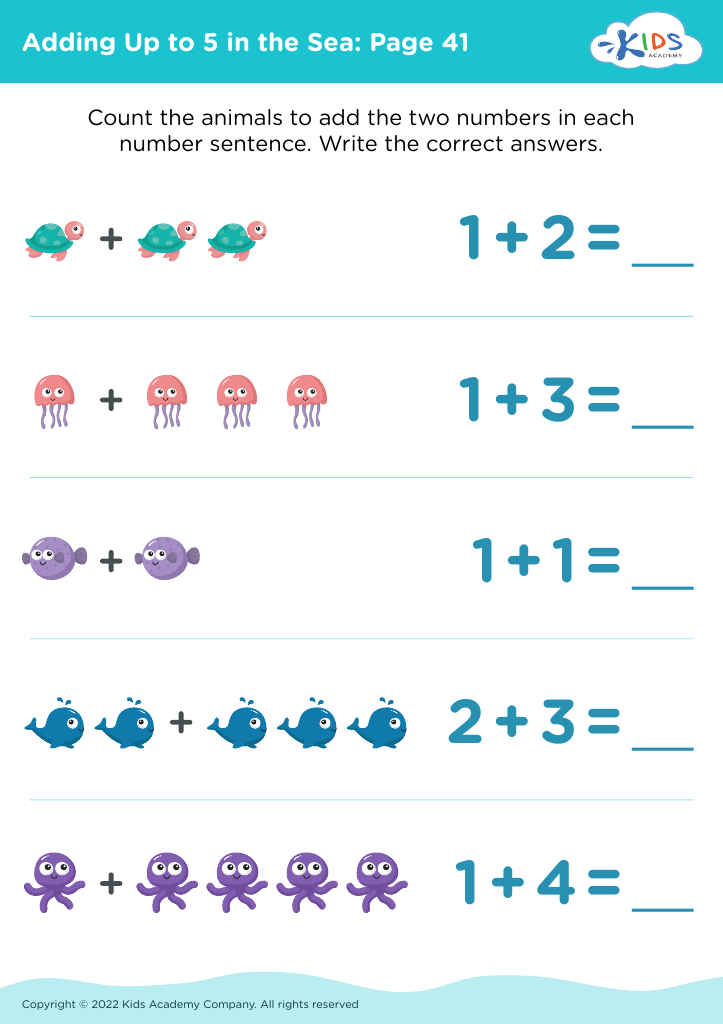
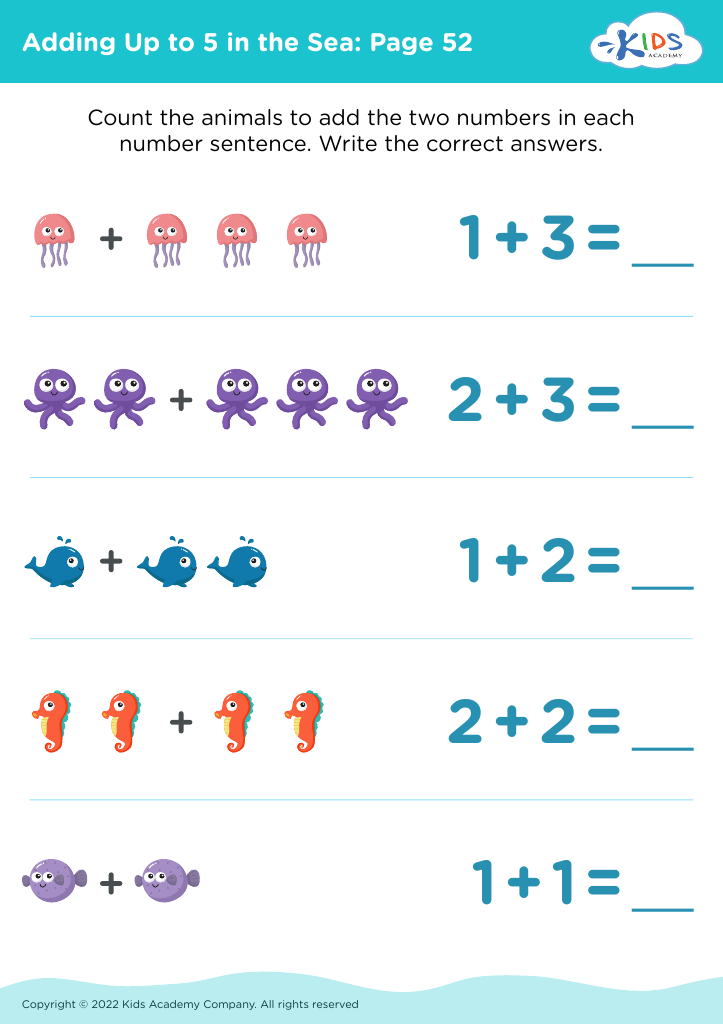
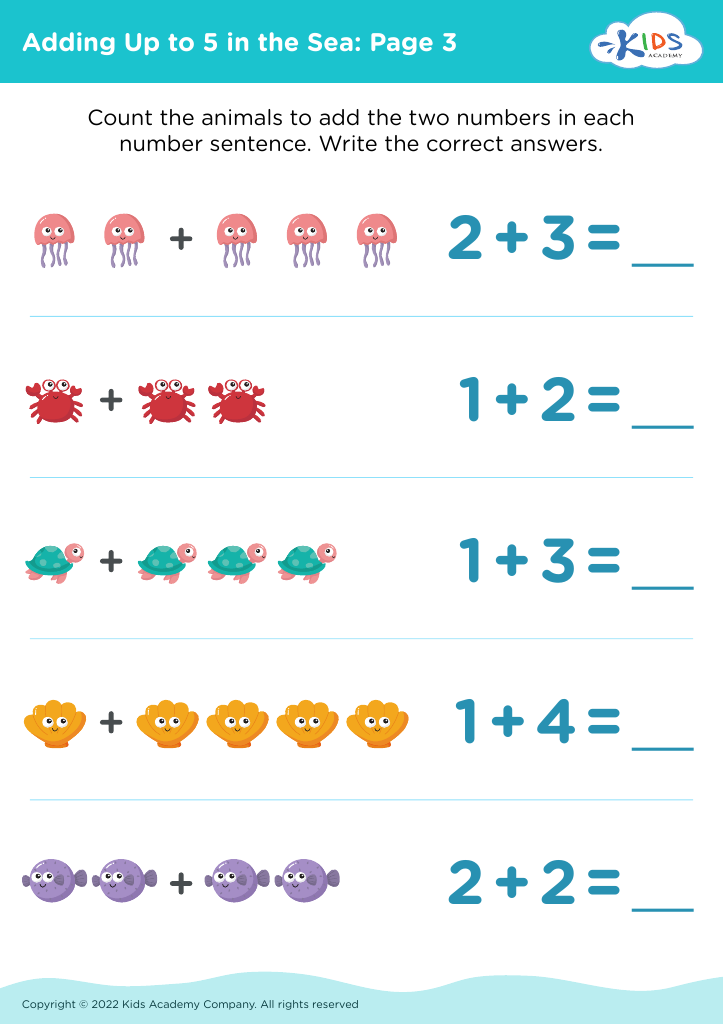








Parents and teachers should care about underwater animal identification and the concept of "Adding Up to 5" for children ages 3-8 because these activities seamlessly blend education and the natural world, fostering curiosity and foundational skills. Understanding underwater animals enhances children's appreciation for biodiversity and marine ecosystems, promoting environmental awareness from a young age. This knowledge encourages caring attitudes towards ocean conservation, critical for future generations.
Incorporating simple addition with the identification of underwater animals can make learning engaging and fun. For example, children can count various animals seen in illustrations or during a seaside adventure, reinforcing the concept of one-to-one correspondence and basic arithmetic through playful exploration.
Using colorful visuals of marine life not only captivates young learners but also aids in memory retention. Furthermore, discussing these animals and their characteristics can develop language skills, as children learn new vocabulary associated with marine life.
Overall, integrating underwater animal identification with foundational math skills provides a holistic learning experience that nurtures a love for both nature and learning. It promotes cognitive development while instilling values of curiosity, responsibility, and stewardship for the ocean and its inhabitants.








