
Develop critical thinking Adding up to 50 Worksheets for Ages 3-8
3 filtered results
Difficulty Level
Grade
Age
-
From - To
Subject
Activity
Standards
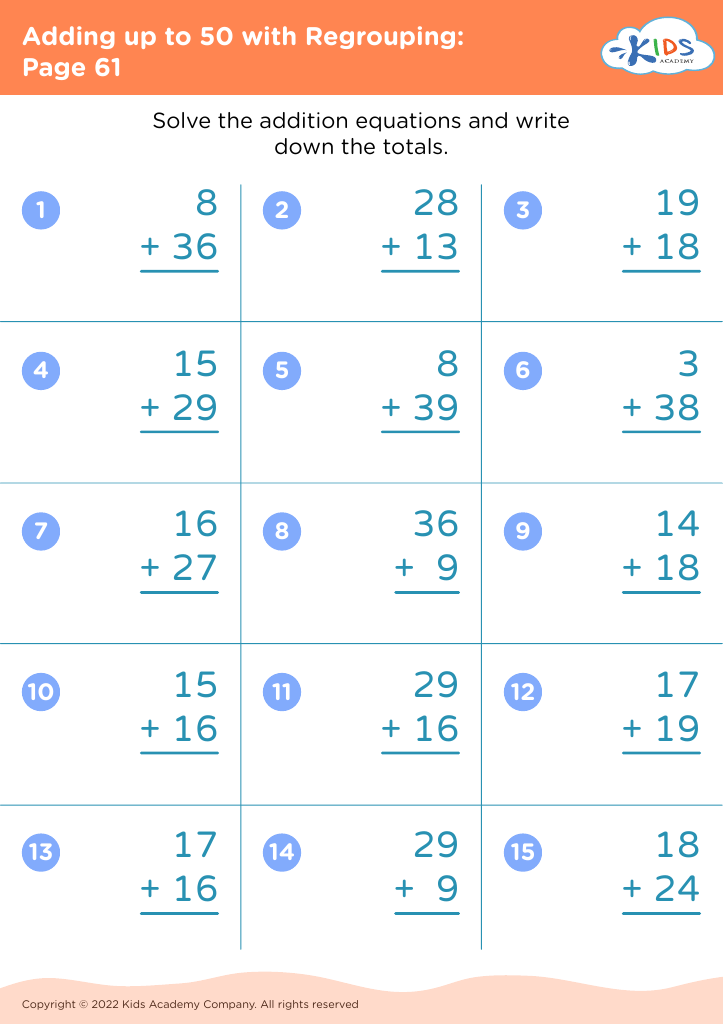
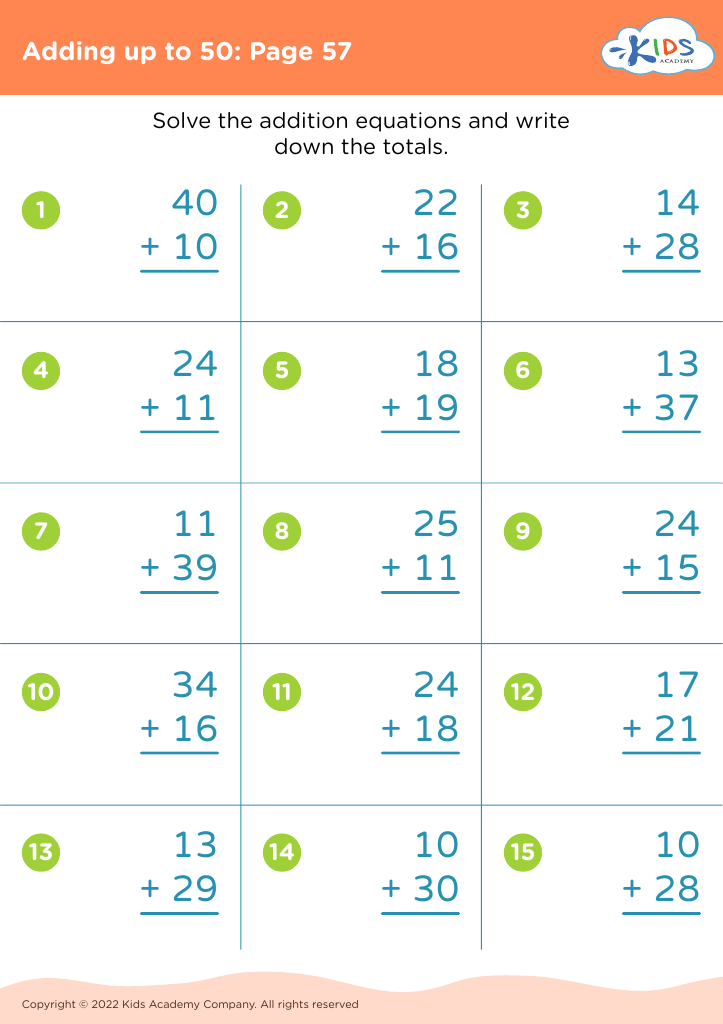
Unlock the potential of young minds with our "Develop Critical Thinking: Adding up to 50 Worksheets for Ages 3-8." These expertly crafted worksheets are designed to nurture essential math skills while fostering critical thinking in early learners. Perfect for children aged 3-8, these engaging activities help kids master addition up to 50 through fun and interactive exercises. Each worksheet combines colorful visuals and challenging math problems, making learning a delightful adventure. By encouraging logical reasoning and problem-solving abilities, our worksheets lay a strong foundation for future academic success. Equip your child with the skills they need to excel with our comprehensive math resources!
Favorites
With answer key
Interactive

Join Kids Academy for Free
Who is primarily going to use this learning content?




Parents and teachers should highly prioritize developing critical thinking and basic arithmetic skills in children aged 3-8. During these formative years, children’s brains are most malleable and receptive to new information. Encouraging critical thinking helps kids learn to analyze situations, make thoughtful decisions, and solve problems innovatively. These skills eclipse mere rote memorization by fostering a deeper understanding of how and why things work, equipping children with the cognitive tools necessary for academic and life-long success.
Integrating basic arithmetic, such as teaching children to add up to 50, further enhances cognitive development. Early exposure to numbers and basic math principles builds a strong foundation for more complex mathematical concepts they’ll encounter later. This exercise can also improve memory, concentration, and attention span.
Combining critical thinking with arithmetic education promotes a balanced development, ensuring children are not only learning facts but also understanding the processes behind them. These skills intersect to help children approach problems more strategically rather than mechanically.
Parents and teachers play a crucial role in providing engaging, age-appropriate activities and challenges that stimulate these skills. By doing so, they lay the groundwork for a child's future academic pursuits and everyday problem-solving abilities, setting them up for long-term success.








