Enhance comprehension Adding up to 50 Worksheets for Ages 3-8
5 filtered results
-
From - To
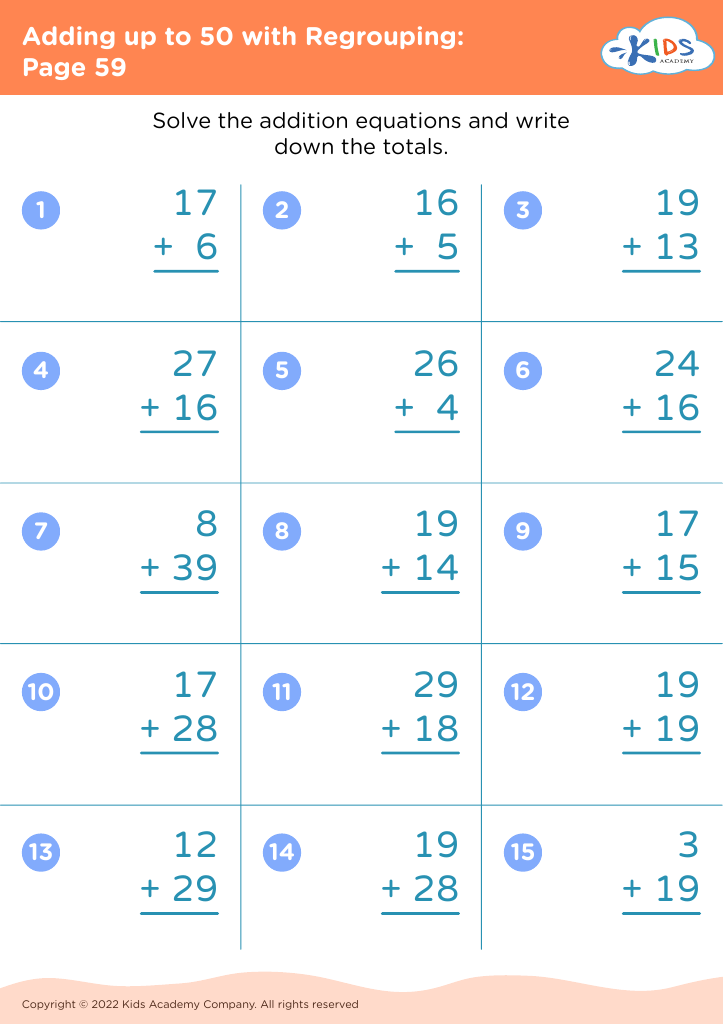
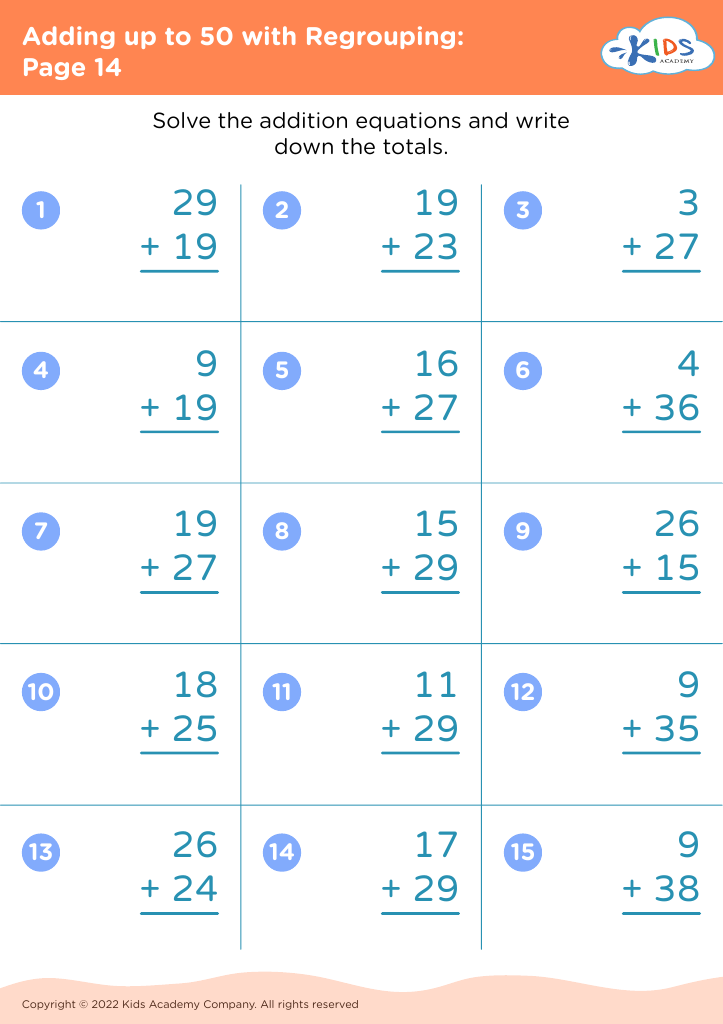
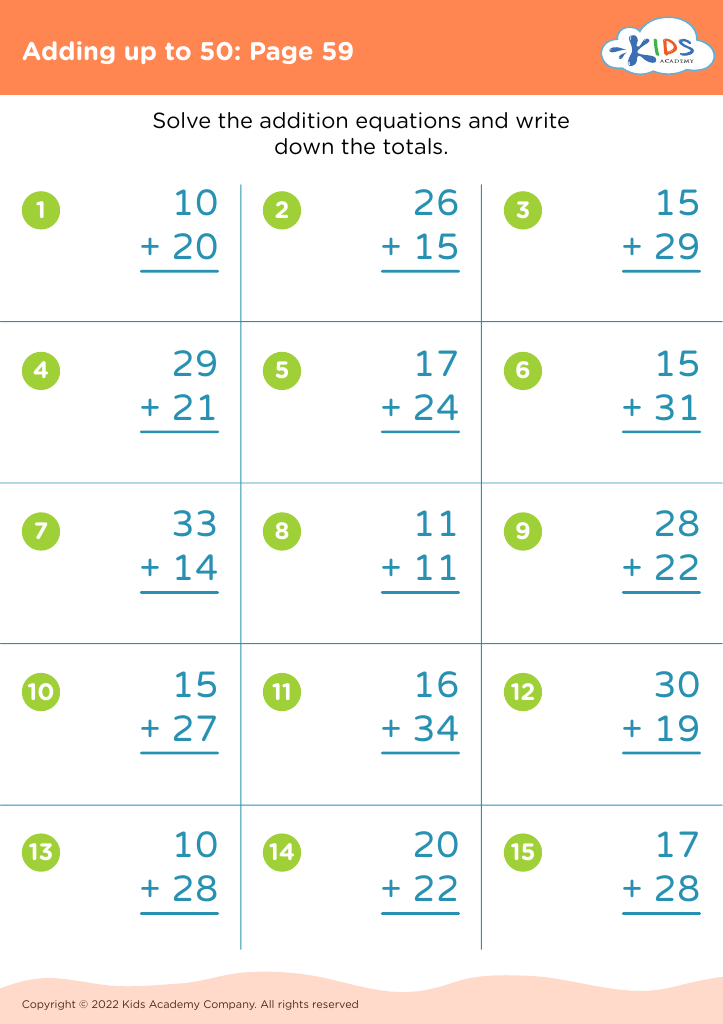
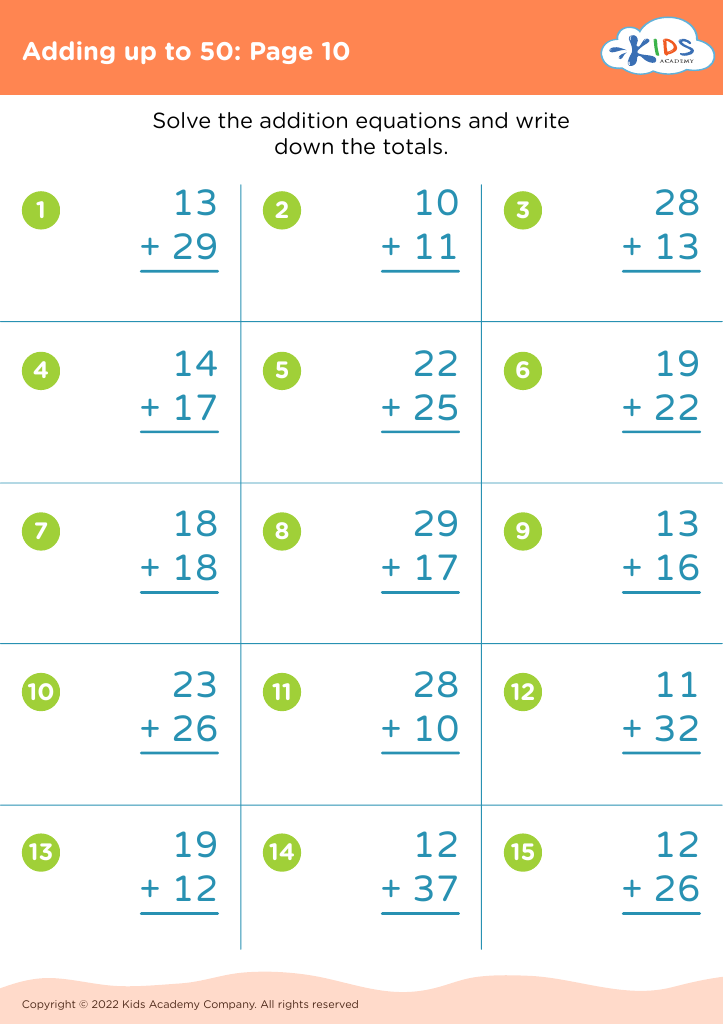
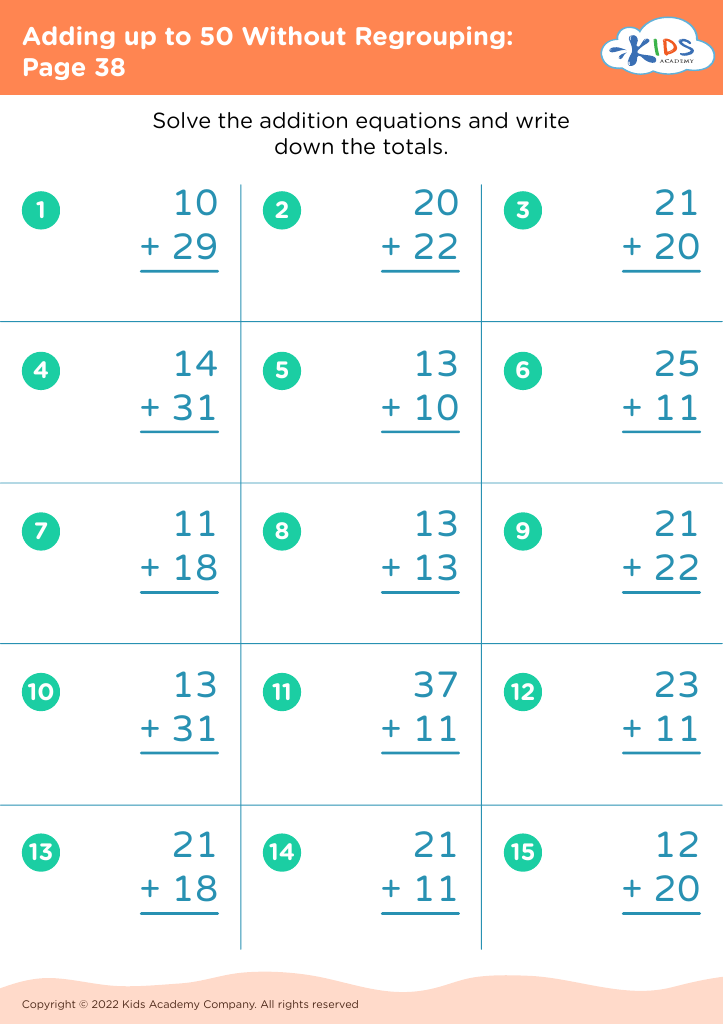
Enhance comprehension with our engaging "Adding Up to 50" worksheets designed specifically for children ages 3-8. This collection of 100 printable worksheets fosters essential math skills while cultivating a love for learning. Each worksheet encourages young learners to practice addition within the range of 50, promoting number recognition, problem-solving, and critical thinking. Tailored to diverse learning styles, these activities combine fun visuals and interactive challenges, ensuring kids remain motivated and focused. Perfect for both classroom use and at-home practice, these worksheets lay a strong foundation for mathematical understanding while enhancing overall comprehension. Start your child's math journey today!




Enhancing comprehension skills in young learners aged 3-8 is crucial for their overall development. At this formative stage, a solid foundation in comprehension not only promotes effective reading and holistic understanding of texts but also fosters critical thinking and problem-solving abilities. When parents and teachers prioritize enhancing comprehension, they empower children to make connections, draw inferences, and develop a love for reading, laying the groundwork for lifelong learning.
Comprehension goes beyond basic understanding; it encompasses the ability to analyze, interpret, and critically engage with information. This skill enables children to navigate various subjects, from literature to mathematics, enhancing their academic performance. Engaging activities, such as storytelling, discussions, and interactive reading, can significantly boost comprehension skills, capturing children's interest and encouraging participation.
Moreover, strong comprehension skills contribute to effective communication. Children learn to articulate their thoughts and understand others better, fostering collaboration and empathy. As a result, fostering comprehension in early childhood is essential for holistic personal development, equipping children with the tools to succeed academically and socially. Parents and teachers who prioritize this developmental aspect set their children on a path towards confident, skilled problem-solvers in our ever-changing world.








