Recognizing Patterns Adding up to 50 Worksheets for Ages 3-8
7 filtered results
-
From - To
Unlock the joy of math with our "Recognizing Patterns Adding up to 50" worksheets designed for kids ages 3-8! These engaging and colorful activities help young learners identify and understand patterns in numbers, enhancing their mathematical skills in a fun way. By recognizing sequences and connections, children build a strong foundation for addition up to 50. Our worksheets promote critical thinking and boost confidence, making math enjoyable! Perfect for classroom or at-home use, these resources encourage practice while fostering problem-solving abilities. Explore a world of patterns and number fun with our interactive worksheets tailored to support early learning and development!
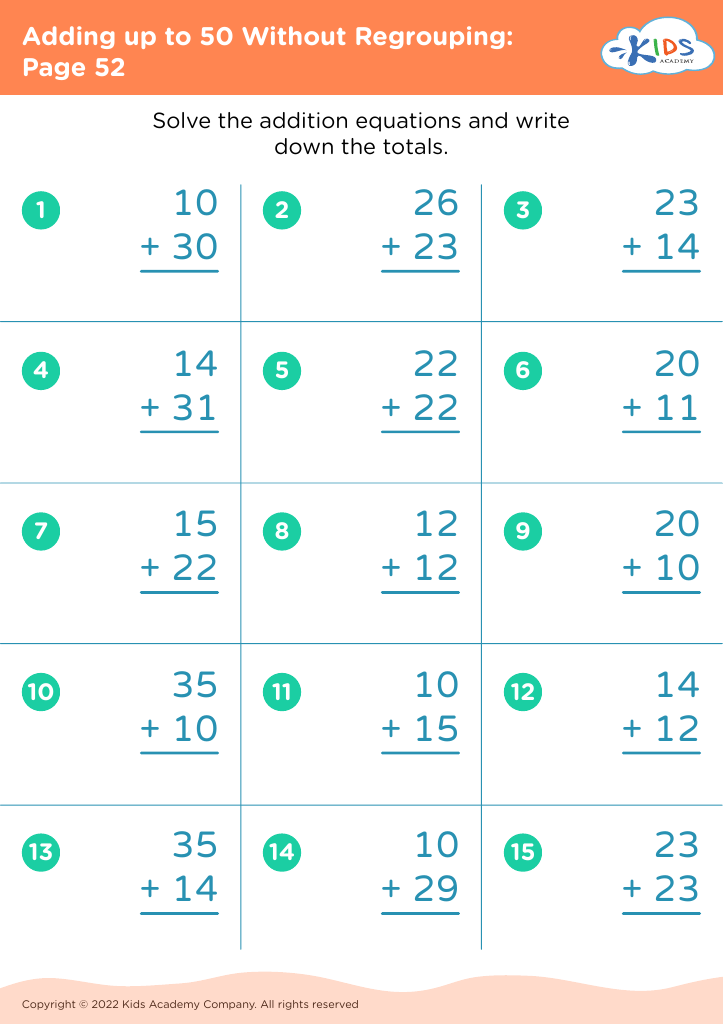
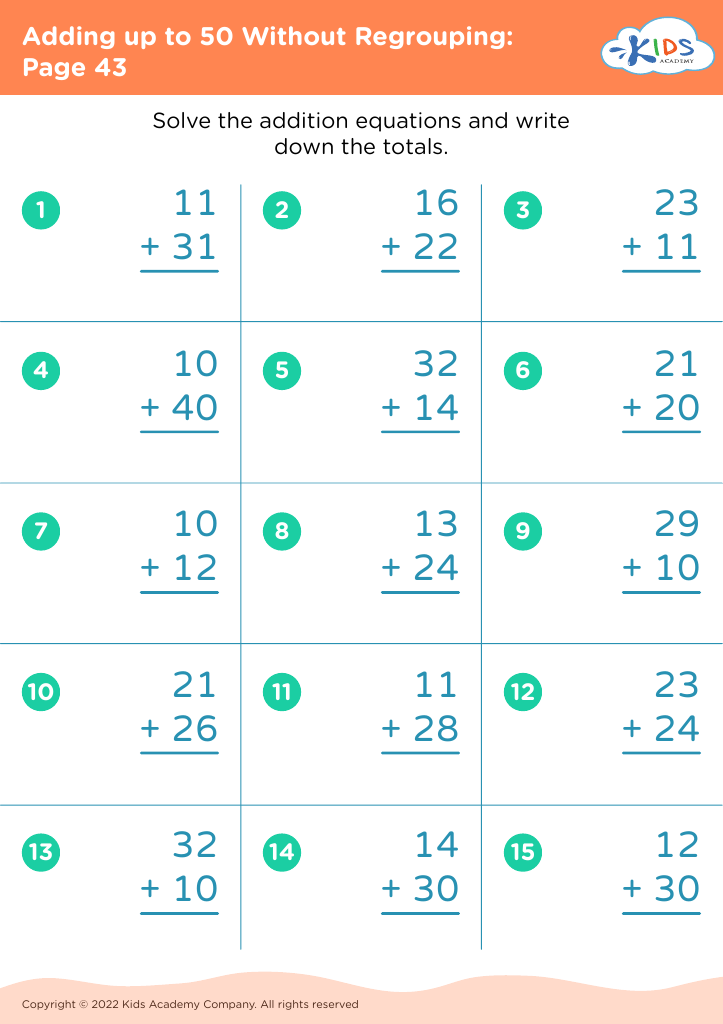
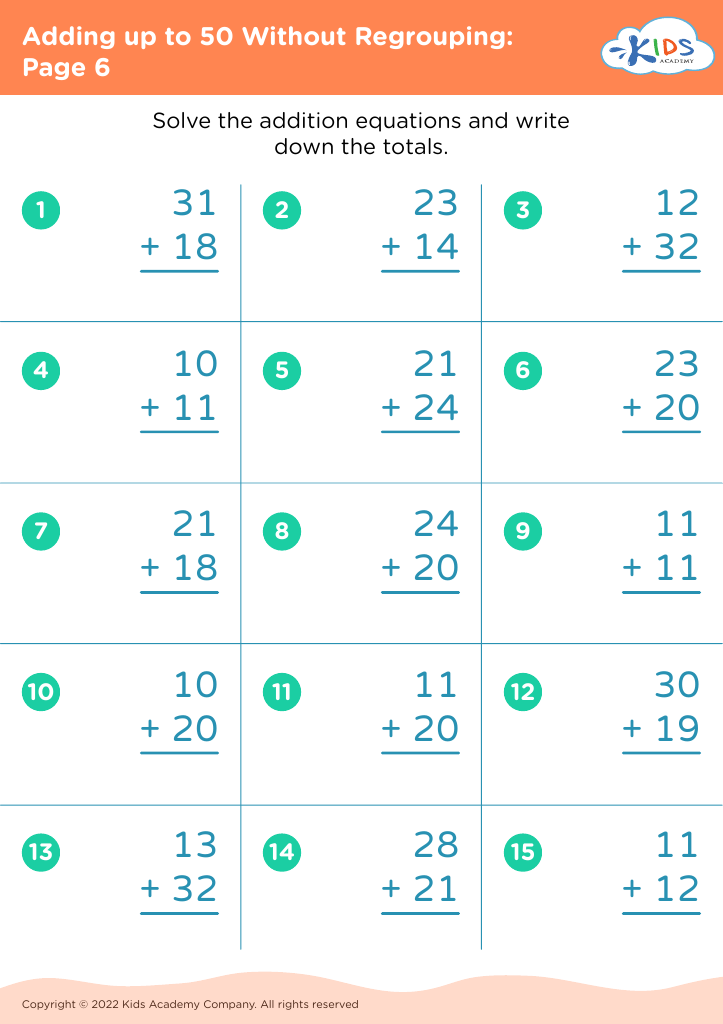
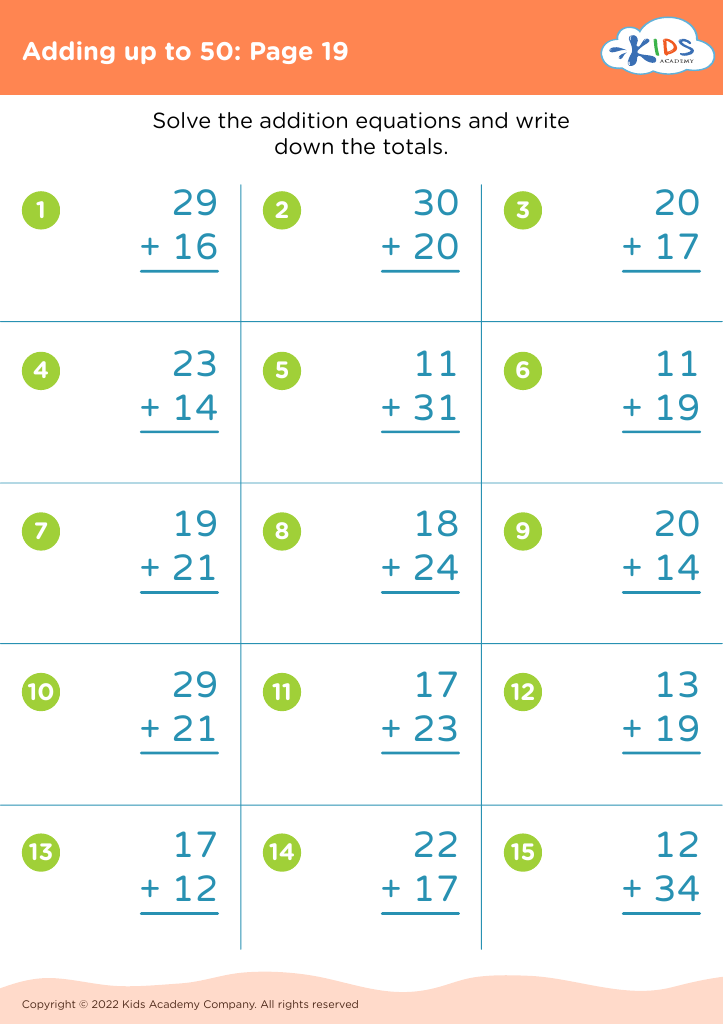
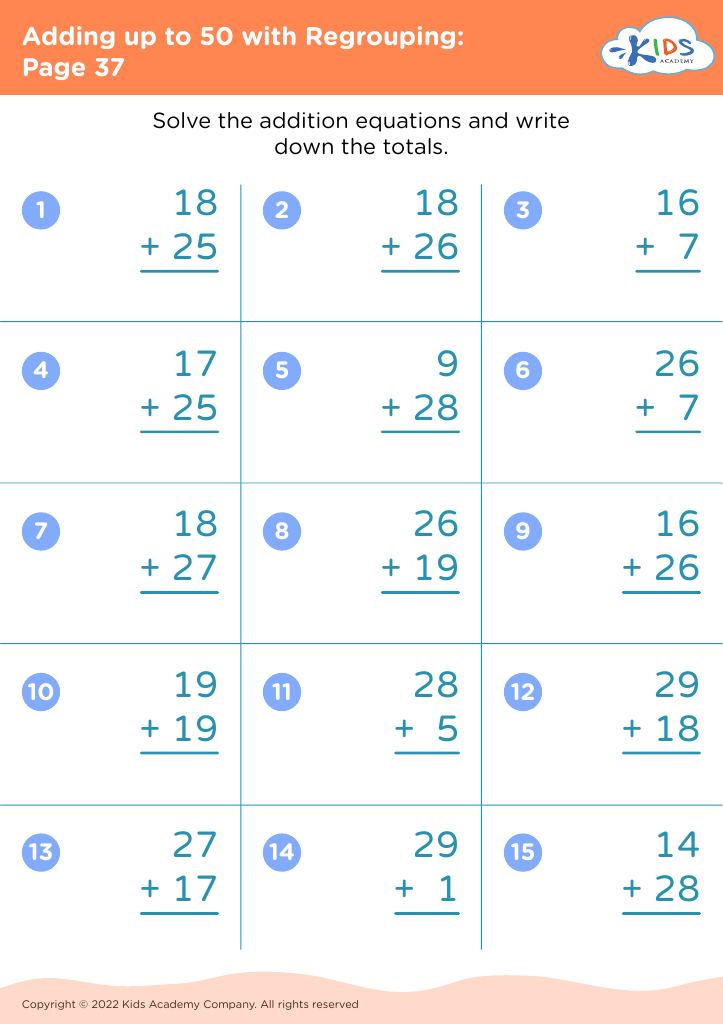
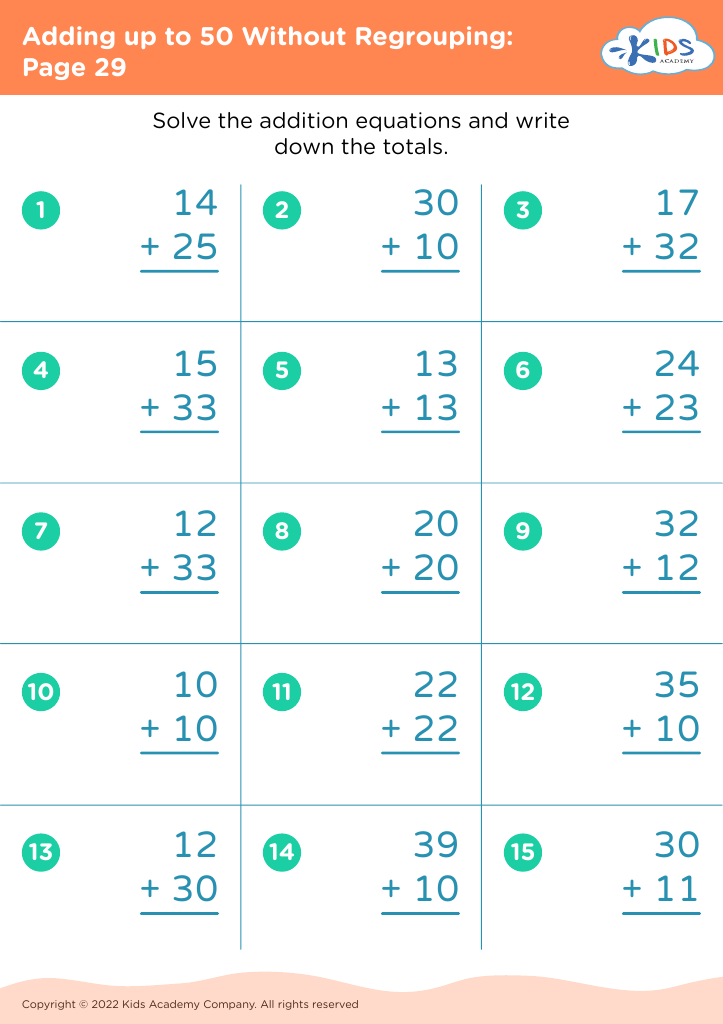
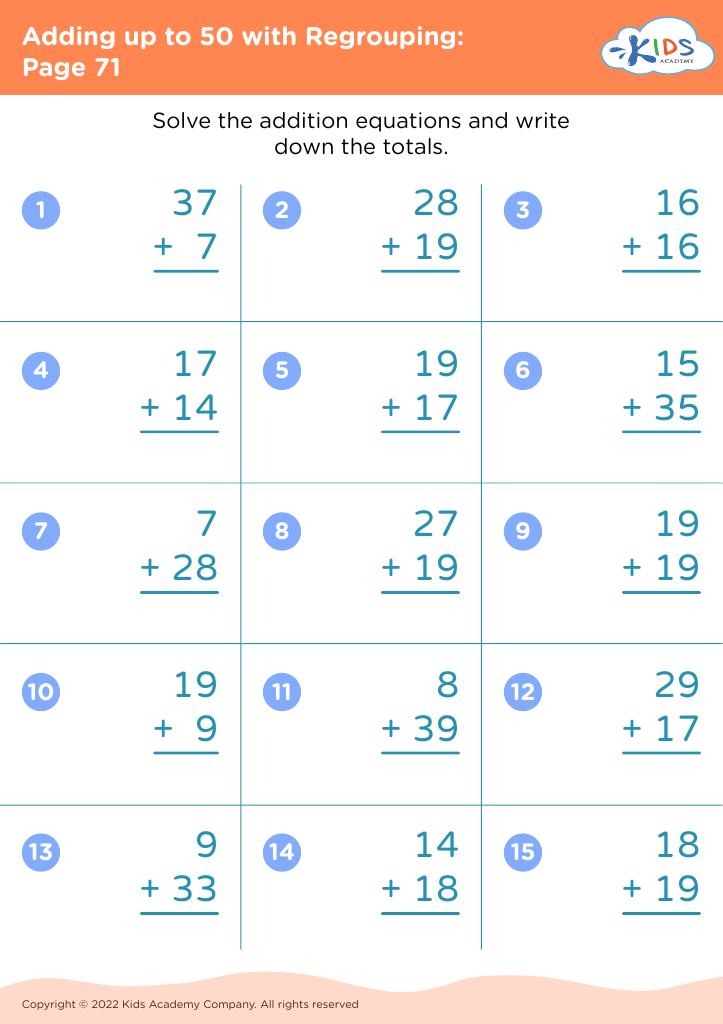




Recognizing patterns and understanding the concept of addition are foundational skills in early mathematics development, particularly for children aged 3-8. When parents and teachers focus on activities that involve recognizing patterns and adding up to 50, they are helping to cultivate critical cognitive skills in children.
Firstly, recognizing patterns enhances children's ability to predict and organize information, vital for problem-solving. It fosters logical thinking, as they learn to identify relationships between numbers and find solutions. This skill lays the groundwork for advanced concepts in math, such as algebra, which rely on patterns.
Moreover, learning to add up to 50 encourages children to work with numbers in a manageable range, bolstering their numerical fluency. This foundational number sense is essential for everyday mathematics, aiding in situations like counting money, telling time, or understanding measurements.
Engaging children in playful, hands-on activities that involve patterns and addition not only makes learning enjoyable but also boosts their confidence in math. Ultimately, fostering these skills empowers children to approach more complex mathematical concepts with a solid understanding, setting them on a path to academic success and lifelong learning. Therefore, parents and teachers play a crucial role in nurturing these early mathematical competencies.








