Recognizing shapes Adding up to 50 Worksheets for Ages 3-8
8 filtered results
-
From - To
Explore our engaging "Recognizing Shapes Adding up to 50 Worksheets" designed for children ages 3-8. These captivating, printable worksheets blend essential math skills with fun shape recognition activities to help your child develop foundational abilities. Through playful exercises, your little ones will enhance their mathematical understanding and boost their problem-solving skills while enjoying interactive learning. Our worksheets are perfect for both classroom settings and at-home practice, ensuring a well-rounded educational experience. By combining shapes and addition up to 50, we create a dynamic and enjoyable learning journey. Download now to stimulate your child's curiosity and confidence in math.
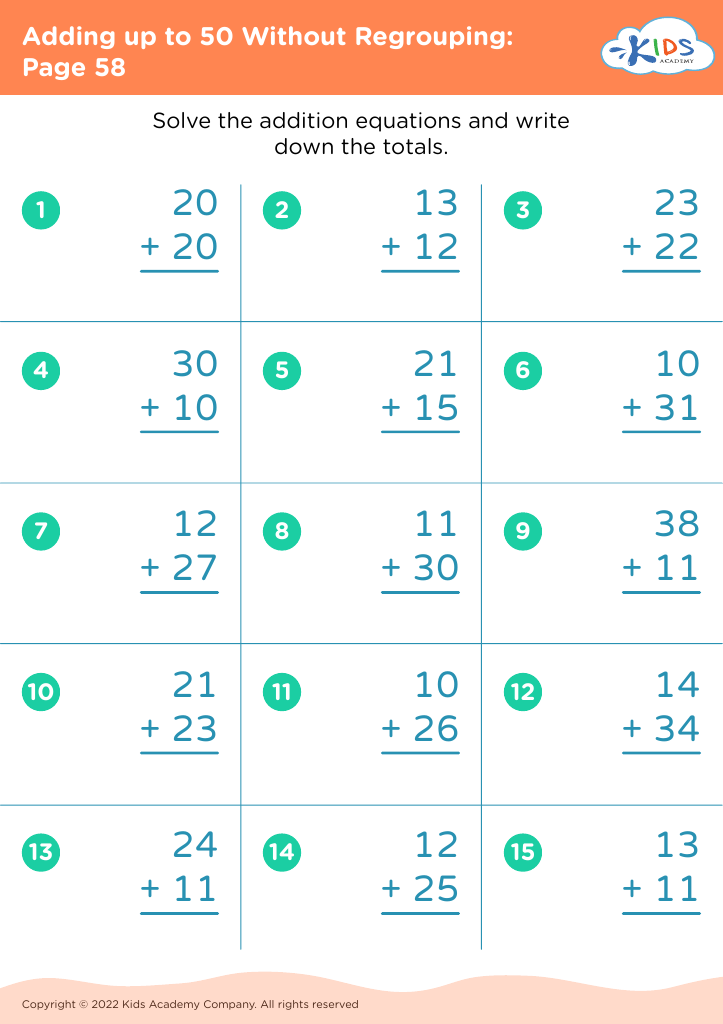
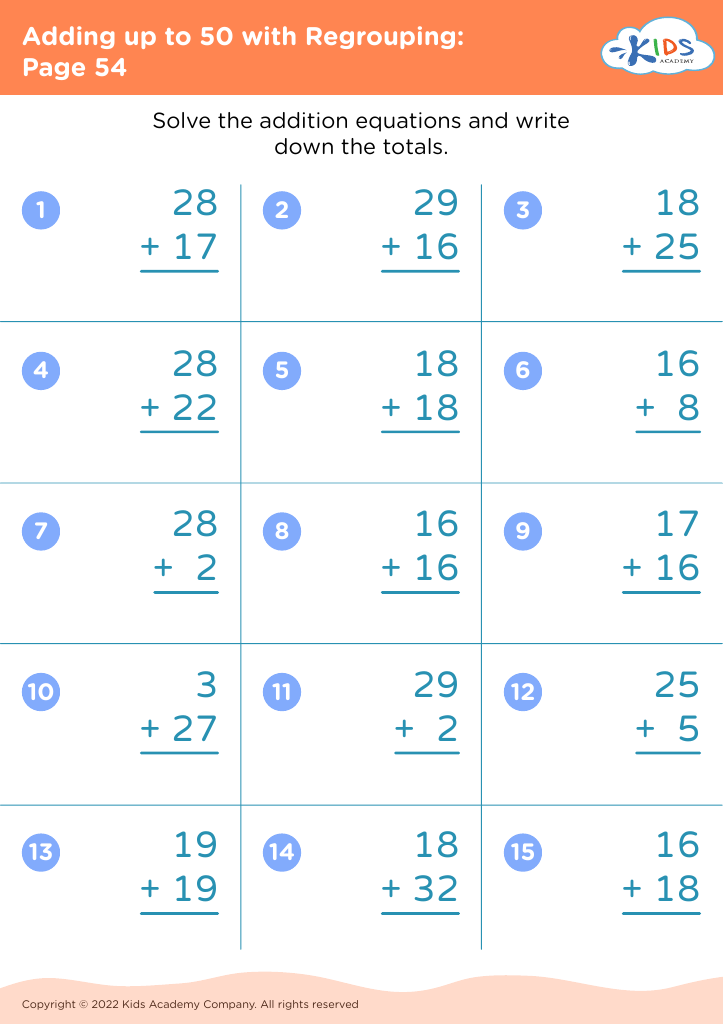
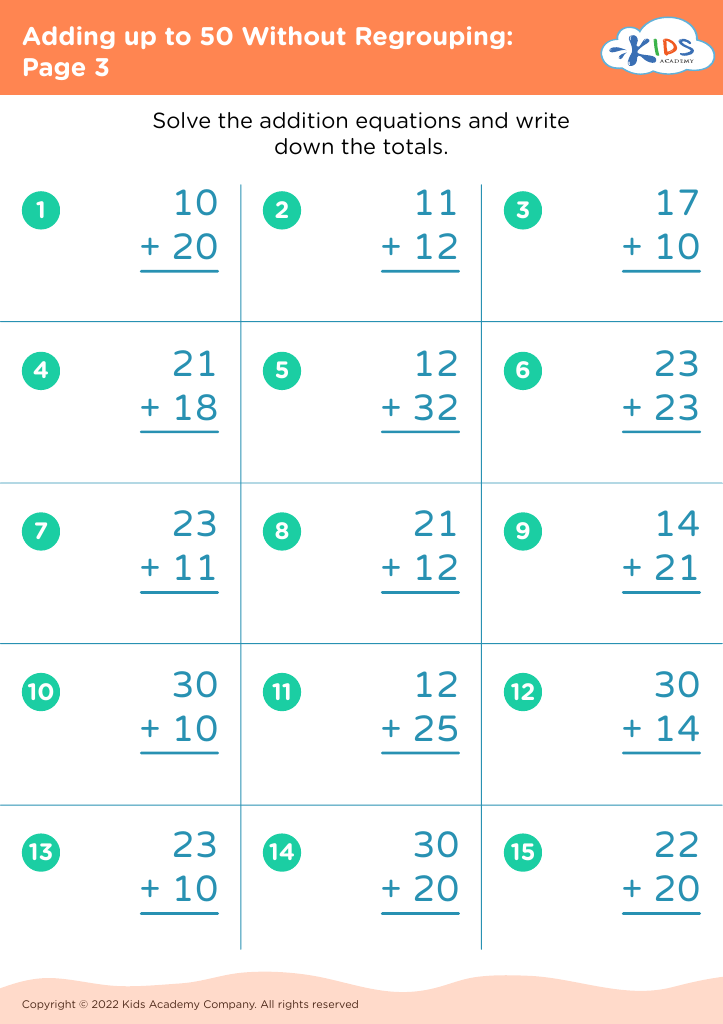
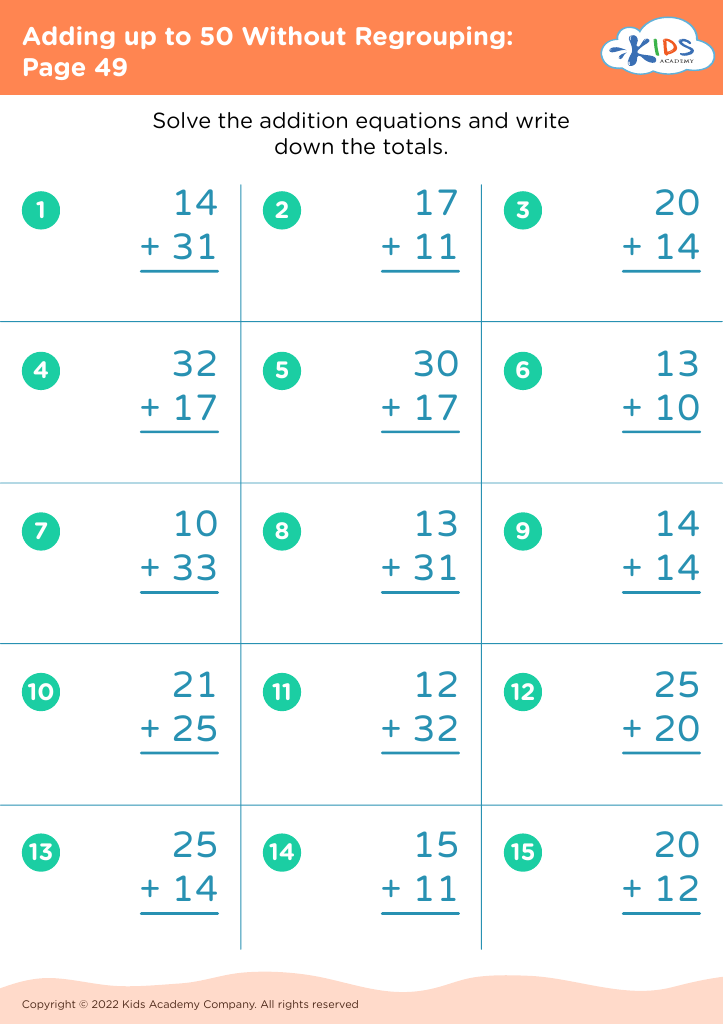
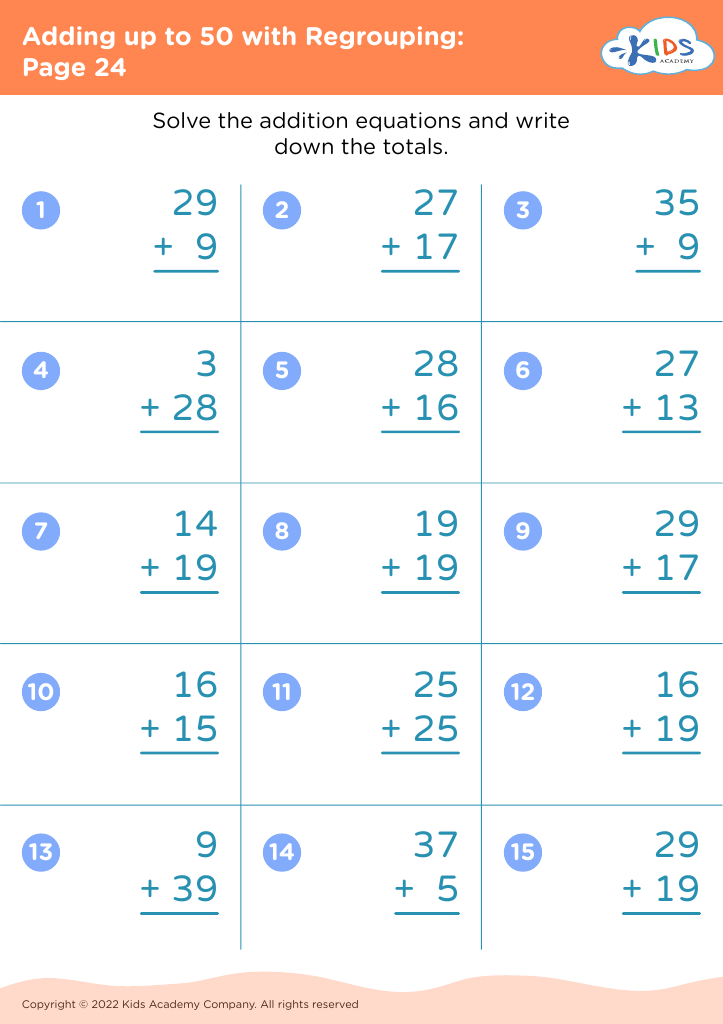
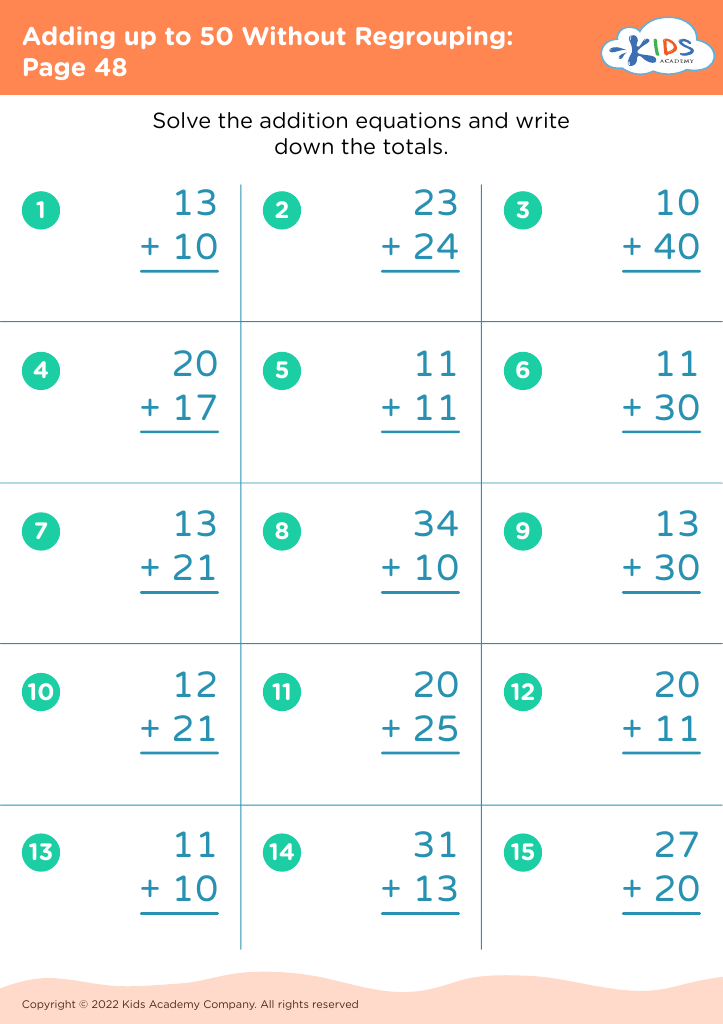
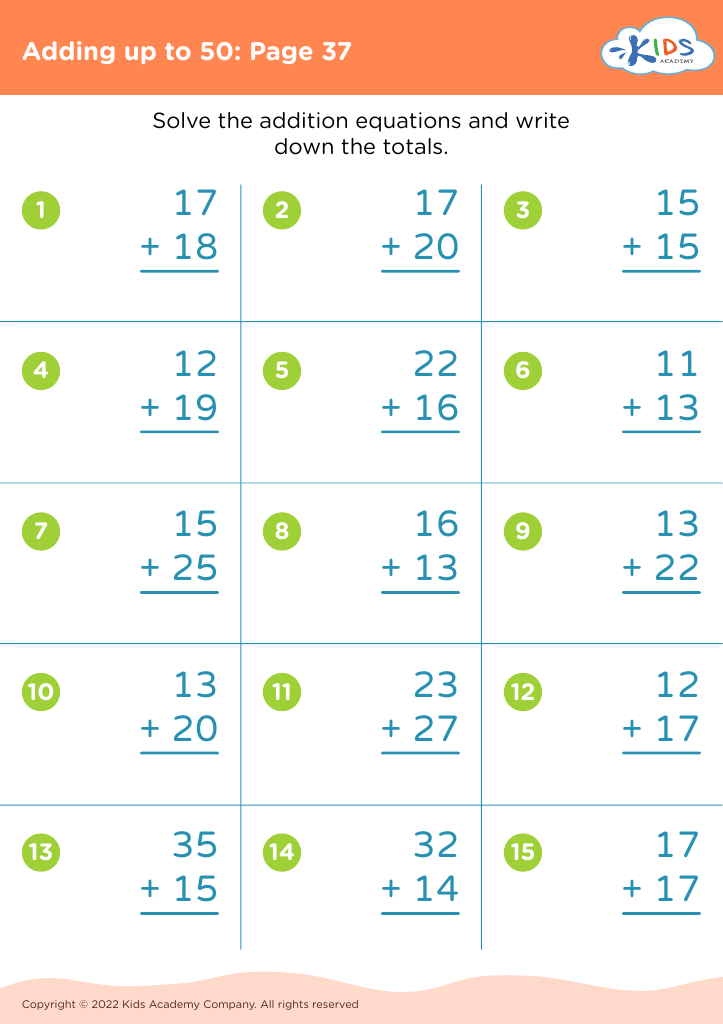
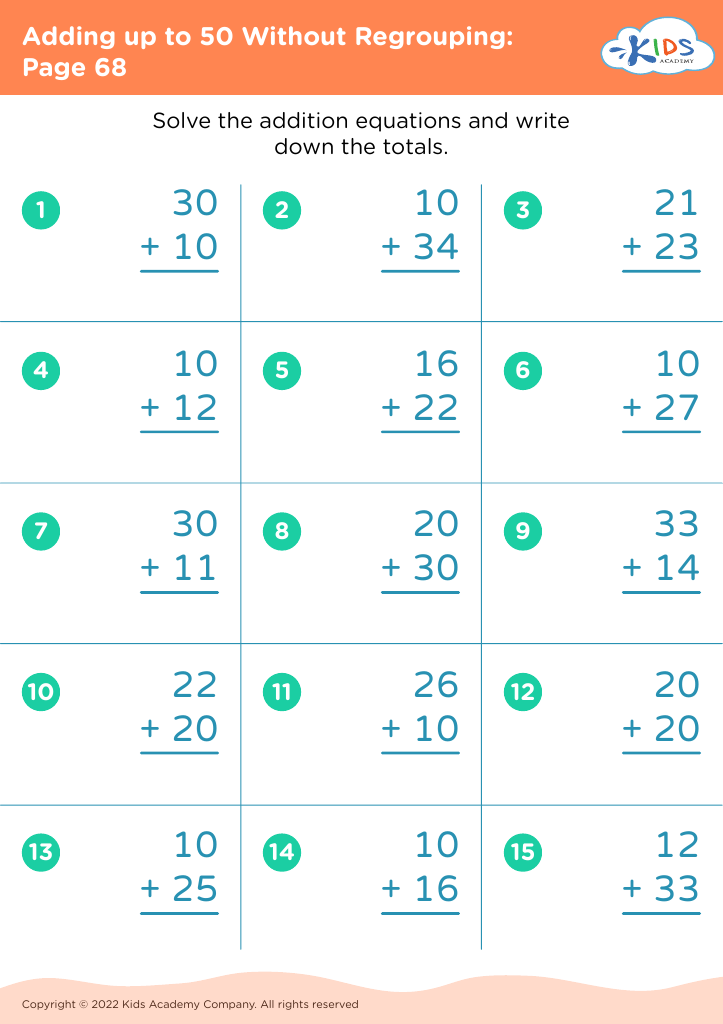




Recognizing shapes and adding up to 50 are foundational skills that play vital roles in a child's early development. For children aged 3-8, these activities are more than just academic exercises; they are gateways to enhancing cognitive, motor, and social skills.
Recognizing shapes helps children understand the basic properties of objects in their environment, fostering spatial awareness and visual discrimination. These skills are fundamental for problem-solving and reasoning abilities, crucial for subjects like science and engineering. Moreover, shape recognition encourages creativity and fine motor skills through drawing, building, and sorting activities, thereby integrating learning with play.
Adding up to 50 fosters number sense, understanding quantity, and the concepts of addition and subtraction. Mastery of these skills is essential for progressing in mathematics. Basic arithmetic enhances logical thinking and empowers children with the confidence to tackle more complex mathematical challenges. Furthermore, incorporating counting and simple math into everyday tasks, like setting the table or measuring ingredients for a recipe, makes learning relevant and practical.
In essence, understanding shapes and basic arithmetic provides children with critical thinking tools, improves their academic performance, and stimulates creative, mathematical, and analytical capacities, setting a strong foundation for lifelong learning and problem-solving. Recognizing the importance of these skills helps parents and teachers support holistic development, equipping children for future success.








