Shape Recognition Adding up to 50 Worksheets for Ages 3-8
9 filtered results
-
From - To
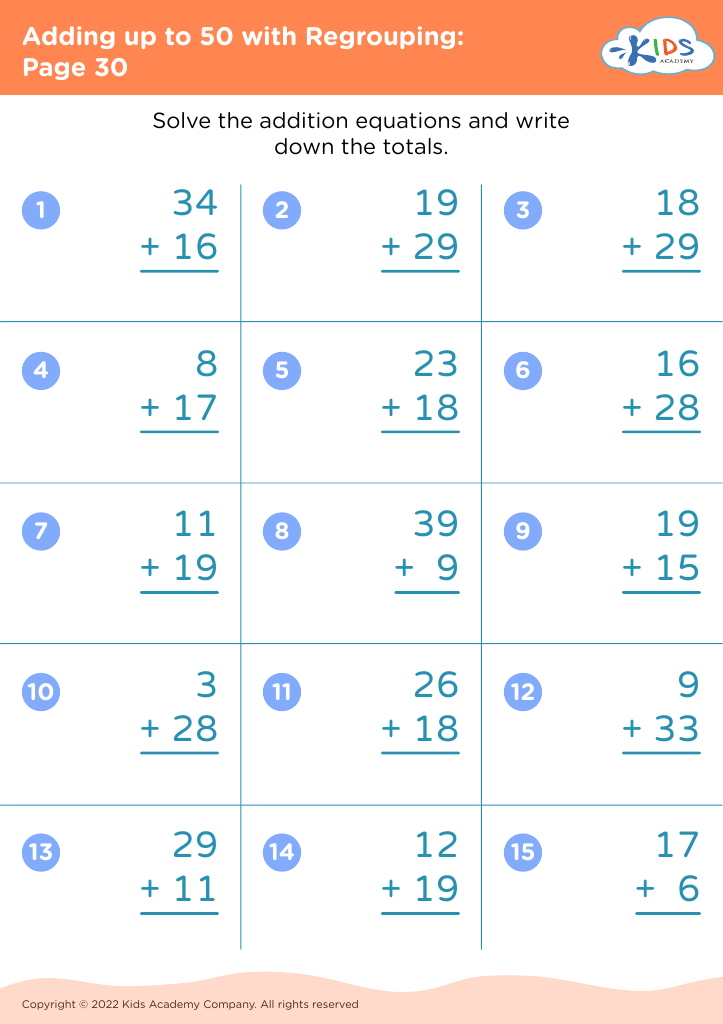
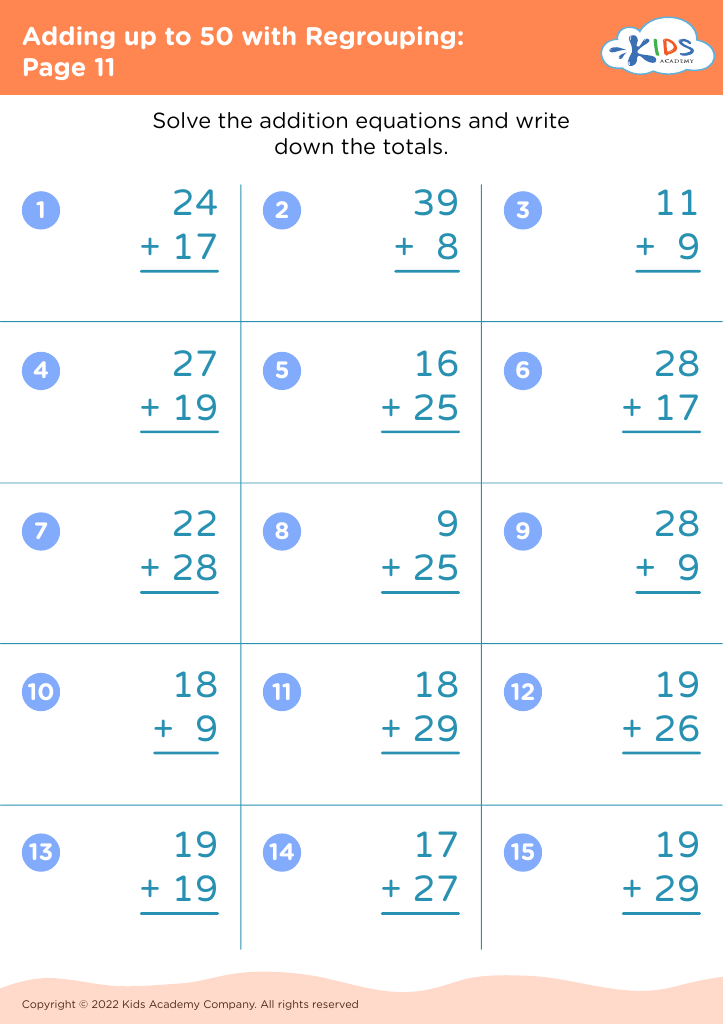
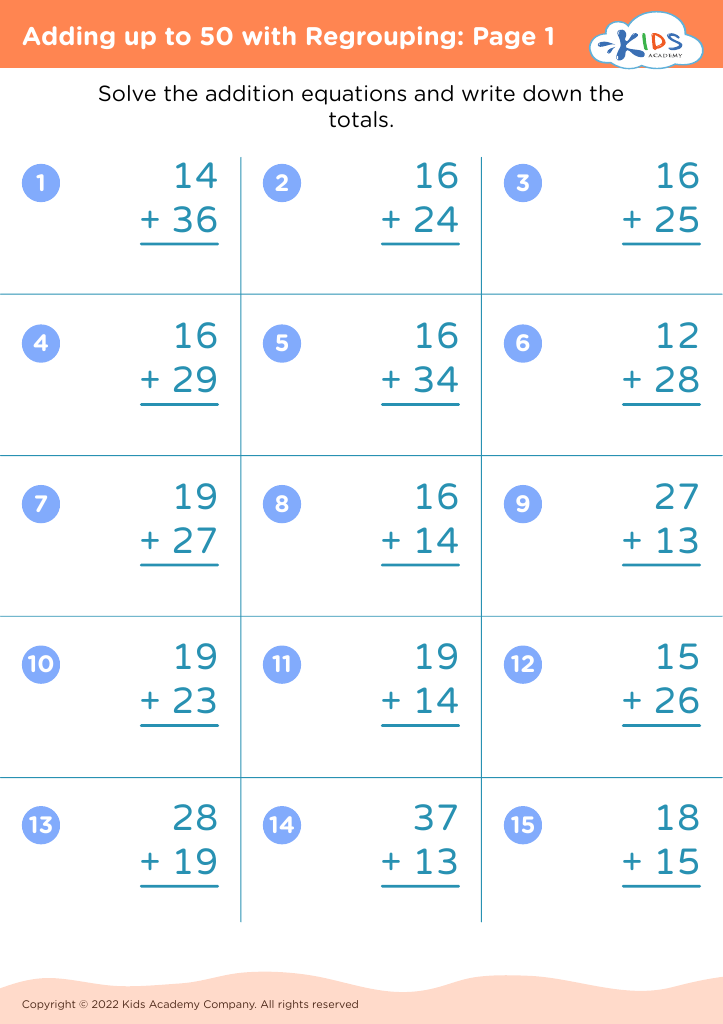
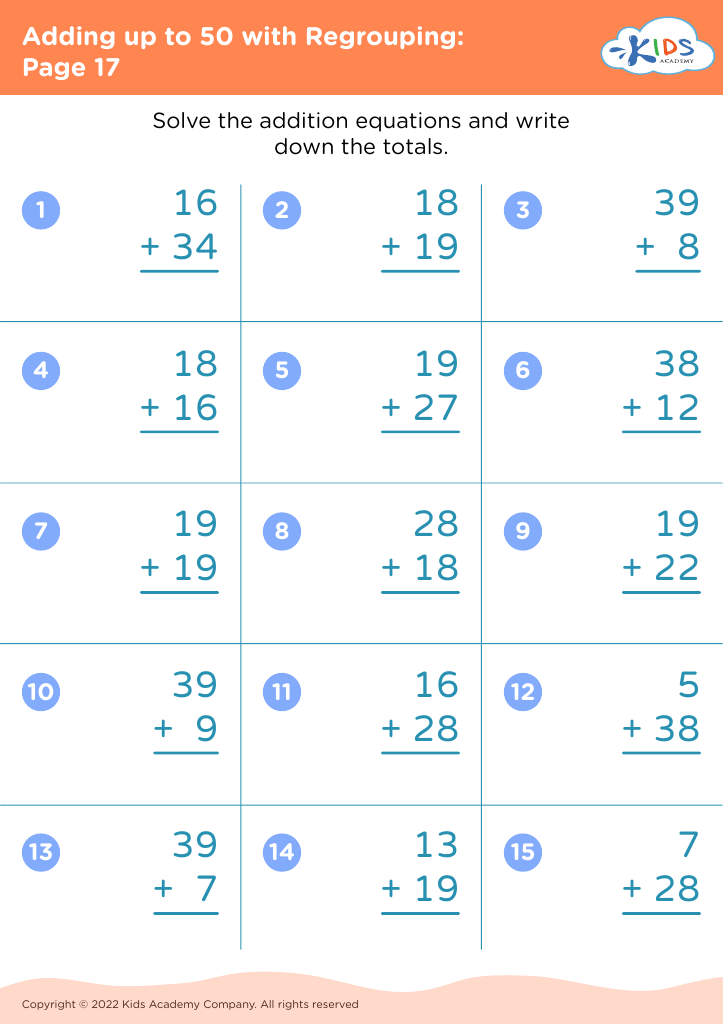
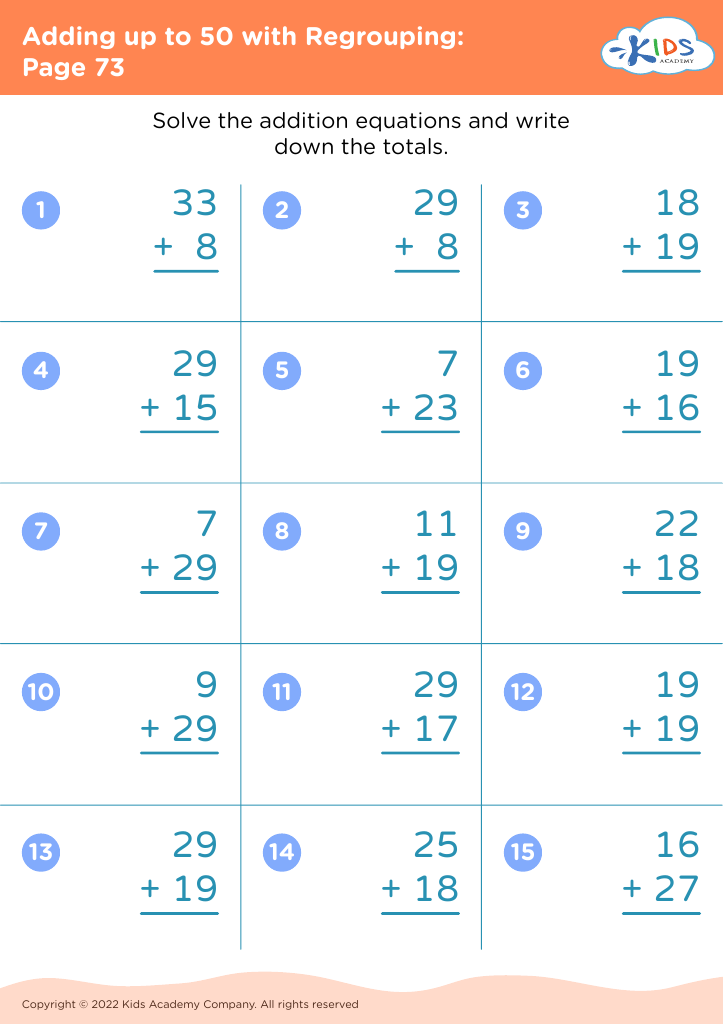
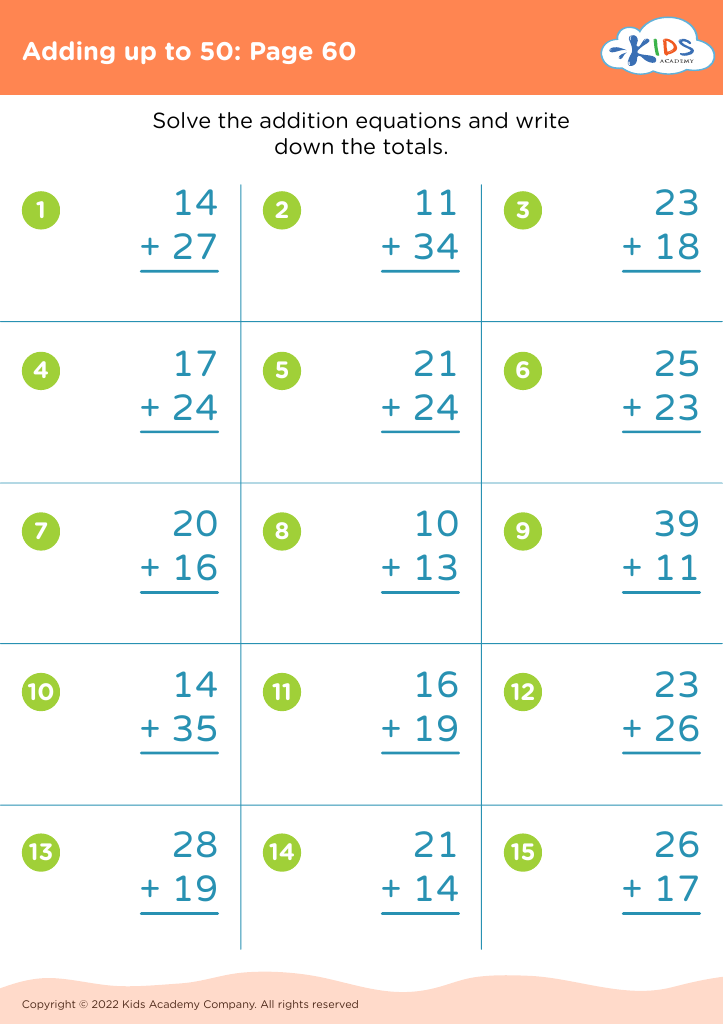
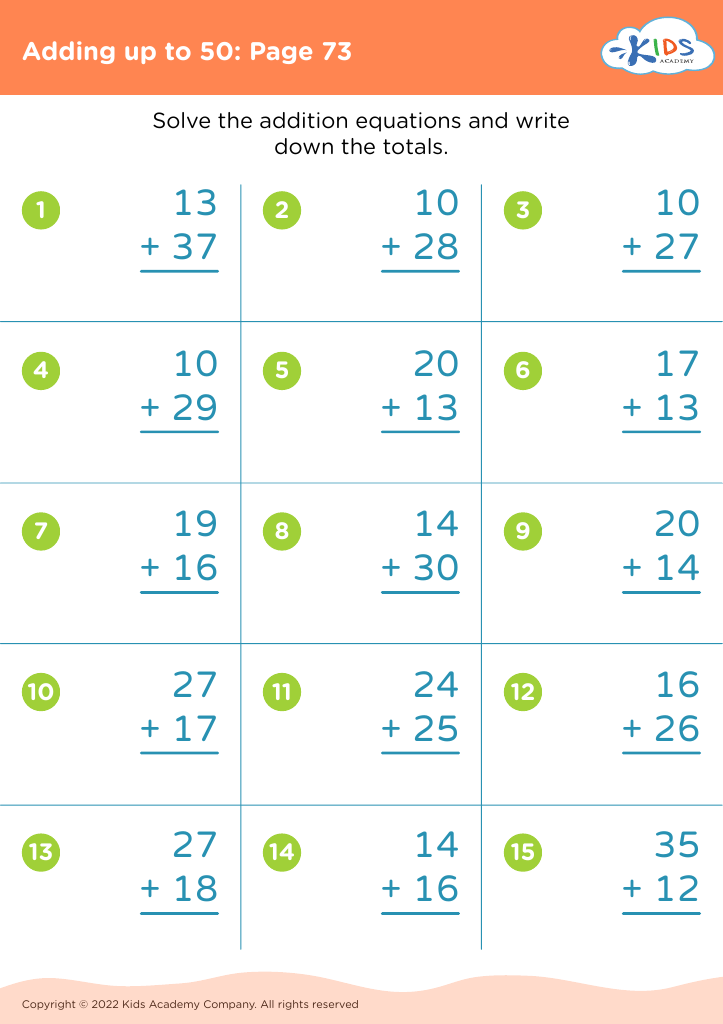
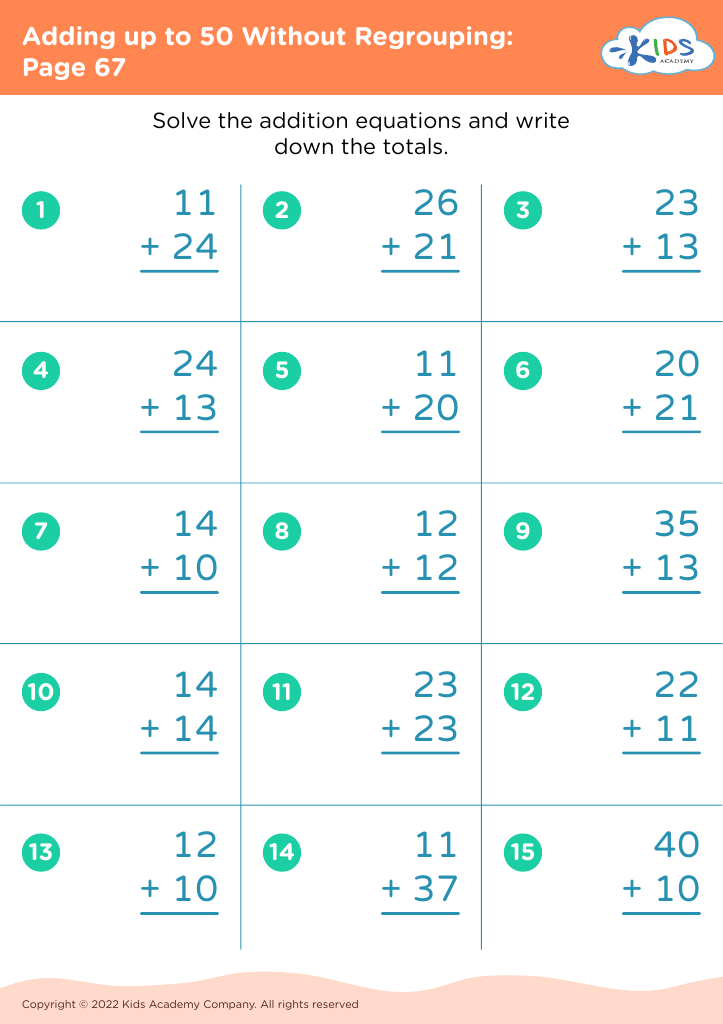
Boost your child’s math and shape recognition skills with our "Shape Recognition Adding up to 50 Worksheets" designed for ages 3-8. Our engaging and educational worksheets combine fun shape identification activities with early addition practice. Each worksheet challenges young learners to recognize and count shapes, then sum up the numbers to promote both mathematical and cognitive development. With vibrant images and interactive exercises, these worksheets make learning accessible and enjoyable. They’re perfect for at-home practice or classroom use, providing a solid foundation in math skills. Transform math time into fun time with our expertly crafted worksheets!
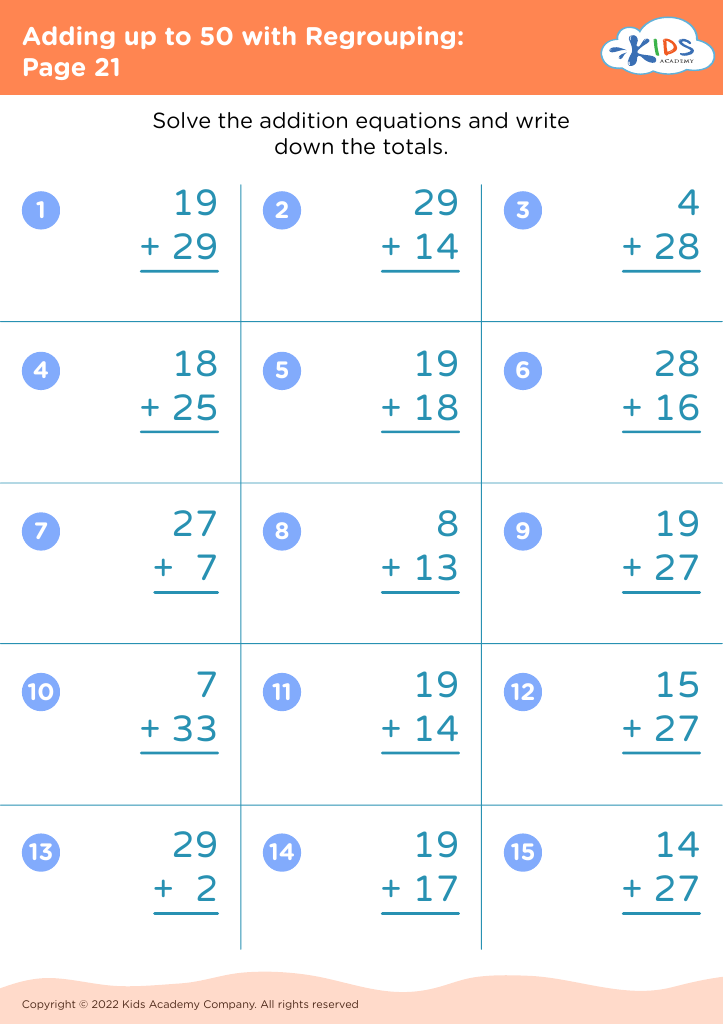




Shape recognition and counting up to 50 play crucial roles in early childhood development for children aged 3-8. Understanding shapes goes beyond simply identifying circles, squares, and triangles; it fosters spatial awareness, a fundamental skill for logical thinking and problem-solving. Recognizing shapes helps children navigate their environment and enhances their ability to understand and remember information by forming visual representations of concepts.
Integrating counting up to 50 enriches mathematical comprehension from a young age, laying a foundation for arithmetic skills critical in subsequent educational stages. When children are proficient in shape recognition and counting, they inherently start understanding patterns and sequences—key concepts in math and science.
Moreover, engaging in these activities develops fine motor skills, as children often manipulate physical objects or use writing tools during learning. Enhancing these motor skills is crucial for everyday tasks like writing and tying shoelaces. Emotional benefits include boosting confidence and independence as kids conquer each learning milestone.
From this foundational knowledge, children learn to categorize and sort, skills applicable in all academic and real-life scenarios. Therefore, parents and teachers should prioritize these educational building blocks; they are essential not just academically but for overall cognitive and motor development.








