Filters

47 filtered results

Clear all filters
Favorites
With answer key
Interactive

47 filtered results

Difficulty Level

Grade


Check out this FREE Trial Lesson on Adding up to 50 for age 3-8!

Match Objects that Fit Together

Favorites
With answer key
Interactive
  • 3-8
  • Understanding fractions
  • Adding up to 50
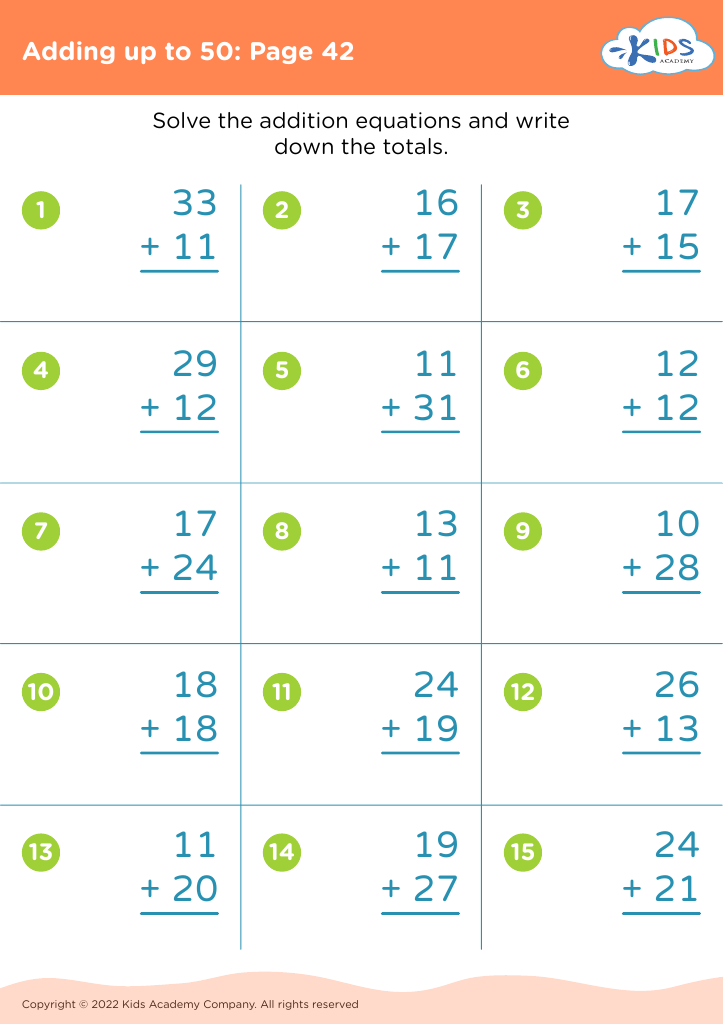
Adding up to 50: Page 42

Adding up to 50: Page 42

Adding up to 50: Page 42
Worksheet
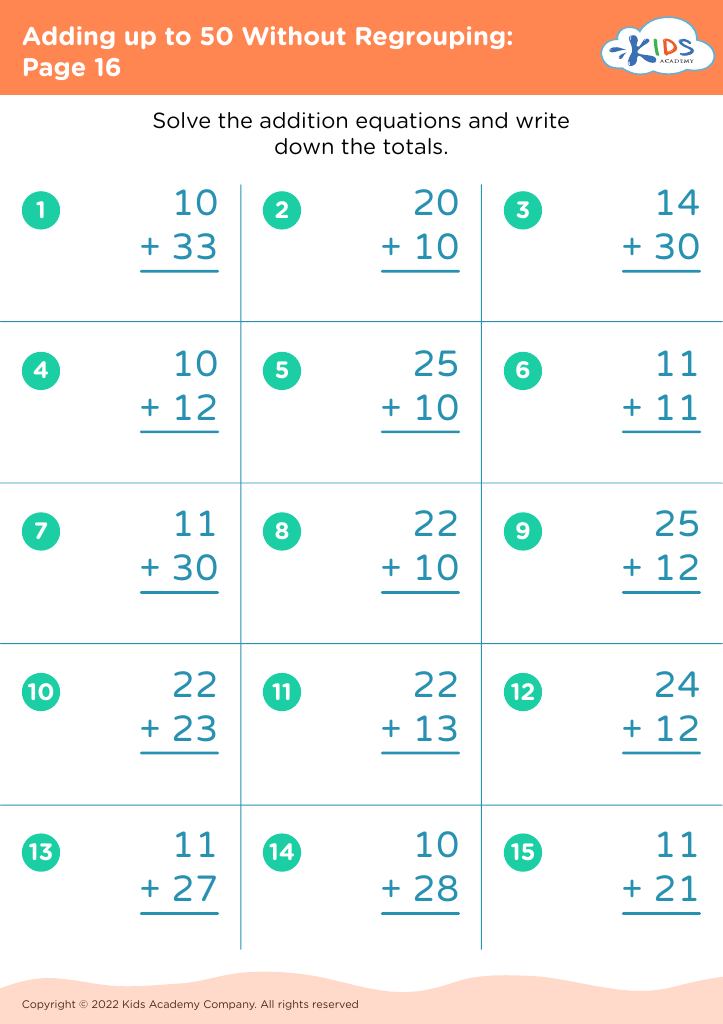
Adding up to 50 Without Regrouping: Page 16
Worksheet
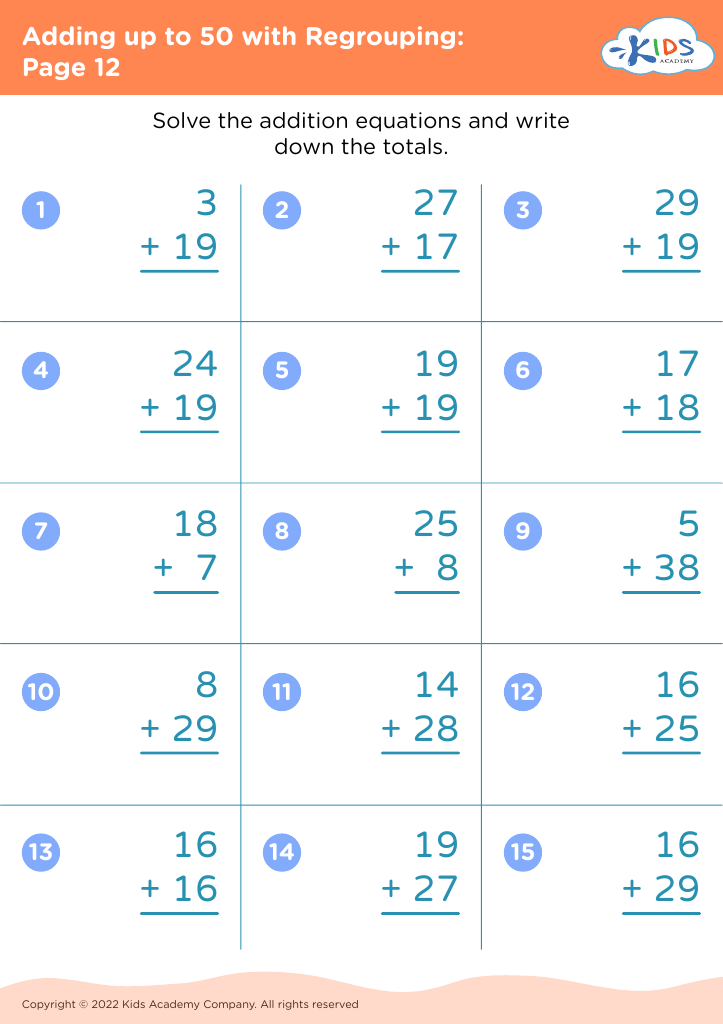
Adding up to 50 with Regrouping: Page 12
Worksheet
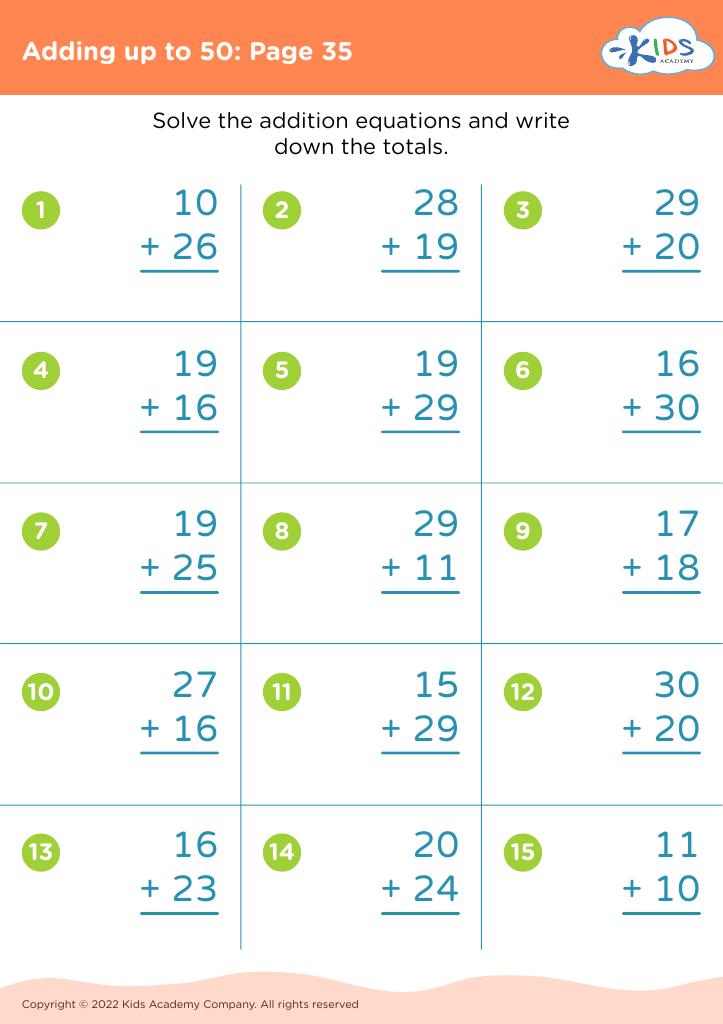
Adding up to 50: Page 35

Adding up to 50: Page 35

Adding up to 50: Page 35
Worksheet
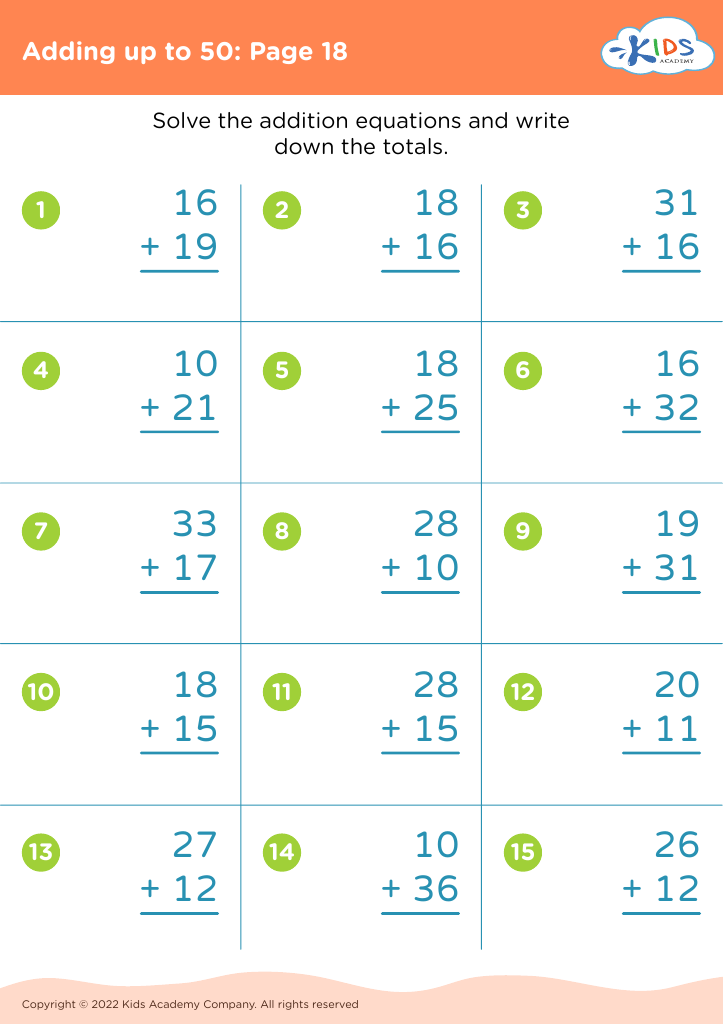
Adding up to 50: Page 18

Adding up to 50: Page 18

Adding up to 50: Page 18
Worksheet
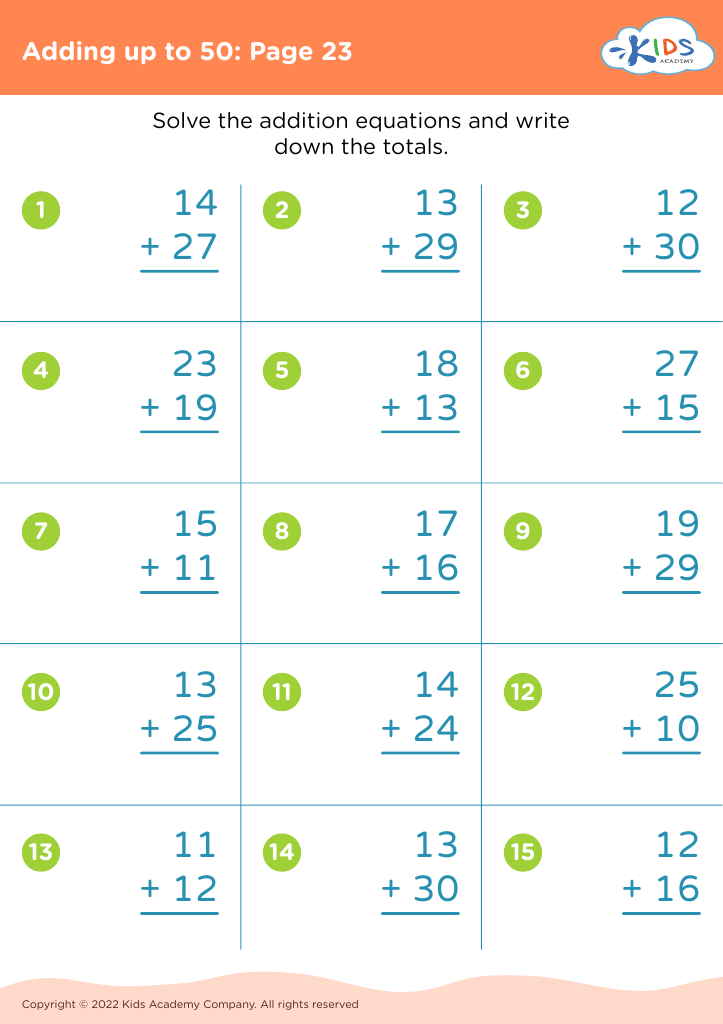
Adding up to 50: Page 23

Adding up to 50: Page 23

Adding up to 50: Page 23
Worksheet
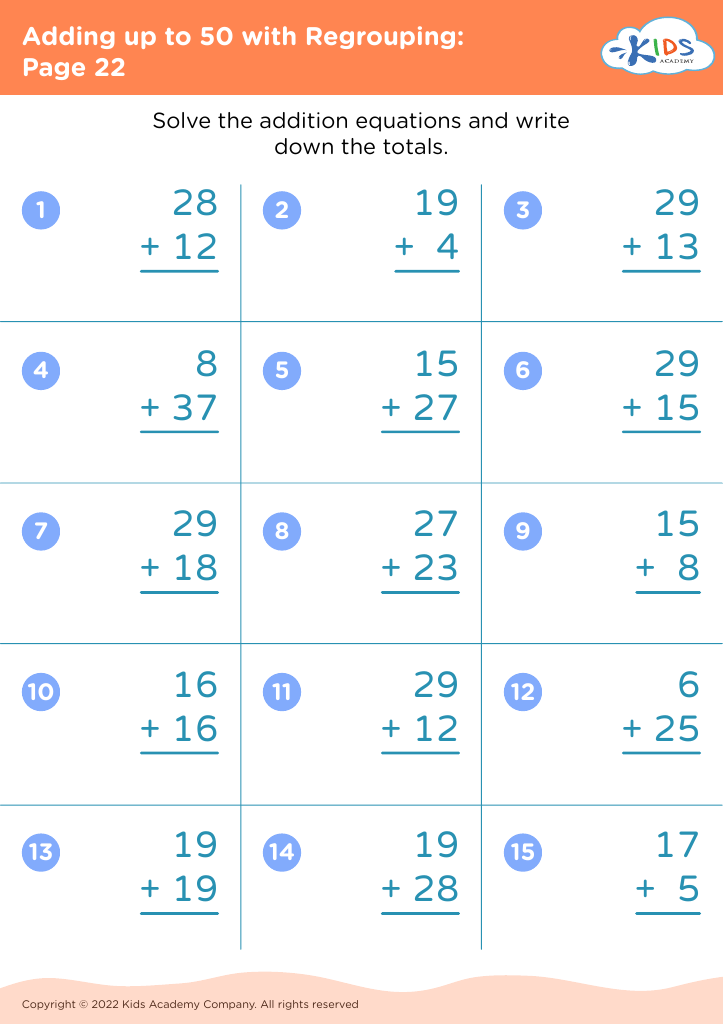
Adding up to 50 with Regrouping: Page 22
Worksheet
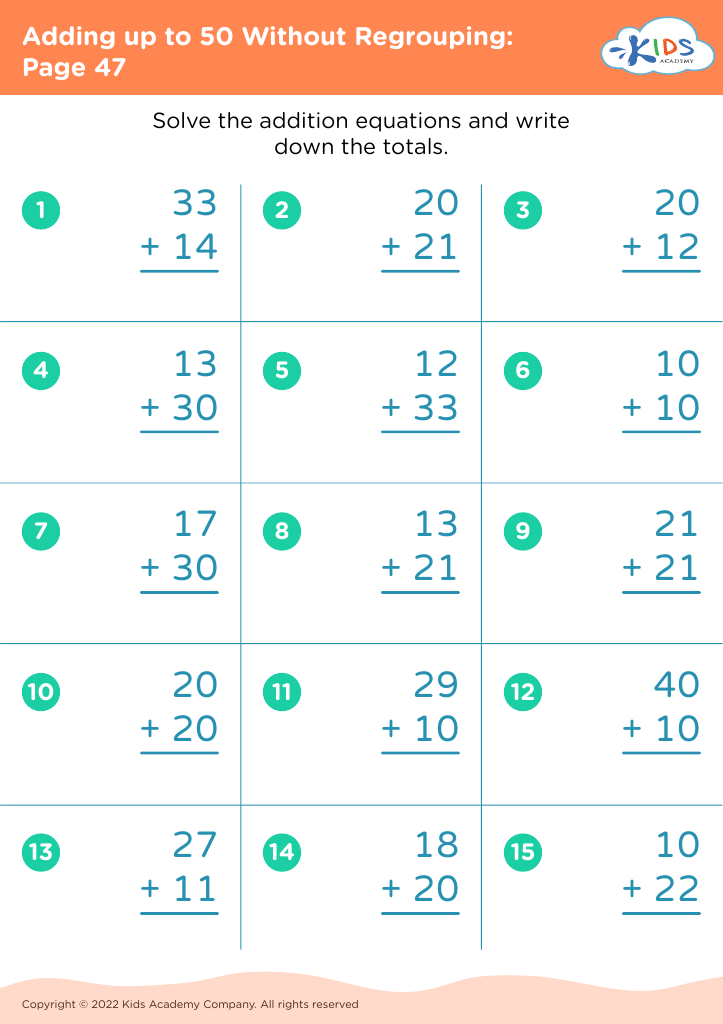
Adding up to 50 Without Regrouping: Page 47
Worksheet
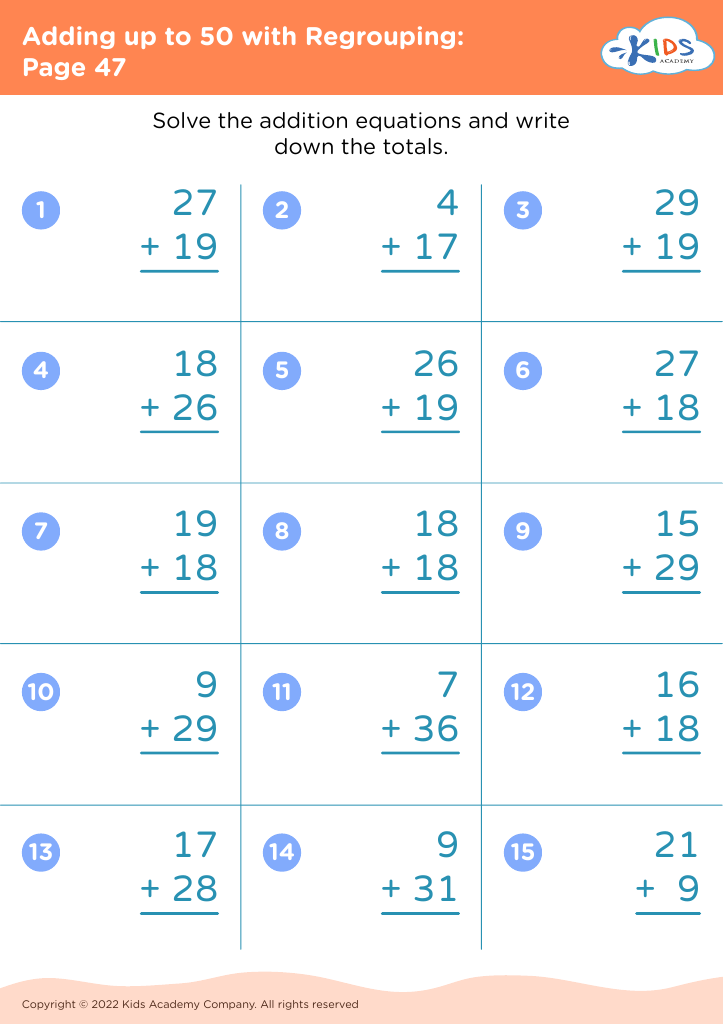
Adding up to 50 with Regrouping: Page 47
Worksheet
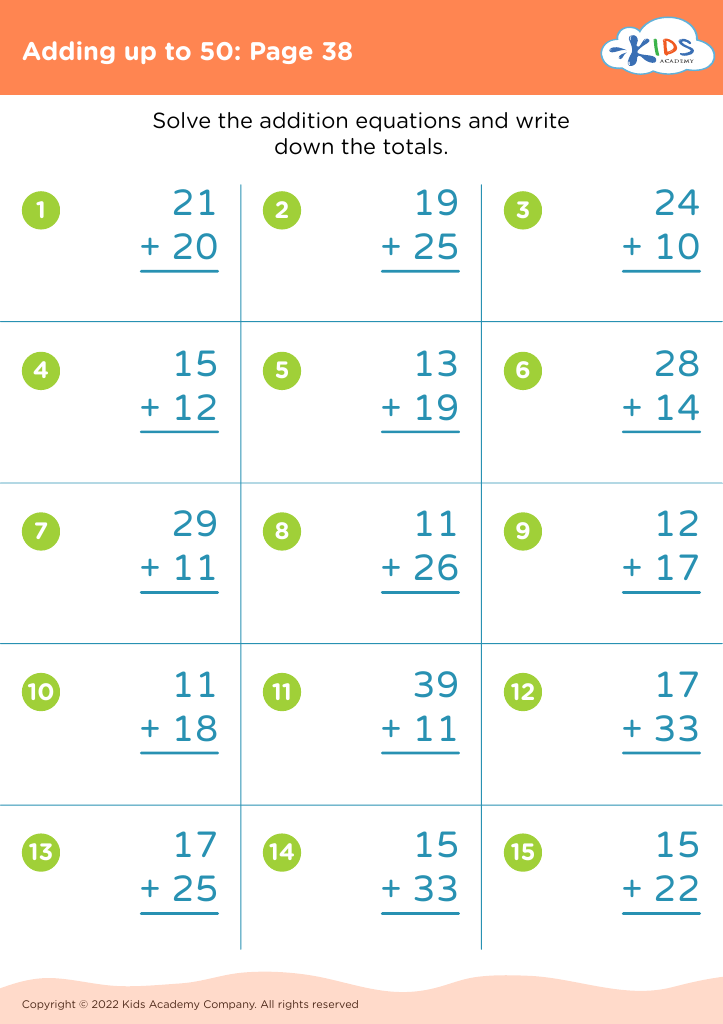
Adding up to 50: Page 38

Adding up to 50: Page 38

Adding up to 50: Page 38
Worksheet
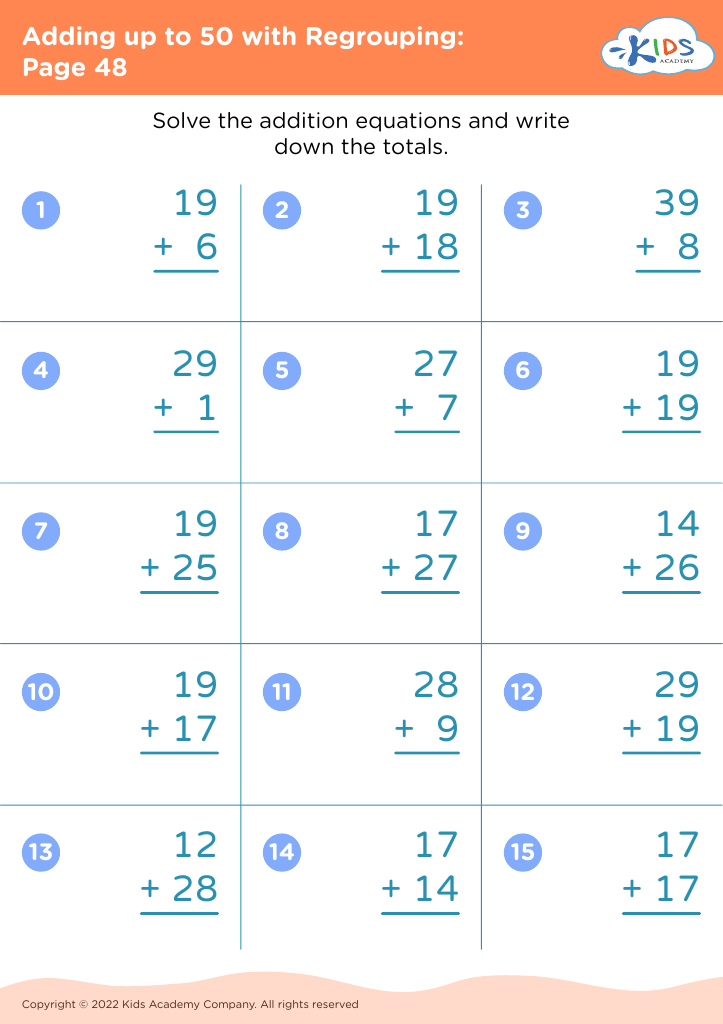
Adding up to 50 with Regrouping: Page 48
Worksheet
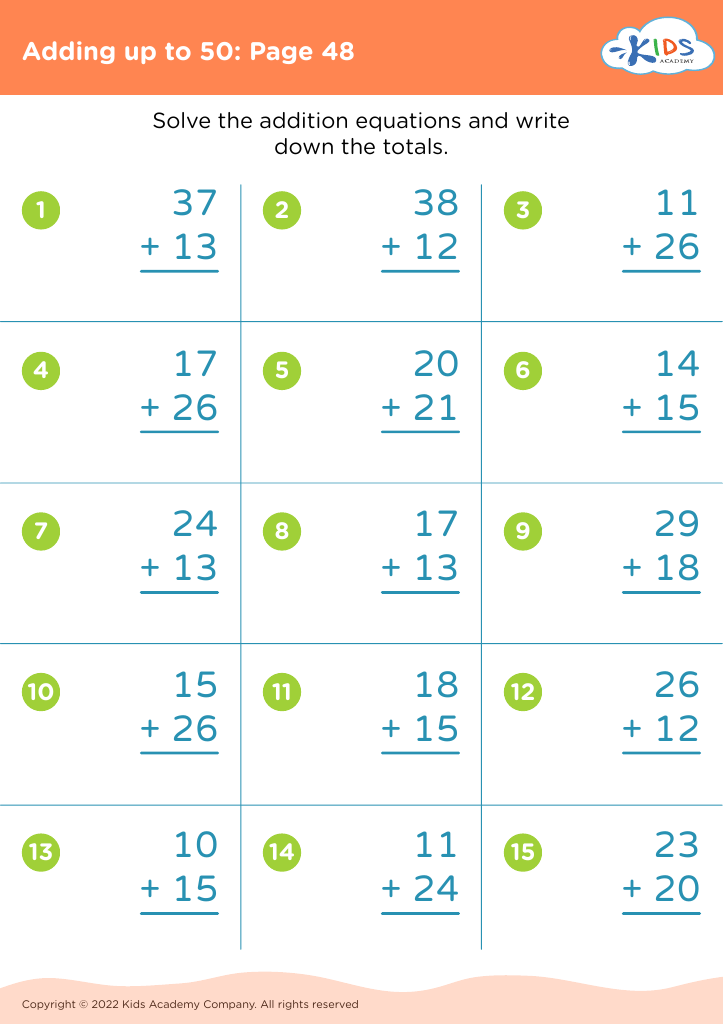
Adding up to 50: Page 48

Adding up to 50: Page 48

Adding up to 50: Page 48
Worksheet
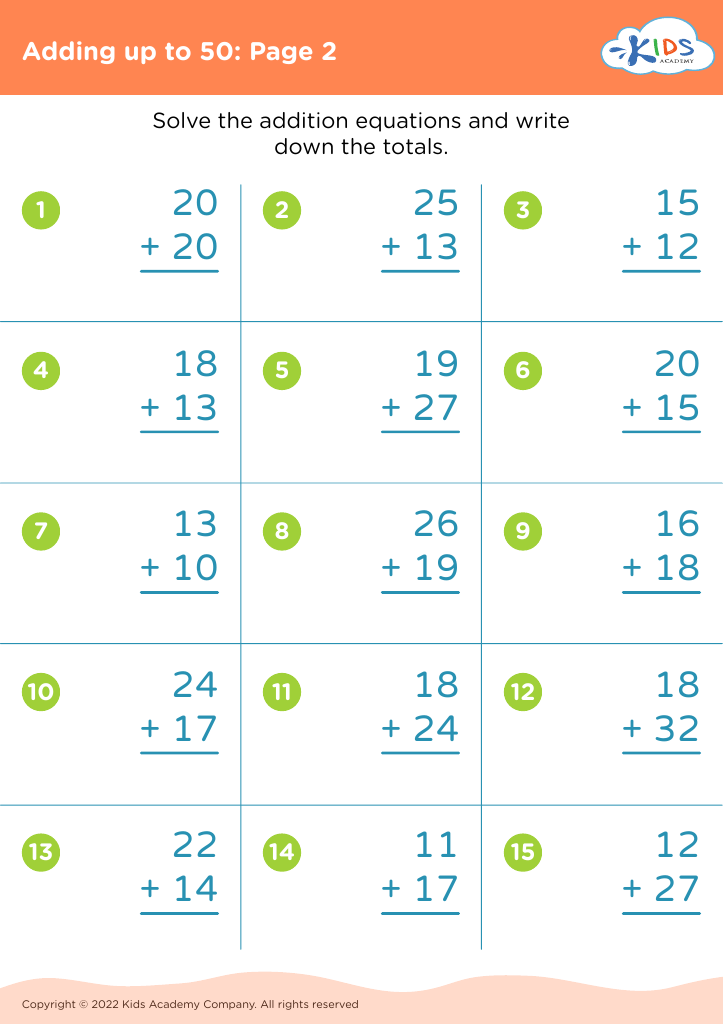
Adding up to 50: Page 2

Adding up to 50: Page 2

Adding up to 50: Page 2
Worksheet
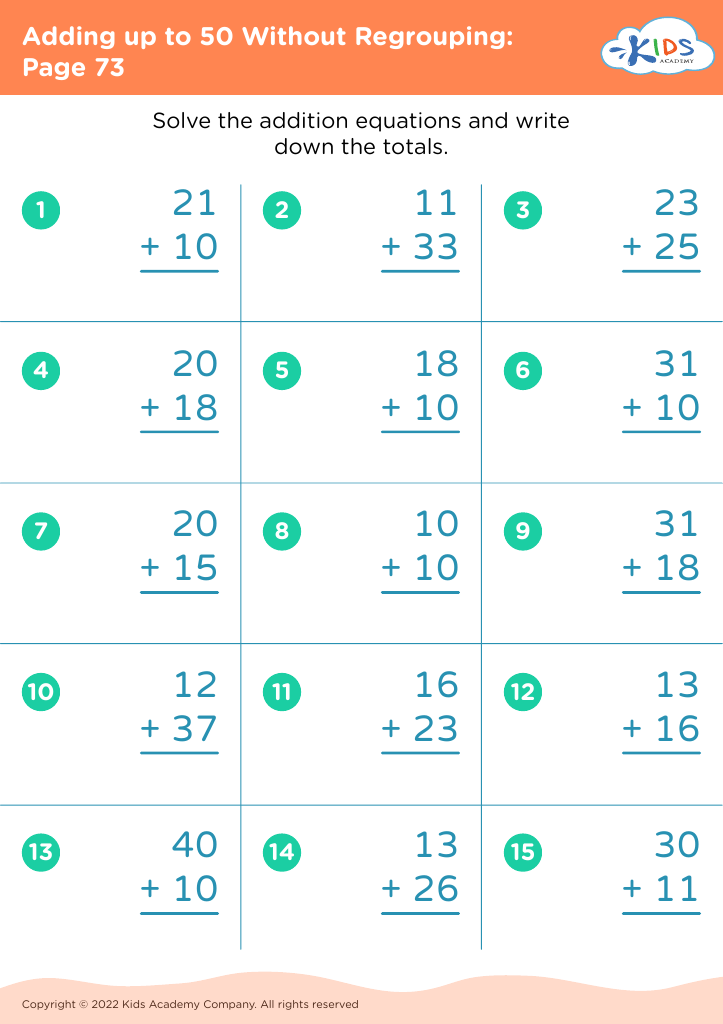
Adding up to 50 Without Regrouping: Page 73
Worksheet
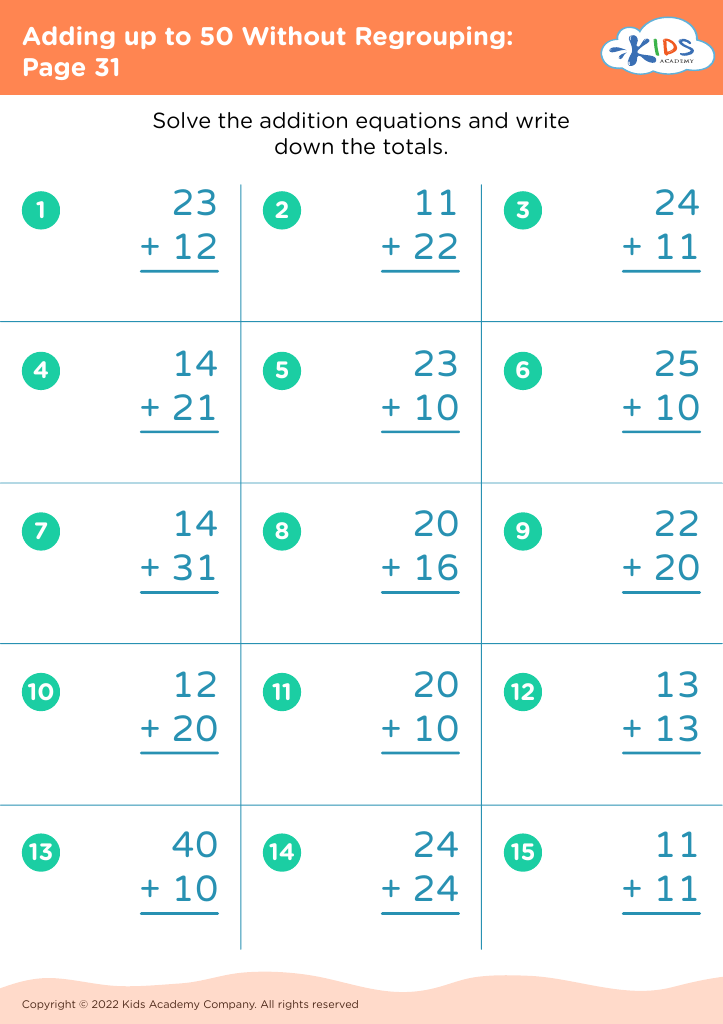
Adding up to 50 Without Regrouping: Page 31
Worksheet
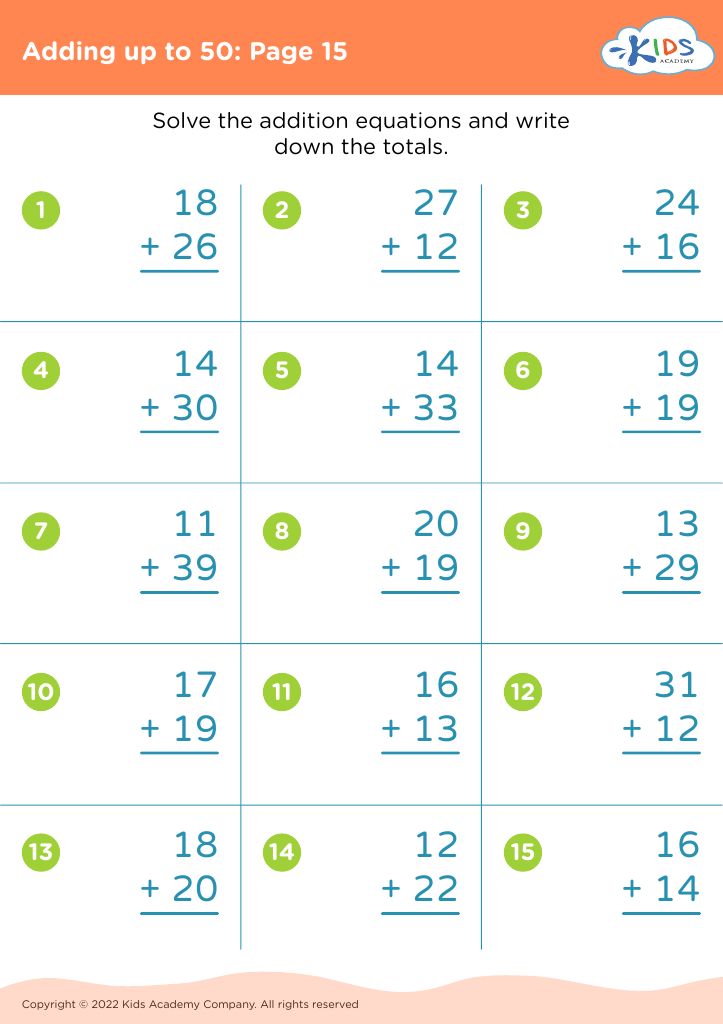
Adding up to 50: Page 15

Adding up to 50: Page 15

Adding up to 50: Page 15
Worksheet
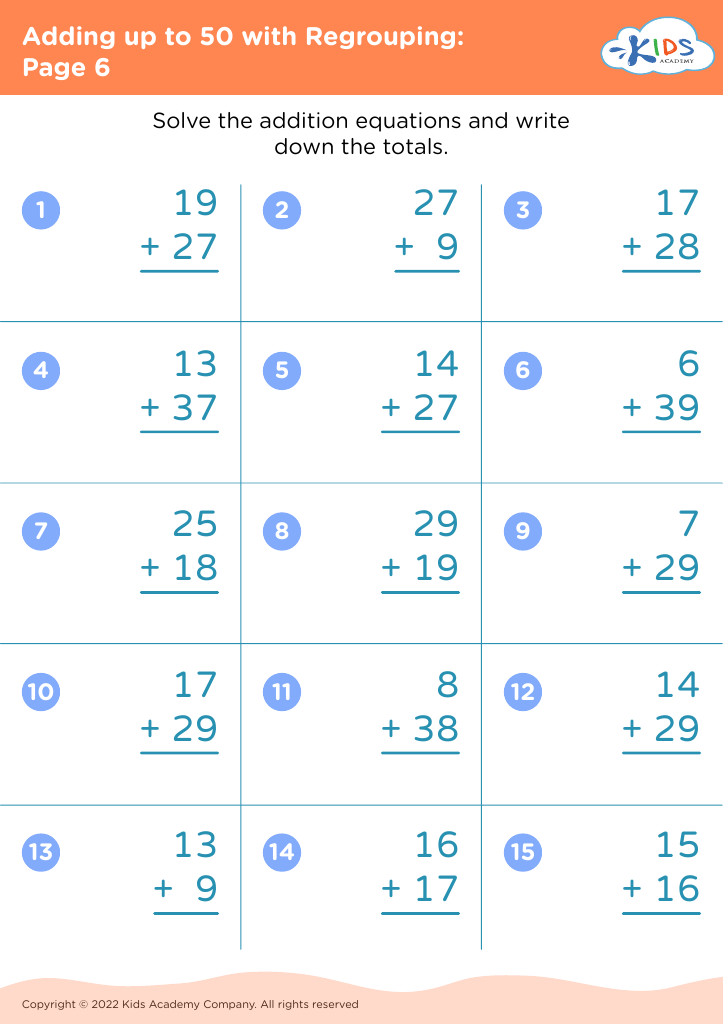
Adding up to 50 with Regrouping: Page 6
Worksheet
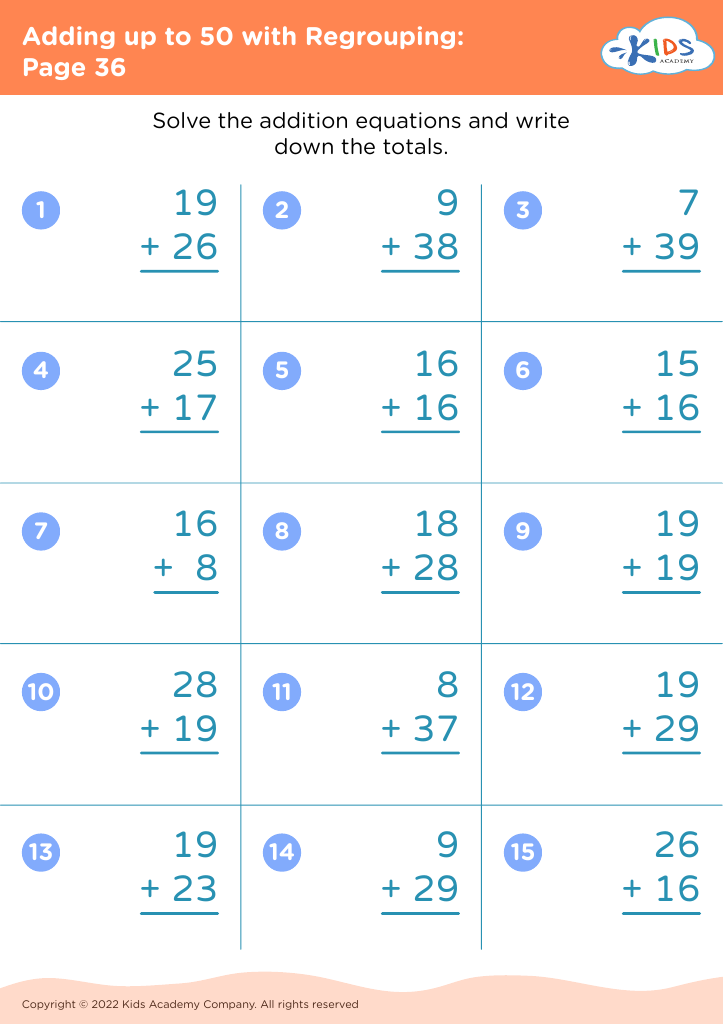
Adding up to 50 with Regrouping: Page 36
Worksheet
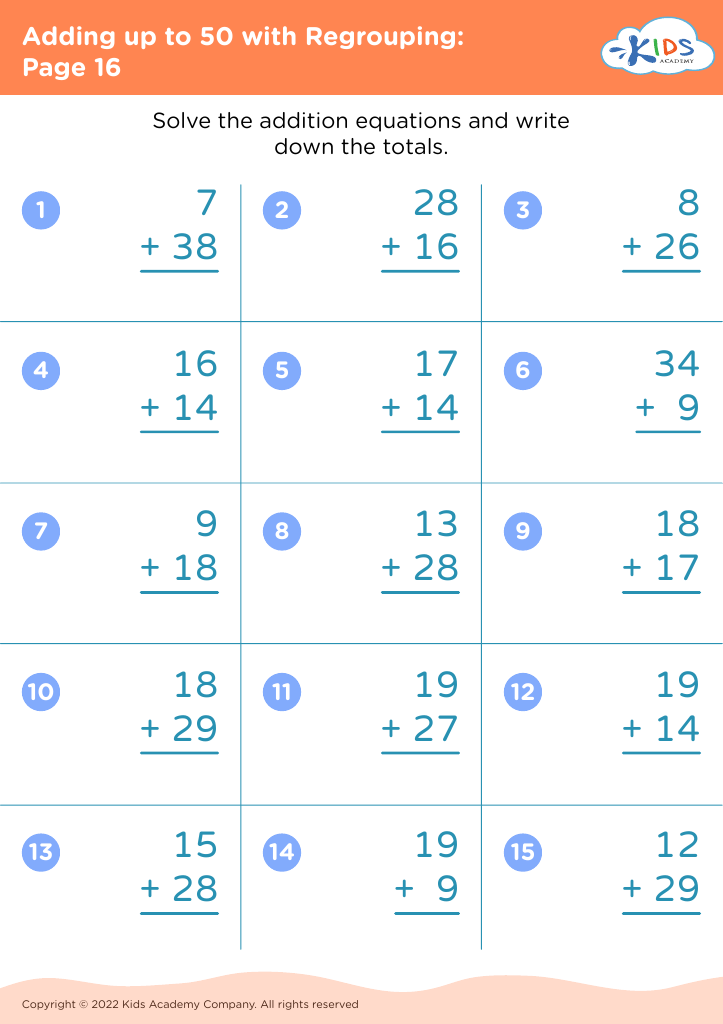
Adding up to 50 with Regrouping: Page 16
Worksheet
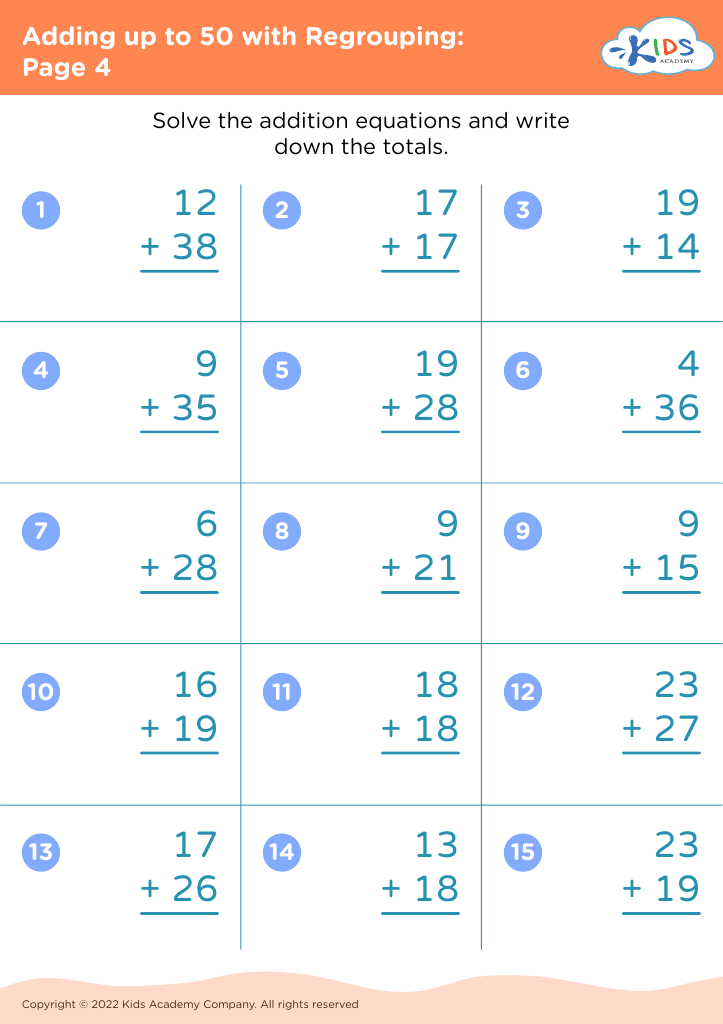
Adding up to 50 with Regrouping: Page 4
Worksheet
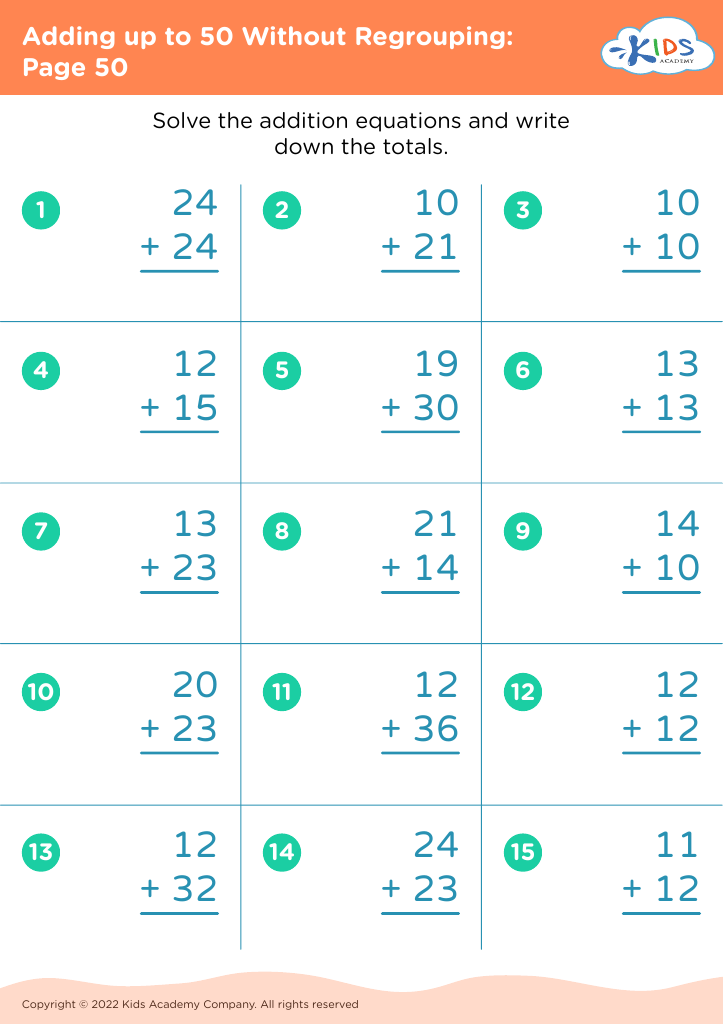
Adding up to 50 Without Regrouping: Page 50
Worksheet
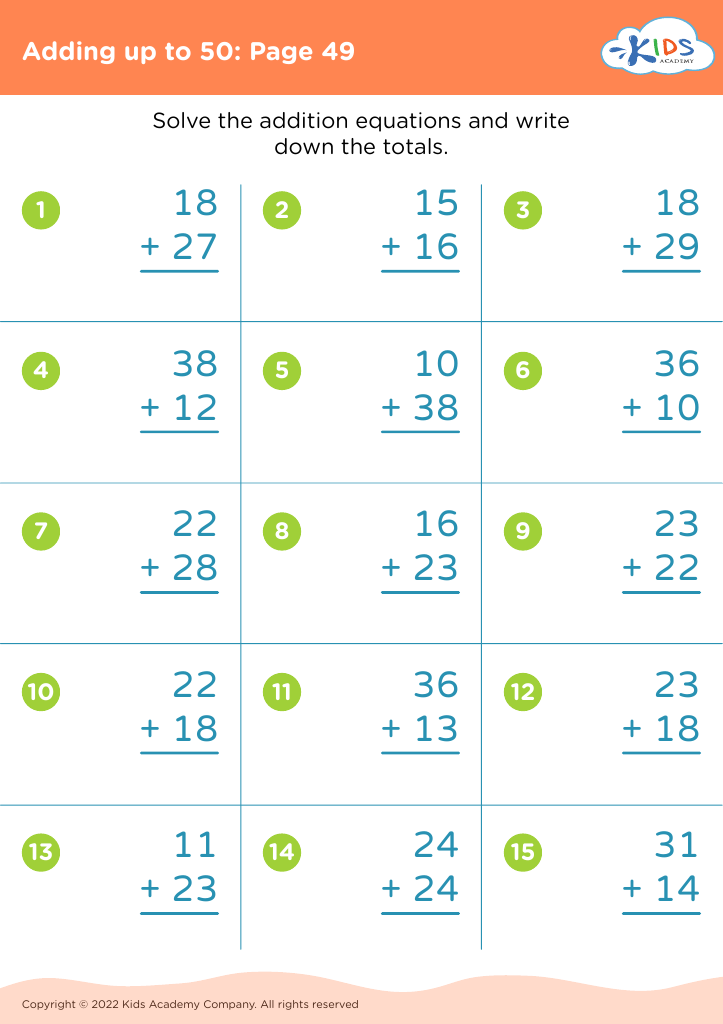
Adding up to 50: Page 49

Adding up to 50: Page 49

Adding up to 50: Page 49
Worksheet
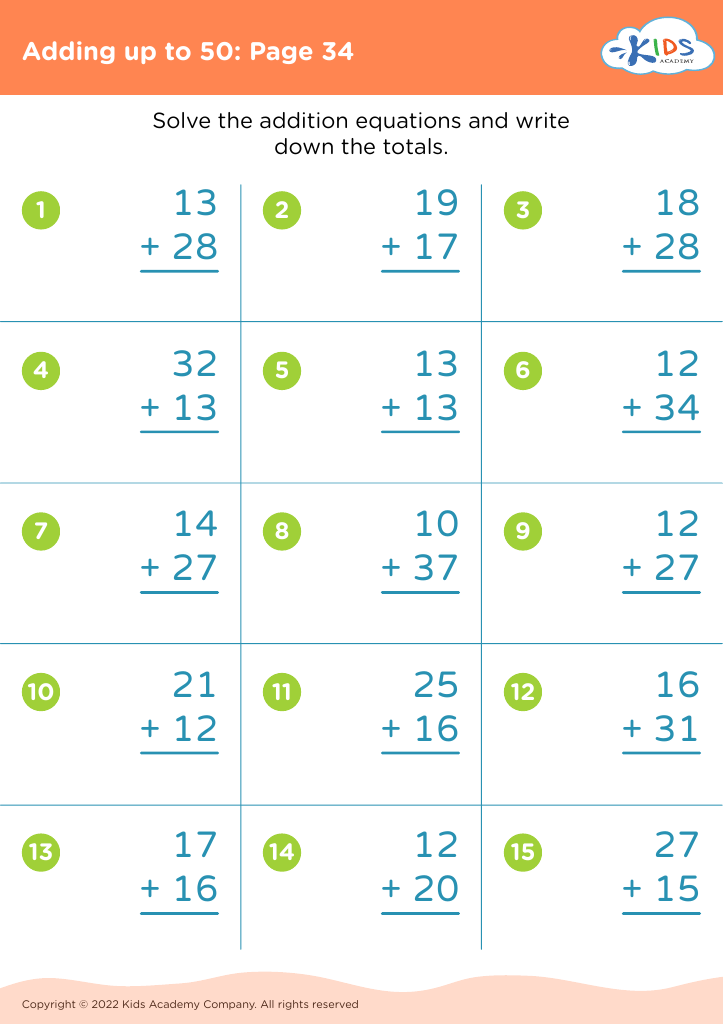
Adding up to 50: Page 34

Adding up to 50: Page 34

Adding up to 50: Page 34
Worksheet


Understanding fractions and learning to sum numbers up to 50 in early childhood is crucial for several reasons. Firstly, these foundational math skills are building blocks for more complex mathematical concepts children will encounter later in school. Mastery of fractions helps kids perceive and interpret quantities and divisions, essential for problem-solving in future mathematical tasks.

Moreover, learning to add numbers up to 50 enhances arithmetic fluency and number sense, crucial for everyday life skills such as managing money and understanding time. This early engagement promotes confidence and reduces anxiety toward math, often developed due to insufficient understanding of basic concepts.

Additionally, these skills foster logical reasoning and critical thinking. As children manipulate numbers to solve addition problems or understand portions like halves and quarters, they engage in cognitive processes that enhance their overall intellectual development.

Teachers and parents should encourage learning in fun, accessible ways such as through games, practical examples (like cooking or sharing toys), and interactive stories. By instilling a strong foundation in these essential areas, we set children up for academic success and competence in everyday tasks, nurturing capable, confident problem-solvers.