Understanding multiplication Adding up to 50 Worksheets for Ages 3-8
5 filtered results
-
From - To
Discover a fun and engaging way for children aged 3-8 to grasp multiplication concepts with our "Understanding Multiplication Adding Up to 50 Worksheets." Designed to simplify mathematical foundations, these worksheets introduce young learners to multiplication through playful activities and relatable visuals. Kids will explore multiplication as repeated addition, laying the groundwork for future math success. Our resources encourage hands-on learning, allowing children to practice and solidify their understanding in a supportive environment. Perfect for both classroom use and at-home learning, these worksheets promote confidence and mastery in mathematics. Unlock your child's potential and watch them thrive with our multiplication activities today!
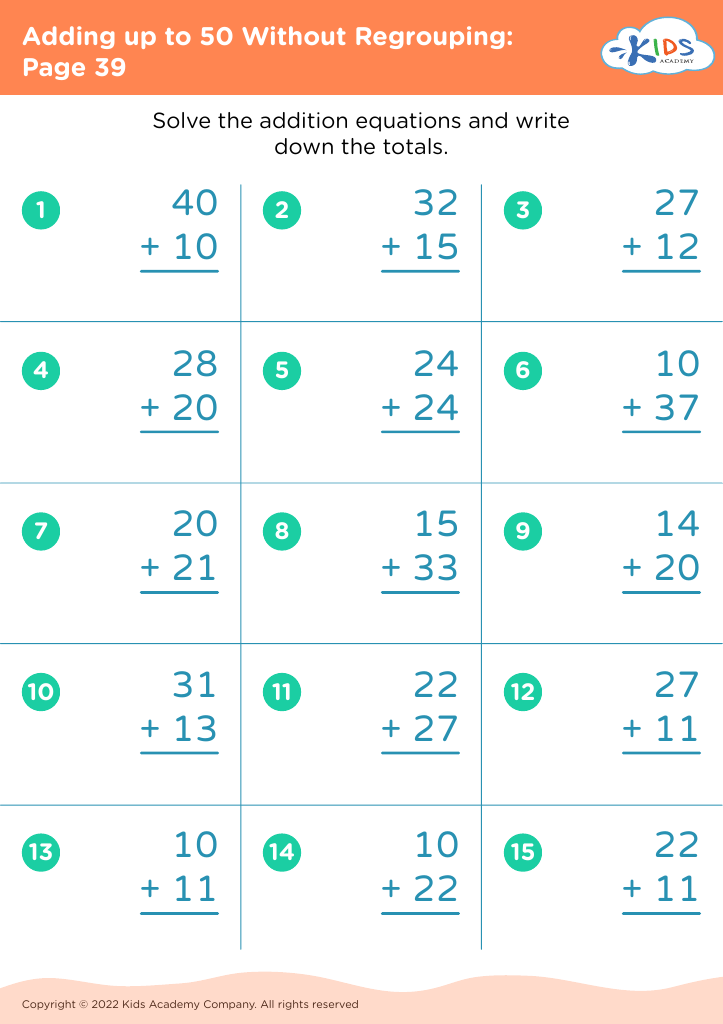
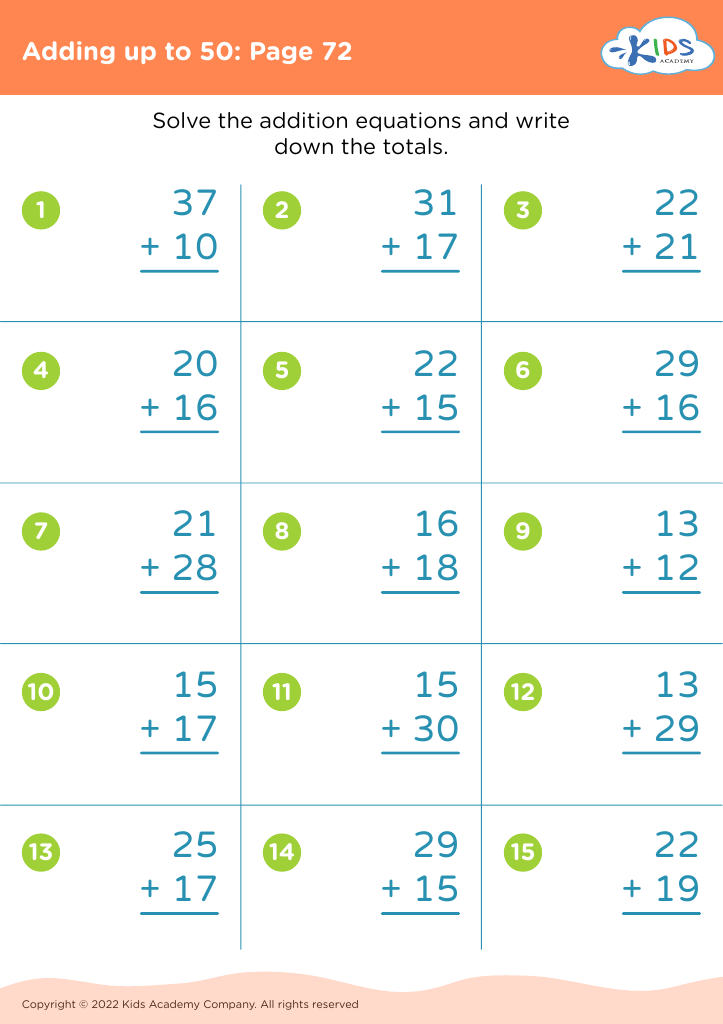
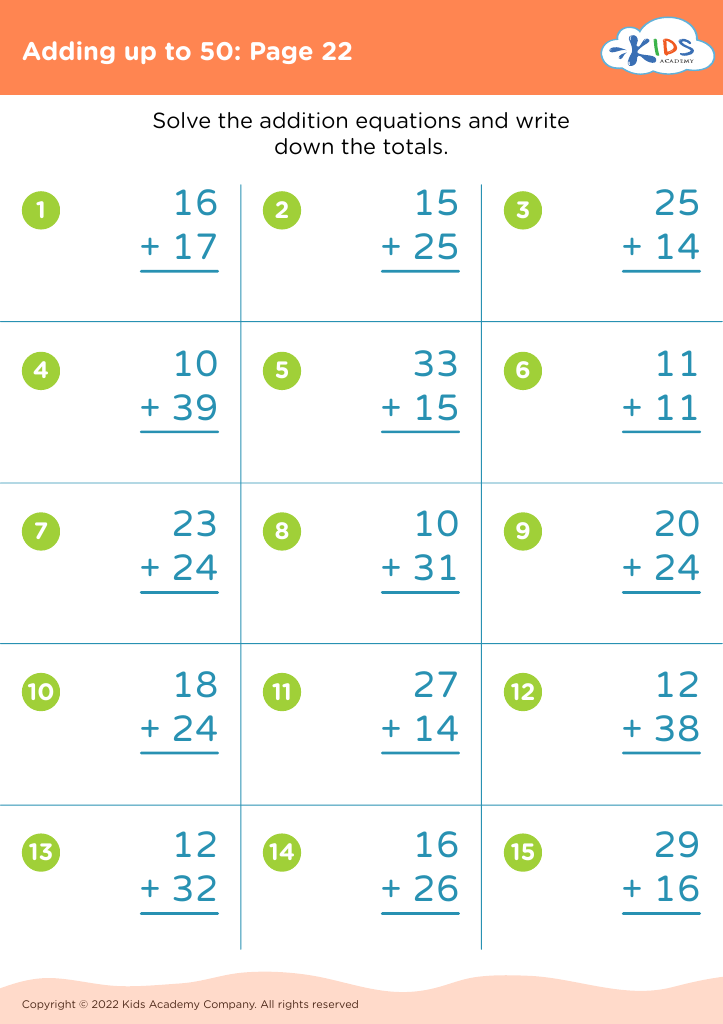
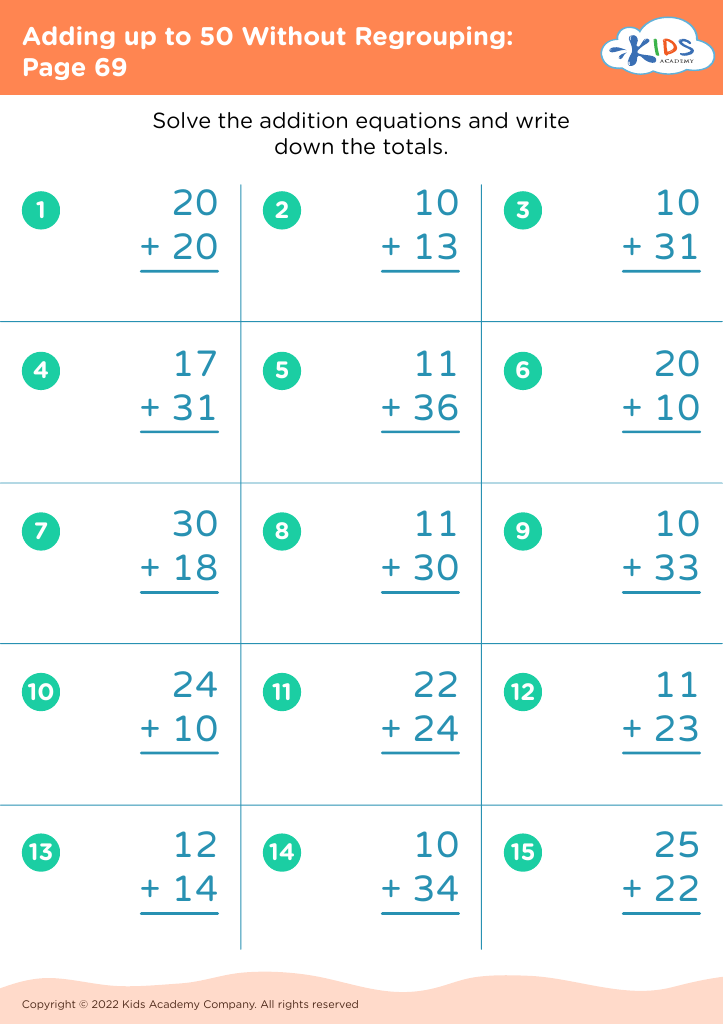
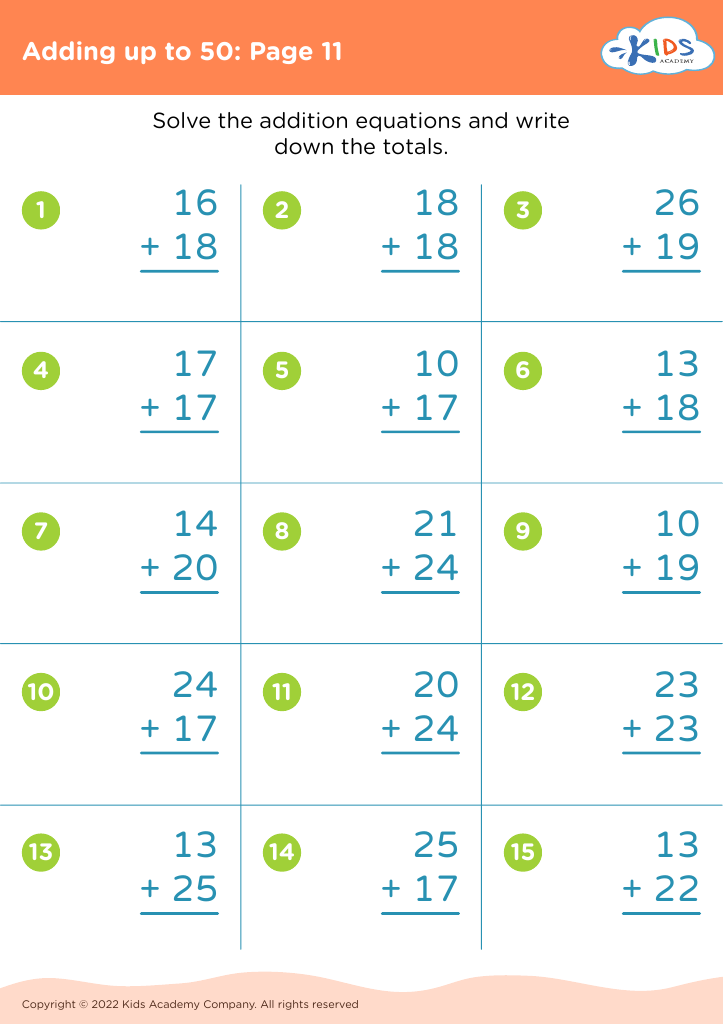




Understanding multiplication and addition within the context of numbers up to 50 is crucial for children ages 3 to 8 as it forms the foundation of their mathematical development. During these formative years, children are highly receptive to learning, and introducing multiplication alongside addition helps them grasp the relationships between numbers and develop critical thinking skills.
Multiplication teaches kids to understand repeated addition, which is essential for problem-solving and number sense. For instance, being able to represent a scenario like "3 groups of 4 apples" unlocks their ability to see different interpretations of numbers and fosters a deeper understanding of arithmetic principles. This comprehension enhances their confidence and lays the groundwork for more advanced math concepts in the future.
Moreover, engaging with multiplication concepts can make math exciting and interactive. Parents and teachers can use everyday objects like toys and snacks to explore these ideas, making learning both accessible and enjoyable. By focusing on addition up to 50 alongside early multiplication, educators help children increase their mental agility and prepare them for complex math challenges as they progress through their educational journey. Ensuring children possess these foundational skills ultimately nourishes their readiness for higher-level math in academic settings down the line.








