Understanding Quantities Adding with Busy Bugs Worksheets for Ages 3-8
4 filtered results
-
From - To
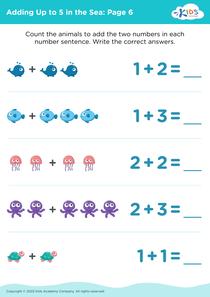
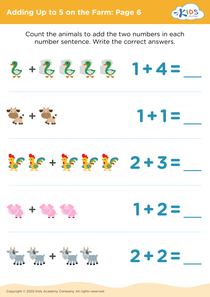
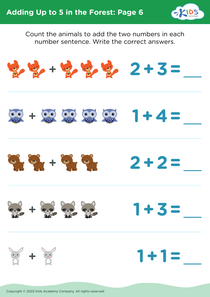
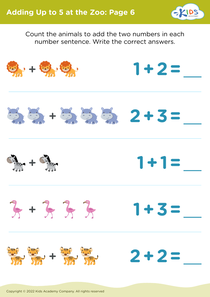
Discover the joy of learning math with our "Understanding Quantities: Adding with Busy Bugs" worksheets, specially designed for children aged 3-8! These engaging worksheets introduce young learners to the concept of quantities while nurturing essential addition skills. Enhanced with colorful illustrations and fun bug themes, our activities make math both interactive and captivating. Children will practice counting, recognizing numbers, and adding groups of bugs, fostering a strong foundation in numeracy. Perfect for at-home learning or classroom use, these worksheets empower kids to build confidence in their mathematical abilities while having fun! Explore our resources and watch your child thrive in math!
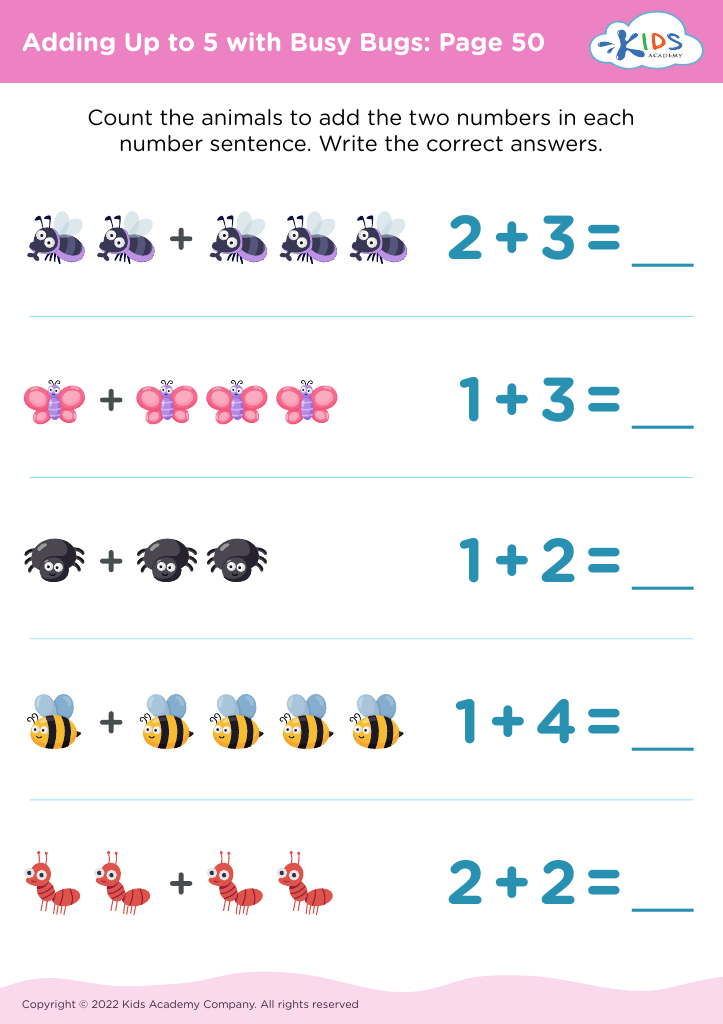
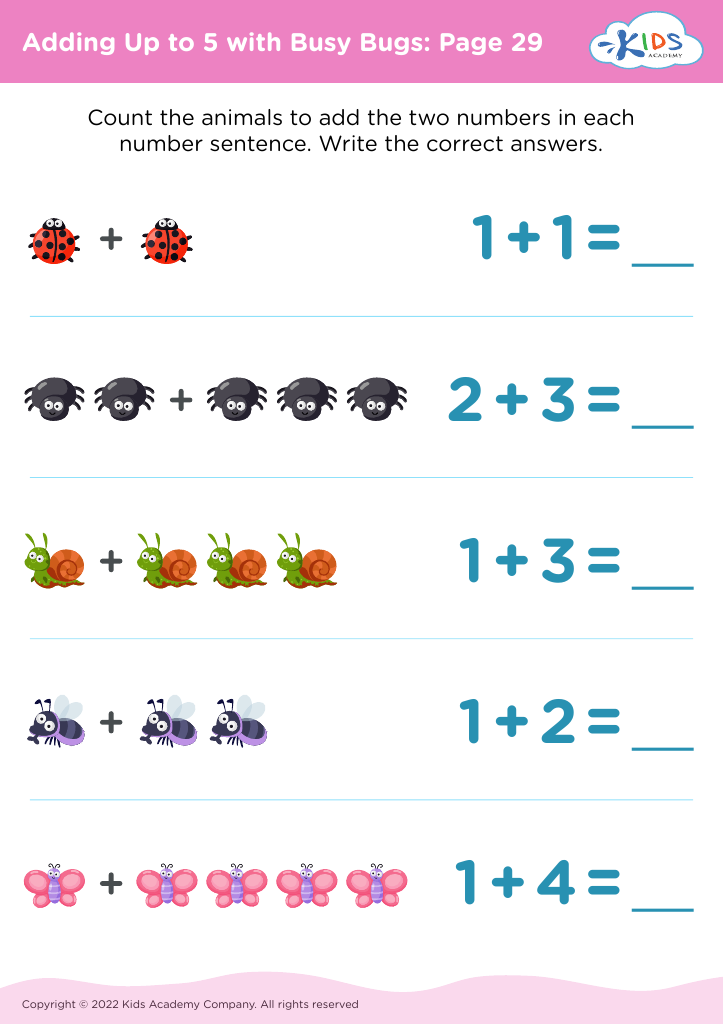
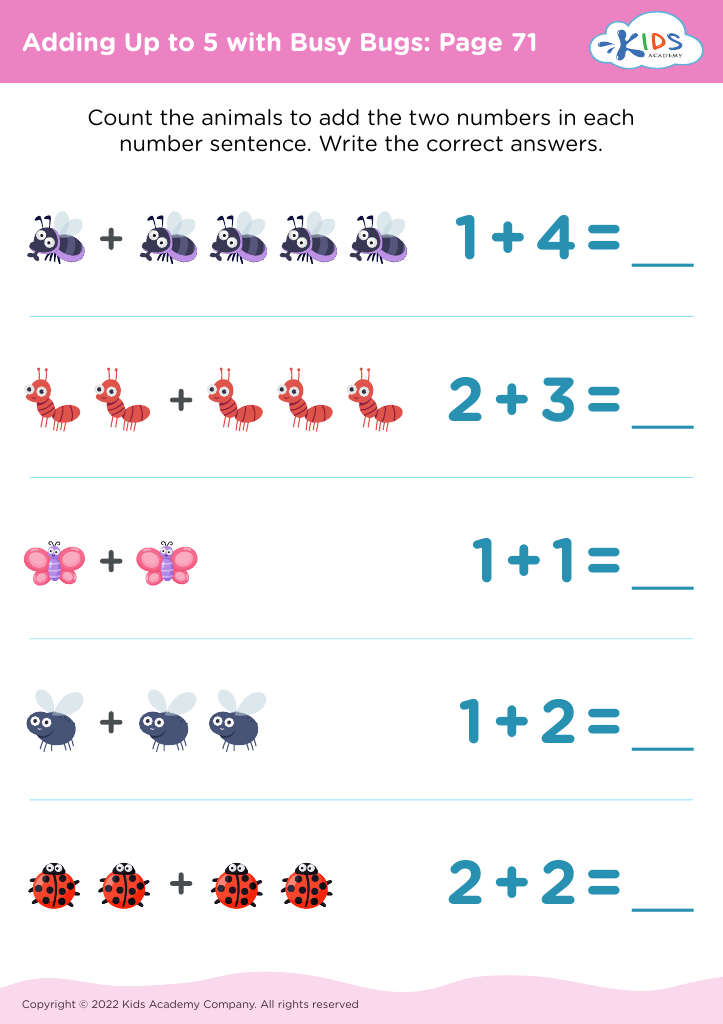
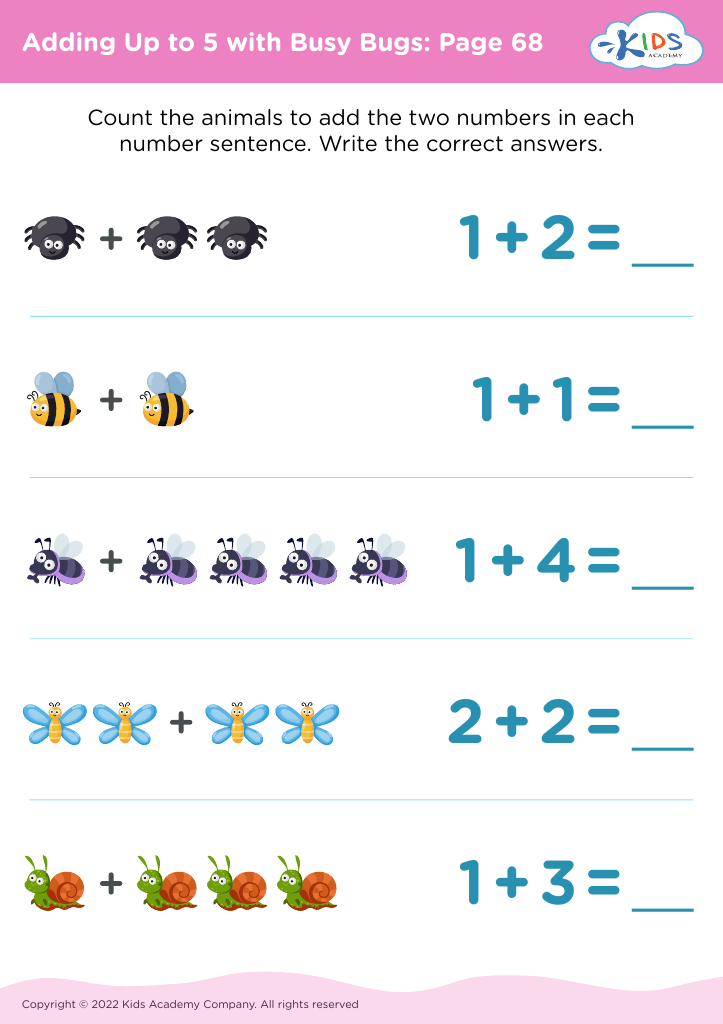



Understanding quantities and basic addition is a foundational skill for children aged 3 to 8, and parents or teachers should prioritize engaging materials like "Busy Bugs" to make this learning both effective and enjoyable. This educational tool introduces key math concepts in a playful context, capturing the children's attention and fostering a love for learning.
Caring about this learning process is essential because early mathematical skills greatly influence later academic success. By using relatable characters, such as busy bugs, children can visualize and quantify numbers, making abstract concepts come to life. This appealing interaction encourages active participation, enabling children to grasp essential principles such as counting, comparison, and addition in a manner that's both intuitive and age-appropriate.
Moreover, "Busy Bugs" not only sharpens cognitive skills but also promotes essential social-emotional development. Collaborative activities can enhance interpersonal skills as children work together to solve problems and share discoveries. Thus, parents and teachers should embrace tools that foster an engaging and comprehensive approach to learning quantities, ensuring children not only build a strong mathematical foundation but also develop essential skills for lifelong learning. Supporting such learning methodologies cultivates self-confidence, perseverance, and a natural curiosity about the math that surrounds us daily.