Cognitive Development Addition and Subtraction Word Problems Worksheets for Ages 3-8
4 filtered results
-
From - To
Discover our engaging Cognitive Development Addition and Subtraction Word Problems Worksheets, specifically designed for children ages 3-8. These worksheets promote critical thinking and problem-solving skills through fun, age-appropriate math challenges. Each activity encourages young learners to process information, make predictions, and explore mathematical concepts in a relatable context. By integrating storytelling with basic addition and subtraction, children develop a stronger grasp of numerical concepts while enhancing their cognitive abilities. Perfect for parents and teachers, our resources aim to create an enjoyable learning experience that fosters confidence and curiosity in young mathematicians. Start nurturing your child's mathematical journey today!
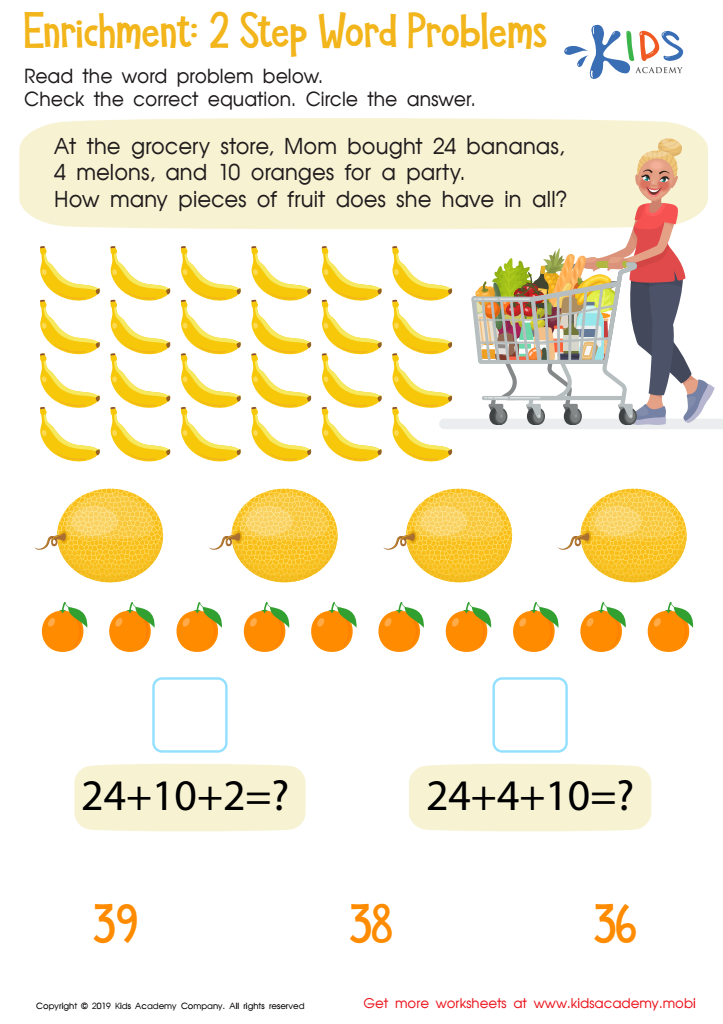
Enrichment -2 Step Word Problems Worksheet
 Assign to My Students
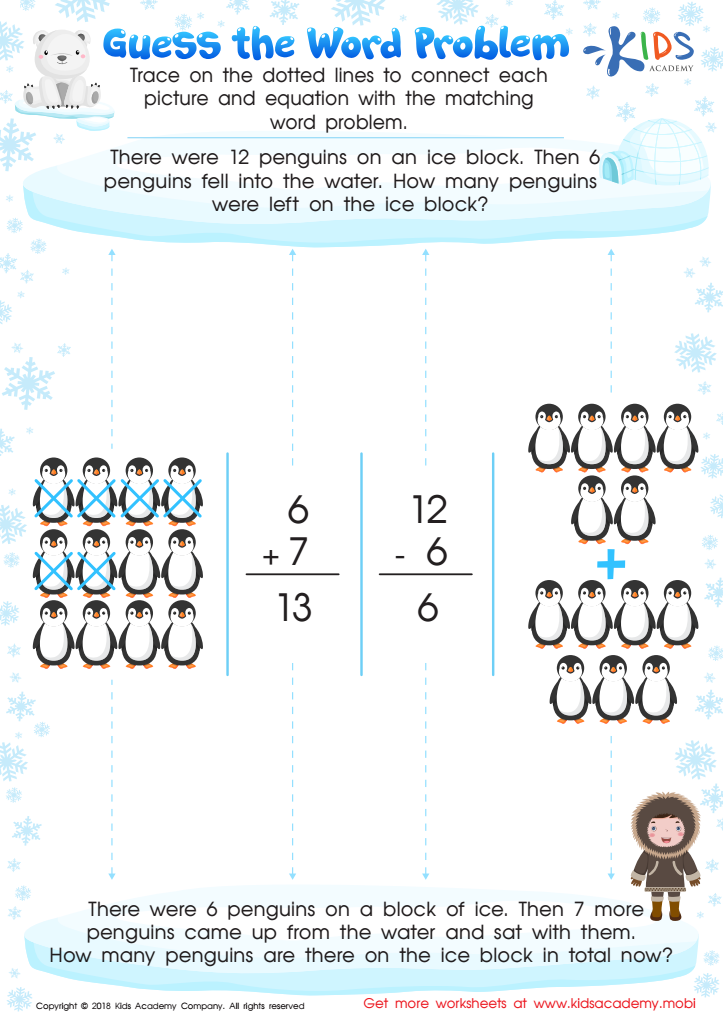
Guess the Word Problem Worksheet
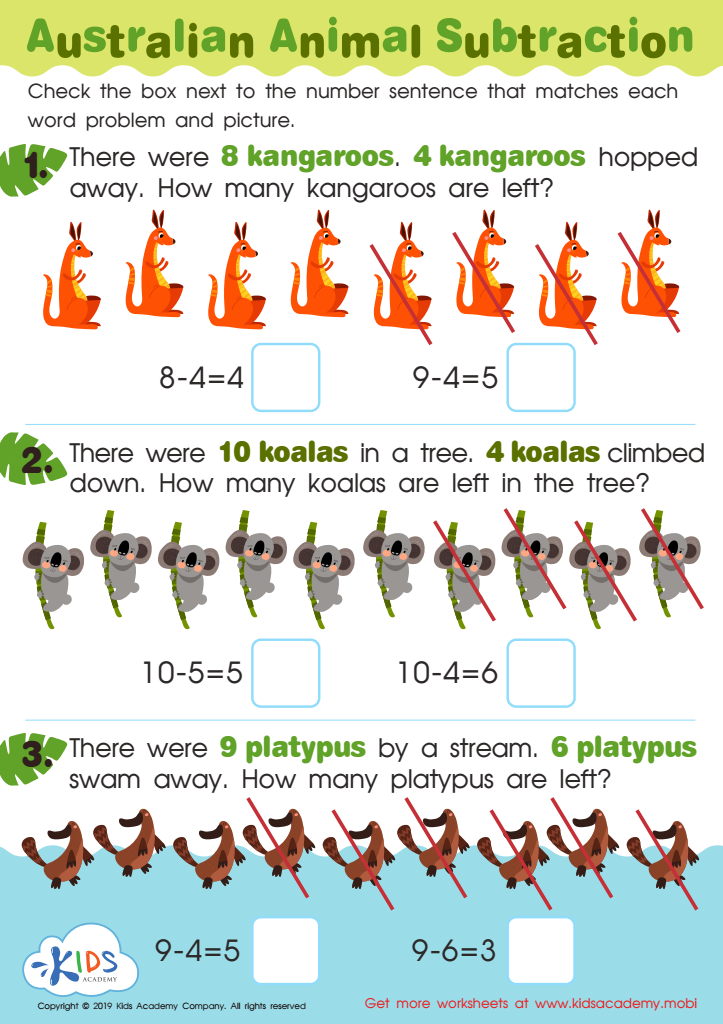
Australian Animal Subtraction Worksheet
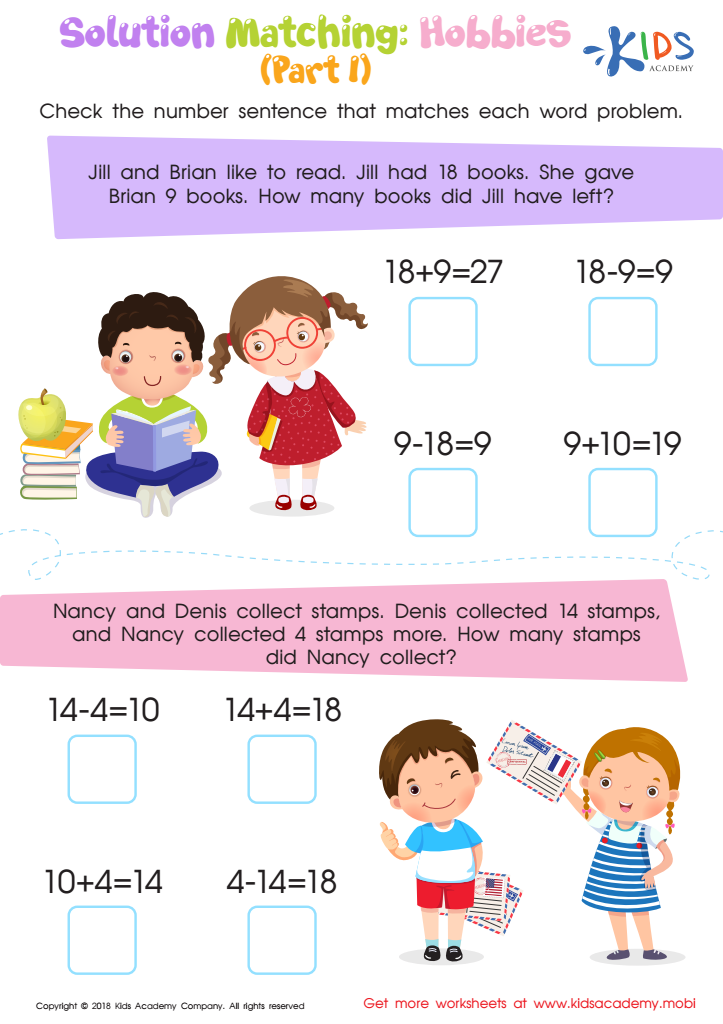
Solution Matching: Hobbies. Part 1 Worksheet








Cognitive development in early childhood is crucial for establishing foundational skills in mathematics, particularly in addition and subtraction. For children ages 3-8, engaging with word problems fosters critical thinking, comprehension, and problem-solving abilities. Parents and teachers should care about this developmental stage because it shapes children's understanding of numerical concepts and relationships.
When children tackle addition and subtraction word problems, they learn to translate real-life scenarios into mathematical expressions, enhancing their ability to connect learning with everyday situations. This skill is vital for developing numeracy as it goes beyond rote memorization, allowing for deeper cognitive connections. Furthermore, solving word problems encourages children to think logically, analyze situations, and find solutions—skills that are not only essential in mathematics but are universally applicable across subjects and life situations.
Promoting these skills early on lays the groundwork for advanced mathematical understanding in later grades, where abstract concepts become more prevalent. By creating a supportive environment rich with opportunities for exploration and discussion of word problems, parents and teachers can significantly influence children's confidence and competence in mathematics, ultimately fostering a positive attitude toward learning that lasts a lifetime.