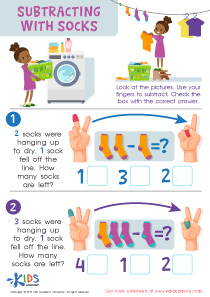
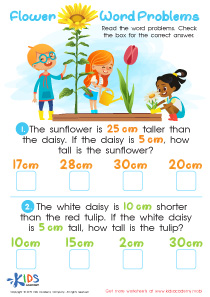
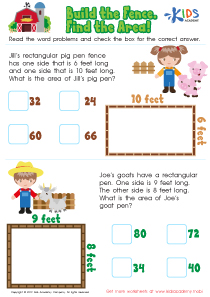
Logical thinking development Addition and Subtraction Word Problems Worksheets for Ages 3-8
3 filtered results
-
From - To
Discover our engaging Logical Thinking Development worksheets designed for children ages 3-8. These interactive addition and subtraction word problems promote critical thinking and problem-solving skills in young learners. Each worksheet features relatable scenarios that encourage kids to apply mathematical concepts in real-world contexts. By solving these fun challenges, children will enhance their logical reasoning and boost their confidence in math. Perfect for homeschooling or supplementary practice, our resources are user-friendly and designed to capture the interest of young minds. Help your kids build a strong foundation in math and logic with our thoughtfully crafted printable worksheets!
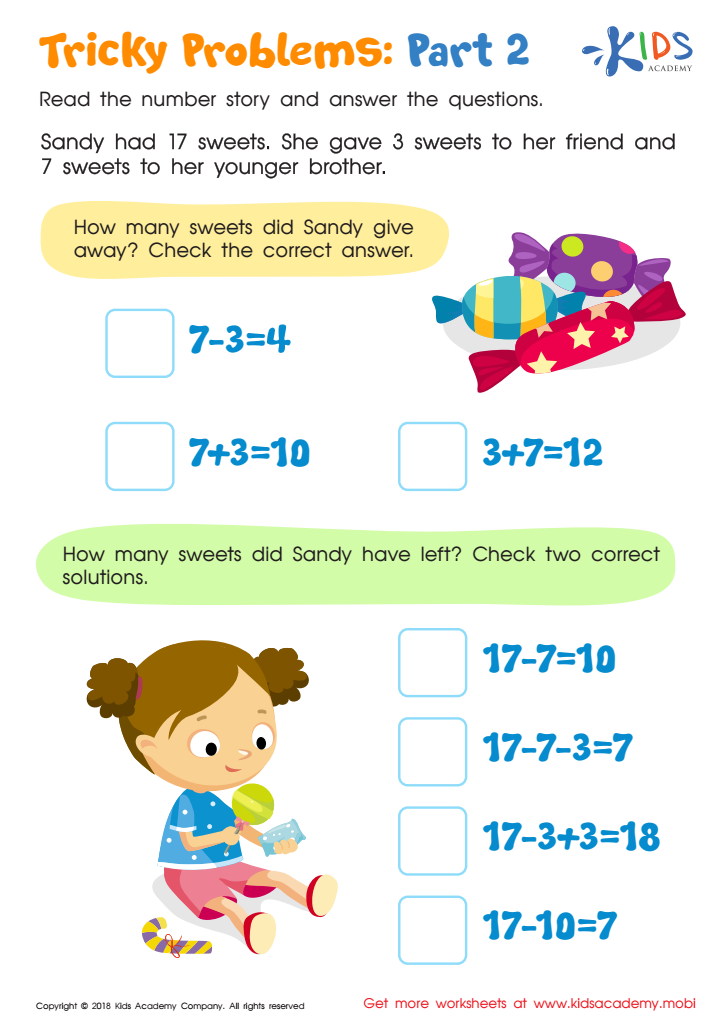
Tricky Problems Worksheet: Part 2
 Assign to My Students
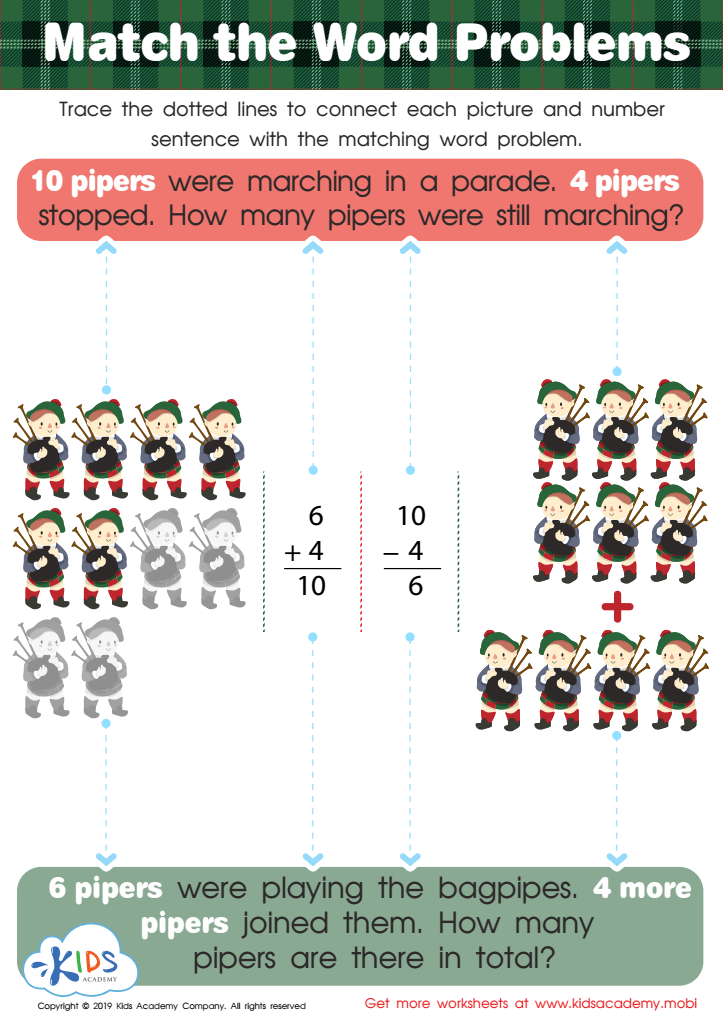
Match the Word Problems Worksheet
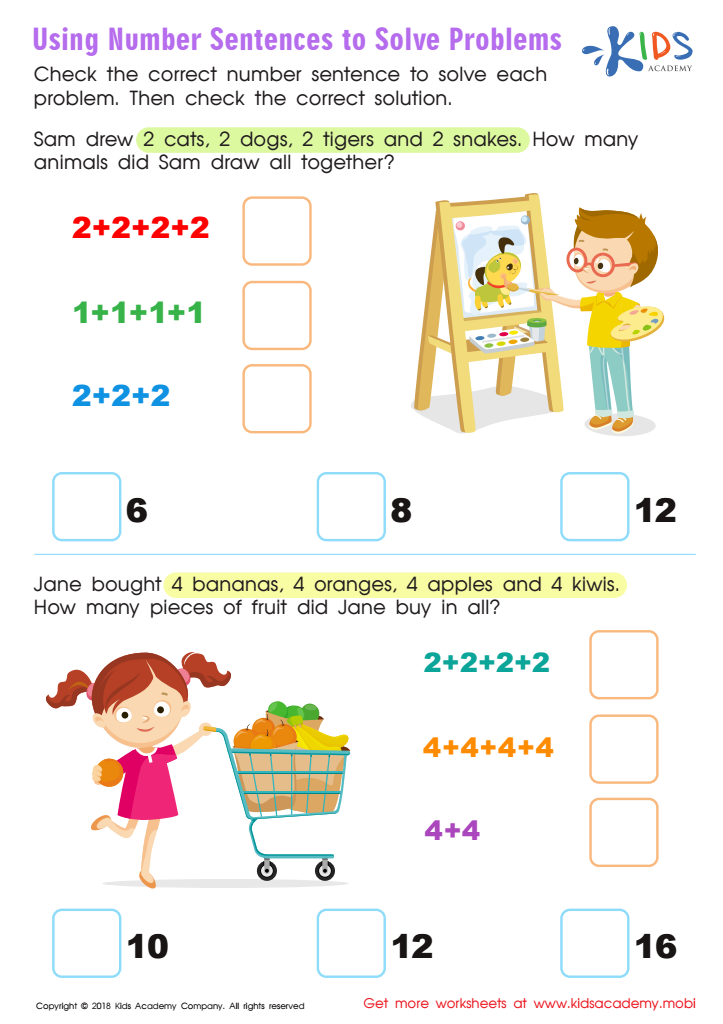
Using Number Sentences to Solve Problems Worksheet








Developing logical thinking and foundational math skills, particularly through addition and subtraction word problems, is crucial for children aged 3-8. At this stage, early reasoning and problem-solving abilities lay the groundwork for future mathematical understanding. Engaging with word problems allows young learners to discover how numeracy is linked to real-world scenarios, fostering not only essential calculation skills but also critical thinking and comprehension.
By working on these problems, children learn to identify relevant information, interpret language, and translate situations into numerical expressions. This practice enhances their logical reasoning and promotes a deeper understanding of mathematics, rather than mere memorization of facts. Furthermore, tackling word problems encourages perseverance and resilience, as children practice approaching challenges systematically.
For parents and teachers, focusing on this area promotes a growth mindset in children. They cultivate a sense of curiosity and empower them to believe in their abilities as problem solvers. As logical thinking skills strengthen, children develop confidence in learning resilience which serves them well beyond early education. Investing time and effort in this area ultimately nurtures a love for learning, critical thinking, and a positive attitude towards mathematics, equipping children with skills essential for their academic journey and everyday life.