Addition up to 5 Addition & Subtraction Worksheets for Ages 3-8
4 filtered results
-
From - To
Introduce your young learners to the world of math with our fun and interactive Addition and Subtraction Worksheets, designed specifically for ages 3-8! These engaging activities focus on addition up to 5, making math approachable and enjoyable. Our worksheets promote numeral recognition, counting skills, and problem-solving in a playful manner. Ideal for home or classroom use, these quality resources support early math development and enhance crucial cognitive skills. With colorful illustrations and simple instructions, children will quickly gain confidence as they practice addition and subtraction. Explore and download our printable worksheets today to foster a love for mathematics in your little ones!
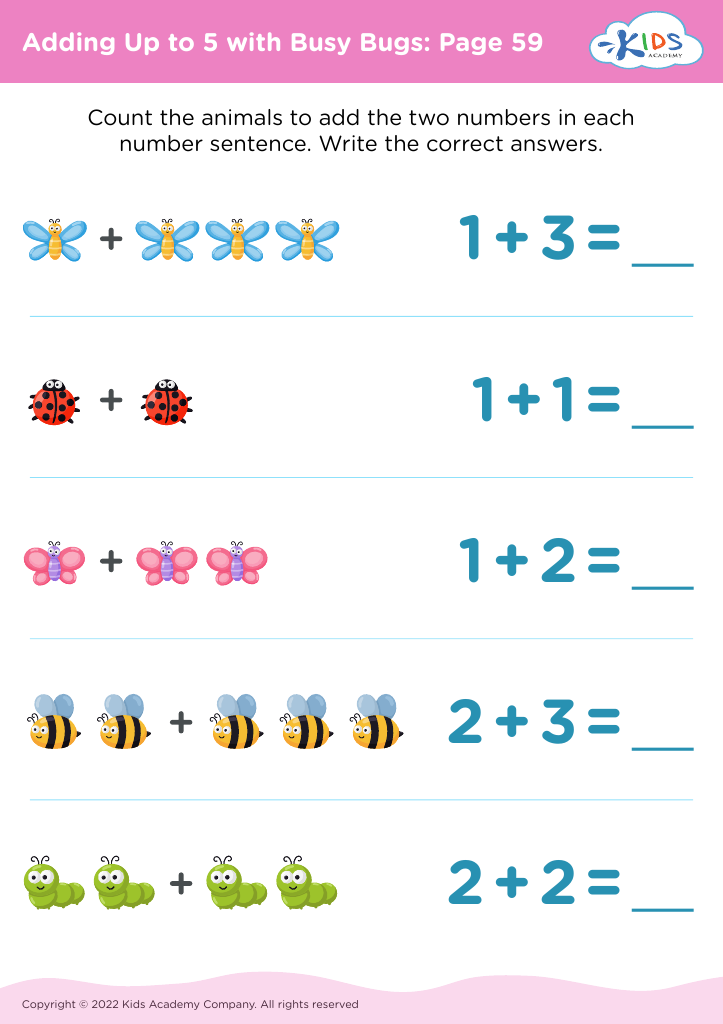
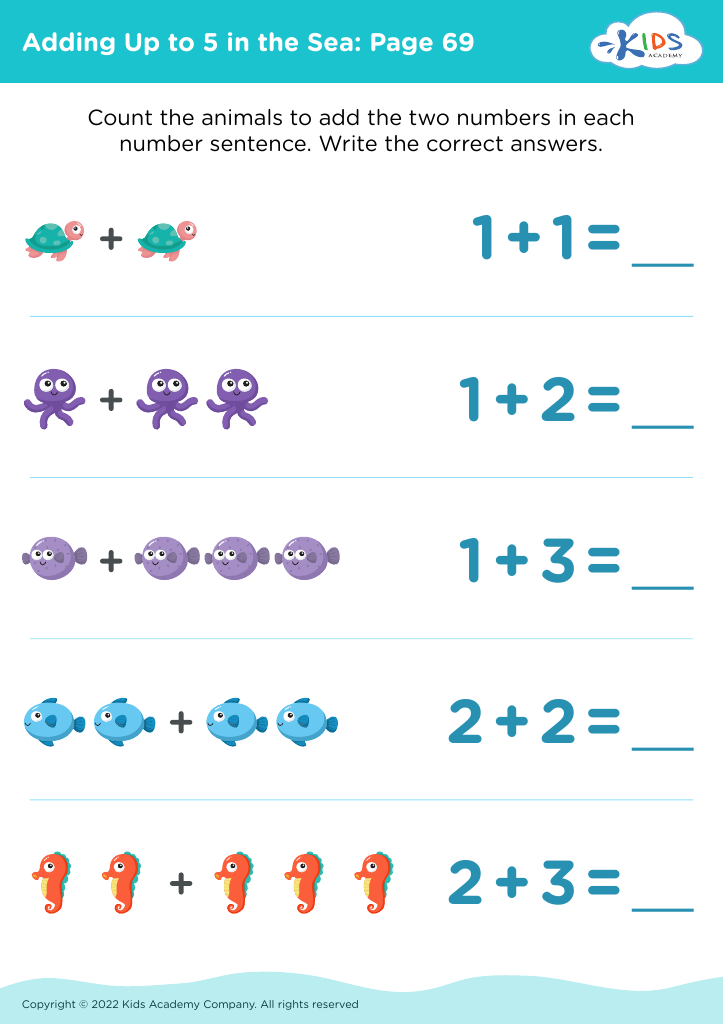
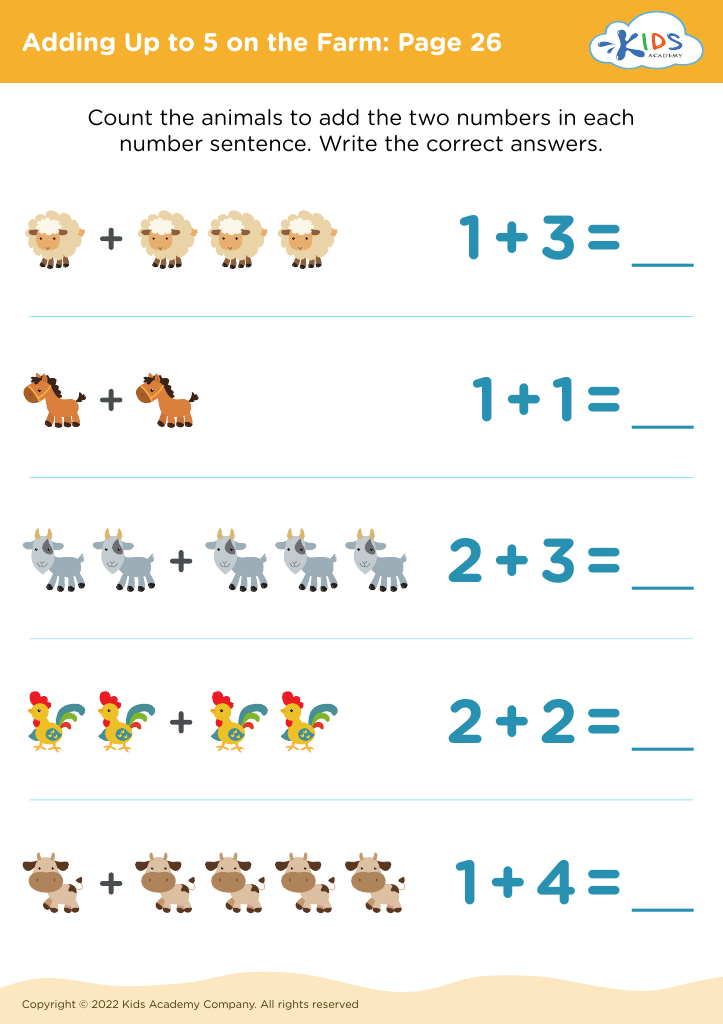
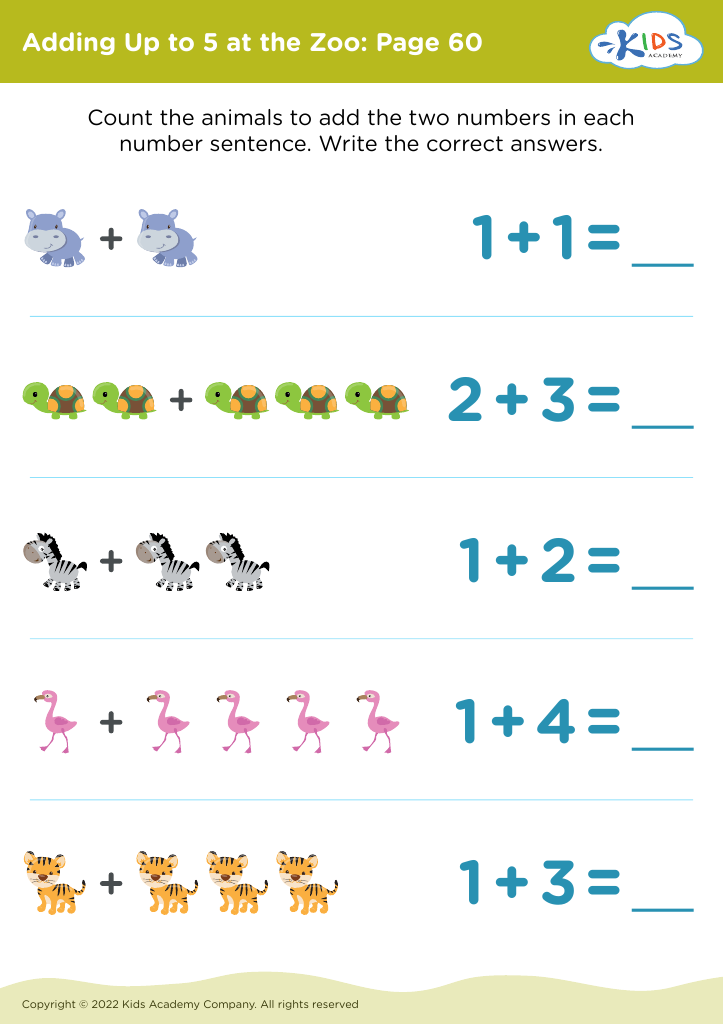








Parents and teachers should prioritize teaching addition and subtraction up to 5 for children aged 3-8 as it lays the foundation for essential math skills that are critical for future learning. At this age, children are highly receptive to new concepts, and early mastery of basic addition and subtraction helps boost their confidence in mathematics, fostering a positive attitude towards the subject.
Understanding numbers up to 5 develops cognitive skills and promotes critical thinking. It encourages counting, recognition of patterns, and problem-solving abilities, which are vital in other areas of learning. Engaging children in fun, hands-on activities can enhance their basic math skills while also strengthening fine motor skills and social interactions.
Moreover, these early math skills have long-lasting implications for academic performance. Children who struggle with basic addition and subtraction may face challenges in more complex mathematical concepts later on. Additionally, these skills are not isolated; they are interconnected with a child’s ability to succeed in other subjects, such as science and logic.
By focusing on addition and subtraction, parents and teachers provide children with the tools they need to navigate the world of numbers confidently, preparing them for lifelong learning and success.








