Categorization skills Addition & Subtraction Worksheets for Ages 3-8
3 filtered results
-
From - To
Unlock your child's potential with our engaging Categorization Skills Addition & Subtraction Worksheets, designed for ages 3-8. These educational worksheets help young learners strengthen their math skills by combining fun categorization activities with essential addition and subtraction practice. Perfect for early grade students, each sheet encourages critical thinking and enhances problem-solving abilities while keeping learning enjoyable. Boost your child's confidence and understanding in math through interactive exercises, fostering a solid foundation for future academic success. Visit Kids Academy for free resources to support your child's educational journey.
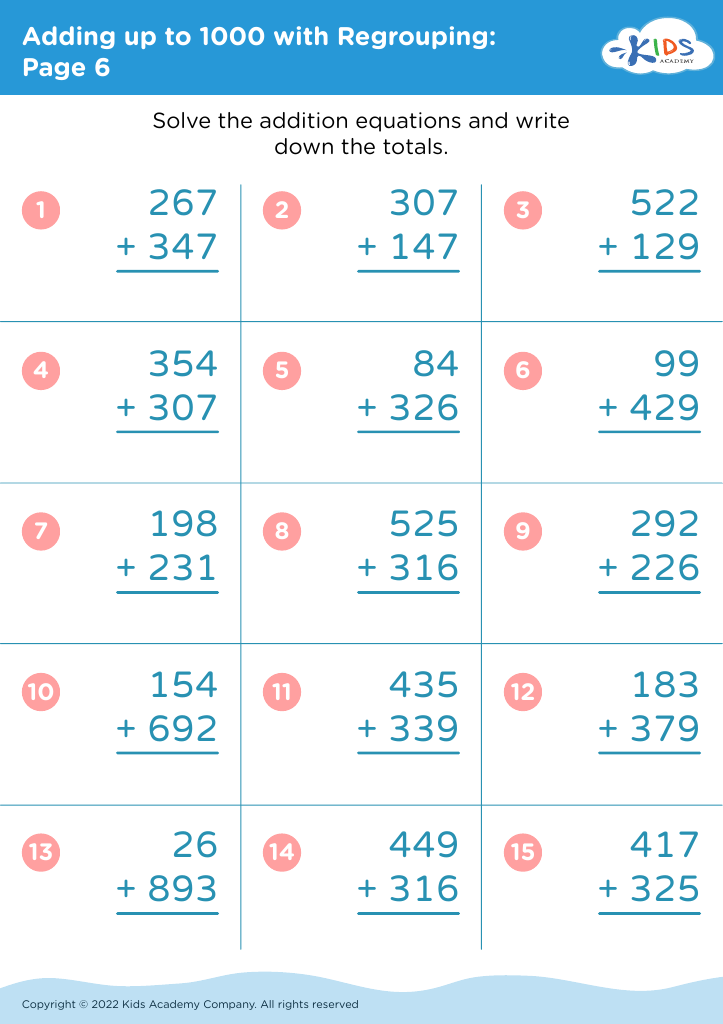
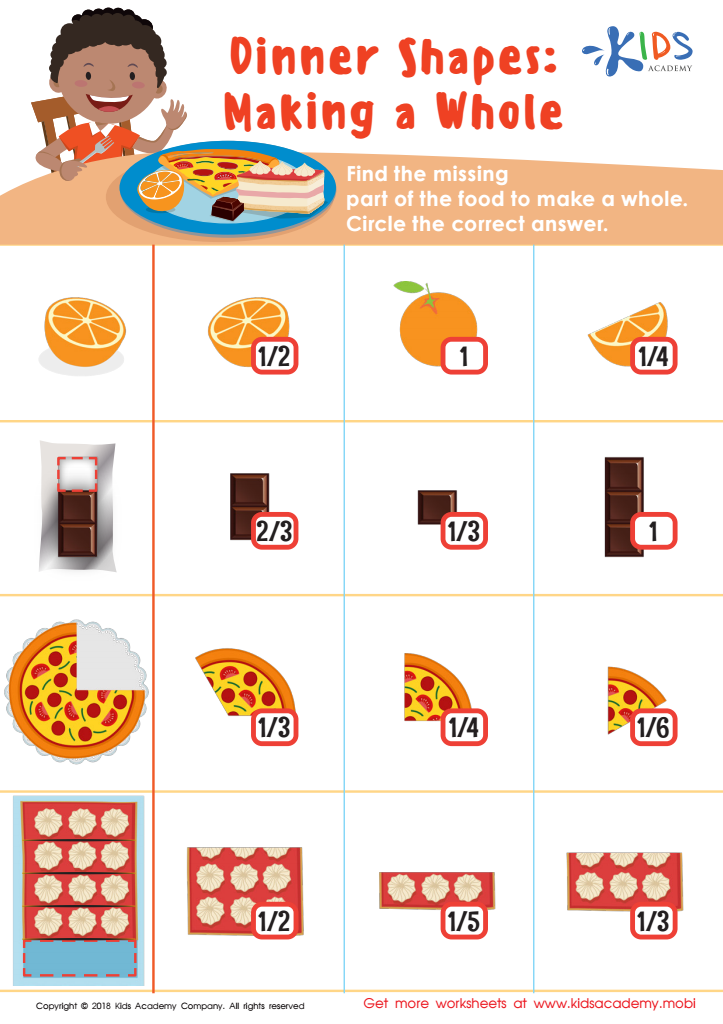
Dinner Shapes: Making a Whole Worksheet
 Assign to My Students
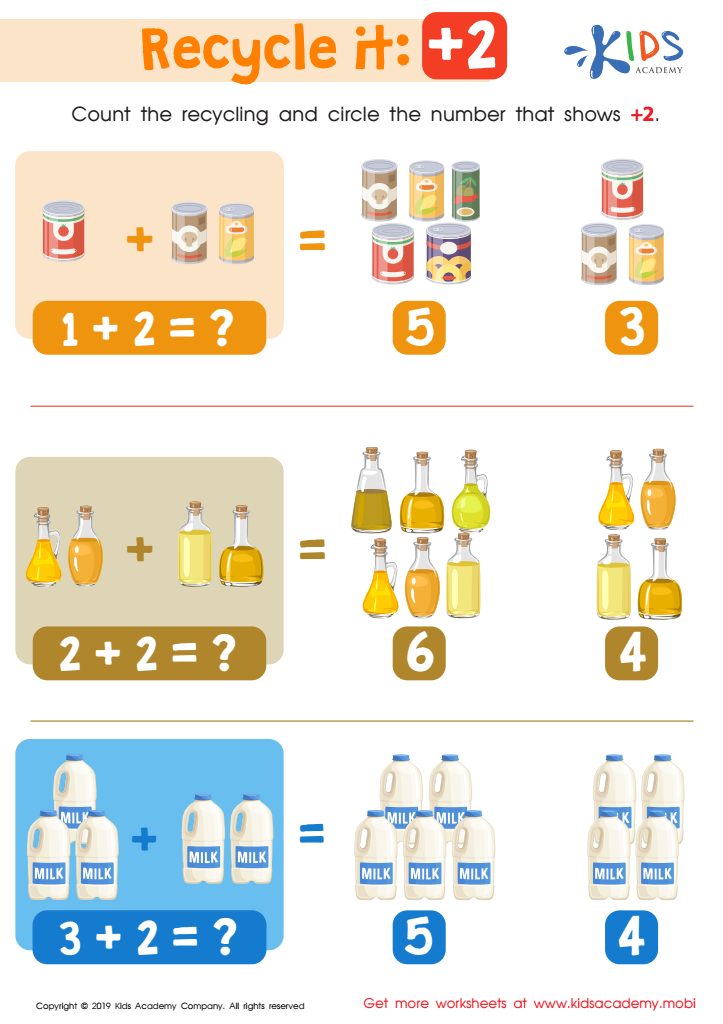
Recycle It: +2 Worksheet








Developing categorization skills and understanding basic addition and subtraction are crucial for children aged 3-8 as these skills lay the foundation for their overall cognitive development and future academic success. Categorization enables children to organize and process information, making sense of the world around them. This critical thinking skill enhances their ability to observe similarities and differences, understand groupings, and improve memory recall—skills that are directly beneficial in learning more complex concepts across various subjects.
Addition and subtraction are fundamental to early math education. Mastering these basic arithmetic operations at a young age builds a child's confidence and sets them up for success in more advanced mathematical topics. It also enhances problem-solving abilities and logical reasoning. Early proficiency in addition and subtraction correlates with later academic achievements, not only in math but also in science and subjects that require analytical thinking.
Parents and teachers should prioritize these skills because they are foundational to a child’s education. Engaging children in activities that promote categorization and arithmetic thinking—like sorting games, puzzles, counting exercises, and interactive math games—can foster a stimulating learning environment. By supporting these early educational milestones, parents and teachers play a critical role in nurturing a child’s intellectual curiosity and school readiness.








