Color Identification Addition & Subtraction Worksheets for Ages 3-8 - Page 2
27 filtered results
-
From - To
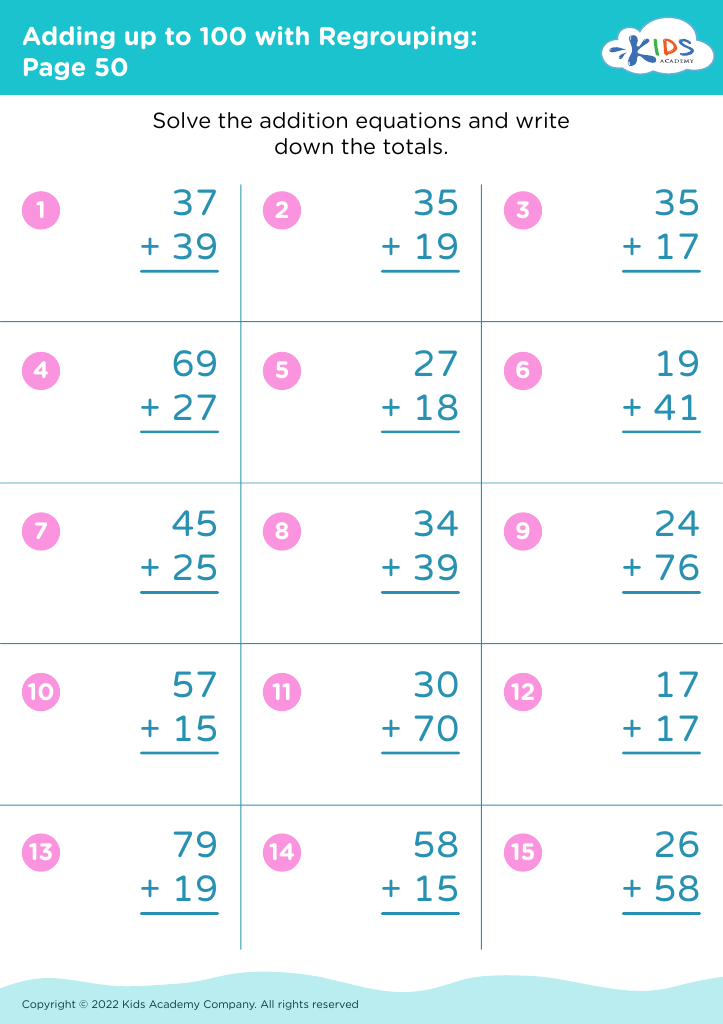
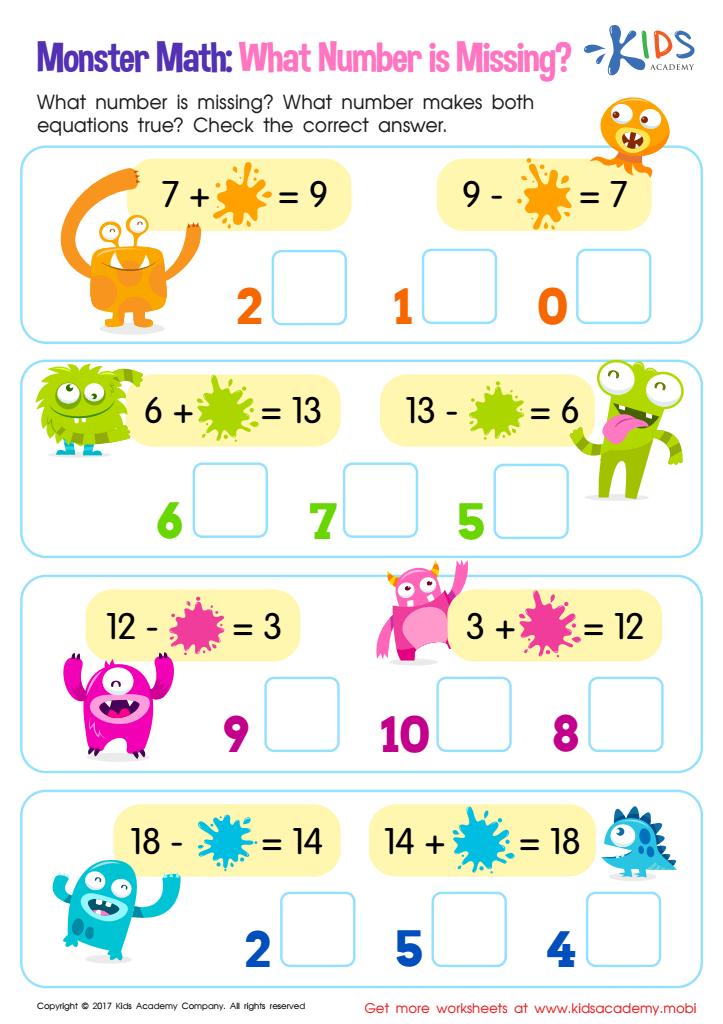
Missing Number: Monster Math Worksheet
 Assign to My Students
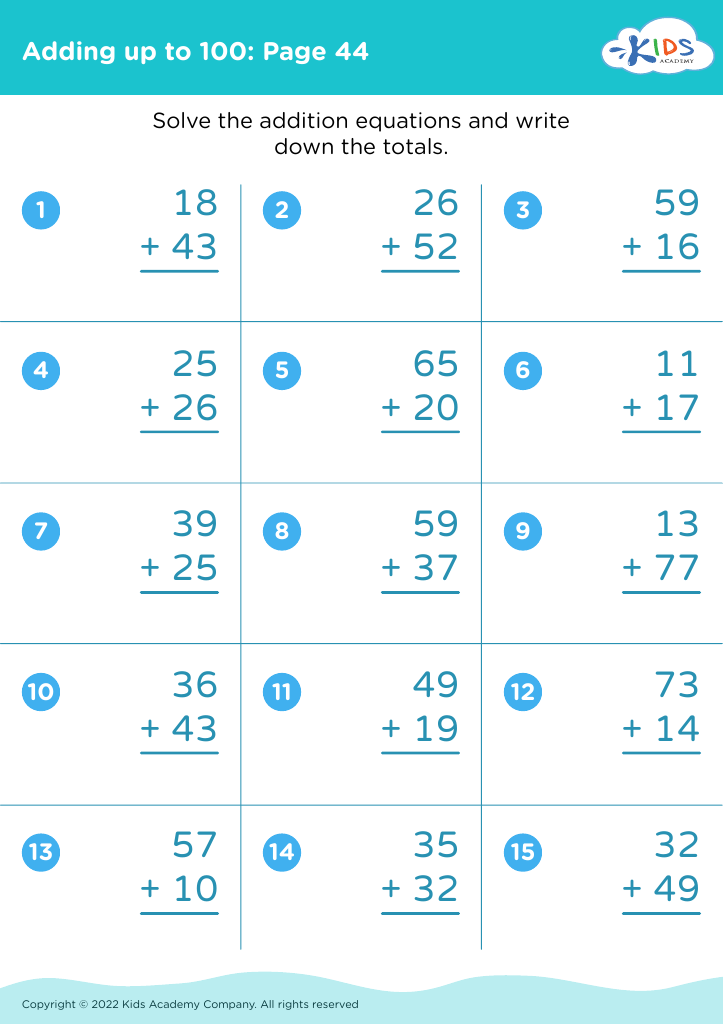



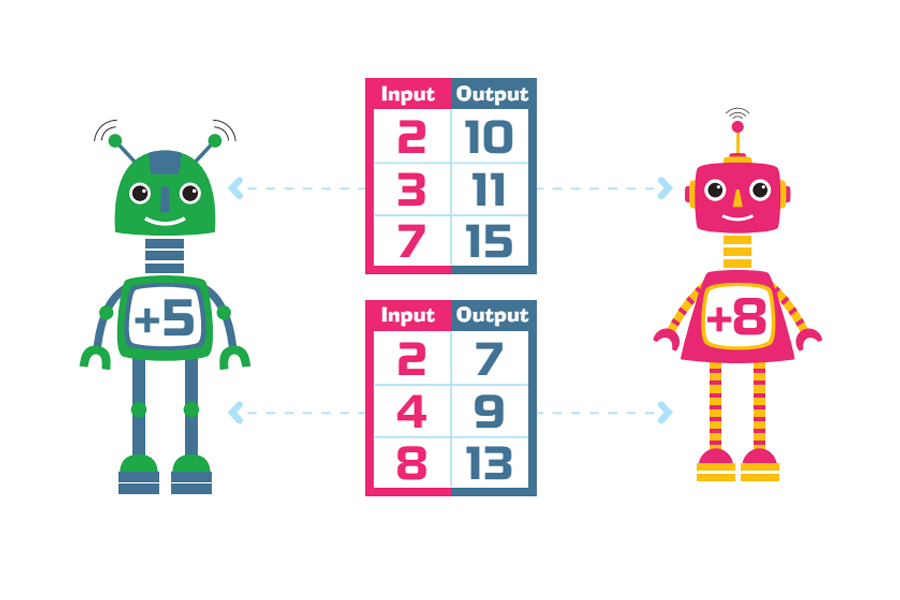




Color identification and basic arithmetic are crucial skills for children ages 3-8, as they serve as foundational elements for later academic success. Integrating these skills early on can foster cognitive development and prepare young minds for more complex concepts. Here's why parents and teachers should prioritize these areas:
-
Cognitive Development: Learning colors helps children to categorize and make sense of the world. When combined with addition and subtraction, this enhances their analytical and problem-solving abilities.
-
Early Literacy and Numeracy: Color identification can improve language skills as children learn their names and associations. Simultaneously, arithmetic introduces fundamental principles of numbers and quantity, which are integral to future math skills.
-
Engagement and Interest: Children are naturally drawn to colorful objects. Coupling colorful visuals with math problems can make learning more engaging and less intimidating, securing a positive attitude towards learning.
-
Interactive Learning: Through games and activities that mix colors and numbers, children can enjoy hands-on experiences that reinforce their understanding while developing fine motor skills and hand-eye coordination.
-
Social Skills and Teamwork: Working on these concepts in a group setting fosters social interaction, communication, and cooperation, meeting emotional and social development milestones.
By combining color identification with basic math, parents and teachers can create a stimulating, holistic educational environment that nurtures various aspects of a child's growth.








