
Critical thinking development Addition & Subtraction Worksheets for Ages 3-8
3 filtered results
Difficulty Level
Grade
Age
-
From - To
Subject
Activity
Standards
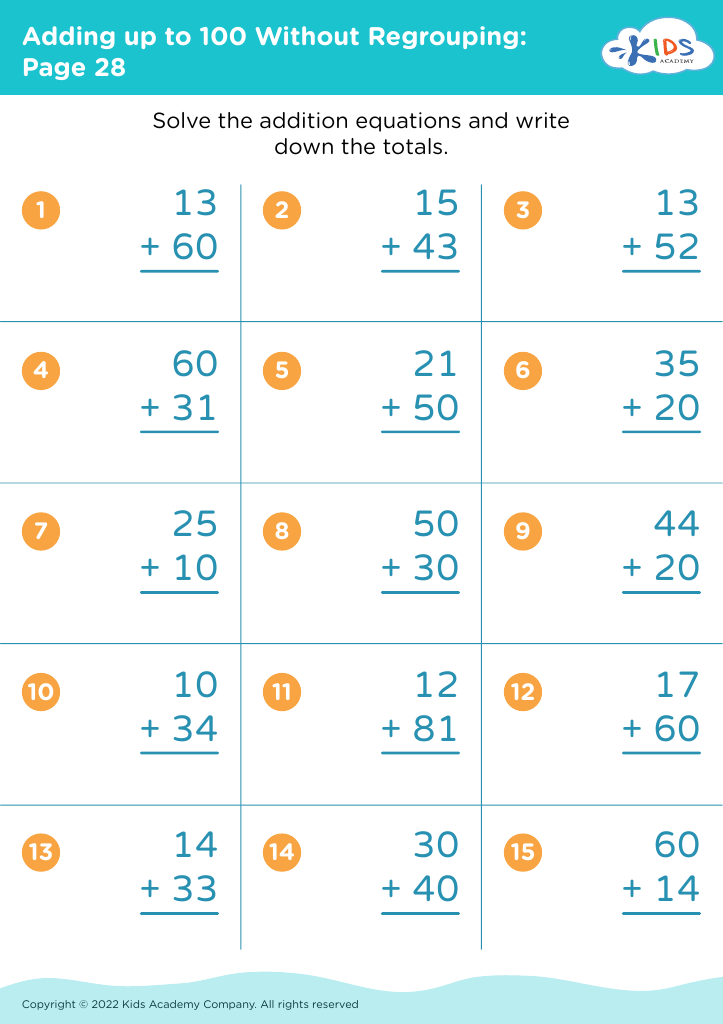
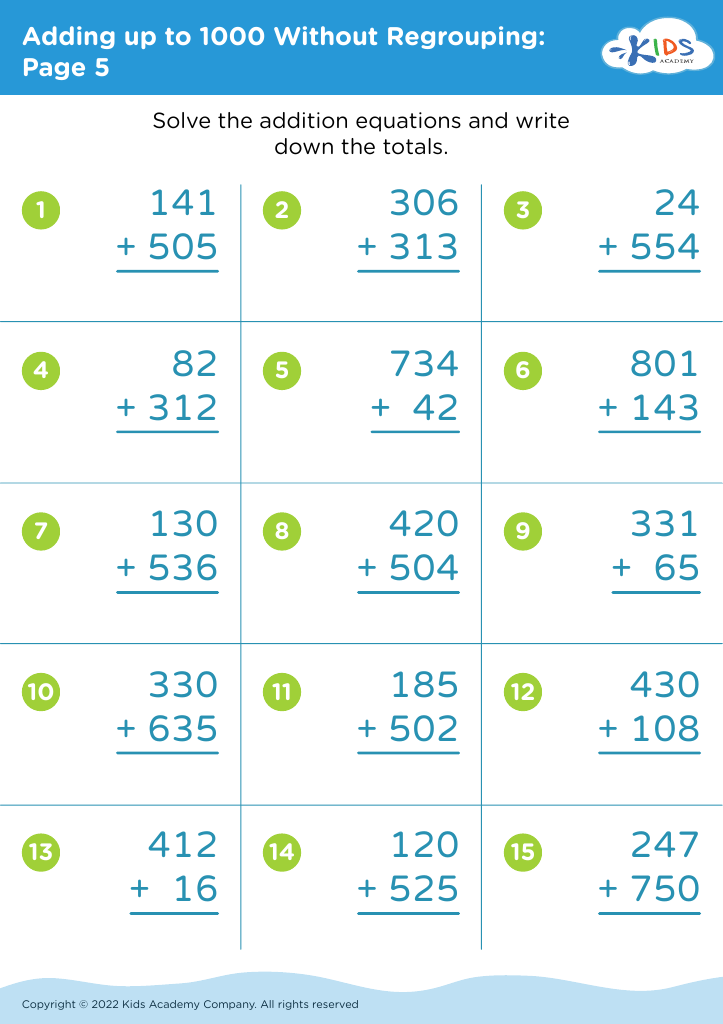
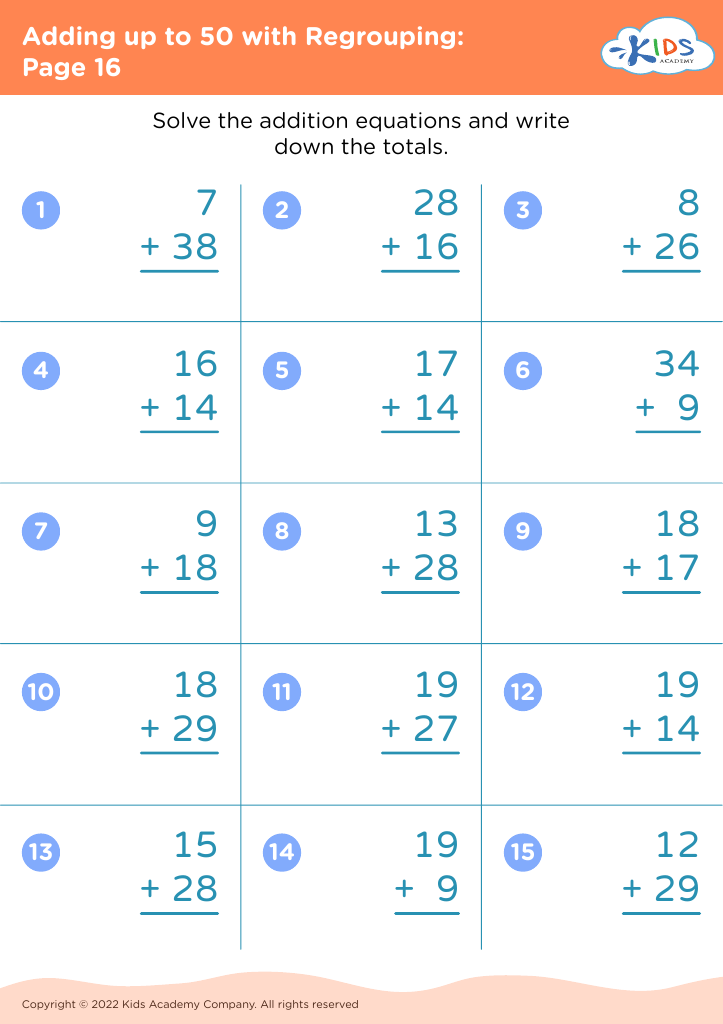
Enhance your child's critical thinking skills with our engaging Addition & Subtraction Worksheets designed for ages 3-8! These worksheets not only teach foundational math concepts but also encourage problem-solving and analytical thinking. Each activity challenges young learners to approach math in a fun, innovative way, aiding their cognitive development. Our worksheets feature vibrant illustrations and interactive exercises that keep children entertained while they learn essential skills. Perfect for at-home practice or classroom use, these resources empower kids to explore mathematics thoughtfully. Unlock your child's potential and watch them become confident problem solvers today with our tailored addition and subtraction worksheets!
Favorites
With answer key
Interactive
Join Kids Academy for Free
Who is primarily going to use this learning content?








Critical thinking development in addition and subtraction for children aged 3-8 is crucial for several reasons. Firstly, this foundational skill enhances children's problem-solving abilities, enabling them to tackle not just mathematical challenges but also everyday situations that require logical reasoning. When parents and teachers focus on critical thinking in mathematics, children learn to analyze, reason, and make connections between concepts, leading to a deeper understanding of not just numbers but the world around them.
Moreover, fostering critical thinking helps children approach math with confidence. Engaging in discussions about different strategies to solve addition and subtraction problems encourages them to explore alternative ways to arrive at answers. This not only strengthens their mathematical proficiency but also nurtures perseverance and adaptability—qualities essential for lifelong learning.
Ultimately, nurturing critical thinking at an early age lays the groundwork for later academic success, fostering curiosity and enthusiasm for learning. It empowers children to become independent thinkers, capable of collaborative problem-solving, and encourages a growth mindset, teaching them that challenges can be overcome with effort and creativity. For parents and teachers, prioritizing critical thinking development in early mathematics education ensures children are equipped with the skills necessary for future success in both academics and everyday life.








